
Sewer and Drain Cleaning: What Every Home Cook Should Know Before Calling a Plumber
Sewer and drain cleaning isn’t the most glamorous topic in a kitchen-lovers’ world, but if you cook often, your pipes work harder than you think. Every pot of pasta water, every rinse of a greasy pan, and every peel that slips past the strainer heads straight into your drain line. Most of the time it flows out fine. Sometimes it doesn’t, and that’s when a slow sink turns into a full-blown sewer backup. This guide walks through what causes clogs, what you can safely fix yourself, and when it’s time to bring in a licensed plumber.
Why Sewer and Drain Cleaning Starts in the Kitchen
The kitchen sink is one of the hardest-working drains in the house. Grease, starch, coffee grounds, and small food scraps build up along the inside of the pipe wall a little at a time, and that coating narrows the passage until water can barely get through. Bathroom drains face a similar buildup from hair and soap scum, and over time, everything eventually funnels into one place: the main sewer line running out to the street or septic system. When that main line slows down, every fixture connected to it starts acting up at once, which is usually the first real sign something bigger than a single clogged sink is going on.
Signs You Need Sewer and Drain Cleaning
A few warning signs tend to show up well before a drain fully stops working, and catching them early is the difference between a $150 cleaning and a $3,000 repair.
- Slow drains in more than one fixture. One slow sink is annoying. Slow drains in the kitchen, bathroom, and laundry all at once usually points to the main line, not an isolated clog.
- Gurgling sounds. That bubbling noise after you run the dishwasher or flush the toilet means air is trapped somewhere in the system, often from a partial blockage.
- Recurring clogs. If the same drain clogs again a few weeks after you cleared it, something deeper is going on, whether that’s grease buildup, a sagging pipe, or tree root intrusion.
- Sewer gas odor. A rotten-egg smell from a drain can mean a dry trap, a cracked pipe, or a blockage trapping waste and gas below the floor.
- Water backing up. If water rises in the tub when you flush the toilet, or pools around a floor drain, that’s a main sewer line issue that needs professional attention right away.
What Actually Causes Most Kitchen and Sewer Clogs
Understanding what’s building up inside your pipes makes it easier to prevent the next clog instead of just reacting to it.
- Grease and cooking oil. Fat is liquid when it’s hot and solid once it cools, so it coats the inside of a pipe the moment it hits cooler water further down the line. Over months, that coating narrows the pipe until almost nothing gets through.
- Starch and food scraps. Rice, pasta, and coffee grounds swell or clump once they’re wet, which is why a garbage disposal alone doesn’t fully solve the problem.
- Hair and soap scum. These combine into a dense mat in bathroom drains that a simple water flush usually can’t move.
- Tree root intrusion. Roots are drawn to the moisture inside a sewer line and can work their way through small cracks or joints, eventually filling the pipe.
- Mineral scale. In homes with hard water, dissolved minerals slowly plate the inside of the pipe the same way they build up on a showerhead, shrinking the space water has to move through.
Most of these build up slowly, which is exactly why routine sewer and drain cleaning matters even when nothing seems wrong yet.
How Often Should You Clean Your Drains?
Most homes benefit from professional sewer and drain cleaning every 18 to 24 months as routine maintenance, even without visible problems. Homes with older cast iron pipes, mature trees near the sewer line, or a history of frequent clogs should lean toward yearly cleaning instead. Kitchens that cook a lot of oil-heavy meals also tend to need more frequent attention to the main drain line, since grease is one of the biggest contributors to slow buildup over time.
DIY Drain Maintenance You Can Do From Your Kitchen
Not every clog needs a plumber, and a lot of routine drain care starts with ingredients already sitting in your pantry.
- Boiling water first. For grease-related slow drains, pour a kettle of hot (not boiling, if you have older PVC) water down the drain in stages. It softens buildup enough to keep water moving.
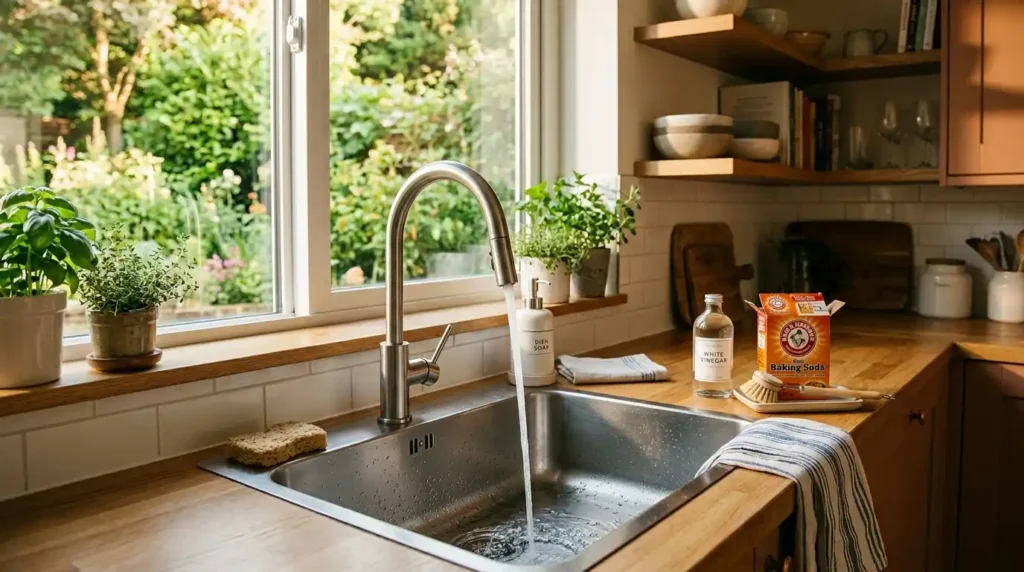
- Baking soda and vinegar. Pour about half a cup of baking soda down the drain, follow with half a cup of vinegar, and let the fizzing reaction sit for 15 to 20 minutes before flushing with hot water. It’s genuinely useful for light grease and odor buildup, though it isn’t strong enough to clear a solid blockage or a tree root problem.
- A basic drain snake. A cheap manual auger can physically pull out hair, food debris, or a stuck object that liquid methods can’t touch.
- Routine habits. Running hot water after cooking, using a sink strainer to catch food scraps, and never pouring cooking oil down the drain will do more for long-term drain health than any single fix.
The honest truth from testing this in a real kitchen: baking soda and vinegar works best as prevention, not rescue. It keeps a mostly-clear drain from slowly building up, but if water is already backing up, it typically buys you a day or two, not a permanent fix.
When DIY Isn’t Enough: Professional Methods Explained
Once a clog is beyond plunging and pantry remedies, professional drain cleaning uses tools that go far deeper into the line.
- Drain snaking (augering): A motorized cable cuts through or pulls out a specific clog. It’s fast and affordable, but it only clears a path through the blockage rather than cleaning the full pipe wall.
- Hydro jetting: High-pressure water, often up to 4,000 PSI, scours the entire interior of the pipe, removing grease, mineral scale, and tree roots in one pass. It costs more than snaking but lasts significantly longer.
- Sewer camera inspection: A small camera is fed through the line to show exactly where a blockage sits and whether the pipe itself is cracked, bellied, or invaded by roots, so the plumber isn’t guessing.
- Trenchless pipe repair: For a damaged section of pipe, some companies can now line or replace it without digging up your yard, which saves both time and landscaping.
How Much Does Sewer and Drain Cleaning Cost?
Sewer and drain cleaning typically costs between $100 and $600 for a standard sink, tub, or toilet clog, with the exact price depending on the clog’s severity and how accessible the pipe is. Main sewer line cleaning runs higher, generally $150 to $800, since it usually requires an auger truck or hydro jetting equipment rather than a handheld snake. Hydro jetting alone tends to fall between $250 and $600, and a sewer camera inspection to diagnose the problem is usually another $125 to $500. Many plumbers apply the inspection or diagnostic fee toward the final repair if you move forward with the work, so it’s worth asking before you book.
A few factors move the price up or down more than anything else: how far the clog sits from an access point, whether the pipe is cast iron, PVC, or an older material, and whether the job is scheduled during regular hours or as an after-hours emergency call. Emergency drain cleaning can run two to three times the standard rate, which is one more reason routine maintenance is worth scheduling before a slow drain becomes a middle-of-the-night backup.
Keeping Your Drains Clear for Good
Sewer and drain cleaning doesn’t have to be a crisis-only task. A sink strainer, a habit of scraping grease into the trash instead of the sink, and an occasional baking soda and vinegar rinse will keep most kitchen drains running smoothly between professional visits. When gurgling, recurring clogs, or slow drains in more than one fixture show up, that’s your cue to schedule a proper inspection before a manageable problem turns into a main line repair. Treat your drains the way you treat a good knife: a little regular care now saves you a much bigger job later.
How often should sewer lines be cleaned?
Most plumbers recommend professional sewer line cleaning every 18 to 24 months as preventive maintenance. Older homes, properties with mature trees, or households that cook frequently with oil should aim for the shorter end of that range.
What’s the difference between snaking and hydro jetting?
Snaking pushes a cable through the clog to restore flow but leaves buildup on the pipe walls behind. Hydro jetting uses high-pressure water to scour the entire interior of the pipe, so it clears more debris and tends to prevent repeat clogs for longer.
Does baking soda and vinegar actually unclog a drain?
It helps with light grease, soap scum, and odor, particularly as regular maintenance, but it rarely clears a solid blockage, a deep clog, or tree root intrusion. If a drain is fully backed up, it’s a sign the problem is bigger than a kitchen remedy.
Can I DIY sewer and drain cleaning, or do I need a plumber?
Sink-level clogs are often fine to handle yourself with hot water, a plunger, or a manual snake. Once multiple drains are affected, water is backing up, or you smell sewer gas, that points to the main line, and it’s time to call a licensed plumber rather than keep experimenting.


Pingback: Storm Drain Cleaning Services: Cost, Signs & 2026 Guide - kitchennista.com
Pingback: Plumbing Drain Cleaning Services: Costs & Signs