
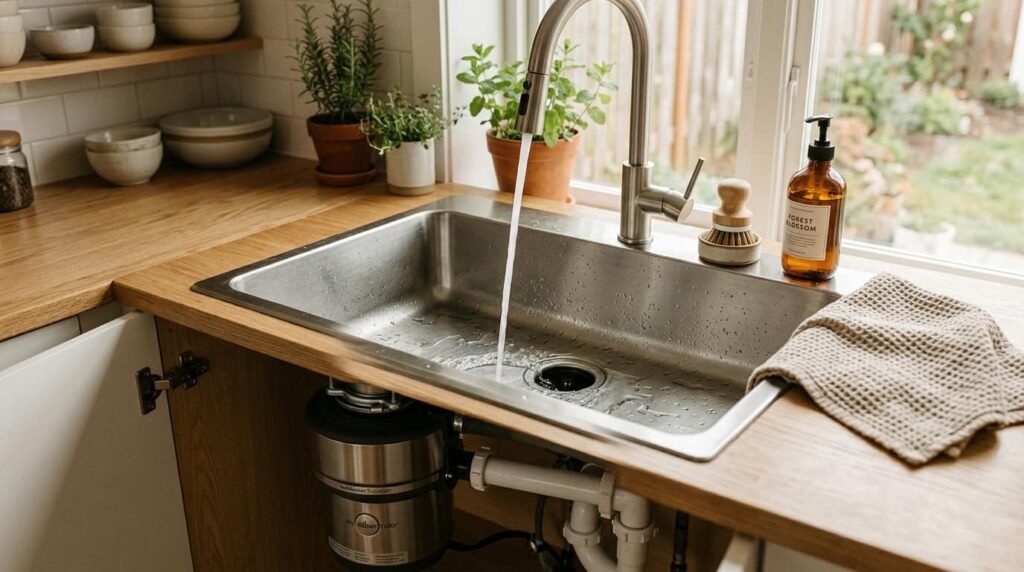
Plumbing Drain Cleaning Services: Costs, Signs & What to Expect
A drain that takes five minutes to empty is usually telling you something.
Maybe the shower has started draining slowly. The kitchen sink gurgles after you run the dishwasher. Or you’ve cleared the same bathroom sink twice this month, only to watch it slow down again a few days later.
That’s where plumbing drain cleaning services become different from simply opening a clog.
A plunger may restore drainage temporarily. A drain snake can break through a stubborn blockage. But if grease, hair, mineral scale, or other debris has accumulated along the pipe walls, opening a small path through the middle may only buy you time.
Professional drain cleaning is about identifying what is restricting the pipe and choosing a method that actually matches the problem.
The good news is that you don’t need professional cleaning for every slow drain. A minor, isolated clog can often be handled at home. The trick is recognizing when the problem has moved beyond a simple DIY fix.
What Do Plumbing Drain Cleaning Services Actually Do?
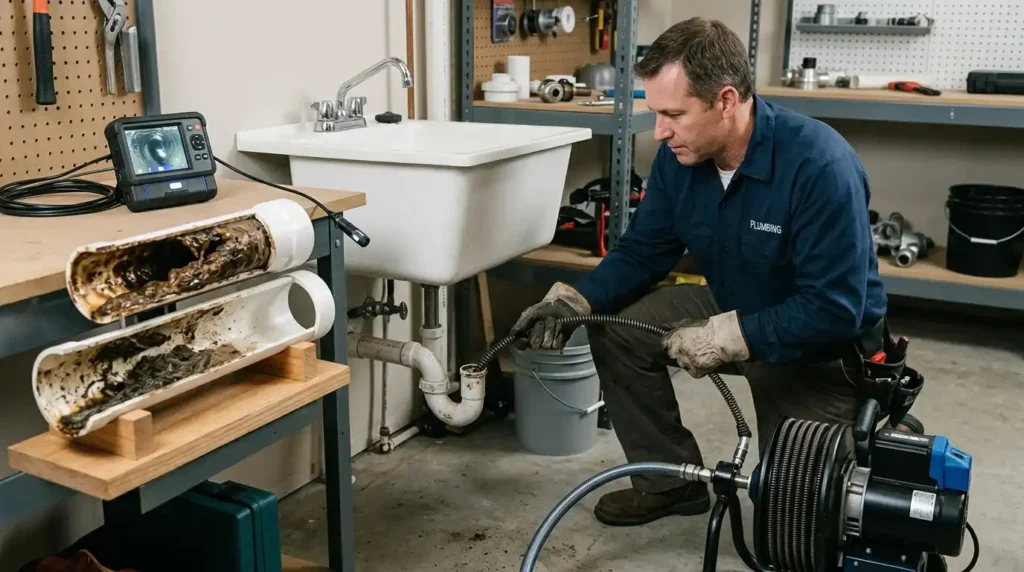
A professional drain cleaning visit usually starts with diagnosis rather than immediately feeding a cable down the pipe.
The plumber will look at which fixture is affected, how quickly it drains, whether the problem has happened before, and whether other fixtures are showing the same symptoms.
That information helps determine where the blockage probably sits.
For example, a slow shower drain by itself often points toward hair, soap residue, or buildup close to the fixture. If the shower, bathroom sink, and toilet are all acting strangely at the same time, the problem may be farther down the branch line or main drain.
Common professional methods include:
- Drain snaking or augering: A flexible cable is pushed into the pipe to break apart, cut through, or retrieve the blockage.
- Hydro jetting: High-pressure water is used to clean buildup from the inside walls of suitable pipes.
- Camera inspection: A small waterproof camera travels through the drain so the plumber can see blockages, roots, cracks, offsets, or other problems.
- Mechanical cleaning: Specialized cutting or retrieval heads can be used for tougher obstructions.
A camera isn’t necessary for every simple sink clog. But when a blockage keeps returning, several drains are affected, or the plumber suspects a damaged sewer line, seeing inside the pipe can prevent guesswork.
That’s one of the biggest practical differences between clearing a clog and diagnosing a drainage problem.
What Can a Professional Drain Cleaning Service Handle?
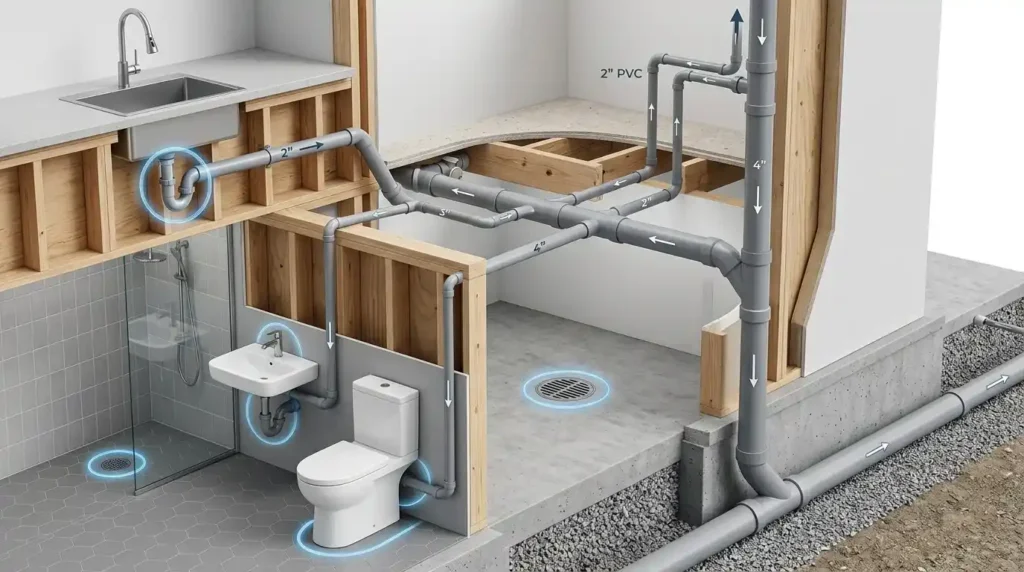
Depending on the company and equipment, drain cleaning may cover:
- Kitchen sinks and garbage disposal lines
- Bathroom sinks
- Showers and bathtubs
- Toilets
- Laundry drains
- Floor drains
- Main sewer lines
- Some exterior or storm drainage lines
The equipment and approach can change significantly depending on the location of the blockage.
A hair clog near a shower trap is a very different job from roots growing into a buried sewer pipe.
How Much Do Plumbing Drain Cleaning Services Cost?
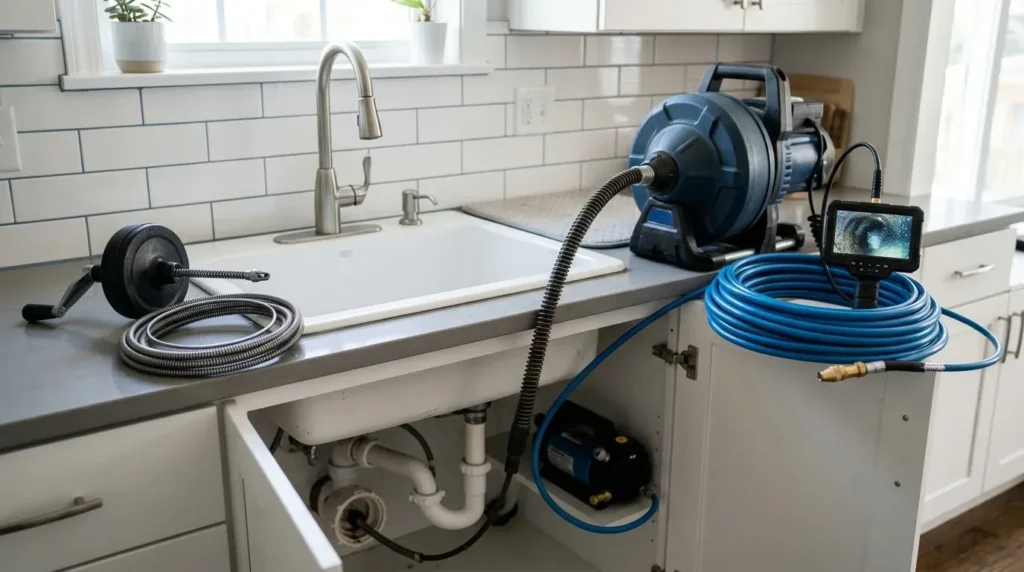
There isn’t one universal price for drain cleaning because the cost depends heavily on where the blockage is, how difficult it is to remove, and which equipment is required.
For many residential jobs, homeowners may encounter prices in the broad range of roughly $100 to $450, while difficult main-line work, hydro jetting, emergency calls, or repairs can push the total considerably higher.
Typical ranges often look something like this:
| Service | Approximate Cost Range |
|---|---|
| Sink or tub clog | $100–$275 |
| Toilet clog | $110–$275 |
| Main sewer line cleaning | $200–$800+ |
| Hydro jetting | $250–$800+ |
| Emergency/after-hours service | Often higher than standard rates |
These are planning ranges rather than guaranteed prices. Local labor rates, accessibility, severity of the blockage, equipment, and the plumber’s pricing model can all change the final bill.
Before approving the work, ask what the quoted price includes.
A surprisingly low drain-cleaning price may cover only the initial service call, while additional charges could apply for longer cable runs, camera inspection, hydro jetting, or difficult access.
What Makes a Drain Cleaning Job More Expensive?
Several factors can increase the cost:
The blockage is far from the fixture.
A clog near a sink is generally easier to reach than an obstruction deep inside a main sewer line.
The pipe needs inspection.
If the plumber suspects roots, a broken pipe, or a recurring obstruction, a camera inspection may be recommended.
Hydro jetting is required.
Jetting uses specialized equipment and is more involved than basic snaking.
It’s an emergency.
Evenings, weekends, holidays, and urgent same-day calls can carry higher service charges.
The pipe has a bigger problem.
Drain cleaning removes an obstruction. It does not repair a collapsed, cracked, severely damaged, or improperly installed pipe.
That last point is worth remembering. If a plumber clears your drain today and the same line blocks again shortly afterward, repeatedly paying for cleaning may not solve the real problem.
What Are the Signs You Need Professional Drain Cleaning?
Most serious drain problems give you warning signs before a complete backup.
Pay attention to changes rather than waiting until water stops moving completely.
1. The Same Drain Keeps Clogging
One isolated clog isn’t necessarily a major concern.
A drain that repeatedly clogs after you’ve already cleared it is different.
If a sink drains normally for a few days and then becomes slow again, there may still be buildup inside the pipe. The temporary opening created by a plunger or small snake may not have removed everything.
2. Several Drains Slow Down Together
This is one of the more useful clues.
If the kitchen sink, bathtub, and bathroom sink all become slow around the same time, don’t assume you have three separate clogs.
Multiple fixtures can point toward a blockage farther downstream, particularly when toilets or floor drains are also involved.
3. You Hear Gurgling
Gurgling can happen when air is displaced around a partial blockage.
For example, flushing a toilet and hearing bubbling from a nearby shower drain can indicate that water and air aren’t moving normally through the drainage system.
Gurgling doesn’t identify the exact location by itself, but combined with slow drainage or backups, it deserves attention.
4. Water Backs Up Somewhere Else
This is a stronger warning sign.
If running the washing machine causes water to rise in a floor drain, or flushing the toilet makes water appear in the shower, the obstruction may be farther down the drainage system.
At that point, repeatedly plunging one fixture isn’t likely to solve the underlying problem.
5. You Notice Persistent Drain Odors
A bad smell doesn’t automatically mean you need professional drain cleaning. Food residue, a dry trap, and other plumbing issues can create odors.
But a persistent sewage-like smell combined with slow drainage or backups deserves investigation.
Should You Call a Plumber or Try DIY Drain Cleaning First?
Not every slow drain needs a service appointment.
For a single, recently developed clog, it’s reasonable to try a few simple methods first.
Start with the least aggressive option.
Use a plunger appropriate for the fixture. For a shower or sink, remove visible debris around the drain opening. A drain screen can prevent hair and food particles from entering the pipe in the first place.
For routine maintenance, flushing a drain with hot water can help move some loose residue. However, avoid assuming that extremely hot or boiling water is safe for every plumbing setup, especially where pipe materials or fittings may be vulnerable.
Baking soda and vinegar are commonly suggested for household drain maintenance, but they shouldn’t be treated as a substitute for mechanical cleaning when a serious blockage exists.
When DIY Stops Making Sense
Call a professional when:
- The same drain keeps clogging
- Multiple fixtures are affected
- Water is backing up elsewhere
- A toilet and shower are affected together
- You suspect a main sewer blockage
- A drain remains slow after reasonable DIY attempts
- You suspect roots, a broken pipe, or another structural problem
One common mistake is escalating from a plunger to stronger and stronger chemical drain cleaners.
That can create another problem.
Chemical drain cleaners may not reach or remove a substantial obstruction, and residual chemicals can create a safety hazard for anyone who later has to open or work on the plumbing.
If the first reasonable DIY attempt doesn’t solve the problem, diagnosing the cause is usually more useful than repeatedly adding chemicals.
Drain Snaking vs. Hydro Jetting: Which One Do You Need?
Snaking and hydro jetting aren’t interchangeable versions of the same service.
They solve different kinds of drainage problems.
| Method | How It Works | Best Suited For |
|---|---|---|
| Snaking/Augering | Cable breaks through or retrieves blockage | Common clogs, hair, objects, moderate buildup |
| Hydro Jetting | Pressurized water cleans pipe walls | Heavy grease, scale, recurring buildup |
| Camera Inspection | Camera identifies internal condition | Recurring clogs, suspected damage, difficult diagnosis |
Snaking is often the first approach because it can quickly open a blocked line without requiring the equipment used for jetting.
Think of it as creating a path through an obstruction.
Hydro jetting is different. It uses high-pressure water to scour the inside of the pipe, making it useful when material has accumulated along the pipe walls rather than forming one simple plug.
That doesn’t mean hydro jetting is automatically the better choice.
If the pipe is damaged, badly deteriorated, or otherwise unsuitable for high-pressure cleaning, jetting may not be appropriate. A plumber may recommend camera inspection first when the pipe’s condition is uncertain.
When Hydro Jetting Makes More Sense
Hydro jetting can be useful when:
- Grease has coated a kitchen drain line
- A sewer line has heavy internal buildup
- Clogs repeatedly return after snaking
- Mineral scale has narrowed the pipe
- A suitable sewer line needs thorough internal cleaning
A snake may restore flow without removing the material coating the pipe. If that buildup remains, the line can become restricted again.
That’s why recurring clogs are worth diagnosing instead of simply clearing over and over.
How Often Should You Have Your Drains Professionally Cleaned?
There isn’t a universal schedule that every household needs to follow.
If all your drains work normally, scheduling aggressive professional cleaning every few months may be unnecessary.
Instead, frequency should reflect the plumbing system and how your household uses it.
A busy kitchen may accumulate grease and food residue faster than a guest bathroom. A home with several occupants may put more hair and soap residue through bathroom drains. Older properties may also have different pipe conditions than newer installations.
For prevention:
- Keep food scraps and grease out of kitchen drains.
- Use hair catchers in showers and tubs.
- Clean drain screens regularly.
- Don’t treat a garbage disposal as a substitute for good food-waste habits.
- Pay attention to slow drainage instead of waiting for a full blockage.
- Consider professional inspection or cleaning when a particular line has a history of recurring problems.
If you’ve had repeated sewer backups, ask the plumber why they keep happening before agreeing to another routine cleaning.
The right question isn’t always, “How often should I clean the drain?”
Sometimes it’s, “Why does this drain keep clogging?”
How Can You Prevent Expensive Drain Problems?
Most drain maintenance is surprisingly simple.
The biggest improvement for a kitchen is controlling what goes down the sink. Grease and cooking oil are especially problematic because they can cool and stick to pipe surfaces. Small amounts repeated over time can contribute to buildup.
Scrape food scraps into the trash or appropriate waste system rather than relying entirely on the garbage disposal.
In bathrooms, use drain screens to catch hair before it enters the plumbing.
Don’t flush items that aren’t designed to be flushed simply because they fit through the toilet.
And don’t ignore early warning signs.
A slow drain is often much easier to deal with than a completely backed-up line. Catching the problem while water still moves gives you more options and may make diagnosis simpler.
What Should You Ask Before Hiring a Drain Cleaning Company?
The cheapest quote isn’t necessarily the easiest way to compare services.
Ask what the price actually includes.
Useful questions include:
- Is the price flat-rate or based on time?
- Does the quote include the service call?
- Is additional cable time charged separately?
- When would you recommend a camera inspection?
- Is hydro jetting included or priced separately?
- What happens if the drain blocks again shortly after cleaning?
- If you find damaged pipe, is repair included in the quoted cleaning price?
- Will you explain the cause of the blockage before recommending additional work?
You don’t need a long technical explanation. You simply want to understand what you’re paying for and whether the proposed service addresses the actual problem.
A good drain-cleaning conversation should leave you knowing three things: where the blockage appears to be, how the plumber plans to clear it, and whether anything suggests a larger plumbing problem.
The Best Time to Deal With a Drain Problem Is Before the Backup
Professional drain cleaning is useful when the problem is deeper than a simple fixture-level clog, when blockages keep returning, or when several drains begin behaving strangely.
The goal shouldn’t be to use the most powerful cleaning method available.
It should be to identify the problem and use the least invasive method that can solve it properly.
A plunger may be enough for one small clog. A snake may handle a stubborn obstruction. Hydro jetting may make sense when buildup coats an otherwise suitable pipe. And sometimes the most valuable service is a camera inspection that reveals the problem isn’t a clog at all.
If your drain keeps slowing down after you’ve already cleared it, don’t keep treating the symptom indefinitely. Find out what’s restricting the line. That can save you repeated service calls and, more importantly, help prevent a small drainage problem from becoming a messy backup.
How long does professional drain cleaning take?
A straightforward sink, tub, or shower clog may take less than an hour. More difficult jobs can take longer, especially when the blockage is deep, access is difficult, or a camera inspection and hydro jetting are needed.
The actual time depends on the location and nature of the obstruction.
Can a clogged drain fix itself?
A partial clog can sometimes appear to improve temporarily as water finds a path around the obstruction, but that doesn’t mean the buildup has disappeared.
If a drain repeatedly slows down and then seems to recover, treat the pattern as a warning rather than assuming the problem has solved itself.
Why does my kitchen sink clog more often than my bathroom sink?
Kitchen drains deal with grease, oils, food particles, and other residue that can stick to pipe walls.
Bathroom drains more commonly collect hair, soap residue, and personal-care product buildup.
The type of material matters because different blockages respond differently to cleaning methods.
Is hydro jetting safe for every pipe?
No cleaning method should be treated as universally appropriate.
Hydro jetting uses significant water pressure, so the condition and construction of the plumbing matter. If a pipe is damaged or its condition is uncertain, a camera inspection can help determine the appropriate approach.
Should I use chemical drain cleaner before calling a plumber?
For recurring or serious blockages, relying on chemical drain cleaner isn’t a good substitute for diagnosis.
If a chemical product fails to clear the drain, avoid repeatedly adding more. Tell the plumber what product was used so they can take appropriate precautions.
How do I know if a clog is in the main sewer line?
Multiple slow drains, several fixtures backing up, unusual toilet behavior, or wastewater appearing in another fixture can point toward a downstream blockage.
These symptoms don’t prove that the main line is clogged, but they are strong enough reasons to stop treating the problem as an isolated sink or shower clog.


Pingback: Sewer and Drain Cleaning: DIY Tips & Pro Guide (2026)