
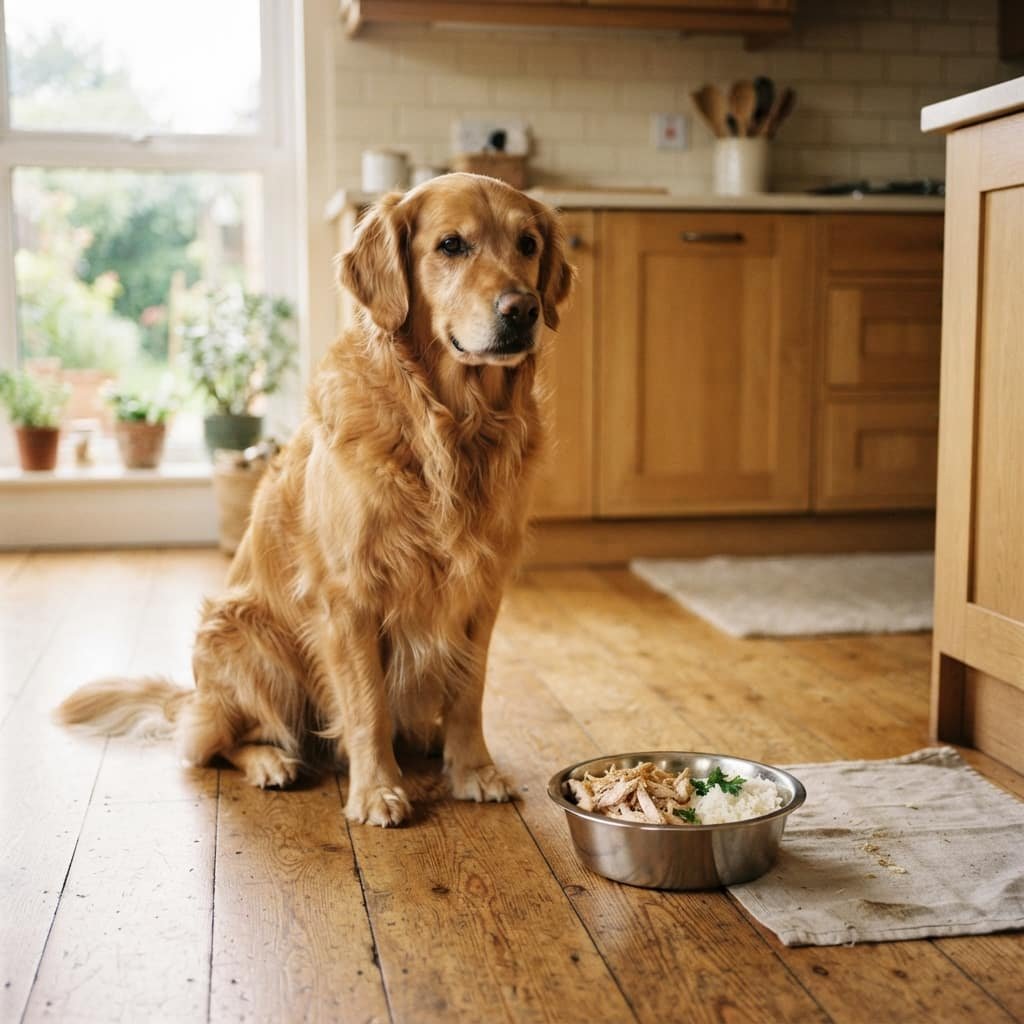
Chicken and Rice for Dogs: A Complete Feeding Guide
Chicken and rice for dogs is the home remedy nearly every pet parent reaches for the moment their dog’s stomach acts up. It’s the combination vets have leaned on for decades, and for good reason: it’s bland, it’s gentle, and most dogs will actually eat it even when they’re turning their nose up at everything else. But knowing that chicken and rice helps is different from knowing how to actually do it right, and getting the ratio, portions, or timing wrong can slow your dog’s recovery instead of speeding it up.
I’ve made this recipe in my own kitchen more times than I can count, for a dog who has a habit of eating things she shouldn’t. What I’ve learned, mostly through trial and error, is that the details matter more than people think.
Quick Answer: What Is Chicken and Rice for Dogs?
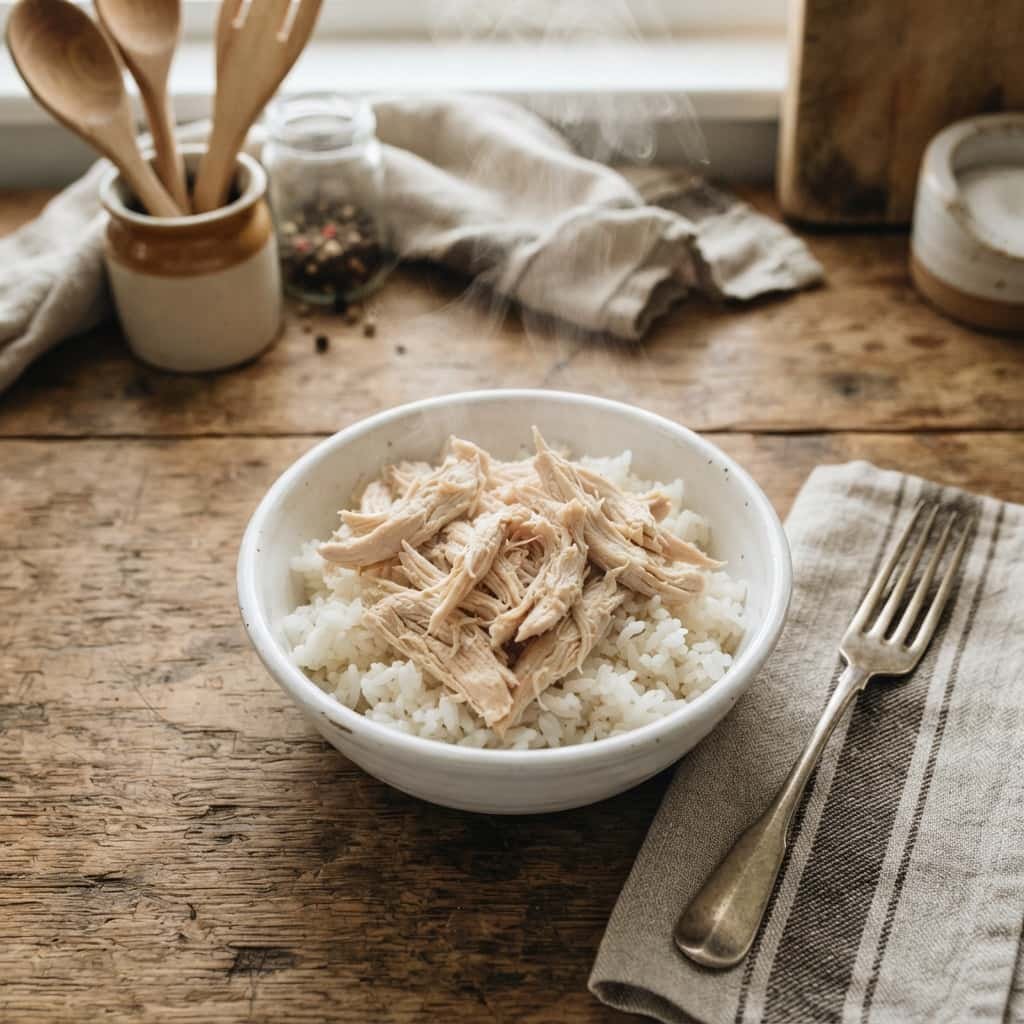
Chicken and rice for dogs is a short-term bland diet made from boiled, unseasoned chicken breast and plain white rice, usually mixed in a 1:2 ratio of chicken to rice. Vets recommend it for mild digestive upset like diarrhea or vomiting because it’s low in fat and easy to digest. It’s meant to be fed for two to five days at most, not as a regular meal, since it doesn’t provide complete nutrition on its own.
Why Chicken and Rice Works for an Upset Stomach
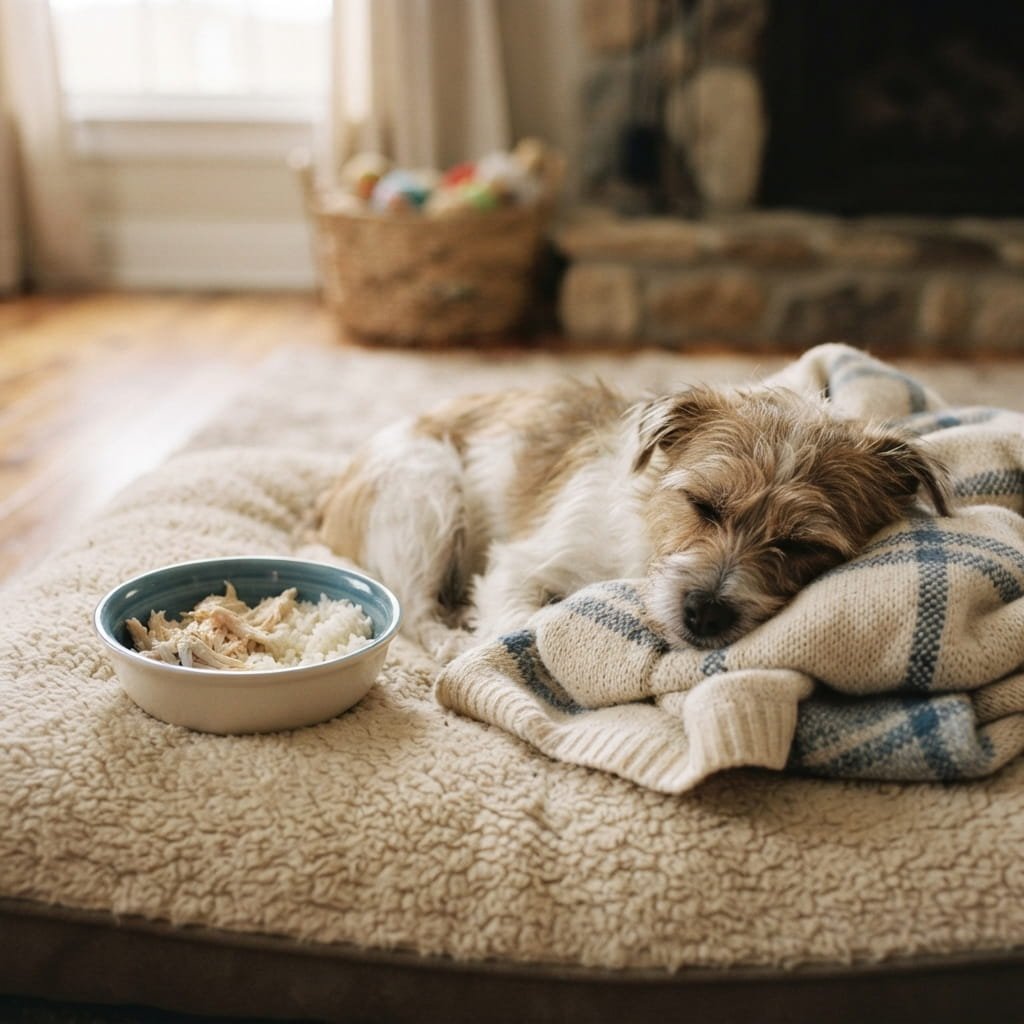
When a dog’s digestive system is inflamed, the last thing it needs is a heavy meal full of fat, fiber, or unfamiliar ingredients. Chicken and rice solves that problem in two simple ways.
Boiled, skinless chicken breast is lean and low in fat, so it doesn’t add extra work for a stomach that’s already struggling. It also delivers protein without the greasiness of thighs, skin, or dark meat, which can aggravate sensitive stomachs and, in some dogs, contribute to pancreatitis.
Plain white rice, meanwhile, is starchy and low in fiber, which gives it a mild binding effect that can help firm up loose stool. It also has a relatively neutral taste that most dogs tolerate even when their appetite is low. Together, the pair gives a recovering dog just enough nourishment to stay strong without overwhelming an already upset gut.
How Much Chicken and Rice Should You Feed Your Dog?
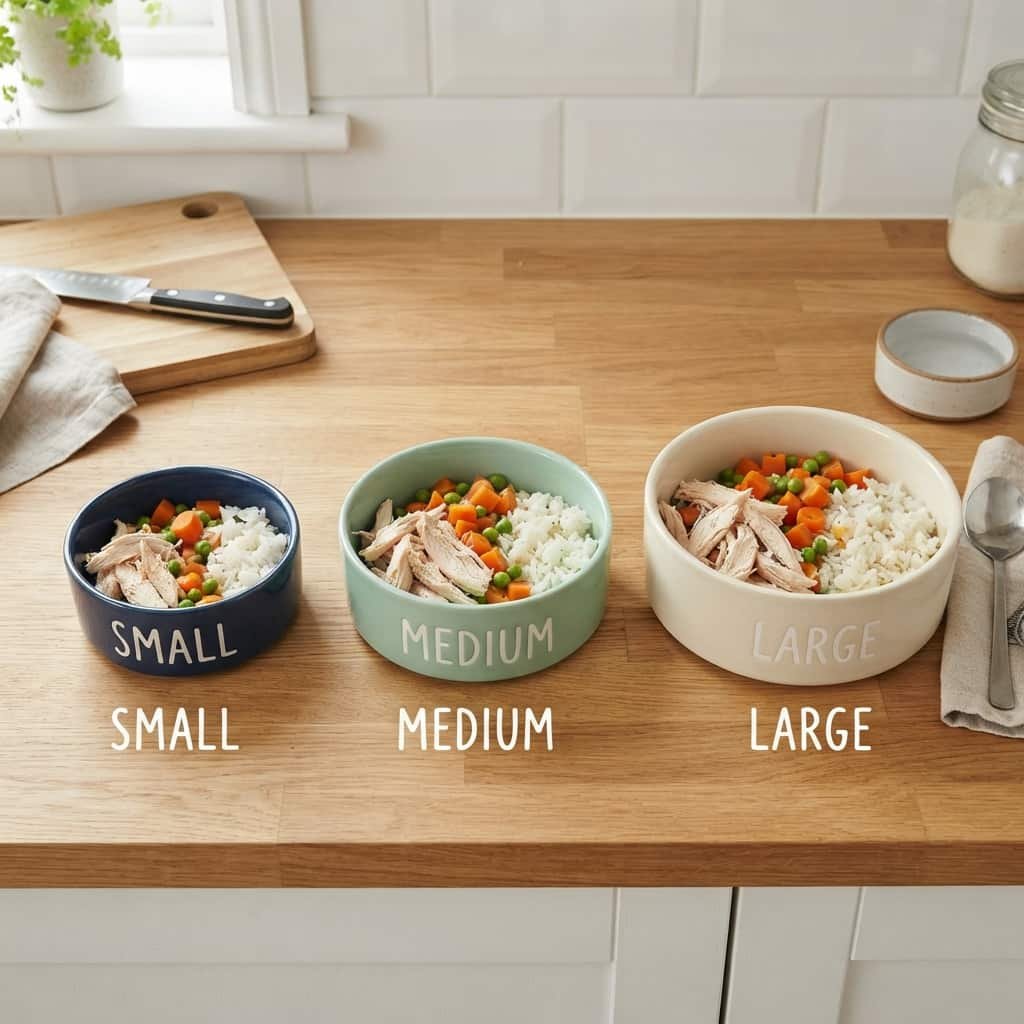
Portion size depends on your dog’s weight, but the ratio stays fairly consistent across veterinary sources: two parts rice to one part chicken. That’s roughly a 2:1 mix by volume, so two cups of cooked rice to one cup of shredded chicken.
For daily amount, a common starting point is about one third to one half cup of the combined mixture per ten pounds of body weight, split into three or four small meals rather than one or two large ones. Using that guideline:
- Small dogs (10–20 lbs): about ½ to ¾ cup of the mixture per day, split into multiple meals
- Medium dogs (20–50 lbs): roughly 1½ to 3 cups per day, divided across meals
- Large dogs (50–100 lbs): around 1 cup chicken to 2 cups rice per meal, fed two to three times a day
These numbers are a starting place, not a prescription. Every dog is different, and a dog that’s actively vomiting should start with much smaller amounts, sometimes just a teaspoon or tablespoon at a time, to make sure it stays down before increasing the volume.
How to Make Chicken and Rice for Dogs
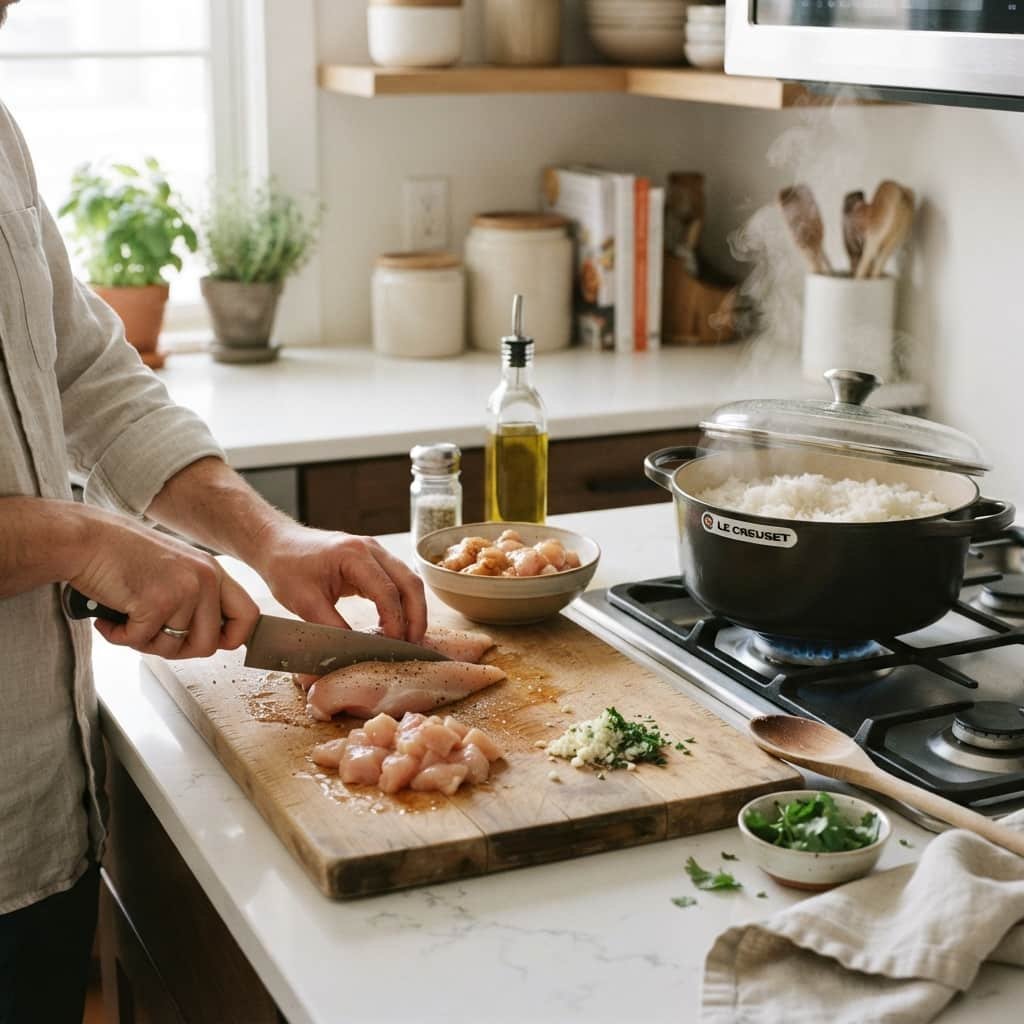
The beauty of this recipe is that it takes almost no skill and very few ingredients.
- Boil the chicken. Place boneless, skinless chicken breast in a pot, cover completely with water, and boil until it reaches an internal temperature of at least 165°F. This usually takes ten to fifteen minutes depending on the size of the pieces. Never feed raw chicken; the bacteria can make an already sick dog worse.
- Cook the rice separately. Prepare plain long-grain white rice according to the package directions, using only water. No butter, oil, broth mixes, or seasoning.
- Shred the chicken. Once cooked, remove the chicken and shred or cube it into bite-sized pieces using a fork. For small dogs, shredding it finer makes it easier to eat.
- Combine and cool. Mix the chicken into the rice at roughly a 1:2 ratio and let the whole batch cool to room temperature before serving. A hot bowl of food can burn a dog’s mouth just as easily as it can ours.
- Store the extra. Leftovers keep in the refrigerator for up to three days, or you can freeze portions for later use.
If you want to add a little more flavor to encourage a picky eater, a splash of homemade, unsalted chicken broth works well. Skip store-bought broth, since it often contains garlic or onion powder, both of which are toxic to dogs.
White Rice or Brown Rice: Which Should You Use?
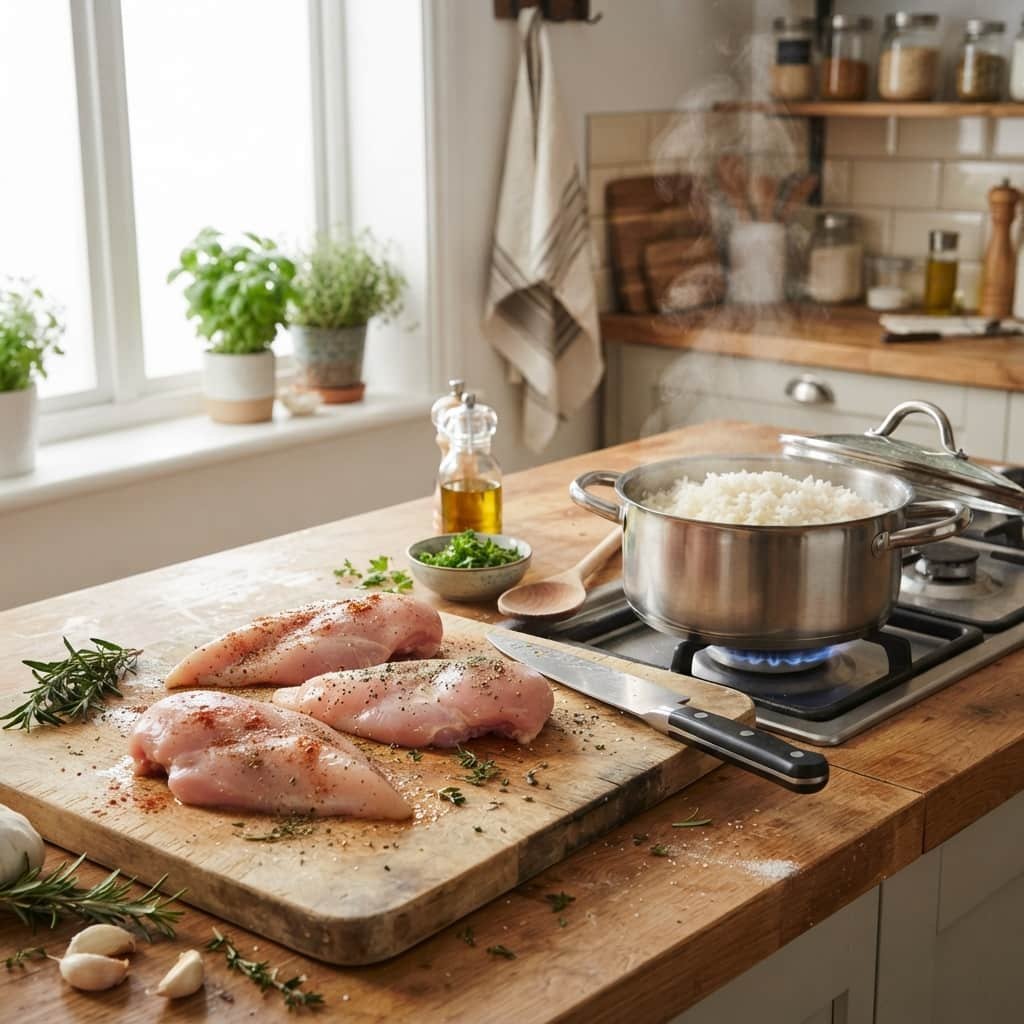
This is one of the most common points of confusion, and the answer is straightforward: for an upset stomach, stick with white rice. Brown rice is a whole grain with more fiber, and while that fiber is beneficial for a healthy dog’s regular diet, it’s harder to digest and can actually work against you when the goal is to calm inflammation and firm up stool.
Long-grain white rice, including jasmine and basmati varieties, digests easily and has a mild binding effect that supports recovery. Save brown rice for days when your dog’s digestion is back to normal and you’re looking to add fiber and nutrients to their regular meals instead.
How Long Can Dogs Eat Chicken and Rice?
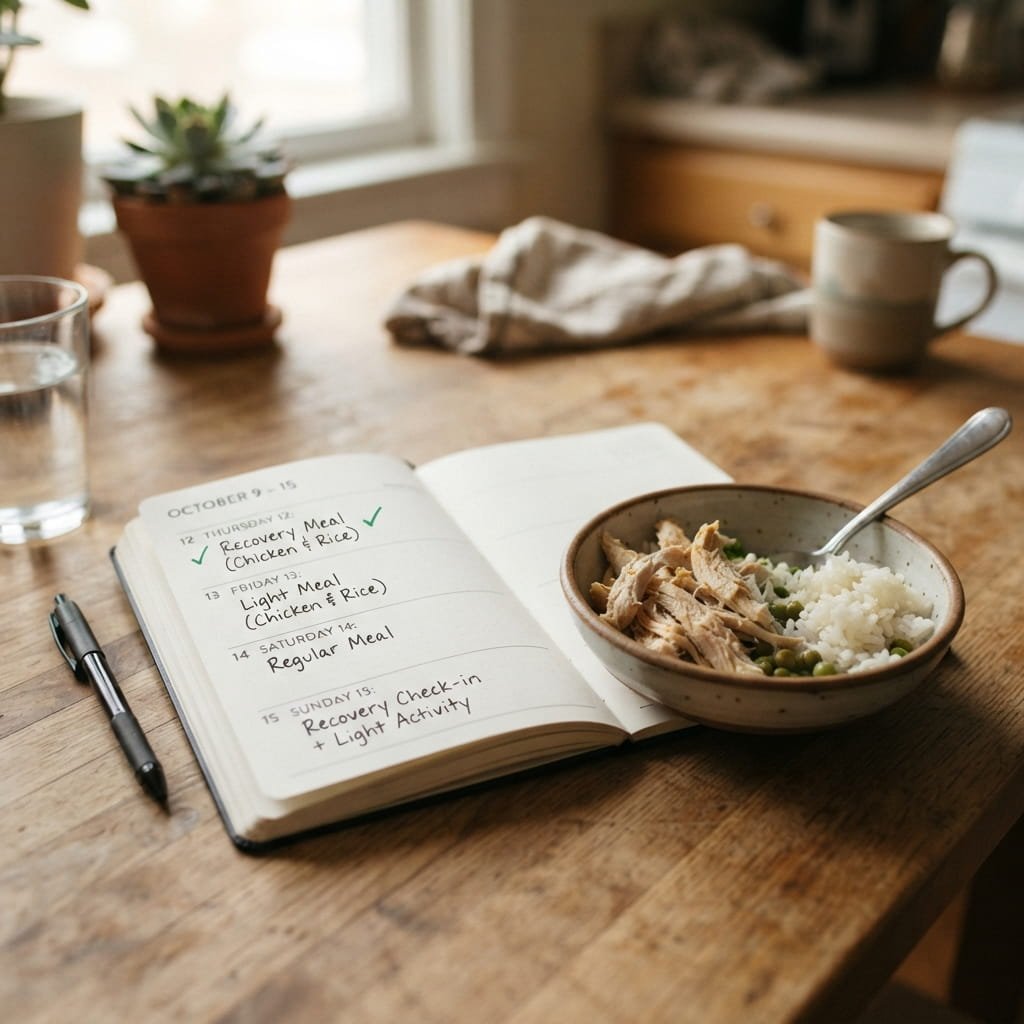
Chicken and rice is designed to be a short-term fix, not an everyday meal. Most vets recommend feeding it for two to three days, or up to about a week in cases of persistent diarrhea, and stopping once your dog’s stool returns to a normal, firm consistency.
The reason it can’t go on indefinitely comes down to nutrition. Chicken and rice alone lacks calcium and several other essential vitamins and minerals that a complete dog food provides. Feeding it long-term, without a vet-approved supplement, can create nutritional gaps over time. If your dog’s symptoms haven’t improved after two or three days on the bland diet, or if they seem to be getting worse, that’s the point to call your veterinarian rather than waiting it out.
How to Transition Back to Regular Dog Food
Once your dog’s stomach has settled, ease them back onto their normal food gradually over about a week rather than switching all at once. A sudden change can trigger another round of stomach upset, undoing the progress you just made.
A simple transition schedule looks like this:
- Days 1–2: About one quarter regular food, three quarters chicken and rice
- Days 3–4: Half regular food, half chicken and rice
- Days 5–6: Three quarters regular food, one quarter chicken and rice
- Day 7 onward: Back to 100% regular food
Watch your dog’s stool and energy level throughout the transition. If diarrhea returns as you reintroduce their regular food, slow the process down and give their gut a bit more time on the bland diet.
Common Mistakes to Avoid
A few small missteps can undo the benefits of an otherwise well-made batch of chicken and rice:
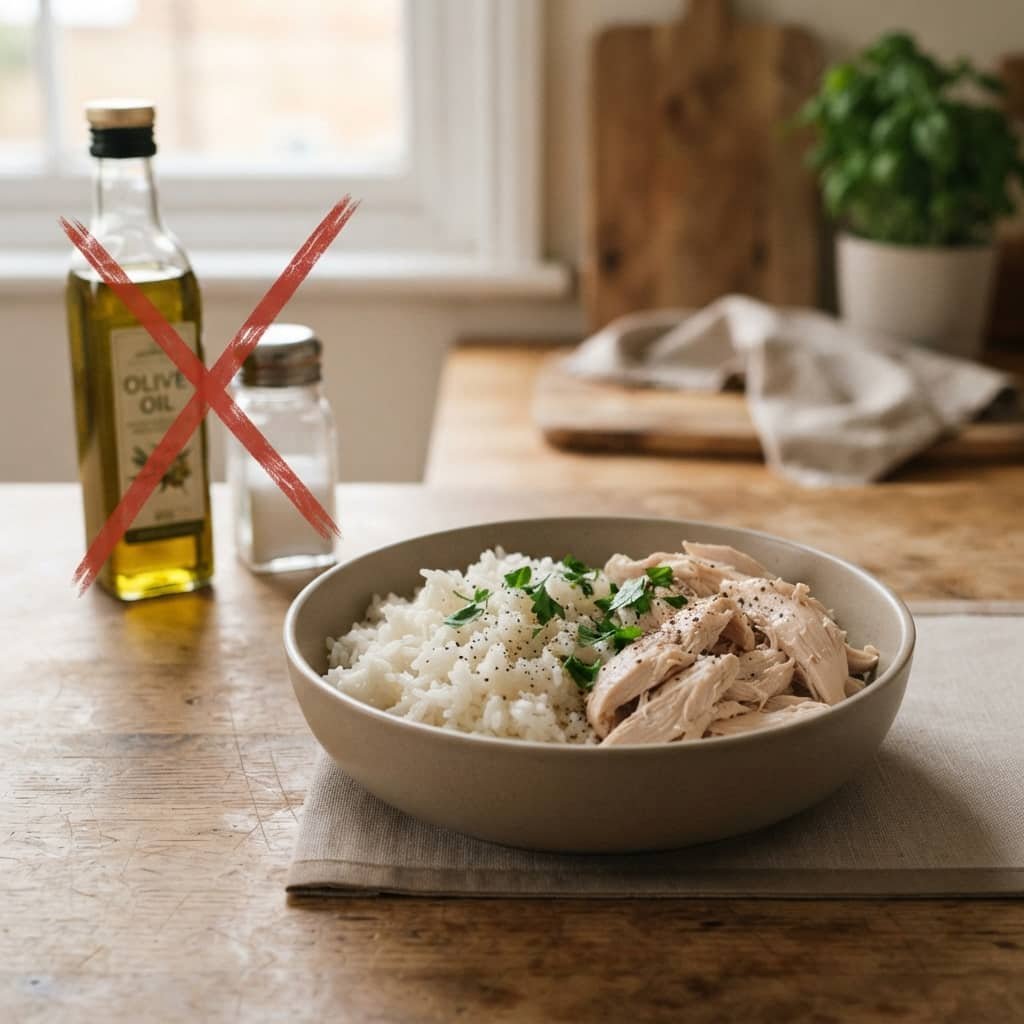
- Adding seasoning, oil, or butter. Even small amounts can irritate a sensitive stomach and defeat the purpose of a bland diet.
- Using dark meat or chicken with skin. The added fat is harder to digest and can be a trigger for pancreatitis in at-risk dogs.
- Feeding too much, too fast. Large portions can overwhelm a recovering digestive system. Smaller, more frequent meals work better.
- Continuing it as a permanent diet. Chicken and rice isn’t nutritionally complete, so it should only be a short-term bridge back to regular food.
- Ignoring symptoms that don’t improve. If diarrhea, vomiting, or lethargy continue past a few days, a vet visit is overdue.
Frequently Asked Questions
Can dogs eat chicken and rice every day?
Not as a regular diet. Chicken and rice lacks calcium and other essential nutrients that dogs need long-term, so it’s best used as a short-term recovery meal rather than an everyday replacement for a complete dog food.
How much chicken and rice should I feed my dog for diarrhea?
A common guideline is about a third to a half cup of the combined mixture per ten pounds of body weight per day, using a 2:1 ratio of rice to chicken, split into three or four small meals rather than one large one.
Is chicken and rice good for a healthy dog, or just a sick one?
Both. It’s most often used to soothe an upset stomach, but a properly portioned batch can also work as an occasional, easy-to-digest treat meal for dogs with no digestive issues, as long as it isn’t used to replace their regular balanced food.
Why is my dog’s poop yellow after eating chicken and rice?
This is common and usually not a concern. Because the meal is so plain and free of the additives found in regular food, it can change the color and texture of stool for a few days. If yellow stool continues after your dog is back on their normal diet, mention it to your vet.
The Bottom Line
Chicken and rice for dogs remains one of the simplest, most reliable tools in a pet parent’s kitchen for getting a dog’s stomach back on track. Stick to the 2:1 rice-to-chicken ratio, keep it plain, portion it by weight, and limit it to a few days before transitioning back to regular meals. If you’re ever unsure whether the bland diet is enough, a quick call to your vet is always worth it, especially if symptoms stick around longer than expected.
Got a picky eater who still won’t touch it? Try shredding the chicken finer or warming the mixture slightly (never hot) to bring out more of the aroma. It’s a small trick, but it’s saved more than one meal in my own kitchen.