
Beyond merely being a place to sleep, a bedroom is where the body refreshes, the mind clears out clutter, and the next day starts. Unfortunately, many bedrooms contain distractions that block the good sleep our bodies need. Bright lights, mess, devices, and uncomfortable chairs all help make sleeping hard and keeping rest difficult.
Rest is very important for our mental and physical health. Not enough rest can cause shorter focus times, higher stress levels, lower defense systems, and less work done. Even though good night habits are needed, room layout strongly affects how well we get to sleep.
A ready sleep area does not need a big change. Small but strong design changes can bring a calmer and nicer feeling that helps with deep and long sleep. This is something we see clearly through our work in property management of Houston homes, where well-designed bedrooms consistently lead to happier, longer-staying tenants.
Your sleep-helping bedroom starts building calmness even before your head touches a cushion.
Ways to Use Science to Make a Better Place for Sleeping
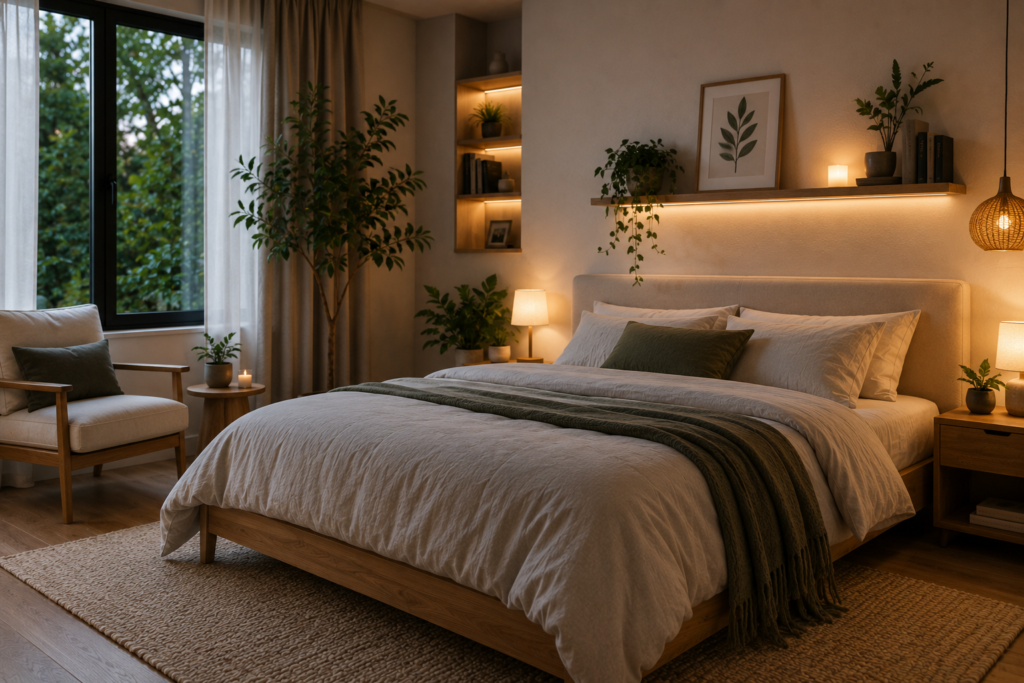
- Pick Quiet and Soft Paint Shades
Paint colors affect feelings much more than many people think they do.
Shades like dull blues, sage greens, warm tans, soft greys, and light brown tones feel relaxing, causing calm and stopping visual noise before your head meets the pillow. Loud or bright colors can start waking you up and stop you from relaxing.
A quiet color palette provides the groundwork for rest and sleep.
Did You Know?
The median sale price for a home in Houston is approximately $345,000.
- Manage Sunlight and Made Lights
Light is among the strongest forces acting on the body’s internal clock.
Making sure enough sunlight gets into the room early in the morning helps build good daily time cycles. When evening arrives, limit time near strong lights and choose gentle, flexible lamps instead of harsh ceiling fixtures. Heavy curtains or decent window coverings stop outside light from entering and keep the darkness needed for rest.
Good lighting helps build a stronger nightly habit.
- Buy a Good Mattress and Sheets
Feeling comfy is key to getting real rest.
A bed built for how you lie lessens sore spots and keeps your spine well aligned. Airy pillows, soft sheets, and covers fit for the weather help control heat all through the night.
The correct surface makes falling asleep faster and staying asleep easier.
- Cut Down Mess for a Quieter Brain
Visual chaos inside a space often leads to mental chaos.
A cleaner room promotes a calmer and quieter feeling inside. Hide messy things away, tidy flat areas, and use boxes to look organized. Empty rooms usually seem easier and nicer. In our experience across rentals and property management in San Francisco, we find that clutter-free bedrooms rank among the most requested features by quality tenants.
A little disorder brings more quiet.
Did You Know?
The overall median rent in San Francisco is approximately $4,245 per month.
- Stop Loud Sounds
A quiet place is vital for sleep without breaks.
Soften echoes and take out bouncing sounds using thick items like carpets, fuzzy chairs, heavy curtains, and cloth art on walls. If loud noises happen outside, white noise tools or calming sounds can hide them well. Stay away from exciting gadgets like televisions, phone alerts, and other tech.
Noise lets the brain find peace.
- Maintain Low Heat and Fresh Air
Your room’s warmth changes how well you rest.
Usually, colder air feels nicer for sleeping than very hot air. Ensure adequate circulation via fans, vents, and cooling units when required. Select airy cloth types for bed linens.
Pleasant heat levels aid profound slumber.
- Include Organic Aspects
Wildness offers calm inside living areas.
Integrate real timber shades, indoor greenery, gentle raw fibers, cane items, and soil colors to build a cozy feel without irritating nerves. Some carefully picked natural elements improve the room’s quiet mood.
Real bits boost letting go.
- Maintain a Tech-Free Rest Area
New rooms hold many displays now.
Gadgets such as mobiles, pads, TVs, and laptops send light that wakes the mind, mostly at nighttime. Make a rule to leave these gadgets out of the room or cut down on them before sleeping to help with good evening routines. The room needs to be safe for resting, not jobs or fun.
Good tech limits help rest.
Final Stage
The path to better rest starts by fixing your space. Careful design picks about paint, glow, ease, order, warmth, and natural elements can turn any place into a sleep-safe spot. Tiny, proof-based changes often give bigger gains than expensive fixes. A nice room helps better sleep cycles and a higher quality of life in the long term.