Shrimp and Corn Chowder Recipe
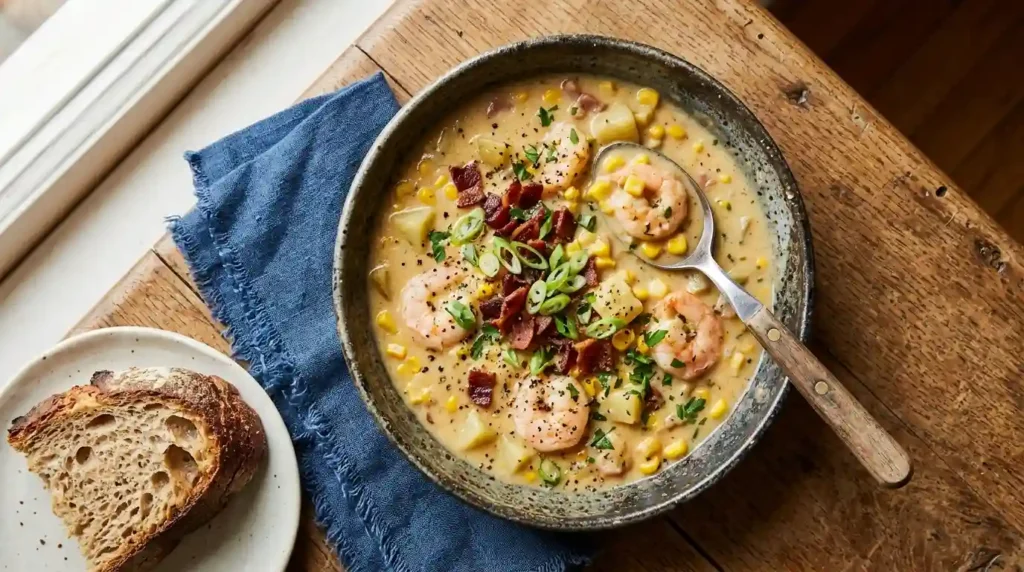
Shrimp and corn chowder Recipe is one of those soups that tastes like it took all afternoon, but really comes together in under 45 minutes in a single pot. Sweet corn, tender potatoes, and plump shrimp simmer in a creamy, lightly spiced broth that’s rich without being heavy. Whether you’re cooking for a weeknight dinner or a chilly weekend lunch, this chowder delivers big flavor with mostly pantry and freezer staples.
Below you’ll find everything you need: what goes into a really good bowl, a step-by-step method, tips for corn and shrimp that actually taste fresh, and answers to the questions people ask most.
How to Make Shrimp and Corn Chowder Fast
Sauté onion, celery, and garlic in butter or bacon fat, then stir in flour to build a light roux. Whisk in broth and milk, add corn and diced potatoes, and simmer until the potatoes are tender, about 15 minutes. Stir in raw shrimp during the last 3 to 5 minutes, just until they turn pink, then finish with a splash of cream. The whole process takes about 40 minutes start to finish.
What Makes a Great Shrimp and Corn Chowder
A good chowder has a few non-negotiables: a creamy but not gluey broth, corn that still has some bite, potatoes that hold their shape, and shrimp that stay tender instead of turning rubbery. Chowder is technically a category of thick, chunky soup, usually built on a roux or starchy vegetables rather than a thin broth. That’s what separates it from a lighter corn soup, which tends to be smoother and thinner.
Bacon and a pinch of cayenne or smoked paprika round out the flavor, giving the sweetness of the corn something smoky and a little spicy to play against. Fresh thyme, Old Bay, or a bay leaf simmered into the broth are common additions worth trying if you want more depth.
Regional versions lean in different directions. A Louisiana-style shrimp and corn chowder often uses a Creole seasoning blend, smoked paprika, and a hearty pour of cream for a bold, slightly spicy bowl. A New England-leaning version keeps things simpler, with milk or half-and-half, potatoes, and just a touch of black pepper so the sweetness of the corn and shrimp stays front and center. Neither is more correct than the other; both are worth trying to see which fits your taste.
Ingredients for Shrimp and Corn Chowder
Most versions of shrimp and corn chowder share the same backbone, with room to swap based on what’s in your kitchen:
- Shrimp: peeled and deveined, tail-off is easiest. Medium to large shrimp work well; just watch the cooking time.
- Corn: fresh kernels cut from the cob, frozen, canned, or a can of cream-style corn for extra body.
- Potatoes: Yukon Gold or red potatoes hold their shape better than russets, which can turn mushy.
- Aromatics: onion, celery, and garlic form the base flavor.
- Broth and dairy: chicken stock plus milk, half-and-half, or heavy cream. Some cooks skip cream entirely and rely on a roux and blended vegetables for creaminess.
- Bacon: optional but adds smoky flavor and a crispy garnish.
- Seasoning: thyme, bay leaf, cayenne pepper, smoked paprika, or Old Bay seasoning.
- Flour or cornstarch: for thickening the broth.
You likely already have several of these on hand, which is part of why this recipe works so well for a last-minute dinner. If you want to stretch the pot further, diced bell pepper, celery leaves, or a handful of fresh corn cut straight from the cob all fold in easily without changing the method.
One ingredient swap worth knowing about: shrimp shells and tails aren’t waste. If you buy shrimp with the shells still on, simmer them in the chicken broth for 10 minutes before straining and using that broth in the chowder. It adds a subtle seafood depth that shrimp alone can’t provide, which is the kind of small step that separates a homemade chowder from an average one.
How to Make Shrimp and Corn Chowder, Step by Step
- Cook the bacon, if using. Render it in a Dutch oven or heavy pot until crisp, then set it aside for garnish, leaving a spoonful of fat in the pot.
- Build the base. Add butter, onion, celery, and garlic to the pot. Cook until softened, about 5 minutes.
- Make the roux. Sprinkle in flour and stir constantly for about a minute so it loses its raw taste.
- Add liquid. Slowly whisk in broth and milk, a little at a time, to avoid lumps. Bring to a gentle simmer.
- Add corn and potatoes. Stir them in along with your seasonings, then simmer until the potatoes are fork-tender, roughly 15 minutes.
- Add the shrimp last. Raw shrimp only need 3 to 5 minutes in the simmering chowder. They’re done as soon as they turn pink and curl into a loose C shape. Pull the pot off the heat as soon as they’re cooked so they don’t overcook while sitting.
- Finish and serve. Stir in cream or half-and-half off the heat to avoid curdling, taste for seasoning, and ladle into bowls topped with bacon, green onions, or a dash of hot sauce.
Fresh, Frozen, or Canned Corn: What Actually Works Best
All three work, and the difference comes down to convenience versus flavor. Fresh corn, cut straight off the cob, brings the sweetest flavor and is worth the extra few minutes when corn is in season. Frozen corn is a reliable year-round substitute with almost no flavor drop-off once it’s simmered into the broth. Canned corn works in a pinch, just drain it well so you don’t water down the chowder.
A can of cream-style corn is a smart addition alongside whole kernels if you want extra body without more dairy. It thickens the broth naturally and adds a subtle sweetness that plain kernels don’t.
How to Keep Your Shrimp Tender, Not Rubbery
Shrimp cook fast, and overcooking is the most common mistake in any seafood chowder. Add raw shrimp near the very end of cooking, not at the start, and pull the pot off the heat the moment they turn opaque pink and curl slightly. If you’re working with already-cooked shrimp, they only need a minute or two just to heat through.
Thawing matters too. If you’re using frozen shrimp, thaw them fully in the refrigerator or under cold running water before adding them to the pot, so they cook evenly instead of releasing extra water into the broth.
A few other common mistakes are easy to sidestep once you know to look for them. Boiling the chowder hard after the cream goes in can cause the dairy to curdle or separate, so keep the heat low and gentle once milk or cream joins the pot. Skipping the roux step and dumping flour straight into hot liquid tends to leave lumps, so always whisk the flour into the fat before adding any broth. And seasoning only at the end often leaves the chowder tasting flat, so season the vegetables early, then taste and adjust again right before serving.
How to Thicken Chowder (With or Without Cream)
The classic method is a roux, meaning flour cooked briefly in butter before the liquid goes in. It builds thickness gradually as the chowder simmers. If you’d rather skip flour, a cornstarch slurry works just as well: whisk a tablespoon of cornstarch with a couple tablespoons of cold water, then stir it into the simmering pot during the last few minutes.
Potatoes are a natural thickener too. Mash a few of the cooked potato pieces against the side of the pot, or use an immersion blender to lightly puree part of the soup while leaving the rest chunky. And if you want a rich texture without heavy cream, stirring in a can of cream-style corn does a lot of the work on its own.
What to Serve With Shrimp and Corn Chowder
This chowder is filling enough to be a full meal, but a simple side rounds it out nicely:
- Crusty bread or cornbread, for soaking up the broth.
- A light green salad, to balance the richness.
- Buttery crackers or cheddar biscuits, for extra texture.
- A crisp white wine, like an unoaked Chardonnay or dry rosé, if you’re serving it for company.
What’s the difference between corn chowder and corn soup?
Chowder is thicker and chunkier than soup, usually built with a roux or starchy vegetables like potatoes, and loaded with large pieces of seafood or meat. Corn soup tends to be thinner and smoother, closer to a broth-based dish than a hearty, stew-like one.
Can you freeze shrimp and corn chowder?
You can, though dairy-based chowders can turn slightly grainy after thawing. For the best texture, cool the chowder completely, freeze it in an airtight container for up to three months, and thaw it in the refrigerator overnight before reheating gently on the stove.
Can you use pre-cooked shrimp?
Yes. Pre-cooked shrimp are already pink, so they only need a minute or two in the hot chowder to warm through. Adding them too early or leaving them in too long will make them tough.
How do you make it gluten-free or dairy-free?
Swap the flour for a cornstarch slurry to thicken the broth without gluten. For a dairy-free version, replace the milk and cream with a canned coconut milk or an unsweetened dairy-free milk, and skip the cheese if your recipe includes any.
Once you’ve made this shrimp and corn chowder a couple of times, you’ll likely find your own favorite tweaks, whether that’s more bacon, a heavier hand with the cayenne, or extra corn straight off the cob. That’s the beauty of a good chowder: the base method stays the same, and the details are yours to adjust.