
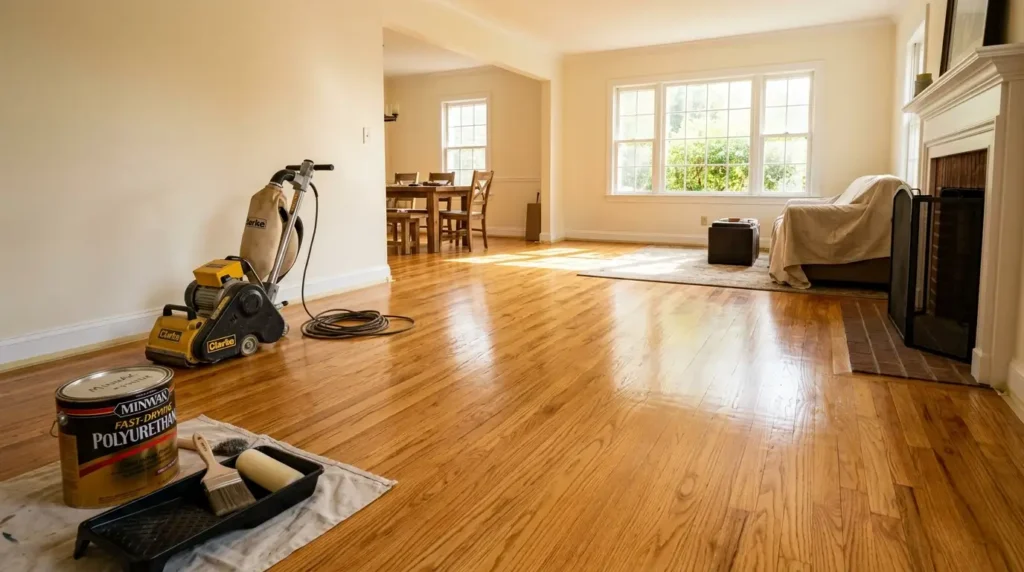
Refinishing Hardwood Floors Cost in 2026 (Full Guide)
refinish hardwood floors cost $3 to $8 per square foot in most of the U.S. in 2026, which works out to roughly $1,100 to $6,500 for a typical home depending on square footage, wood species, and finish. If you’re staring at dull, scratched floors after years of foot traffic (or you just ripped up old carpet and found solid oak underneath), refinishing is almost always cheaper than replacing, and it can make a bigger visual difference than you’d expect for the price.
I’ve priced out flooring projects for my own kitchen and dining area renovations, and the range you’ll see quoted online is wide because so many variables stack on top of each other. Here’s the real breakdown, by size, wood type, and finish, so you know what to actually budget.
What Will Refinishing Cost You?
For a standard 1,000 square foot main level in good condition, expect to pay between $3,500 and $6,500 for a full sand and refinish with a natural stain and three coats of polyurethane. Smaller rooms cost more per square foot because setup and edge work eat into the labor time. Larger, open floor plans usually land at the lower end of the per-square-foot range.
How Much Does It Refinish Hardwood Floors Cost in 2026?
Most professional hardwood floor refinishing jobs fall between $3 and $8 per square foot, with the national average sitting closer to $4 to $6 per square foot for a standard sand, stain, and finish. That per-square-foot price usually covers labor and materials for sanding down the old finish, applying stain if you want one, and sealing the wood with two to three coats of protective finish.
On a whole-project basis, that translates to:
- A single room (200 to 300 square feet): $600 to $2,400
- A 500 square foot area (living room plus hallway): $1,750 to $3,000
- A 1,000 square foot main floor: $3,500 to $6,500
- A 1,500 square foot open layout: $5,500 to $10,000+
Prices at the higher end usually involve a stain color change, board repairs, or a dust-controlled sanding system.
Refinish Hardwood Floors Cost by Square Footage
Square footage is the first number any contractor asks for, but it’s not a straight multiplication problem. Smaller jobs carry a higher per-square-foot rate because equipment setup, masking, and edge sanding take roughly the same time whether you’re doing 200 square feet or 800.
| Room Size | Square Footage | Estimated Cost |
|---|---|---|
| Small bedroom | 100 sq ft | $300–$800 |
| Living room + hallway | 500 sq ft | $1,750–$3,000 |
| Main floor (average home) | 1,000 sq ft | $3,500–$6,500 |
| Large open-concept level | 1,500 sq ft | $5,500–$10,000+ |
If stairs are part of the project, budget separately. Stair refinishing runs $4.50 to $8 per square foot because each tread and riser requires hand sanding and finishing.
Cost by Wood Type and Finish
The species of wood under your feet changes both how it sands and how much finish it needs to look right.
| Wood Type | Cost per Sq Ft |
|---|---|
| Bamboo | $2–$6 |
| Oak | $3–$5 |
| Cherry | $3–$5 |
| Engineered hardwood | $3–$5 |
| Pine | $4–$7 |
| Maple | $6–$8 |
| Mahogany | $6–$8 |
Softer woods like pine take longer to sand evenly and show swirl marks more easily, which nudges labor cost up. Harder species like maple resist sanding, which also slows the job down, just for a different reason.
The finishing process itself breaks down roughly as:
- Sanding: $0.50 to $3 per square foot
- Staining (if changing color): $1 to $3 per square foot
- Recoating without a full sand: $1 to $2 per square foot
If your floors just look tired but the finish hasn’t worn through to bare wood, ask your contractor about recoating or resurfacing instead of a full refinish. It skips the heaviest sanding stage and can cost noticeably less.
What Drives Hardwood Floor Refinishing Cost Up or Down
A quote isn’t random. A handful of factors consistently move a job from the bottom of the range to the top.
Floor condition. Deep scratches, cupping, or uneven old sanding jobs mean more passes with the sander, which adds labor hours directly to your bill.
Repairs. Loose boards, water damage, or a section that needs new wood spliced in can add $200 to $600 on their own, separate from the refinishing scope.
Pet stains. Surface discoloration usually sands out, but urine that has soaked into the wood fibers often means replacing individual boards.
Stain color changes. Going from a natural finish to a dark espresso stain requires more careful, even sanding, since dark stain highlights every imperfection underneath it.
Dustless sanding systems. HEPA-connected sanding equipment keeps dust out of the rest of your house, but the specialized gear pushes pricing toward $5 to $8+ per square foot.
Finish type. Standard oil-based polyurethane sits at the lower end of material cost. Water-based finishes dry faster and stay clearer over time but cost more per gallon.
DIY vs. Professional Refinishing Cost
Renting equipment yourself can look like a big discount on paper, and for a small, flat, single-color room, it sometimes is.
Typical DIY costs:
- Drum or belt sander rental: $60 to $100 per day
- Edger rental: $40 to $60 per day
- Sandpaper, stain, and polyurethane: $400 to $900 total
That puts a DIY weekend project somewhere around $500 to $1,300 in rentals and materials, well below a professional quote. The catch is skill. Drum sanders are unforgiving. A momentary pause creates a visible gouge, and uneven passes leave swirl marks that show up worse once stain goes on. Many flooring contractors report that a large share of their business comes from fixing DIY refinishing attempts, which usually costs more in the end than hiring a professional from the start.
DIY tends to make sense for small secondary rooms under 300 to 400 square feet where you’re keeping the natural color. For anything larger, occupied during the project, or involving a color change, professional labor is worth the premium.
Refinishing vs. Replacing: Which Costs Less?
Refinishing is almost always the cheaper path. Full hardwood replacement, including demolition, new material, and installation, typically runs $8 to $15 per square foot, and can exceed $18 per square foot for premium species or high-cost labor markets.
For a 1,000 square foot main level, that’s roughly:
- Refinishing: $3,500 to $6,500
- Replacement: $10,000 to $15,000+
The gap widens on larger homes. Replacement only makes sense when the wood has already been sanded down too many times, there’s structural subfloor damage, or the flooring is a thin engineered product that can’t handle another sanding pass.
Is Refinishing Hardwood Floors Worth the Cost?
According to the National Association of Realtors’ Remodeling Impact Report, homeowners who refinished their hardwood floors recovered about 147% of the project cost in added home value, higher cost recovery than any other interior renovation the report measured. On an average spend of around $3,400, that works out to roughly $5,000 in perceived value gained.
That combination of durability and return on investment is what makes this one of the more efficient home improvement dollars you can spend. If you’re also planning a kitchen renovation, getting the kitchen counter height right can make a noticeable difference in everyday comfort and functionality.
A professionally refinished floor typically lasts 7 to 15 years before it needs sanding again, and solid hardwood can usually handle three to five refinishing cycles over its lifetime. That combination of durability and return on investment is what makes this one of the more efficient home improvement dollars you can spend.
How much does it cost to refinish 1,000 sq ft of hardwood floors?
Refinishing 1,000 square feet typically costs $3,500 to $6,500. Floors in decent shape with no color change or repairs land near the lower half of that range, while projects with pet stains, board replacement, or a premium dust-controlled finish push toward the top.
Is it cheaper to refinish or replace hardwood floors?
Yes, refinishing is nearly always cheaper. It costs a fraction of full replacement since there’s no demolition, no new material, and no installation labor involved, generally 50% to 70% less than tearing out and installing new hardwood.
Is dustless sanding worth it?
Dustless, HEPA-connected sanding systems add to the per-square-foot price, usually pushing it into the $5 to $8+ range, but they significantly cut down on airborne dust throughout the rest of the house. For occupied homes, especially with kids, pets, or allergies, many homeowners find the extra cost worthwhile.
Can engineered hardwood be refinished?
It depends on the wear layer thickness. Engineered floors with at least a 2 millimeter wear layer can typically handle one to three sandings over their lifetime. Thinner wear layers usually can’t be sanded safely and may need resurfacing or replacement instead.

Pingback: Cost to Paint a 1,500 Sq Ft House Interior (2026)
Pingback: Cost to Finish Basement: 2026 Price Guide - kitchennista.com