What Is Pork Belly? A Complete Guide
If you’ve ever wondered what makes bacon so rich and why some restaurant dishes have that incredibly tender, melt-in-your-mouth pork, there’s a good chance pork belly is involved.
So, what is pork belly? Simply put, it’s a boneless cut of pork taken from the underside of the pig. It’s known for its layers of meat and fat, rich flavor, and wonderfully crisp skin when it’s cooked properly.
Pork belly is sold fresh and uncured. That distinction matters because bacon starts with pork belly, but it goes through a curing process before it becomes bacon.
You can roast a whole slab, braise it until tender, smoke it for barbecue, or slice it thin and cook it in a hot pan. The best method depends on the texture you’re after.
What Is Pork Belly?
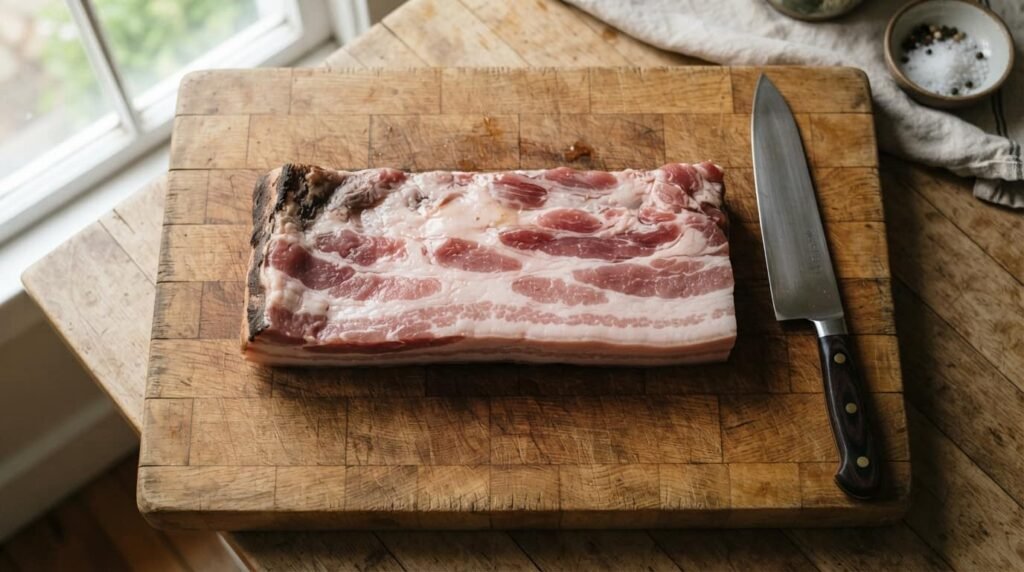
Pork belly is the fatty, boneless cut taken from the underside of a pig. It sits below the loin and around the rib area and is usually sold as a thick slab.
Look at a piece of pork belly from the side and you’ll notice its characteristic layers: meat, fat, meat, and more fat. That high fat content is exactly what makes the cut so flavorful, but it also means pork belly needs a little patience.
When cooked slowly, the fat gradually renders while the meat becomes tender. If the skin is still attached, a hot finish can turn it into crisp, bubbly crackling.
Fresh pork belly hasn’t been cured or smoked. It’s simply raw pork, which means you can season and cook it in many different ways.
Where Does Pork Belly Come From on the Pig?
The name gives away its location. Pork belly comes from the pig’s underside.
After the butcher separates the loin and removes the ribs, the belly section remains as a relatively flat, rectangular cut. It’s naturally boneless and contains alternating layers of lean meat and fat.
A whole pork belly can be quite large, so supermarkets and butchers commonly sell smaller portions. Depending on where you shop, you may find it with the skin attached or already skinless.
The skin is worth paying attention to if you’re planning to roast the belly. Properly dried skin can become crisp and crunchy, while wet skin tends to stay chewy.
That’s one of the first practical lessons with pork belly: moisture and crispy skin don’t get along.
What Does Pork Belly Taste Like?
Pork belly has a rich, savory flavor with much more fat than lean cuts such as pork loin or tenderloin.
The texture depends heavily on how you cook it. A slow braise can make the meat incredibly soft, while roasting can give you tender meat underneath crisp skin. Smoking adds a deeper, smoky flavor.
It’s also the fat that makes pork belly so satisfying. As it cooks, some of that fat renders away, while the remaining fat softens and adds richness to the meat.
If you’re used to bacon, pork belly will taste familiar, but fresh pork belly has a cleaner pork flavor because it hasn’t been cured or smoked.
Is Pork Belly the Same as Bacon?
This is probably the most common question about pork belly.
Pork belly and bacon are closely related, but they aren’t the same thing.
| Pork Belly | Bacon |
|---|---|
| Fresh and uncured | Cured |
| Usually sold as a slab | Usually sliced thin |
| Not necessarily smoked | Often smoked |
| Rich, fresh pork flavor | Salty, smoky flavor |
| Can be roasted, braised, or smoked | Usually pan-fried, baked, or grilled |
Bacon generally starts as pork belly. The difference comes from what happens afterward.
Bacon is cured with salt and may include other curing ingredients, seasonings, sugar, and smoke. Pork belly sold fresh hasn’t gone through that process.
So if a recipe calls for fresh pork belly, don’t automatically substitute bacon. Bacon has a very different salt level and flavor.
What Is Side Pork?
If you’re shopping for pork belly and see something called side pork, don’t be surprised.
In some parts of the United States, particularly the Midwest, fresh pork belly may be called side pork or fresh side. The exact naming can vary by butcher and region.
The important thing is to check whether the product is fresh or cured. If you’re looking for pork belly for a recipe, fresh, uncured belly is usually what you want unless the recipe specifically says otherwise.
Pork Belly vs. Pork Bacon vs. Pancetta
These names can get confusing because they all involve similar cuts of pork.
Pork belly: Fresh, uncured pork from the pig’s underside.
Bacon: Pork belly that has been cured and usually smoked before being sliced.
Pancetta: Italian cured pork belly that is generally seasoned and air-dried rather than prepared like typical smoked bacon.
They can sometimes be used in similar dishes, but they don’t behave exactly the same way. Pancetta and bacon are already seasoned and cured, while fresh pork belly needs to be seasoned and cooked from scratch.
Why Is Pork Belly So Fatty?
The belly is naturally a fat-rich part of the pig. Unlike a muscle that does a lot of movement, this section contains substantial layers of fat between the meat.
That fat is both an advantage and a challenge.
It’s an advantage because fat carries flavor and helps keep the meat moist during long cooking. It’s a challenge because if you cook pork belly too quickly, you can end up with a piece that’s browned outside but still tough and chewy inside.
For a whole slab, low-and-slow cooking is usually the safer approach.
How to Choose Good Pork Belly
When buying pork belly, don’t just grab the biggest piece you can find. Look at the meat itself.
A good piece should have:
- Even layers of meat and fat
- Fresh-looking meat
- Skin that isn’t excessively damaged if you want crackling
- No unpleasant odor
- A thickness that suits your cooking method
If you’re roasting it with the skin on, a relatively even slab makes cooking easier because the skin has a better chance of crisping at the same rate.
For braising, skinless pork belly can be convenient because you’re mainly interested in tender meat and rendered fat rather than crackling.
How to Cook Pork Belly
Pork belly is versatile, but most successful methods have one thing in common: give the fat and connective tissue enough time to break down.
Roasting Pork Belly
Roasting is a great choice when your goal is tender meat with crisp skin.
Start by drying the skin thoroughly. If you have time, leave the uncovered pork in the refrigerator for several hours or overnight. This helps dry the surface.
Before roasting, season the pork according to your recipe. Score the skin carefully without cutting too deeply into the meat.
A low-temperature roasting stage helps render the fat and tenderize the meat. Once the belly is cooked through and tender, increase the heat to crisp the skin.
Don’t rush the final stage. Watch it closely because the skin can go from beautifully blistered to burnt surprisingly quickly.
Let the pork rest for about 10 minutes before slicing.
Braising Pork Belly
Braising produces a completely different texture.
Instead of focusing on crisp skin, you’re slowly cooking the pork in flavorful liquid. Depending on the recipe, that liquid might contain stock, soy sauce, wine, aromatics, sugar, or spices.
The pork cooks gently for an extended period until the fat softens and the meat becomes very tender.
This is the style used in dishes such as Chinese red-braised pork belly.
One advantage of braising is that it is forgiving. You don’t have to worry about getting perfect crackling, and the cooking liquid adds plenty of flavor.
Smoking Pork Belly
Pork belly is also popular in barbecue.
A whole slab can be smoked slowly until the meat becomes tender and takes on a deep smoky flavor. Cubed pork belly can also be turned into barbecue-style burnt ends.
Smoking takes longer than most everydaycooking methods, so it’s best when you have time rather than when you’re trying to get dinner on the table quickly.
Pan-Searing Sliced Pork Belly
If you don’t want to cook a whole slab, thinly sliced pork belly is much quicker.
Place the slices in a pan and cook them over moderate heat. As the pork warms, its own fat begins to render, allowing the slices to brown in that rendered fat.
This method is closer to cooking thick-cut bacon, although fresh pork belly won’t have bacon’s cured flavor.
Be careful with the heat. Pork belly contains plenty of fat, and a pan that’s too hot can cause excessive splattering and burn the outside before the fat has properly rendered.
The Secret to Crispy Pork Belly Skin
Crispy skin is one of the best parts of roasted pork belly, but it doesn’t happen automatically.
The biggest mistake is leaving the skin wet.
Before cooking, pat the skin very dry with paper towels. If possible, refrigerating the uncovered pork for several hours also helps remove surface moisture.
Salt can help draw moisture from the surface, but the cooking method matters just as much.
A useful approach is:
- Dry the skin thoroughly.
- Score or poke the skin carefully.
- Season appropriately.
- Cook the pork at a lower temperature first.
- Finish with high heat to crisp the skin.
- Keep an eye on it during the final stage.
Don’t cover the skin with liquid while you’re trying to create crackling. Moisture on the skin works against crisping.
Common Pork Belly Mistakes
Cooking It Too Fast
High heat alone may brown the outside, but the inside can remain tough. Pork belly generally benefits from a slower cooking stage.
Starting With Wet Skin
If the skin is damp, it becomes much harder to get that crisp, crackly finish.
Cutting It Immediately
Let the cooked pork rest for a few minutes before slicing. Cutting immediately can make it harder to handle and can release juices before the meat has had a chance to settle.
Using Too Much Salt
Fresh pork belly doesn’t have the salt that bacon already contains, but that doesn’t mean you need to heavily salt it. Season according to the recipe, especially if you’re using a salty braising liquid or sauce.
Choosing the Wrong Cut for the Recipe
Skin-on belly is excellent when crackling is the goal. Skinless belly can be more practical for braising or recipes where the skin isn’t needed.
How Long Does Pork Belly Take to Cook?
There’s no single cooking time because thickness and cooking method make a big difference.
For slow roasting or braising, around 1½ to 3 hours is a reasonable starting range for many recipes, but the pork should be judged by its tenderness and the specific recipe rather than time alone.
Smoking can take considerably longer.
For sliced pork belly, cooking time is much shorter because the pieces have far more surface area and are thinner.
If you’re following a particular recipe, use its temperature and timing as your starting point rather than trying to apply one cooking time to every pork belly.
How Should You Store Cooked Pork Belly?
Once cooked, allow the pork to cool appropriately and store it in an airtight container in the refrigerator.
For the best quality, use refrigerated leftovers within a few days.
You can also freeze cooked pork belly. Wrap it well or place it in a suitable freezer container to protect it from air and freezer burn.
When reheating, use an oven, skillet, or air fryer if you want to bring some crispness back to the outside. Microwaving is convenient, but it won’t recreate crispy skin very well.
Pork Belly Around the World
One reason pork belly is so interesting is how differently various cuisines use the same cut.
In China, pork belly is used in dishes such as hong shao rou, where it is slowly braised with seasonings that create a rich, glossy sauce. Cantonese roast pork can feature beautifully blistered, crispy skin.
In Korea, samgyeopsal refers to thick slices of pork belly commonly grilled at the table and eaten with sauces and side dishes.
In Japan, pork belly is used in dishes such as ramen toppings and braised preparations.
In the Philippines, lechon kawali involves cooking pork belly and then frying it until the skin becomes crisp and blistered.
In Thailand, crispy pork belly is used in a variety of dishes and is often served with rice or vegetables.
Across Latin America, crispy fried pork preparations such as chicharrón show just how well this fatty cut responds to high-heat cooking.
The seasonings change from country to country, but the basic appeal remains the same: rich pork, rendered fat, and a satisfying contrast between tender meat and crisp exterior.
Is Pork Belly Healthy?
Pork belly is a fatty cut, so it is much more calorie-dense than leaner pork such as tenderloin or loin.
That doesn’t mean you can’t enjoy it. It simply makes sense to think of pork belly as a rich food rather than a lean everyday protein.
Portion size and preparation also matter. A heavily salted or highly processed pork product is different from a fresh piece of pork belly cooked at home.
If you’re managing a specific health condition or dietary restriction, use advice from your healthcare professional rather than relying on a general food article.
Final Thoughts
Pork belly is one of those cuts that becomes much easier to appreciate once you understand how it behaves.
It’s rich, fatty, and full of flavor, but it rewards patience. For a whole piece, slower cooking gives the fat time to render and the meat time to become tender. If the skin is attached, drying it well and finishing with high heat can give you the crisp crackling that makes roasted pork belly so special.
And remember the simplest answer to what is pork belly: it’s fresh, uncured pork from the underside of the pig—the same general cut that can eventually become bacon, but with a lot more cooking possibilities before that happens.
What is pork belly made from?
Pork belly is a cut of meat from the underside of the pig. It contains alternating layers of lean meat and fat and is usually boneless.
Is pork belly just uncured bacon?
They come from the same general cut, but fresh pork belly is not simply bacon without slicing. Bacon is cured and usually smoked, while fresh pork belly is uncured and can be seasoned and cooked in many different ways.
Is pork belly better with the skin on or off?
It depends on what you’re making. Keep the skin on if you want crispy crackling. For braised dishes where crisp skin isn’t the goal, skinless pork belly may be more convenient.
Why is my pork belly tough?
Pork belly can remain tough when it hasn’t been cooked long enough for its connective tissue to soften. For thick pieces, a slower cooking method is often better than relying on high heat alone.
Why isn’t my pork belly skin crispy?
The most common issue is moisture. Dry the skin thoroughly before cooking and use a high-heat finishing stage when the recipe calls for crackling.
Can I substitute bacon for pork belly?
Usually not without adjusting the recipe. Bacon is cured and often smoked, so it contains much more salt and has a different flavor. If a recipe specifically calls for fresh pork belly, bacon may change the result considerably.
Can pork belly be grilled?
Yes. Thin slices of pork belly can be grilled or cooked over high heat, while thicker pieces may benefit from slower cooking first. The key is to manage the rendered fat and avoid burning the outside.
What is the best way to cook pork belly?
There isn’t one universal best method. Choose roasting when you want crispy skin, braising when you want very tender meat, smoking when you want barbecue flavor, and pan-searing when you’re cooking thin slices quickly.