
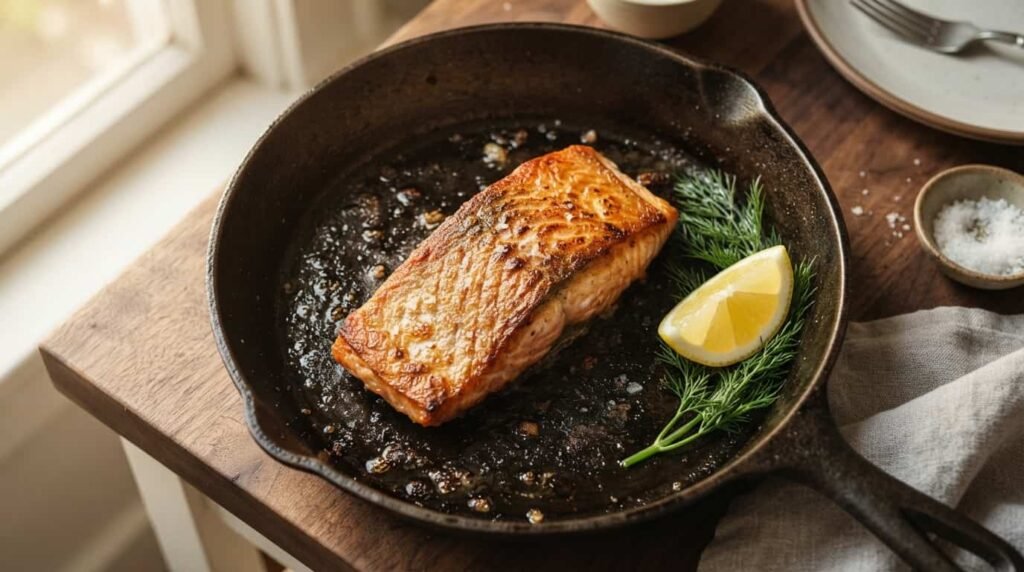
How to Fry Salmon (Crispy Skin, Perfectly Cooked Every Time)
If you want to know how to fry salmon so the skin turns crackly-crisp and the inside stays moist, the short version is this: pat the fillets bone dry, get your pan properly hot, lay the salmon in skin-side down, and leave it alone. Most home cooks over-flip and under-dry their fish, and that’s the whole problem. Once you understand the timing and a couple of small habits, frying salmon becomes one of the fastest, most reliable dinners in your rotation, ready in under 15 minutes with almost no cleanup.
What You Need to Fry Salmon
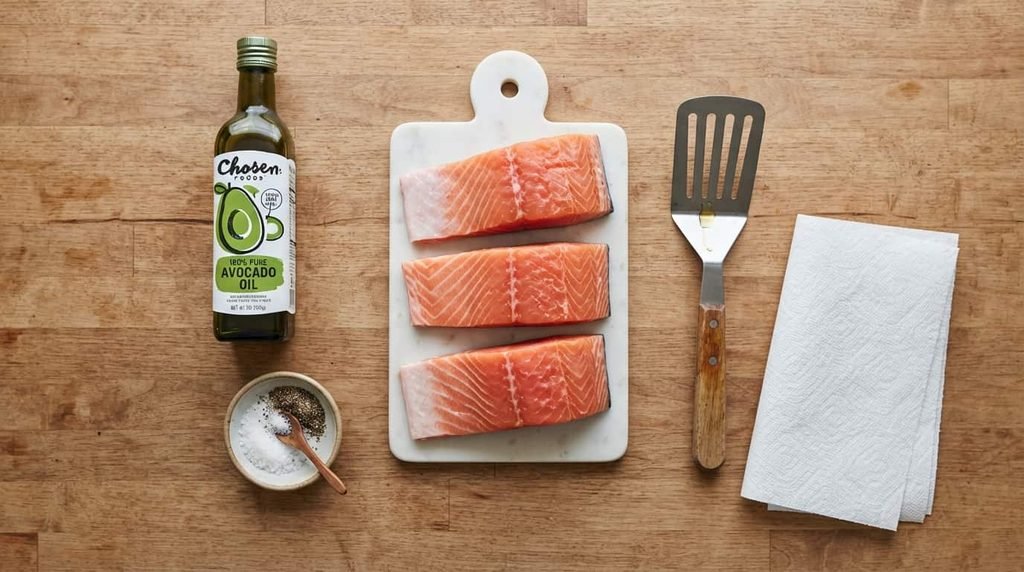
You don’t need much gear for this. A few basics make the difference between salmon that sticks and tears, and salmon that lifts out of the pan in one clean, golden piece.
- Salmon fillets, 6 to 8 ounces each, about 1 inch thick. Center-cut pieces cook more evenly than thin tail ends.
- A heavy skillet. Cast iron or a good nonstick pan both work well. Stainless steel is fine too, but the skin is more prone to sticking in it.
- A high smoke point oil, like avocado, canola, or light olive oil. Save extra-virgin olive oil for finishing, not frying, since it burns at lower heat.
- Paper towels, for drying the fillets thoroughly before they hit the pan.
- A thin, flexible fish spatula, so you can slide under the fillet cleanly without tearing the skin.
- Salt and pepper, plus whatever else you like: garlic powder, dried dill, lemon zest, or a Cajun-style seasoning blend.
That’s genuinely it. No batter, no breading, no marinade required, though you can add one later once you’ve got the base technique down.
How to Fry Salmon Step by Step
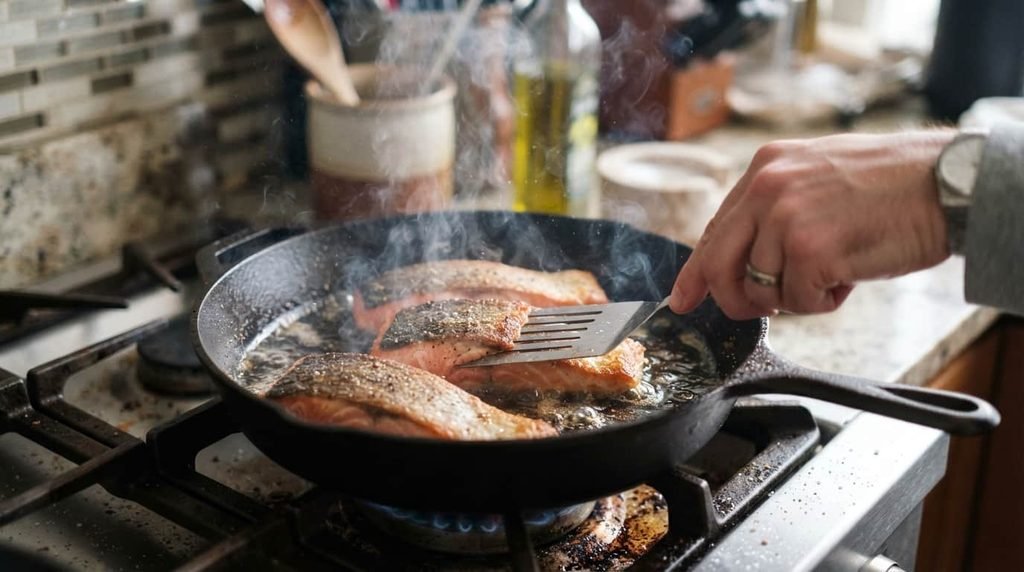
Here’s the method that holds up whether you’re cooking one fillet or four.
- Pat the salmon completely dry. Moisture is the enemy of a crisp crust. Press paper towels firmly over both sides, including the skin.
- Season it. A generous pinch of salt and pepper on both sides is enough. Add other seasonings now if you’re using them.
- Heat the pan before the oil. Set the skillet over medium-high heat for a couple of minutes. If you’re using stainless steel or cast iron, flick in a drop of water. It should skitter across the surface rather than sit and sizzle.
- Add the oil and swirl to coat. You want a thin, even layer, not a puddle. Wait until it shimmers.
- Lay the fillets in skin-side down, spaced about an inch apart so they sear instead of steam. Press each one flat with the back of your spatula for the first few seconds so the skin doesn’t curl away from the heat.
- Don’t touch it. This is the step most people get wrong. Leave the fish alone for the full cook time on that side so a real crust can form.
- Flip once, then drop the heat to medium and finish cooking on the flesh side.
- Rest for a minute or two off the heat before serving. The fish keeps cooking slightly as it rests.
That’s the whole process for how to fry salmon well: dry, hot pan, undisturbed sear, one flip.
How Long to Fry Salmon by Thickness
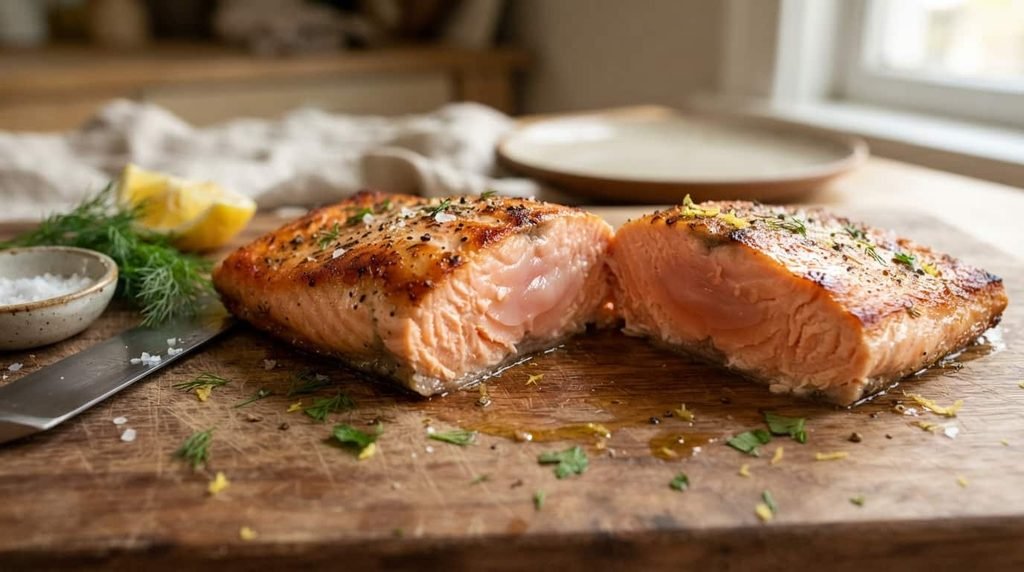
Timing depends almost entirely on how thick your fillet is, not on the recipe you’re following. As a general rule for a 1-inch fillet over medium-high heat, cook 4 minutes skin-side down, then 3 to 4 minutes on the flesh side. That gets you a fillet that’s opaque throughout with a faint, jewel-toned center if you like it a touch under.
Adjust from there:
- Thin fillets (under ¾ inch): about 2 to 3 minutes per side.
- Standard fillets (about 1 inch): 4 minutes skin-side down, 3 to 4 minutes flesh-side.
- Thick fillets or steaks (1½ inches or more): sear both sides, then finish covered on low heat, or slide the pan into a hot oven for a few minutes, to avoid a burnt exterior before the center cooks through.
Quick Answer: How Do You Fry Salmon Without It Sticking?
Salmon sticks when the pan isn’t hot enough or the fish isn’t dry enough. Pat the fillets completely dry, preheat the empty pan until a drop of water skitters on contact, then add oil and wait for it to shimmer before the fish goes in. Leave the salmon undisturbed until it releases naturally, usually after 3 to 4 minutes; if it resists when you try to lift it, it needs another 30 seconds.
Best Oil for Frying Salmon
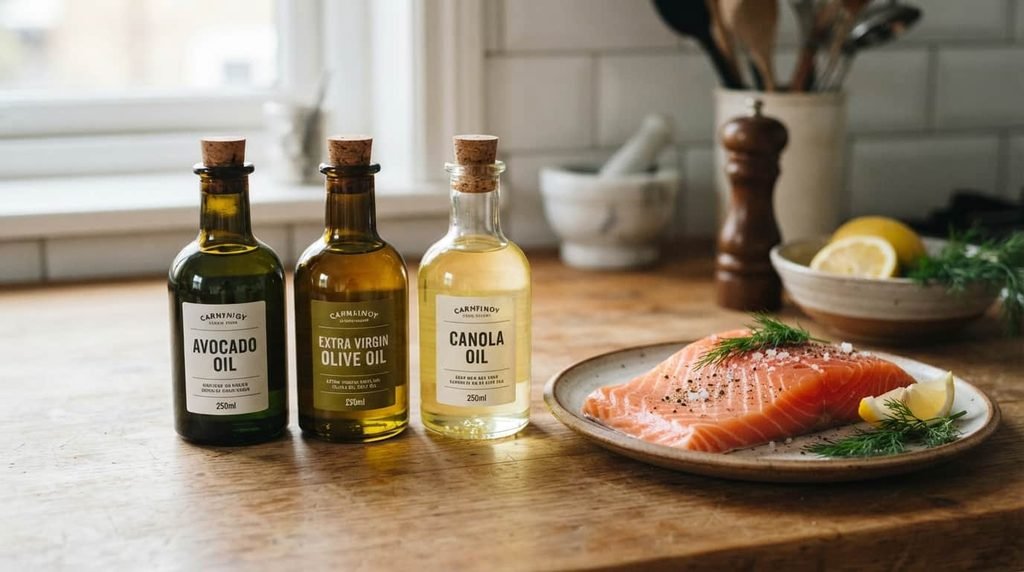
The oil matters more than most recipes let on. You’re cooking at fairly high heat, so you need something with a smoke point well above where the pan is running, or you’ll get acrid, bitter-tasting fish.
- Avocado oil has a smoke point around 520°F and a neutral flavor, making it one of the most forgiving choices for a hot skillet.
- Light or refined olive oil (not extra-virgin) holds up well and adds a mild richness.
- Canola or vegetable oil are budget-friendly, neutral, and reliable for everyday frying.
- Butter browns beautifully and adds flavor, but it burns fast on its own. Mix it with a neutral oil, or add a knob toward the end and baste the fish, rather than using butter alone from the start.
Extra-virgin olive oil, walnut oil, and flaxseed oil all have lower smoke points and stronger flavors that are better saved for drizzling over the finished salmon, not for the pan itself.
How to Get Crispy Salmon Skin
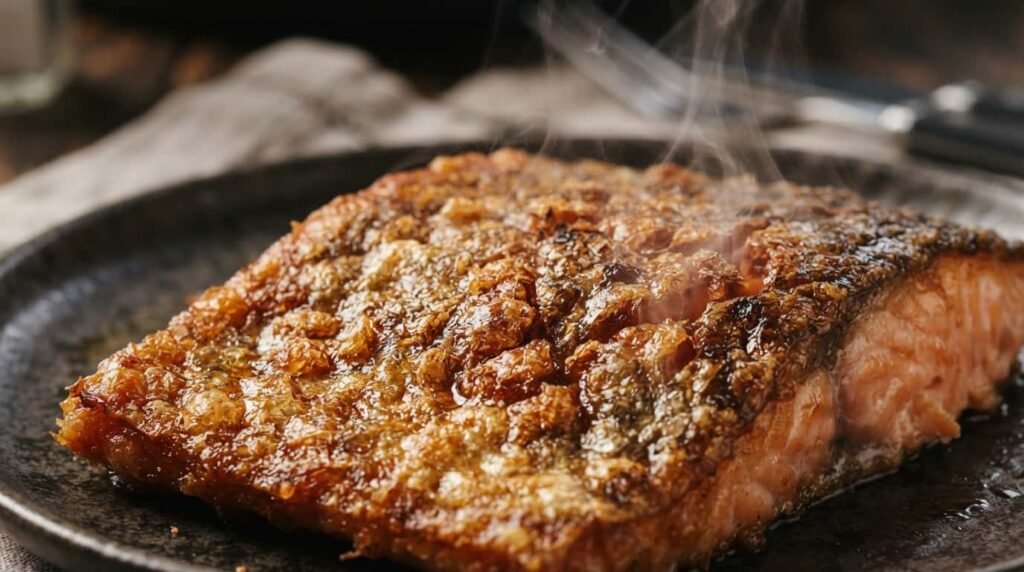
Crispy skin is genuinely one of the best parts of a well-fried fillet, and it comes down to two things: dryness and patience.
Start with skin-on fillets and pat them bone dry, then, if you have the time, leave them uncovered on a plate in the fridge for 30 to 60 minutes before cooking. The dry, cold air pulls out extra surface moisture, which makes a real difference to how the skin crisps. A few shallow slashes through the skin (not into the flesh) can also stop it from curling and lifting away from the pan.
From there, it’s about heat and oil. Use enough oil to coat the pan properly, since a starved pan burns the skin instead of crisping it. Lay the fillet skin-side down into hot, shimmering oil, hold it flat for the first 20 to 30 seconds, and then leave it completely alone. You’ll see the skin go from translucent and pale to deep golden brown, and that’s your cue that it’s ready to flip.
How to Tell When Fried Salmon Is Done
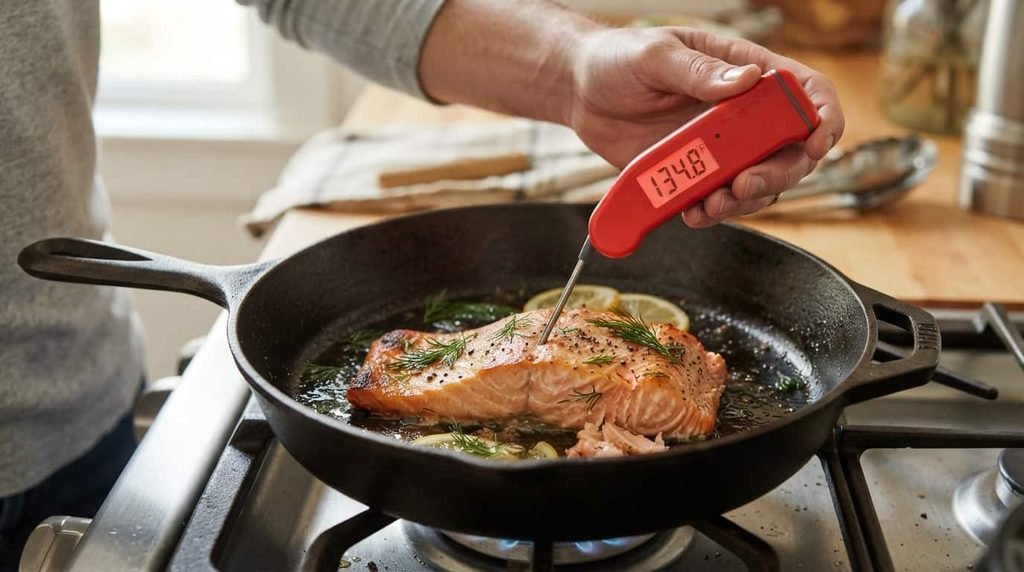
The most reliable way to know your salmon is done is with an instant-read thermometer inserted into the thickest part of the fillet. The USDA recommends cooking fish to an internal temperature of 145°F, though many cooks pull salmon at 125 to 130°F for a softer, medium texture, since it continues cooking a few degrees as it rests.
If you don’t have a thermometer, look at the sides of the fillet as it cooks. You’ll see a line of opaque, cooked flesh creeping up from the pan side toward the center. When that line has moved about three-quarters of the way up and only a thin translucent streak remains in the middle, it’s ready to come off the heat. The fish should flake easily when you press it gently with a fork, but shouldn’t be falling apart or dry.
Common Mistakes When Frying Salmon
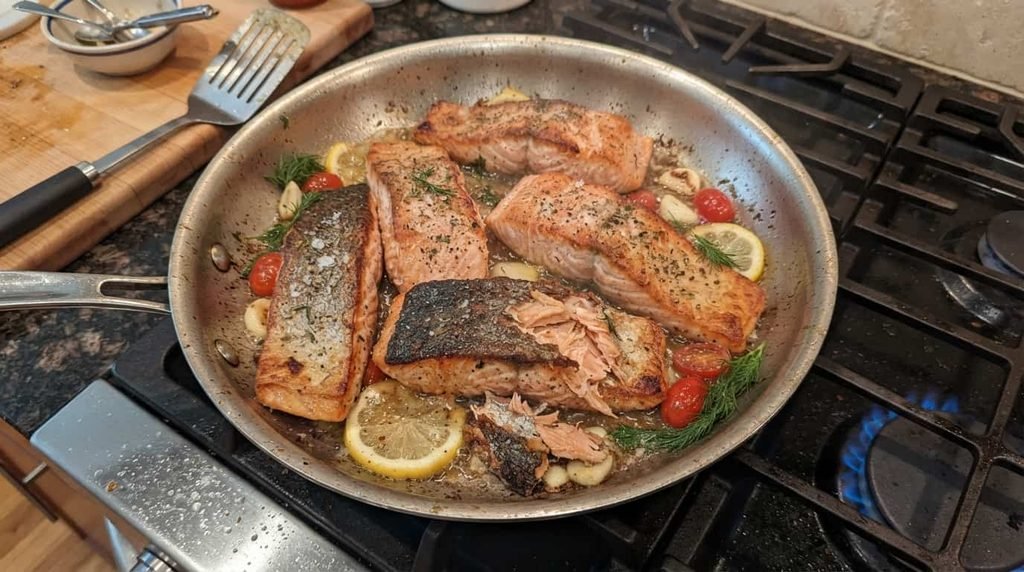
A few habits are behind almost every disappointing piece of fried salmon.
- Cooking straight from the fridge. Cold fish hits a hot pan unevenly. Let fillets sit at room temperature for 15 to 20 minutes before cooking.
- Skipping the dry-off. Wet skin steams instead of crisping, no matter how hot your pan is.
- Moving the fish too soon. Flipping or nudging the fillet before a crust has formed tears the surface and leaves it stuck to the pan.
- Crowding the pan. Fillets packed too closely trap steam and stop the skin from browning. Cook in batches if you need to.
- Walking away too long. Salmon goes from perfectly cooked to dry in a matter of minutes. Set a timer rather than guessing.
Frequently Asked Questions
How long do you fry salmon on each side?
For a standard 1-inch fillet over medium-high heat, fry about 4 minutes skin-side down, then flip and cook 3 to 4 minutes on the flesh side. Thinner fillets need less time, and thicker cuts need more, so always judge by color and firmness rather than the clock alone.
Should salmon be fried skin-side down first?
Yes, in almost every case. Starting skin-side down protects the more delicate flesh from direct heat, renders some of the fat under the skin, and is the only way to get that crisp, golden crust people love. If your fillet is skinless, start with the presentation side, the smoother side you’ll plate face-up, down first instead.
What is the best oil for frying salmon?
A neutral, high smoke point oil like avocado oil, canola oil, or light olive oil works best for the actual frying. They can handle the heat without burning or turning bitter. Save stronger, lower-heat oils like extra-virgin olive oil or flaxseed oil for drizzling over the salmon after it’s cooked.
How do you know when fried salmon is done?
Check with an instant-read thermometer for a reading of 145°F for fully cooked fish, or slightly lower if you prefer it more medium. Without a thermometer, watch the sides of the fillet: when the opaque, cooked color has moved about three-quarters of the way up from the pan side and the fish flakes easily with a fork, it’s done.
Bring It to the Table
Once you’ve got the timing down, fried salmon becomes one of those recipes you can make without measuring or checking a card. Serve it plain with a squeeze of lemon, over rice with a quick pan sauce, or flaked over a salad, and let the crispy skin do most of the talking. Try it this week and see how quickly it becomes a regular in your dinner rotation.


Pingback: How to Cook Salmon on the Stove (Perfect Every Time)