
Cost to Paint a 1,500 Sq Ft House Interior
The cost to paint a 1,500 sq ft house interior is typically around $3,000 to $9,000 for a professional repaint, depending on what you want painted and how much preparation the house needs. A simple walls-only project can fall near the lower end, while painting walls, ceilings, doors, trim, and damaged surfaces can push the price much higher.
That wide range can make painting estimates confusing. A contractor may quote $3,500 while another asks for $7,000, yet neither price is automatically unreasonable. The difference often comes down to scope: number of coats, paint quality, wall condition, ceiling height, trim, repairs, and labor.
For a 1,500 sq ft home, the best way to judge a quote isn’t simply to divide the total by 1,500. Painters work from the paintable surface area, not just the home’s floor area. Before accepting an estimate, find out exactly what surfaces are included and what preparation the contractor plans to do.
How Much Does It Cost to Paint a 1,500 Sq Ft House Interior?
For planning purposes, a 1,500 sq ft house generally falls into these broad price ranges:
| Painting Scope | Approximate Cost |
|---|---|
| Walls only, basic paint | $3,000–$4,875 |
| Walls, ceilings, and trim | $5,000–$7,500 |
| Premium paint with extensive preparation | $7,500–$9,000+ |
These are planning ranges rather than fixed prices. Local labor rates and the condition of the property can move the final number considerably.
A house with clean, smooth walls and a similar new color may require relatively little preparation. On the other hand, walls with nail holes, dents, peeling paint, stains, cracks, or a dramatic color change can take substantially longer.
The quote should also specify whether it includes closets, doors, baseboards, window trim, ceilings, stairways, and other areas that are easy to overlook.
Why a 1,500 Sq Ft Home Can Have a $3,000 or $9,000 Paint Bill
One of the most common mistakes homeowners make is assuming that a 1,500 sq ft house has only 1,500 sq ft of surface to paint.
It doesn’t.
The 1,500 sq ft measurement normally describes the floor area. A painter has to work around walls, ceilings, doors, windows, trim, corners, closets, and sometimes staircases. Wall height also changes the amount of paintable surface.
This is why two houses with the same floor area can have different painting costs.
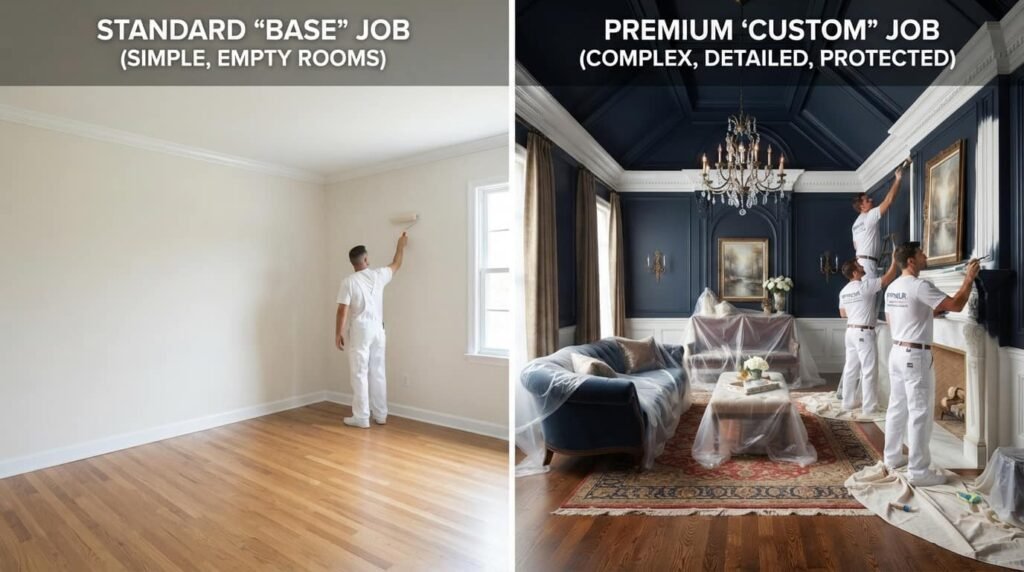
For example, imagine two 1,500 sq ft homes:
-
House A: 8-foot ceilings, open layout, good walls, minimal trim, similar-color repaint.
-
House B: 10-foot ceilings, several small rooms, extensive baseboards, damaged drywall, dark-to-light color changes, and ceilings included.
Both have 1,500 sq ft of floor space, but House B requires considerably more labor.
The scope of work matters more than the number on the real estate listing.
What Is Included in a Typical Interior Painting Quote?
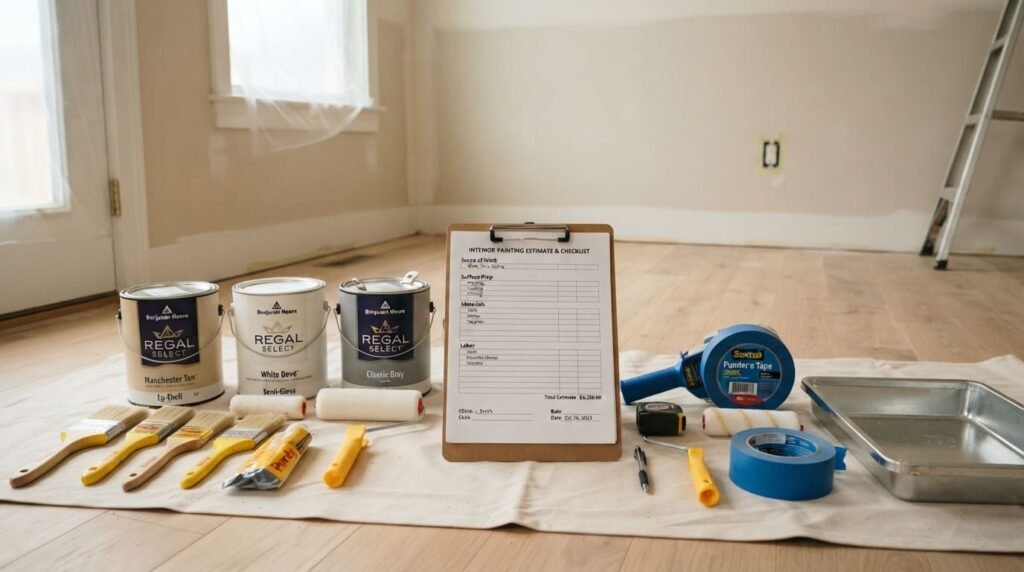
Before comparing contractors, ask each one to describe the work in writing. A typical interior painting estimate may include:
-
Basic wall preparation
-
Minor nail-hole and surface patching
-
Sanding rough areas
-
Primer where needed
-
Two coats of paint
-
Labor and standard painting supplies
-
Basic protection of floors and furniture
However, not every quote includes ceilings, trim, doors, drywall repairs, heavy furniture moving, or extensive stain treatment.
This is where homeowners sometimes think a contractor is overcharging when the real issue is that the two quotes cover different work.
A $4,000 walls-only quote cannot be fairly compared with a $6,500 quote that includes walls, ceilings, baseboards, doors, and additional preparation.
Tip: Ask for the quote to list every painted surface separately. It makes the final decision much easier.
Interior Painting Cost by Square Foot
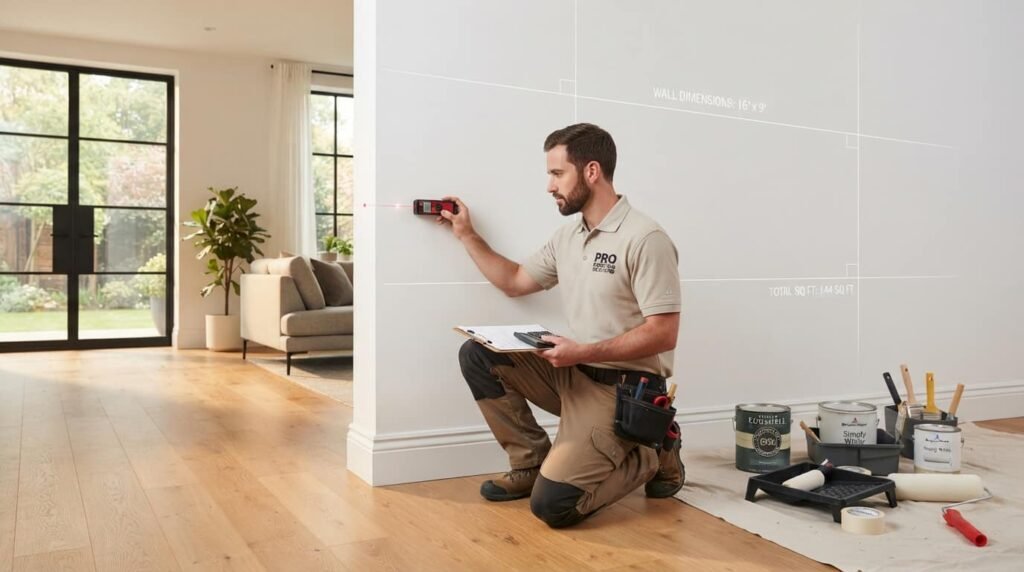
A common planning figure for interior painting is about $2 to $6 per square foot of floor space, although this should not be treated as a universal contractor rate.
Using that range gives the following rough comparison:
| Home Size | Approximate Interior Painting Cost |
|---|---|
| 1,000 sq ft | $2,000–$6,000 |
| 1,500 sq ft | $3,000–$9,000 |
| 2,000 sq ft | $4,000–$12,000 |
| 2,500 sq ft | $5,000–$15,000 |
The price range becomes wider as the home gets larger because there are more surfaces, rooms, trim, corners, ceilings, and potential preparation issues.
For a 1,500 sq ft house, the square-foot figure is useful for creating a starting budget. It should not replace a detailed estimate.
How Much Does It Cost to Paint Each Room?
Room-by-room pricing can be useful if you don’t want to repaint the entire house at once.
Typical planning ranges include:
| Room | Approximate Cost |
|---|---|
| Living room | $400–$1,200 |
| Primary bedroom | $650–$1,400 |
| Secondary bedroom | $350–$850 |
| Bathroom | $150–$400 |
| Kitchen walls | $150–$250 |
| Dining room | $600–$1,000 |
| Hallways and entryways | $300–$1,000 |
These figures can overlap because room size, ceiling height, wall condition, and the amount of trim vary considerably.
Bathrooms are usually smaller, but moisture and ventilation can affect product selection and preparation. Kitchens may also cost more when cabinets, doors, or extensive trim are part of the project.
If money is limited, you don’t necessarily have to paint every room. Starting with the living room, entryway, and primary bedroom can give the home a noticeable change without paying for a complete repaint immediately.
The Biggest Factors That Change the Price
1. Labor
Labor is usually the largest part of an interior painting estimate. Painting itself is only one part of the job. Contractors also have to protect floors, prepare walls, move or cover furniture, cut around trim, apply multiple coats, clean up, and allow appropriate drying time.
A room that looks simple can take much longer when the walls require extensive preparation.
Local labor rates also vary. A contractor working in a high-cost metropolitan area may charge substantially more than one working in a lower-cost market.
2. Paint Quality
Paint prices vary widely by product and finish.
Budget interior paint can reduce material costs, while premium products generally cost more per gallon. The right choice depends on where the paint is being used.
For example, a durable washable finish may make more sense in a busy hallway than in a low-use guest room. You don’t necessarily need the most expensive paint in every room.
Also consider the existing color. A major color change can require additional coats or primer, increasing both material and labor costs.
3. Wall Condition
Preparation can make or break a painting budget.
Small nail holes are relatively simple. Large dents, cracks, water stains, peeling coatings, damaged drywall, or poorly repaired patches take more time.
Before the painter arrives, walk through the house and look closely at the walls under normal lighting. A wall that looks fine from across the room may show dozens of small repairs once you’re standing beside it.
Don’t assume “painting” automatically includes major drywall repair. Ask specifically.
4. Ceilings
Ceilings can add a significant amount to the project because they increase both surface area and labor.
A standard 8-foot ceiling is easier to work with than a vaulted or unusually high ceiling. Stairwells can be especially expensive because they may require ladders, scaffolding, or additional safety precautions.
If your budget is tight, ask for separate pricing for ceilings. You may decide that painting the walls now and the ceilings later makes more sense.
5. Trim, Doors, and Baseboards
Trim requires more detailed work than large wall surfaces.
Baseboards, door frames, window casings, and doors often require brushing, sanding, caulking, taping, or multiple coats. They can therefore add considerably to the labor portion of the project.
If your existing trim is in good condition and you aren’t changing its color, leaving it untouched can reduce the overall cost.
6. Number of Coats
Two coats are common for many interior repainting projects, but every house is different.
A light color covering a similar light color may cover efficiently. A bright white paint over a deep red, navy, or other dark color can be much more demanding.
Ask the contractor whether the estimate includes one coat or two. A low quote based on one coat may not actually be cheaper if the finish looks uneven and needs another coat later.
How Much Paint Does a 1,500 Sq Ft House Need?
Paint quantity depends on the actual wall dimensions, ceiling height, doors, windows, surface texture, and number of coats.
As a rough planning range, a 1,500 sq ft home may require around 10 to 15 gallons for walls, with additional paint needed for ceilings, trim, doors, or extra coats.
Most interior paint products provide a coverage estimate on the container. Coverage can be lower on rough, porous, or previously unpainted surfaces.
Rather than buying paint based only on the home’s floor area, calculate the rooms or ask your painter to estimate the required quantity. Buying too little can create color-matching problems if the exact product or tint changes later.
DIY vs. Hiring a Professional
If you paint the entire house yourself, you may spend roughly $600 to $1,500 on paint and supplies, depending on the products and equipment you choose. A professional repaint may cost several thousand dollars more.
The savings are real, but so is the time commitment.
DIY painting involves more than rolling paint onto walls. You’ll need to:
-
Move or cover furniture.
-
Protect floors.
-
Remove or protect outlet and switch covers.
-
Clean dirty surfaces.
-
Patch holes and imperfections.
-
Sand repaired areas.
-
Prime when necessary.
-
Cut around corners and trim.
-
Apply the required coats.
-
Clean brushes, rollers, and the work area.
For a single bedroom, DIY often makes sense. A full 1,500 sq ft home is a different project, particularly if it has high ceilings, staircases, extensive trim, or damaged walls.
A Practical Middle Ground
You don’t have to choose between doing everything yourself and hiring a contractor for everything.
One useful option is to handle simple preparation and cleanup while hiring a professional for the painting.
For example, you might move furniture, remove wall decorations, clean surfaces, and handle basic cleanup. The painter then focuses on preparation that requires experience and on applying the finish coats.
The exact savings will depend on the contractor and the work you take on, so ask whether they offer a reduced labor price for customer-prepared rooms.
How to Get an Accurate Painting Estimate
Don’t ask only, “How much to paint a 1,500 sq ft house?”
Instead, give the painter enough information to price the actual job.
Tell them:
-
Approximate floor area
-
Number of bedrooms and bathrooms
-
Ceiling height
-
Which rooms need painting
-
Whether ceilings are included
-
Whether trim and doors are included
-
Current wall colors
-
Desired new colors
-
Condition of the walls
-
Whether furniture needs to be moved
-
Whether there are stains, cracks, or drywall damage
Then request an itemized estimate.
Getting at least three quotes is useful because you’ll see how contractors approach the same project. But don’t automatically choose the cheapest one.
A contractor who spends more time explaining preparation, materials, coats, protection, and cleanup may be offering a more complete service.
Common Mistakes That Increase Painting Costs
Choosing a contractor from the total price alone
The cheapest quote isn’t necessarily the best value. Check the scope before comparing totals.
Forgetting ceilings and trim
Homeowners often budget for walls and remember the other surfaces later. Get separate prices for them from the beginning.
Ignoring preparation
Painting over dirty, damaged, or poorly prepared walls can produce a disappointing finish. Good preparation may increase the initial estimate but can make the final result look significantly better.
Choosing paint without considering the room
A paint finish that works well in a bedroom may not be ideal for a busy hallway or bathroom. Think about cleaning, moisture, traffic, and the appearance you want.
Changing colors without considering coverage
A dramatic color change can require more paint or primer. Ask about coverage before choosing a new color.
How to Save Money Without Making the Job Look Cheap
You can lower the cost without cutting corners in the areas that affect the final appearance most.
Get multiple itemized quotes. This gives you a realistic picture of local pricing and makes differences in scope easier to identify.
Do simple preparation yourself. Moving lightweight furniture, removing pictures, and taking down outlet covers can reduce labor in some projects.
Prioritize rooms. If you can’t afford the entire house, paint the rooms that are used most often first.
Keep trim if it still looks good. Repainting perfectly good trim can add labor without providing much visual benefit.
Use premium paint selectively. Spend more where durability or frequent cleaning matters and consider a more economical product for low-traffic spaces.
Ask about off-season scheduling. Some contractors may offer better pricing when their schedules are less busy, although this varies by location and company.
How Long Does It Take to Paint a 1,500 Sq Ft House?
A professional crew may complete a 1,500 sq ft interior in roughly 3 to 5 working days when painting walls, ceilings, and trim under reasonably normal conditions.
That timeline can change significantly.
Extensive wall repairs, multiple colors, high ceilings, detailed trim, occupied rooms, drying conditions, and additional coats can all extend the schedule.
DIY painting usually takes longer because one person has to handle preparation, painting, moving items, and cleanup. Working only evenings and weekends can turn a project into a multi-weekend job.
The fastest-looking quote isn’t necessarily the best one if the contractor is allowing too little time for preparation or proper coats.
Is $5,000 a Reasonable Price to Paint a 1,500 Sq Ft House?
A $5,000 quote can be reasonable if it covers a substantial portion of the interior, but the number alone doesn’t tell you enough.
For example, $5,000 for walls only with minimal preparation is very different from $5,000 for walls, ceilings, trim, doors, and significant repairs.
Look at the estimate line by line:
-
What rooms are included?
-
How many coats?
-
What paint product?
-
Are ceilings included?
-
Is trim included?
-
What preparation is included?
-
Are drywall repairs extra?
-
Is furniture moving included?
-
Who supplies the materials?
Once those questions are answered, you can compare the quote against the actual work rather than simply comparing the final dollar amount.
What is the average cost to paint a 1,500 sq ft house interior?
A reasonable planning range is $3,000 to $9,000 for a professional interior repaint. Walls-only projects tend toward the lower end, while projects including ceilings, trim, premium materials, and extensive preparation can approach or exceed the upper end.
Is it cheaper to paint a 1,500 sq ft house yourself?
Usually, yes. A whole-house DIY project may cost roughly $600 to $1,500 in paint and supplies, compared with several thousand dollars for professional labor and materials. The main tradeoff is your time and the quality of the finished work.
How much does labor cost to paint a 1,500 sq ft house?
Labor varies by location and project complexity. It can represent the majority of a professional painting estimate because preparation, protection, cutting in, multiple coats, and cleanup all require time.
Should I paint the ceilings and trim at the same time?
If your budget allows, doing them during the same project can create a more consistent finished appearance and avoids having painters return later. If the ceilings and trim are already in good condition, however, you may save money by leaving them alone.
How many coats of paint are needed?
Two coats are common for interior repainting, but the required number depends on the existing color, new color, paint product, surface condition, and whether primer is needed. Dark-to-light changes can require additional coverage.
How can I tell if a painting quote is fair?
Compare at least three detailed estimates and make sure they describe the same scope. Look beyond the total price and compare preparation, number of coats, paint quality, ceilings, trim, repairs, materials, and cleanup.
Can I save money by doing the preparation myself?
Sometimes. Moving furniture, removing wall decorations, cleaning surfaces, and handling simple preparation may reduce the amount of work a contractor needs to perform. Ask the painter what preparation they require before deciding what to handle yourself.
What is the most important thing to check before hiring a painter?
Check the scope of work. A detailed quote should clearly state what is being painted, how many coats are included, what preparation will be performed, which materials are being used, and what work costs extra.
For a 1,500 sq ft house, the smartest budget starts with the actual condition and scope of your home—not simply the square footage. Once you separate walls, ceilings, trim, preparation, materials, and labor, a painting estimate becomes much easier to understand and compare.



Pingback: Cost to Paint Interior of House: 2026 Price Guide