Pizza and Pasta Night: The Complete Guide
Planning a homemade pizza and pasta night? Get dough and sauce recipes, topping ideas, sides, and hosting tips to build the perfect Italian-style spread.
A good pizza and pasta night doesn’t need a restaurant reservation, it just needs a solid dough, a jar of good sauce, and a plan for what’s going on the table. Whether you’re feeding your own family on a Friday or hosting a build-your-own pizza party for a crowd, this guide walks through everything from crust to sides, so you can pull off a spread that beats takeout.
How Do You Plan a Pizza and Pasta Night?
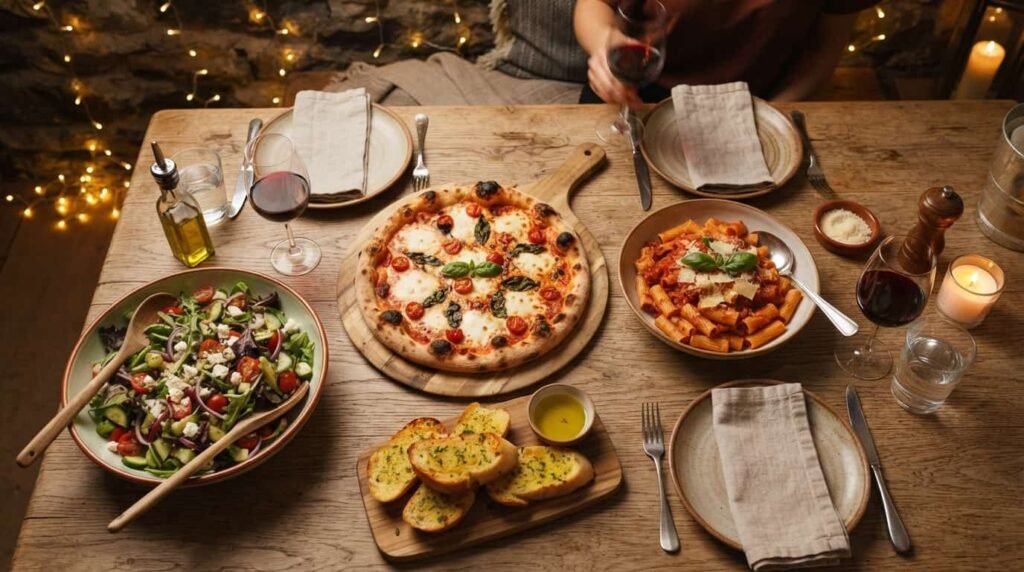
Start with a make-ahead dough and sauce (both can be done a day early), prep a topping bar with 5-6 options, and pick one simple pasta dish that can sit warm while the pizzas come out of the oven in batches. Add a salad and a light dessert, and you’ve got a full spread without spending the whole evening cooking.
Why Pizza and Pasta Night Works for Any Occasion
Pizza and pasta are two of the easiest crowd-pleasers to put on one table. They’re budget-friendly, they scale up or down without much fuss, and almost nobody turns down either one. Pairing them together also solves the usual “what if someone doesn’t want pizza” problem, since the pasta dish becomes a natural backup.
It also works well as a build-your-own setup, which turns dinner into part of the entertainment. Set out toppings and let everyone build their own pie while a big pot of pasta keeps warm on the stove, and you’ve got a low-stress dinner that still feels like an event.
The Dough: Your Foundation
A basic pizza dough needs just flour, water, yeast, salt, and a little olive oil. Whether you make it from scratch or start with a store-bought ball, a few things matter more than the recipe itself.
Let the dough come to room temperature before stretching it, cold dough tears instead of stretching evenly. If you’re making it ahead, a slow rise in the fridge for 24 to 48 hours actually improves the flavor and texture, giving the crust a slightly chewier bite and better browning.
For a crisp bottom crust, preheat a pizza stone or a heavy baking sheet in the oven for at least 30 minutes before baking, and use cornmeal or semolina on your pizza peel so the dough slides off easily instead of sticking.
The Sauce: Pizza Sauce vs. Pasta Sauce
You don’t necessarily need two separate sauces. A simple marinara made from canned tomatoes, garlic, olive oil, and a long simmer works for both pizza and pasta, just use it thicker and less watery for pizza so it doesn’t make the crust soggy.
To make one big batch that covers both: simmer canned crushed tomatoes with sautéed onion and garlic, salt, pepper, and Italian herbs for at least an hour. Use it straight for pasta, or reduce a portion further on the stove until it’s thick enough to spread on dough without running.
Building the Topping Bar
This is where pizza night becomes an event instead of just dinner. A good topping bar covers a few categories so there’s something for everyone:
- Cheeses: mozzarella, Parmesan, provolone, ricotta dollops
- Meats: pepperoni, sausage, bacon, prosciutto
- Vegetables: mushrooms, bell peppers, red onion, spinach, roasted garlic
- Finishers: fresh basil, red pepper flakes, a drizzle of good olive oil after baking
Keep proteins pre-cooked before they go on the pizza, raw sausage or chicken won’t fully cook in the short time a pizza spends in the oven.
A Simple Pasta Dish to Round Out the Table
While the pizzas are baking in batches, a baked pasta dish is the easiest thing to have ready and holding warm. A pizza-inspired baked pasta, tossed pasta with marinara and pepperoni, topped with mozzarella, and baked until bubbly, uses the same sauce and toppings you already have out for the pizza bar, so there’s no extra shopping list.
If you’d rather keep it lighter, a simple aglio e olio (pasta with garlic, olive oil, and red pepper flakes) comes together in the time it takes one pizza to bake and doesn’t compete with the richness of the pizza course.
Sides and Salad Pairings
A crisp salad balances out a table full of cheese and dough. Caesar salad is the classic pairing, but a simple arugula salad with lemon, olive oil, and shaved Parmesan is just as easy and adds a peppery contrast. Garlic bread is optional when there’s already pizza dough in the kitchen, but it’s an easy add if you have extra dough on hand, just stretch, brush with garlic butter, and bake.
Hosting Tips for a Pizza and Pasta Night
Prep as much as possible ahead of time. Dough and sauce can both be made a day in advance, and toppings can be chopped and stored in the fridge that morning. This keeps the actual event low-stress instead of turning into a solo kitchen marathon.
If you’re hosting a group, stagger the pizzas rather than trying to bake everyone’s at once. One oven usually only fits one or two pizzas at a time, so let guests build their pies in order and call names as each one comes out.
Keep the pasta dish in a low oven (around 200°F) or on the stove on low heat so it stays warm without drying out while the pizza course runs long.
Bringing It All Together
A pizza and pasta night doesn’t need to be complicated to feel like a real event. One solid dough, one all-purpose sauce, a stocked topping bar, and a simple pasta dish covers the whole table with very little extra effort. Prep what you can ahead of time, keep the oven working in batches, and the rest takes care of itself.
Frequently Asked Questions
Can I make the dough and sauce ahead of time?
Yes, both hold up well made a day or two in advance. Dough actually improves with a slow refrigerator rise, and sauce keeps in the fridge for up to a week or in the freezer for a few months.
How many pizzas do I need for a group?
Plan on one 12-inch pizza per 2-3 people if pasta and salad are also on the table. If pizza is the only main, plan closer to one pizza per 2 people.
What’s the best oven temperature for homemade pizza?
As hot as your oven goes, usually 475-500°F, with a preheated pizza stone or baking sheet. High heat is what gives homemade pizza a crisp, blistered crust closer to a pizzeria result.
Can I do a pizza and pasta night without a pizza stone?
Yes. A heavy baking sheet, preheated in the oven the same way as a stone, gets you most of the way there. The crust won’t be quite as crisp on the bottom, but it still bakes up well.
What pasta shape works best for a pizza-topping-inspired pasta bake?
Short, sturdy shapes like penne, rigatoni, or rotini hold sauce and toppings better than long noodles in a baked pasta dish, and they’re easier to serve buffet-style.