
Sliding Barn Door Hardware: A Buyer’s Guide for Pantries, Laundry Rooms, and More
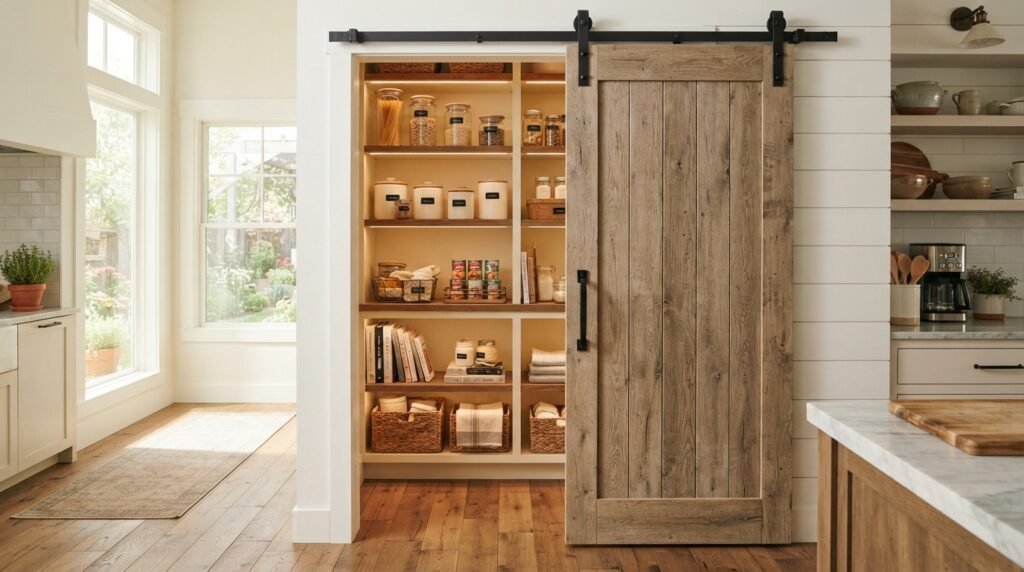
Sliding barn door hardware is the track-and-roller system that lets a door glide along a wall instead of swinging open on hinges, and it’s become one of the easiest upgrades for a tight kitchen pantry, laundry closet, or mudroom. I put a kit on our own pantry door two years ago after a swinging door kept banging into the fridge, and the hardest part of the whole project wasn’t the install, it was figuring out which kit to actually buy. This guide walks through the parts, the weight math, and the details that separate a barn door that glides quietly for a decade from one that sags after six months.
What Sliding Barn Door Hardware Actually Includes
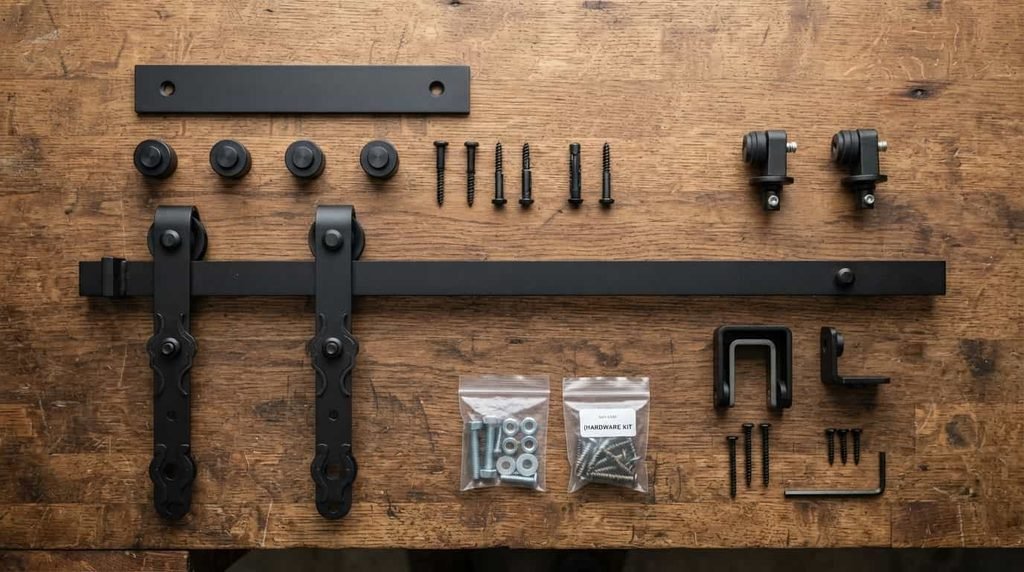
A complete kit isn’t just a rail. It’s a system of parts that all have to work together:
- Track: the metal rail mounted above the doorway that the door hangs from.
- Hangers or rollers: the wheeled brackets bolted to the top of the door that ride along the track.
- Mounting brackets and wall spacers: hold the track a fixed distance off the wall so the door clears the trim.
- Floor guide: a small bracket at the base of the opening that keeps the door from swinging out.
- Stops: adjustable blocks that stop the door in the open and closed positions.
Buying these as a kit, rather than piecing them together individually, is worth the small premium. A mismatched track and roller set is the most common reason a barn door sticks or rattles.
Quick Answer: What’s the Best Sliding Barn Door Hardware for a Kitchen Pantry?
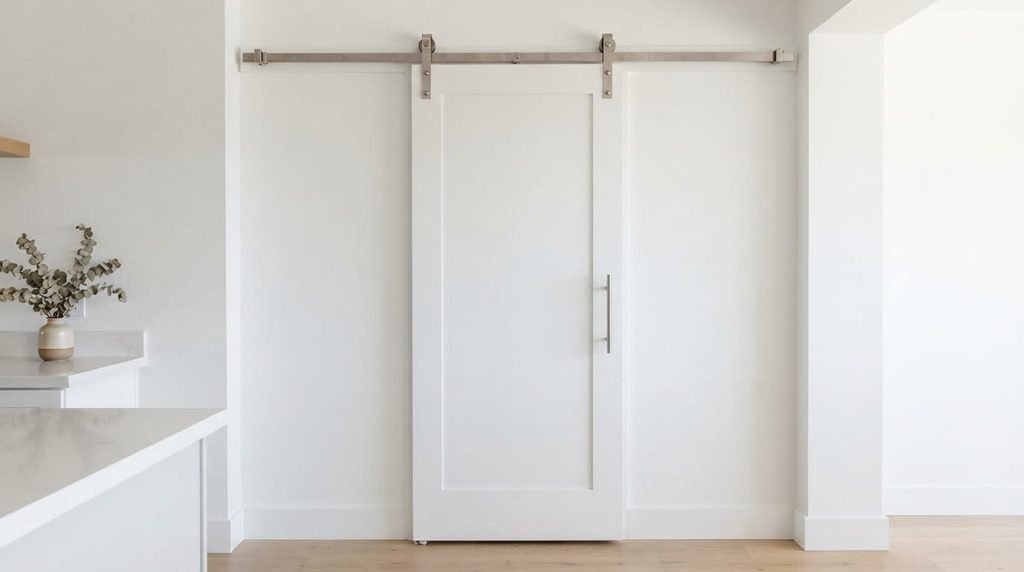
For a standard pantry or laundry door under 1-3/4 inches thick and under 200 pounds, a matte black or brushed nickel flat track kit rated for at least 150 pounds is the safest, most affordable choice. Flat track kits are the most widely available style, they mount easily to studs above most doorways, and they’re forgiving of small measurement errors during installation. If your door is solid wood or oversized, size up to a heavy duty kit instead of assuming a standard kit will hold.
The Main Types of Sliding Barn Door Hardware
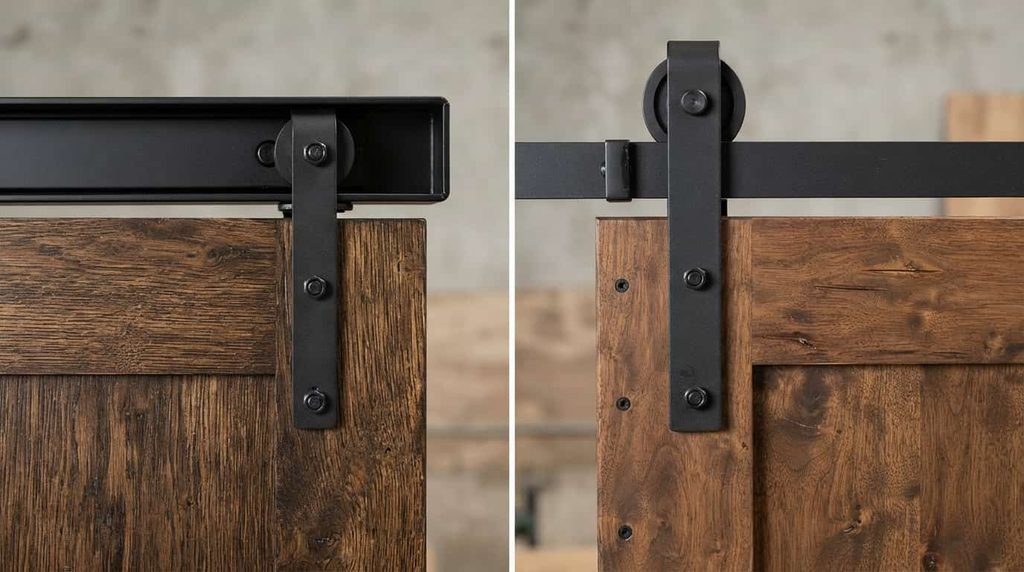
Not every kit is built the same way, and the type you choose affects both the look and the function of the finished door.
Flat track hardware is the classic option: a flat metal rail with exposed rollers riding on top. It’s the easiest to find, the easiest to install, and it works with nearly any door style, from rustic paneled doors to smooth modern slabs.
Box rail hardware encloses the rollers inside a boxed track, so the wheels stay hidden and protected from dust. It gives a cleaner, more architectural look and tends to run quieter than flat track over time, but it costs more.
Ceiling-mounted track skips the wall entirely and attaches to the ceiling joists, which is useful when there’s no clear wall space above the opening, or when you want the hardware to disappear visually.
Bypass hardware uses two parallel tracks so two doors can slide past each other, which works well for wide pantry or closet openings where a single door wouldn’t cover the whole space.
Heavy duty hardware raises the weight rating, sometimes up to 800 pounds per door, and is meant for solid wood doors, oversized panels, or anything thicker than 1-3/4 inches.
How to Match Sliding Barn Door Hardware to Your Door’s Weight
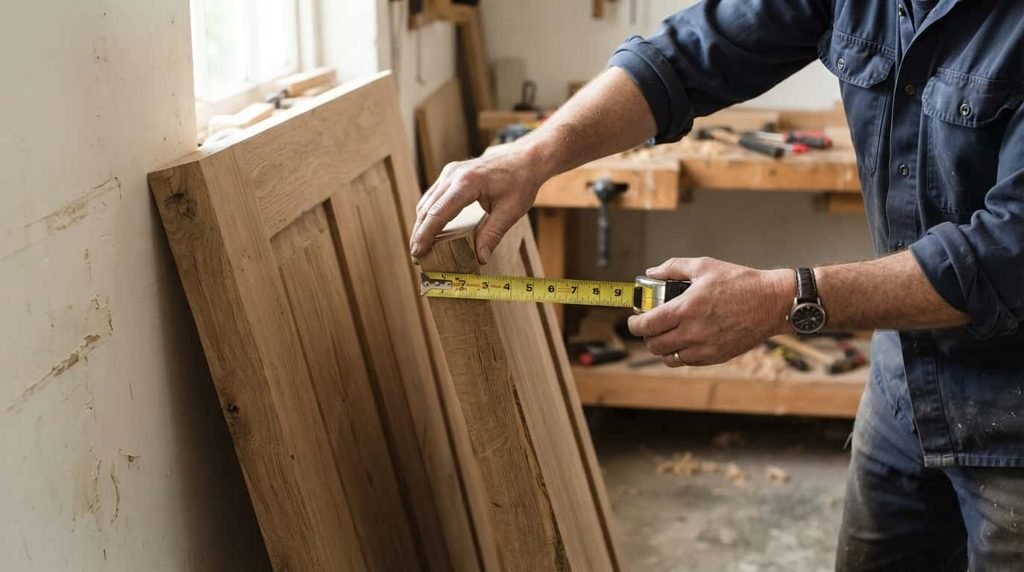
Getting the weight rating right matters more than any other spec on the box. Hollow-core doors typically run 25 to 35 pounds, while solid wood doors start around 80 pounds and climb quickly depending on the wood species and thickness. Most standard sliding barn door hardware kits are rated between 150 and 250 pounds, and heavy duty lines extend that range for thicker or denser doors.
If you don’t know your exact door weight, round up. A hardware kit rated well above your door’s actual weight isn’t wasted money, it’s what keeps the rollers from wearing prematurely and the door from sagging on the track after a year of daily use. Also check the door thickness the kit supports: standard hardware is usually built for doors 1-3/8 to 1-3/4 inches thick, while heavy duty kits can handle up to about 2-1/4 inches.
One detail that’s easy to miss: the weight rating usually applies per pair of hangers, meaning per door, not per track. If you’re installing a bypass system with two doors, each door needs to fall under the rating on its own, not combined.
Flat Track vs. Box Rail vs. Ceiling-Mounted: Which One Fits Your Space
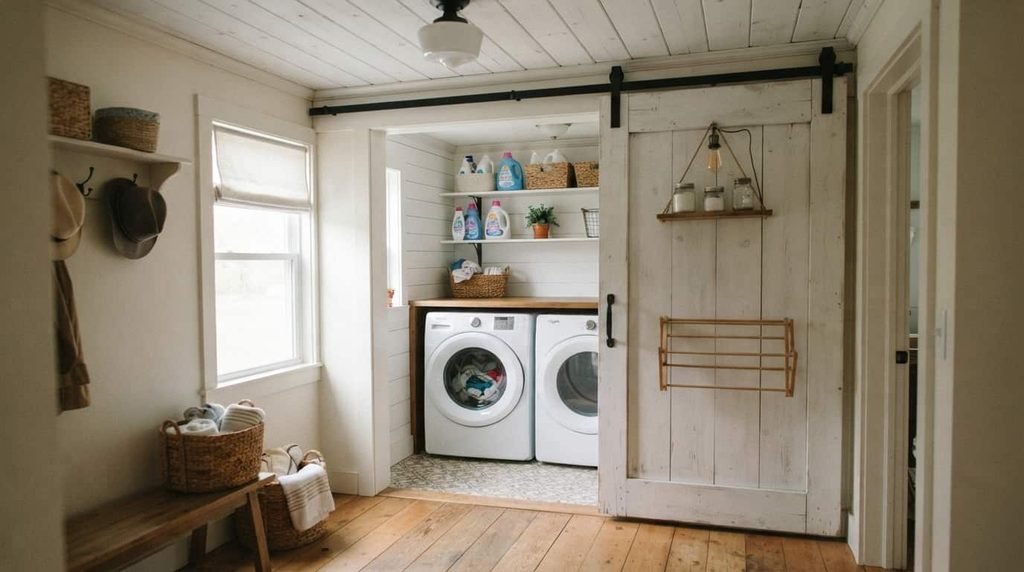
The right style comes down to wall space, ceiling height, and how visible you want the hardware to be.
If you have a clear stretch of wall above the doorway and want a straightforward, budget-friendly install, flat track is the default choice. If you want a more polished, boutique look and don’t mind spending more, box rail hides the moving parts and reads as more modern. If your ceiling is low or there’s no room above the opening for a wall-mounted track, ceiling-mounted or low-clearance hardware solves that without sacrificing function. For anyone converting a hallway closet or a wide pantry opening into a two-door setup, bypass hardware is the only style built to let two panels share a single wall footprint.
Floor Guides, Soft-Close, and Other Details People Forget
A floor guide isn’t optional, even though it’s easy to overlook when comparing kits online. Without one, a barn door swings and wobbles at the bottom every time it’s opened or closed, and over time that stress can pull the door off the track. Most kits include a basic guide, but if you want the door bottom to stay fully concealed, look for a low-profile or recessed guide instead of a surface-mounted one.
Soft-close mechanisms, which slow the door gently in the last few inches instead of letting it slam into the stop, have become common on mid-range and premium kits. They’re a genuinely useful upgrade for a kitchen pantry door that gets opened dozens of times a day, and they’re worth the extra cost if quiet operation matters in your space.
Finishes and Style: Matching Hardware to a Kitchen or Pantry
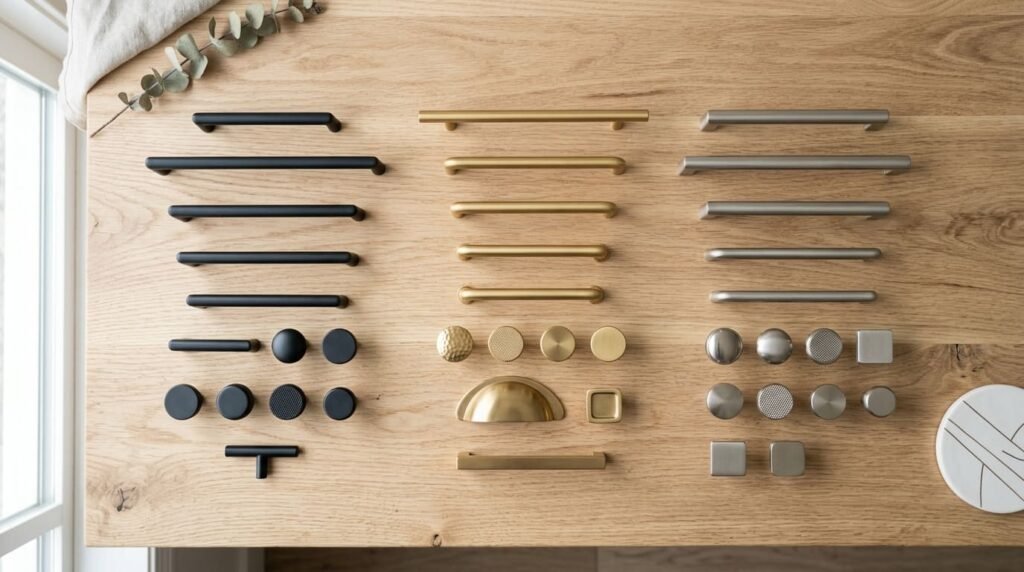
Hardware finish affects maintenance as much as looks. Matte black and dark bronze are the most forgiving finishes for a busy kitchen since they hide fingerprints and don’t show wear the way polished finishes can. Brushed nickel and stainless steel pair well with contemporary kitchens and are low-maintenance day to day. Brass has real warmth and works beautifully against wood doors, but it develops a patina over time and needs occasional polishing if you want to keep that original shine.
Beyond the track finish, the hanger style changes the look of the door itself. Strap-style hangers read as more traditional and rustic, while low-profile or top-mounted hangers give a cleaner, more minimal line, especially on shaker-style or flat-panel doors that are already common in modern kitchens.
Frequently Asked Questions
How much weight can sliding barn door hardware hold?
Standard sliding barn door hardware kits typically hold between 150 and 250 pounds per door, while heavy duty kits are built for doors up to 400 to 800 pounds depending on the hanger style. Always check the manufacturer’s rating rather than assuming, since it varies by kit even within the same product line.
What size track do I need for a barn door?
As a rule of thumb, the track should be roughly twice the width of the door so the opening can be fully cleared when the door is open. A 36-inch-wide door generally needs a track close to 72 inches long, though you should confirm against the specific kit’s sizing guide before ordering.
Do sliding barn doors need a floor guide?
Yes. A floor guide keeps the bottom of the door from swinging away from the wall as it slides, which prevents wobbling and reduces strain on the track and rollers. Skipping it is one of the most common reasons a barn door starts to lean or come off its track.
Can I install barn door hardware myself?
Most flat track kits are designed for DIY installation with basic tools, as long as you can locate wall studs and the wall above the opening can support the track’s mounting hardware. Heavier doors or ceiling-mounted systems may call for a second set of hands, or a contractor, to get the weight distribution right.
Final Thoughts
Choosing sliding barn door hardware really comes down to three questions: how much your door weighs, how much wall or ceiling space you’re working with, and what finish fits the room. Get those three right and the rest, floor guides, soft-close, hanger style, is just picking the details that match your kitchen’s look. If you’re outfitting a pantry, laundry nook, or mudroom this season, measure the door and the wall before you shop, not after, and the whole project goes a lot smoother than mine did the first time around.

Pingback: Hidden Barn Door Hardware: The Complete 2026 Buying Guide
Pingback: Barn Door Hardware Kit Buying Guide (2026) - kitchennista.com