How To Cook Asparagus?
How do you cook asparagus? Trim the woody ends first, then roast, steam, grill, sauté, or blanch the spears until they turn bright green and just tender, usually in 5 to 15 minutes depending on the method you pick. Roasting at 400°F is the most forgiving option for beginners, since it needs almost no attention and gives you crisp tips every time.
I’ve made asparagus this way in my own kitchen more times than I can count, and the method you choose really does change the whole dish. Roasting gives you caramelized, slightly crisp tips. Steaming keeps things gentle and bright green. Grilling adds a smoky char. Sautéing is the fastest weeknight option, and blanching is the move when asparagus is headed into a salad, pasta, or frittata. None of these are hard, and once you learn the basic timing for each, you’ll never have to look up a recipe again.
How to Trim and Prep Asparagus Before Cooking
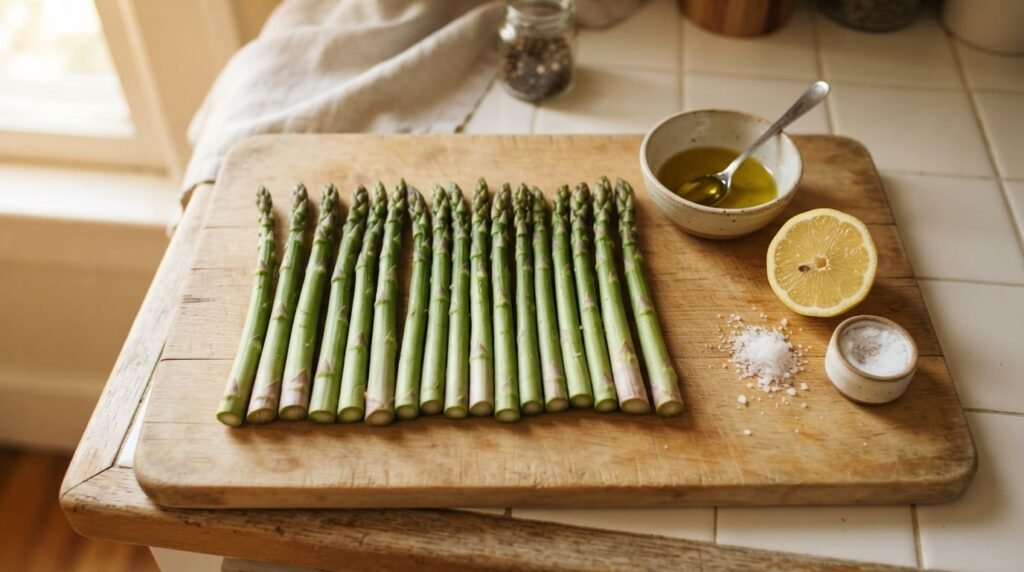
Every method starts the same way: trimming. Asparagus has a natural woody base that stays tough no matter how long you cook it, so that part has to go before anything hits the pan.
The easiest trick is the snap method. Hold one spear near the bottom and near the middle, then bend it gently until it breaks. It will naturally snap right at the point where the tender part meets the fibrous end. Once you know where that spot is, line up the rest of the bunch and cut them all at the same length with a knife, so you don’t have to snap each one individually.
A few more prep tips worth knowing:
- Thick stalks benefit from a light peel along the bottom third with a vegetable peeler. This removes the stringy outer layer and makes the whole spear tender.
- Thin, pencil-sized spears don’t need peeling at all, and they cook faster than thick ones, so keep thickness in mind when you’re setting a timer.
- Rinse and pat dry before cooking. Wet spears steam instead of browning, which matters most for roasting and grilling.
- Fresh asparagus should look bright green with tightly closed tips. If the tips are mushy or the stalks look shriveled, it’s past its prime.
How Do You Cook Asparagus in the Oven? (Roasting)
Roasting is the method I reach for most, because it’s mostly hands-off and gives you those golden, slightly crispy tips that make asparagus actually exciting.
- Preheat the oven to 400°F.
- Toss trimmed asparagus with olive oil, salt, and black pepper.
- Spread the spears in a single layer on a rimmed baking sheet, leaving space between them so they roast instead of steam.
- Roast until crisp-tender: about 8 to 11 minutes for thin spears, 12 to 15 minutes for average spears, and 16 to 20 minutes for thick ones.
Don’t overcrowd the pan. If the spears are touching, they’ll release moisture and steam each other instead of getting that golden char on the edges. For extra flavor, add minced garlic before roasting, or finish with lemon juice and shaved parmesan right after it comes out of the oven. If you want more char, bump the temperature to 425°F and shave a couple of minutes off the cook time.
How to Steam Asparagus
Steaming is the gentlest method, and it’s a good pick if you want asparagus that’s tender but still snappy, without any oil at all.
- Bring an inch or two of water to a boil in a pot fitted with a steamer basket.
- Add the trimmed spears in a single layer.
- Cover and steam for 3 to 5 minutes, depending on thickness, until the spears turn bright green and pierce easily with a fork.
- Remove immediately so they don’t overcook from residual heat.
Steamed asparagus is a great base for building flavor after the fact. Toss it with melted butter and a squeeze of lemon, or top it with a soft-boiled egg for a simple spring dinner.
How to Grill Asparagus
Grilling adds a smoky, charred edge that roasting can’t quite match, and it only takes a few minutes over direct heat.
- Toss trimmed spears with olive oil, salt, and pepper.
- Preheat the grill or a grill pan to medium-high.
- Lay the spears perpendicular to the grates so they don’t fall through.
- Grill for 6 to 8 minutes, flipping or rolling halfway through, until tender with visible char marks.
A trick worth stealing: grill lemon halves alongside the asparagus. The heat mellows and sweetens the juice, and squeezing the charred lemon over the finished spears takes this from a side dish to something worth photographing.
How to Sauté Asparagus on the Stovetop
Sautéing is the quickest route from fridge to plate, which makes it the method I use most on weeknights.
- Heat olive oil or butter in a large skillet over medium-high heat.
- Add trimmed spears in a single layer, cut into shorter pieces if you like.
- Cook for 5 to 7 minutes, tossing or flipping occasionally, until bright green with some browning.
- Season with salt, pepper, and minced garlic in the last minute of cooking so it doesn’t burn.
Sautéed asparagus is perfect folded into a frittata, tossed with pasta, or served alongside eggs at breakfast. A finishing squeeze of lemon or a scatter of toasted sesame seeds turns it into something worth repeating.
How to Blanch Asparagus
Blanching is less about serving asparagus hot and more about prepping it for something else, like a salad, a cold pasta, or a quick stir-fry later in the week.
- Bring a large pot of salted water to a boil, and set a bowl of ice water nearby.
- Cut spears into 1-inch pieces or leave them whole.
- Drop them into the boiling water and cook for 1 to 3 minutes, until bright green and just tender.
- Use a slotted spoon to transfer them straight into the ice water for about a minute, then drain and pat dry.
That ice bath is the step people skip, and it matters. It stops the cooking instantly, so the asparagus stays a vivid green instead of turning dull and overcooked. Blanched asparagus keeps well in the fridge for a few days, which makes it an easy meal-prep vegetable.
How to Cook Asparagus in the Air Fryer
If you’ve already got the air fryer going for something else, asparagus is one of the easiest vegetables to throw in alongside it.
- Toss trimmed spears with olive oil, salt, and pepper.
- Arrange them in a single layer in the air fryer basket, working in batches if needed so they aren’t stacked.
- Air fry at 400°F for 7 to 10 minutes for thin spears, or up to 12 to 13 minutes for thicker ones, shaking or tossing the basket halfway through.
- Check for doneness with a fork. The tips should be lightly browned and the stalks tender.
Air-fried asparagus ends up close to roasted in flavor, with a bit more crisp on the edges, and it’s the fastest of all the oven-adjacent methods since there’s no preheating a full oven required.
Best Seasonings and Pairings for Asparagus
Plain asparagus with olive oil, salt, and pepper is already good, but a few simple additions take it further without much extra effort. Garlic and lemon are the classic pairing, whether it’s minced garlic added near the end of sautéing or a squeeze of lemon juice right before serving. Grated parmesan or pecorino melts nicely over hot roasted or grilled spears. Red pepper flakes add a little heat, and toasted sesame seeds with a drizzle of sesame oil give sautéed asparagus an Asian-inspired twist. Asparagus is also naturally low in calories and a good source of vitamin C, vitamin K, folate, and fiber, which is part of why it shows up so often as a simple spring side dish alongside salmon, roasted chicken, or a seared steak.
How to Store and Reheat Cooked Asparagus
Cooked asparagus keeps in an airtight container in the refrigerator for up to three days. Store it in a single layer if possible, since stacking can make the spears go soft faster.
To reheat, skip the microwave if you can. A quick 3 to 4 minutes in a 400°F oven or air fryer brings back some of the original crispness, especially for roasted or grilled asparagus. A hot skillet with a little butter works well too, and only takes a couple of minutes. Cooked asparagus doesn’t freeze particularly well, since it tends to turn watery and limp once thawed, so it’s best treated as a fresh, short-term leftover rather than something to stash away for later.
The Bottom Line
There’s no single best way to cook asparagus. Roasting gives you the most flavor for the least effort, steaming keeps things light, grilling brings smoke and char, sautéing is the fastest weeknight option, and blanching sets you up for salads and pasta later in the week. Once you’ve got the trimming step down, the rest is just picking a method to match your dinner. Try one this week and see which becomes your go-to.
Frequently Asked Questions About Cooking Asparagus
Do you need to peel asparagus before cooking?
Only if the stalks are thick. Thin, pencil-sized asparagus doesn’t need peeling. For thicker stalks, peeling the bottom third with a vegetable peeler removes the stringy outer layer and makes the whole spear tender instead of fibrous near the base.
How do you know when asparagus is done?
It’s done when it turns bright green and a fork slides easily into the thickest part of the stalk, with just a bit of resistance left. For roasted or grilled asparagus, you’ll also see light browning or char on the tips. Overcooked asparagus turns dull olive green and goes limp.
Can you eat asparagus raw?
Yes. Thin asparagus can be shaved into ribbons with a vegetable peeler and tossed into a salad with olive oil and lemon, or layered onto pizza or toast. Thicker raw asparagus can be tough, so raw preparations work best with young, slender spears.
Why does asparagus turn mushy or stringy?
Mushy asparagus is almost always the result of overcooking, especially in boiling water without an ice bath to stop the process. Stringy asparagus usually means the tough woody ends weren’t trimmed, or a thick stalk wasn’t peeled before cooking.