
What Is Halal Chicken?
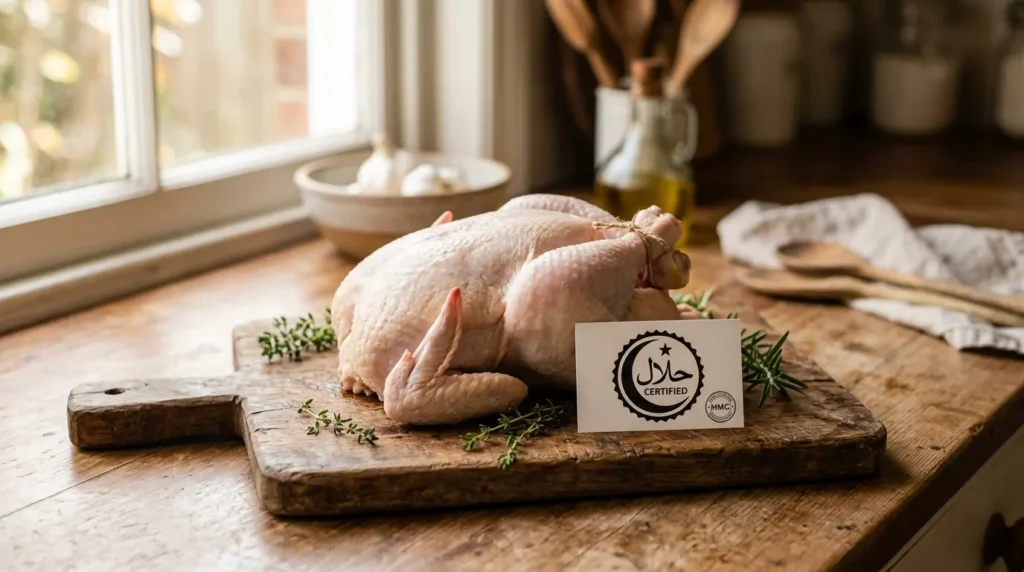
Halal chicken is chicken that has been slaughtered according to Islamic law: a healthy bird, a swift cut by a Muslim who recites a blessing, and a full drain of the blood before anything else happens to the meat. That’s it. It’s not a marinade, a brand, or a cooking style. It’s a set of conditions met at the exact moment of slaughter, and once those conditions are met (or missed), nothing that happens afterward changes the outcome. If you’ve ever stood in a grocery aisle wondering why one chicken carries a small green logo and another doesn’t, this is what that logo is actually telling you.
So, What Is Halal Chicken, Exactly?
Halal chicken is poultry that meets three conditions at slaughter: the bird was healthy and alive right up to that moment, a Muslim performed the cut while saying “Bismillah, Allahu Akbar” (“in the name of Allah, Allah is greatest”), and the blood was fully drained afterward. Skip any one of those steps and the chicken doesn’t qualify, no matter how it’s cooked or seasoned later. The word “halal” itself just means “permissible” in Arabic, and it applies to far more than food, but meat is where most people encounter it first.
The Three Requirements for Halal Chicken
Islamic dietary law, drawn from the Quran, lays out a fairly short checklist for a chicken to count as halal:
- The bird is healthy at the time of slaughter. Sick or already-dead animals don’t qualify, and neither does anything killed by strangling, disease, or a fall.
- A practicing Muslim performs the slaughter and recites the blessing out loud. This is called the tasmia, and it’s spoken over the animal, not the finished meat.
- The blood is completely drained from the carcass. Blood itself is considered haram (forbidden) in Islam, so this step isn’t optional.
Miss any one of these and the chicken is haram, or not permissible, even if every other part of the process looks identical to halal handling. That’s the piece a lot of people miss: halal isn’t a spectrum, it’s a pass or fail at one specific moment in the supply chain.
How Halal Chicken Is Actually Slaughtered
The method is known as zabiha (sometimes spelled dhabiha), and it’s more precise than most people assume. A sharp blade makes one swift cut across the throat, severing the windpipe, esophagus, and both jugular veins in a single motion. The goal, according to Islamic teaching, is to minimize suffering and let the blood drain out quickly and completely, which is also why the cut needs to be fast and clean rather than slow or repeated.
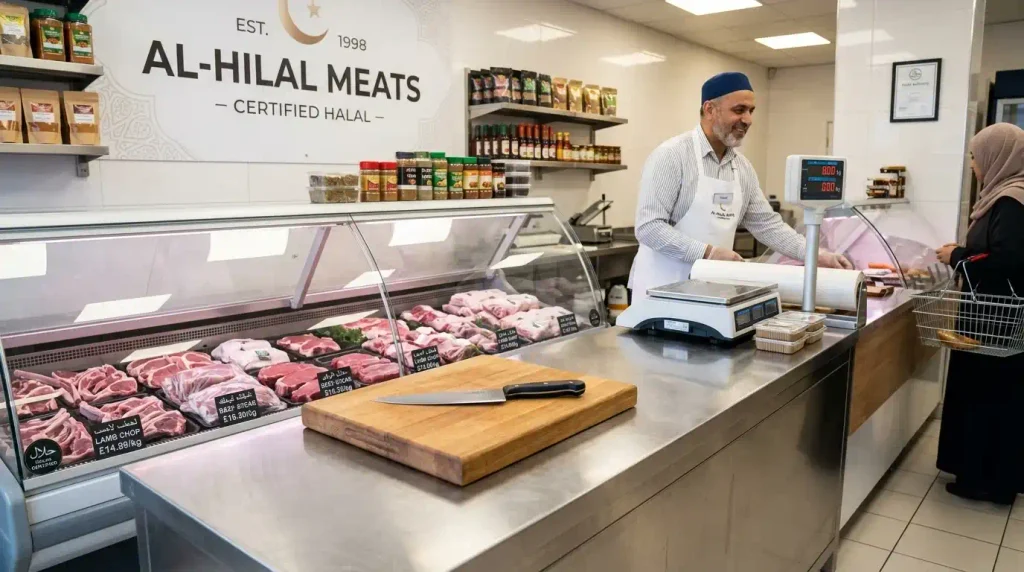
In the United States, this happens in one of two ways. Hand slaughter, sometimes called Zabihah, involves an individual Muslim slaughterer saying the blessing over each bird as it’s killed by hand. Machine slaughter, which is far more common on large commercial lines, uses mechanical blades while a recorded blessing plays continuously over the whole run, with a Muslim supervisor overseeing the process. Both methods are accepted as halal by many certifying bodies, but a meaningful share of Muslim consumers (roughly a third, according to industry estimates) only trust hand-slaughtered, individually blessed birds. If that distinction matters to you, it’s worth asking your butcher or checking the certifier’s standards directly, since “halal” on a label doesn’t always specify which method was used.
Halal Chicken vs. Regular Chicken: What Actually Changes
Here’s where a lot of the confusion comes from. Conventionally processed chicken in the US is typically stunned and slaughtered by machine, with no religious requirement attached to the process, and blood drainage is handled as a standard food-safety step rather than a religious one. Halal chicken goes through the same basic supply chain, but with the Islamic requirements layered on top: a healthy bird, a Muslim performing or overseeing the cut, the blessing spoken aloud, and complete blood drainage confirmed as part of the process.
Nutritionally, the two are close to identical. A roasted chicken breast is roughly the same calories and protein whether it’s halal or not, and the USDA doesn’t track halal status separately in its nutrition data. What does tend to differ is upstream: many halal producers also market themselves around vegetarian feed, no added hormones or antibiotics, and smaller-scale farming, though none of that is actually required for the halal label itself. Those extras come from individual brands, not from Islamic law.
Halal vs. Kosher Chicken: Same Thing?
Close, but not interchangeable. Kosher slaughter (shechita) is always performed by hand by a trained shochet, shares the same basic goal of a swift, humane cut, and also requires draining the blood, sometimes with additional soaking and salting afterward. The real difference is the blessing: kosher slaughter doesn’t require an invocation spoken over each individual animal the way halal does, and it’s always hand-performed, with no machine-slaughter equivalent. Because the requirements overlap so closely, many Muslims consider kosher meat an acceptable substitute when halal isn’t available, though the reverse isn’t automatically true.
How to Tell If Chicken Is Halal-Certified in the US
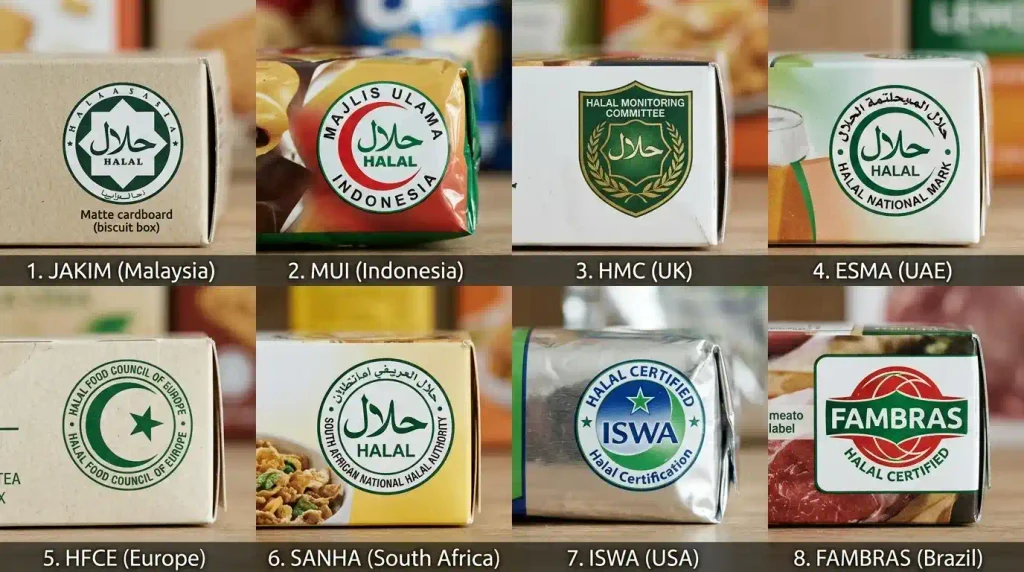
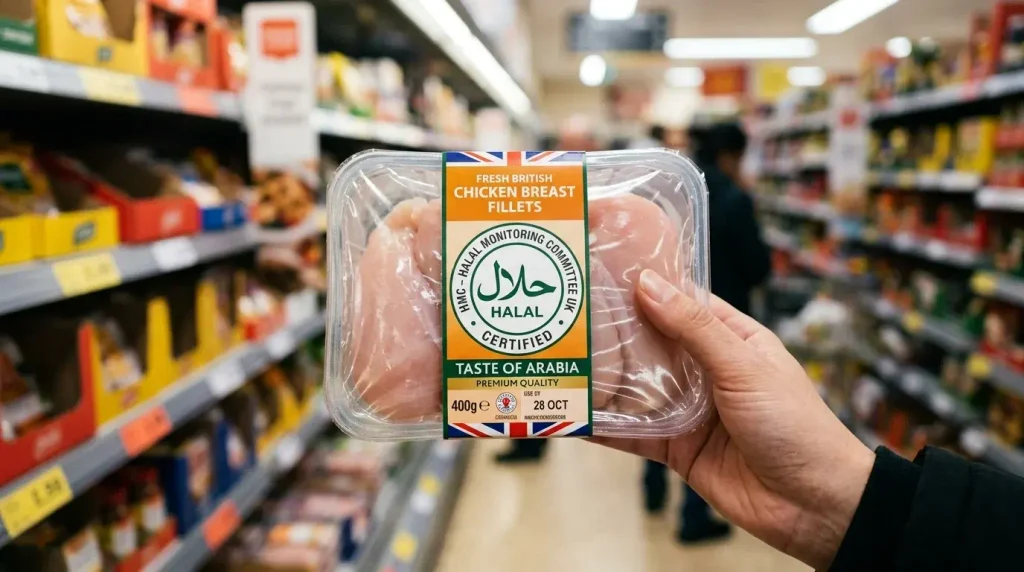
Halal certification isn’t a single, government-run stamp. It comes from independent Islamic organizations that audit slaughterhouses, verify ingredients, and inspect facilities before issuing a certificate, usually valid for about a year. In the US, the names to look for on packaging include the Islamic Food and Nutrition Council of America (IFANCA), Islamic Services of America (ISA), the Halal Food Council USA, and Halal Monitoring Services (HMS). Some brands also print a plant processing code instead of a full logo, so if you don’t see a certification mark, it’s worth checking the company’s website or calling before assuming either way.
A few practical notes for shopping: certification is usually tied to a specific plant or product line, not an entire company, so one product from a brand can be certified while another isn’t. Larger chains like Whole Foods and Costco now carry halal-certified chicken in most regions, and dedicated halal butchers remain the most reliable option if you want certainty about hand slaughter specifically.
Is Halal Chicken More Expensive, and Why
If you’ve priced it out at the counter, you’ve probably noticed halal chicken often costs a bit more than the conventional package next to it. A few things drive that gap. Hand slaughter is slower and more labor-intensive than a fully automated line, certification itself carries an annual audit fee that gets passed down through the supply chain, and many halal producers operate at a smaller scale than the largest conventional processors, which means less pricing power on feed and logistics. None of that is required by Islamic law itself; a certifying body only checks the slaughter and ingredient requirements, not the farm size or feed brand. The premium you’re paying is really funding the extra steps and oversight, not a religious markup.
What the Halal Logo Actually Guarantees
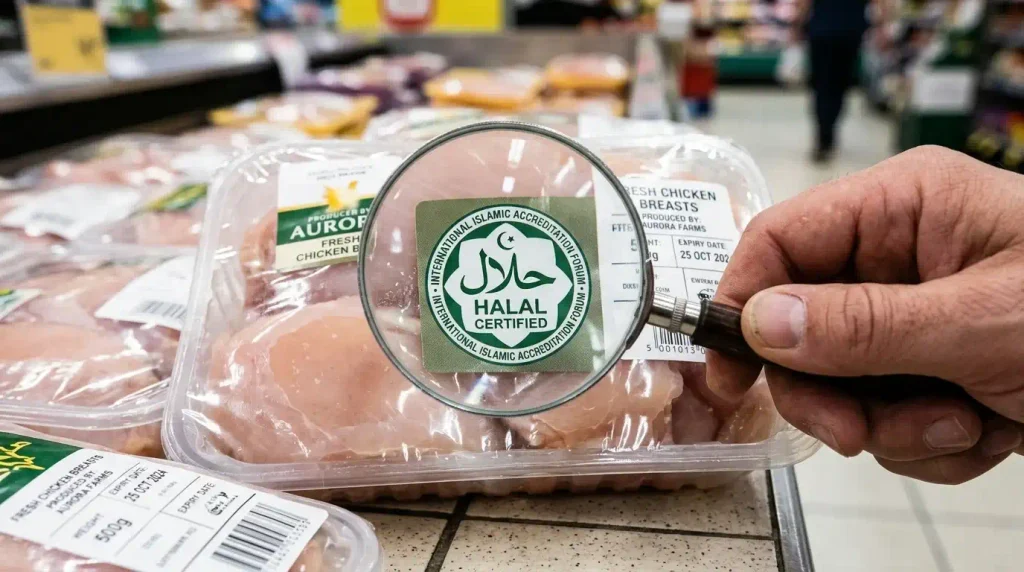
A halal logo on a chicken package is a promise about process, not a promise about taste, freshness, or nutrition. It tells you that an independent certifier reviewed the slaughter method, confirmed a Muslim performed or oversaw the cut with the blessing spoken, and verified that no haram ingredients (like pork-derived additives) touched the product afterward. It doesn’t tell you whether the bird was hand- or machine-slaughtered unless the certifier specifies that on the label, and it doesn’t guarantee the chicken was raised without antibiotics or hormones. Those are separate claims that need their own labeling, so if a specific standard matters to you beyond the halal requirement itself, it’s worth reading the fine print or reaching out to the certifier directly rather than assuming the logo covers everything.
Why More Home Cooks Are Reaching for Halal Chicken
Once you know what to look for, buying halal chicken is straightforward: check the packaging for a recognized certifier’s logo, or ask your butcher directly whether the chicken was hand-slaughtered if that distinction matters to you. Whether you’re cooking for religious reasons or just curious about where your chicken comes from, understanding the process behind the label makes the choice a lot less confusing next time you’re standing in the meat aisle.
Does cooking method affect whether chicken is halal?
No. Grilling, roasting, frying, or cooking on a charcoal spit has nothing to do with halal status. That’s decided entirely at the slaughter stage, before the chicken ever reaches a pan or a marinade.
Is halal chicken healthier than regular chicken?
Not inherently. The two are nutritionally comparable, and there’s no peer-reviewed evidence that halal slaughter itself changes the meat’s nutritional value. Any perceived health edge usually comes from separate factors, like a producer’s feed practices or farming scale, not from the religious slaughter requirement.
Can non-Muslims eat halal chicken?
Yes, without restriction. Plenty of non-Muslim shoppers choose halal chicken specifically for the full blood drainage, which some describe as producing a cleaner taste, and for the emphasis on humane handling built into the process.
Is all chicken at my grocery store halal?
Not automatically, even at stores that stock some halal products. Halal and non-halal chicken are often sold side by side, and the packaging doesn’t always make the distinction obvious unless you look for a certification logo or ask staff directly


Pingback: Mexican Black Beans Recipe (Easy & Ready in 30 Minutes)
Pingback: Steelhead Trout vs Salmon: Key Differences