Hidden Barn Door Hardware: What It Is and How to Choose It
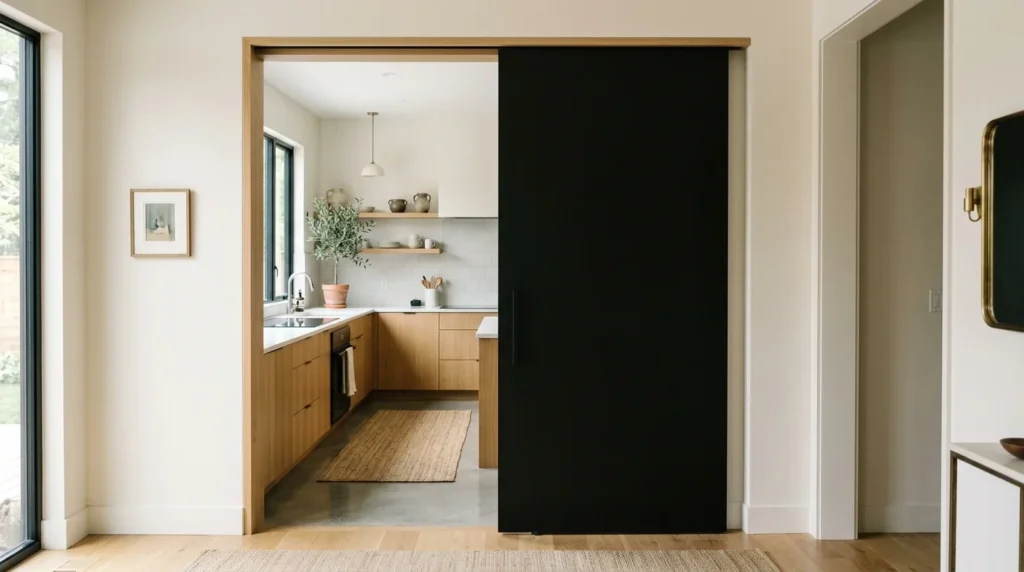
Hidden barn door hardware conceals the rollers and track that make a sliding door glide, so all you see from the room is the door panel itself moving across the wall. If you like the idea of a sliding door for a pantry, laundry closet, or home office, but the exposed rail and hangers feel too rustic for the rest of your kitchen or living space, this hardware category exists to fix that. It swaps the visible farmhouse-style track for a setup that reads as clean, modern, and almost architectural.
What Is Hidden Barn Door Hardware?
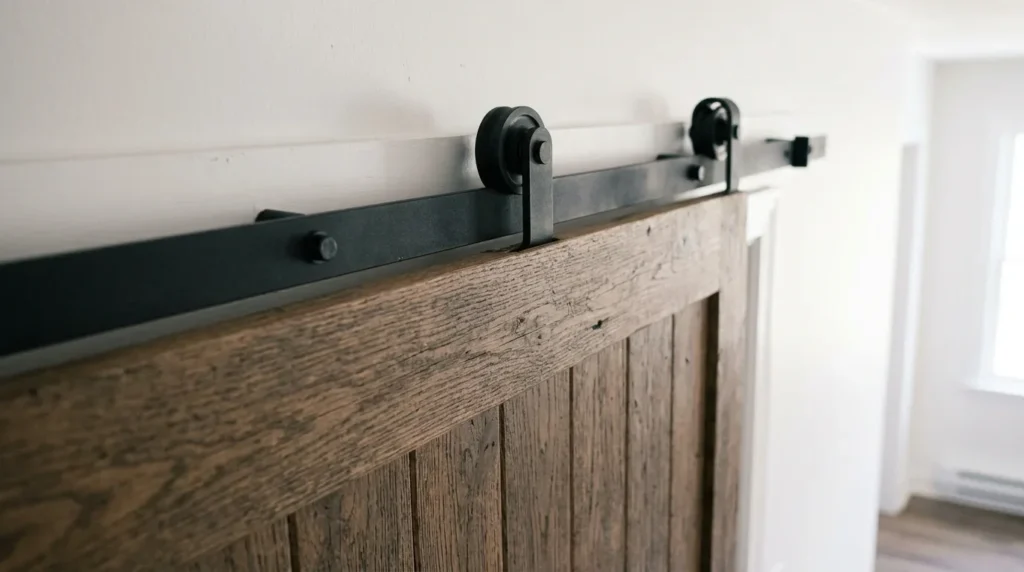
Hidden barn door hardware is a sliding door system where the roller mechanism mounts behind the door panel instead of above it, so the moving parts disappear from view once the door is hung. You’ll still see the track ends past the width of the door and the mounting hardware at the header, but the rollers themselves stay tucked out of sight. The result is a floating, minimalist look, achieved without routing the door or recessing the wall on most kits.
This is different from the older idea of “invisible” pocket-style hardware, where the mechanism is buried inside a channel cut into the door itself. That look is dramatic in photos, but it relies on just two connection points, one at the top and one at the bottom, which is a weaker way to hang a heavy door. Most hidden roller kits sold today avoid that problem by keeping the hardware surface-mounted and simply repositioning it behind the door face.
How Hidden Barn Door Hardware Works
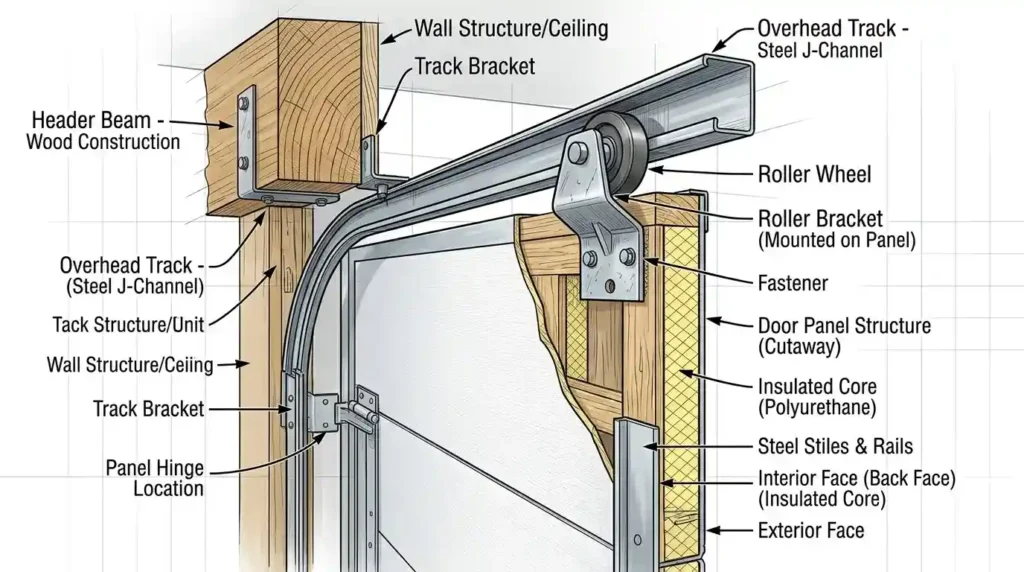
A standard barn door track sits above the doorway, with rollers hanging down and forward so you see the wheels and straps every time you look at the door. Hidden barn door hardware flips the position of the roller assembly. Instead of sitting on top of the door’s upper edge, it mounts to the back of the door and rides along the same overhead track a normal kit would use.
The mechanics are nearly identical to standard hardware. The track still mounts to the wall at the header, and the roller still travels along the top of that track. The only real change is where the assembly attaches, which is why a hidden roller kit doesn’t require any special door prep, wall recessing, or structural changes beyond what any barn door install already needs: solid blocking or a header board behind the drywall.
A separate, less common style relies on a bottom track instead of an overhead one. In these kits, a track fastens to the back of the door near the floor, and small wheels roll along the ground rather than hanging from above. Either way, the goal is the same: get the working parts out of your sightline while the door still slides.
Hidden Barn Door Hardware vs. Traditional Sliding Door Hardware
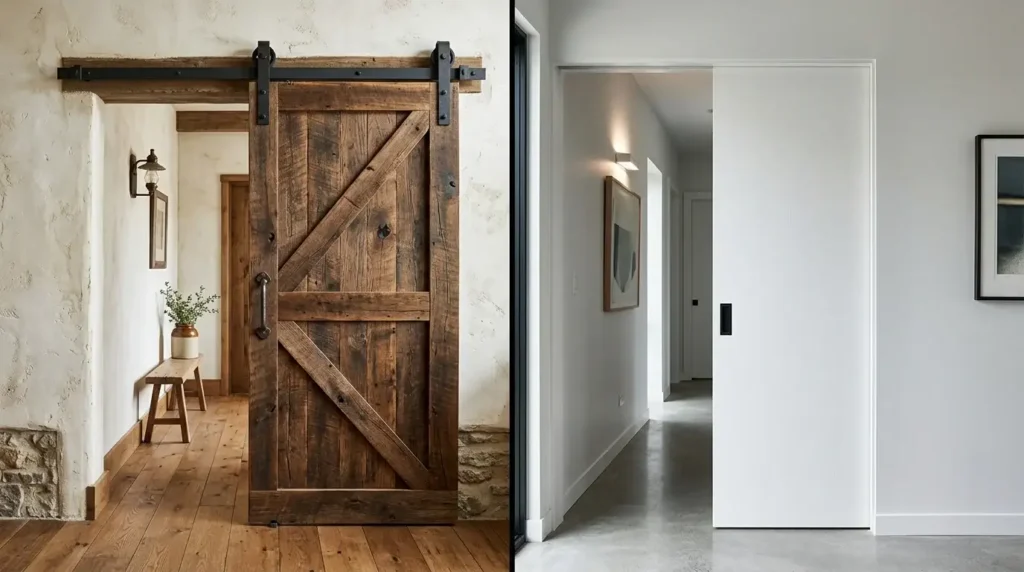
The functional job is identical between the two. What changes is appearance, cost, and a few installation details worth knowing before you order.
| Feature | Traditional Track Hardware | Hidden Barn Door Hardware |
|---|---|---|
| Visible rollers | Yes, hangers and wheels show | No, concealed behind the door |
| Wall offset | About 3/8 in | About 1 in (roller sits behind door) |
| Best suited style | Farmhouse, industrial, rustic | Modern, minimalist, transitional |
| Soft close availability | Usually available | Often unavailable on hidden roller kits |
| Typical price | $80 to $250 | $130 to $400+ |
| Header clearance needed | Varies by kit | At least 4-3/8 in above the opening |
If the exposed rail and rollers are part of the look you want, standard hardware is simpler to source, easier to find in more finishes, and usually less expensive. If you want the door to read as a floating panel with no hardware visible on the face, hidden barn door hardware is the category built for that.
Types of Hidden Barn Door Hardware Kits
Not every “hidden” kit hides the same thing, so it’s worth knowing what you’re actually buying.
Header-mounted concealed roller kits are the most common and most structurally sound option. The track sits at the top of the doorway as usual, and the roller assembly bolts to the back of the door instead of the top edge. This is the style most home improvement retailers and specialty barn door companies sell today.
Bottom-rolling kits use a track mounted to the back of the door near the floor, with small wheels running along a strip on the ground. These can work well in kitchens and pantries where a low-profile look at the header matters more than at the floor, though the exposed floor strip is a tradeoff to consider if you have pets or small kids running through the doorway.
Routed or pocket-style systems carve a channel into the door itself so the hardware sits fully inside the panel, connected at just two points. These look the most seamless in photos, but the reduced number of connection points makes them a less durable choice for a heavy, frequently used door. Most hardware specialists steer homeowners away from this style for anything beyond decorative or lightweight applications.
What to Measure Before You Buy Hidden Barn Door Hardware
Ordering the wrong size is the single most common mistake with any barn door project, and hidden roller kits have a couple of extra measurements standard kits don’t.
Header clearance. Most hidden roller systems need at least 4-3/8 inches of clearance between the top of the door and the top of the rough opening for the hardware to physically fit. If your ceiling is low or the opening is unusually tall relative to the space above it, measure this first, before you fall in love with a specific kit.
Wall offset. Because the roller assembly sits behind the door rather than above it, a hidden roller door typically hangs about 1 inch off the wall, compared to roughly 3/8 inch for standard hardware. That extra inch rarely matters, but it can be a problem in a tight hallway or a narrow reveal next to cabinetry.
Track length. The rule is the same as with any sliding barn door: the track needs to be at least twice the width of the door for the opening to clear fully. A 36-inch door needs at least a 72-inch track. For a two-door biparting setup, add both door widths together, then double that number.
Weight capacity. Kits are typically rated in two tiers, a lighter-duty option good for around 125 pounds per door, and a heavy-duty option rated closer to 250 pounds. Solid wood doors, glass-panel doors, and anything over roughly 1.5 inches thick usually call for the heavier-duty rollers.
Cost of Hidden Barn Door Hardware
Budget for the hardware kit alone somewhere between $130 and $400, depending on finish, weight rating, and brand. Big box retailers carry entry-level kits in the $100 to $200 range, rated for doors up to around 130 pounds. Specialty hardware companies charge more, often $180 to $260 for a single-door kit in a premium finish like matte black or bronze, partly because these are made to order rather than stocked.
If you’re buying a complete door-and-hardware package rather than hardware only, expect to pay considerably more, often $300 to $950 depending on the door material, size, and finish. Solid wood and glass-panel doors sit at the higher end of that range. Add another $100 to $150 if you want handles, a lock, or a floor guide that isn’t already bundled into the kit, and factor in professional installation costs if you’re not doing it yourself, since hidden roller hardware isn’t always a beginner-friendly DIY project.
Installing Hidden Barn Door Hardware: What to Expect
For a handy homeowner, installing hidden barn door hardware is a weekend project, not a multi-day one. Most kits ship with the track, roller assembly, mounting hardware, and a floor guide included, though handles and soft close are frequently sold separately or unavailable on hidden roller styles.
The header still needs solid backing, either wall studs in the right spot or a header board, ideally at least a 1×6, installed across the opening before the track goes up. Skipping this step is the most common reason a barn door sags or pulls away from the wall later. Once the header is solid, the track mounts at the correct height, the roller assembly attaches to the back of the door, and the door hangs on the track. Many installers find the trickiest part isn’t the mounting itself, it’s lifting a heavy door onto the track alone, so a second set of hands makes the job considerably easier.
Is Hidden Barn Door Hardware Right for Your Space?
Hidden barn door hardware makes the most sense when you want the space-saving benefit of a sliding door without the rustic, exposed-track look that comes with traditional barn door hardware. It suits modern kitchens, minimalist pantries, and transitional-style homes where a visible rail would clash with the rest of the design. If the exposed hardware is actually part of the aesthetic you’re after, or if budget is the top priority, traditional hardware remains the simpler and more affordable route.
Is hidden barn door hardware hard to install?
Not for a moderately handy DIYer, though it’s a step up from standard barn door hardware. The extra measurements around header clearance and wall offset mean there’s less room for error, and you’ll want solid blocking behind the wall before you mount the track. Most kits can still be installed in a few hours with basic tools.
Does hidden barn door hardware work with heavy doors?
Yes, as long as you choose the right roller tier. Lighter-duty kits typically top out around 125 pounds per door, while heavy-duty versions are rated for roughly 250 pounds, which covers most solid wood and glass-panel doors. Always check the manufacturer’s weight rating against your actual door before ordering.
Can you add soft close to hidden barn door hardware?
Sometimes, but not always. Several header-mounted hidden roller systems don’t support soft close because of how the roller assembly is positioned behind the door. If a quiet, cushioned stop matters to you, check that specific feature before buying, since it varies by brand and kit style.
How much clearance do you need for hidden barn door hardware?
Plan for at least 4-3/8 inches between the top of the door and the top of the rough opening, since that’s the minimum most concealed roller assemblies need to physically fit and travel smoothly. You’ll also want roughly 1 inch of clearance between the door and the wall once it’s hung, slightly more than standard hardware requires.
Is hidden barn door hardware more expensive than standard hardware?
Generally yes, by roughly $50 to $150 per kit, mainly because concealed roller kits are often made to order in a narrower range of finishes rather than mass produced. The floating, no-visible-hardware look is the tradeoff you’re paying for.
If you’re weighing a sliding door for a pantry, laundry nook, or awkward kitchen corner, hidden barn door hardware is worth a closer look before you commit to a swinging door or a standard track. Measure your header clearance first, decide how much of a wall offset you can live with, and match the roller rating to your actual door weight. Browse more kitchen and home upgrade guides on Kitchennista for the rest of the project, from choosing the door panel to picking hardware finishes that match your space.