
Kitchennista recipe card
Simple Mac and Cheese Without Flour
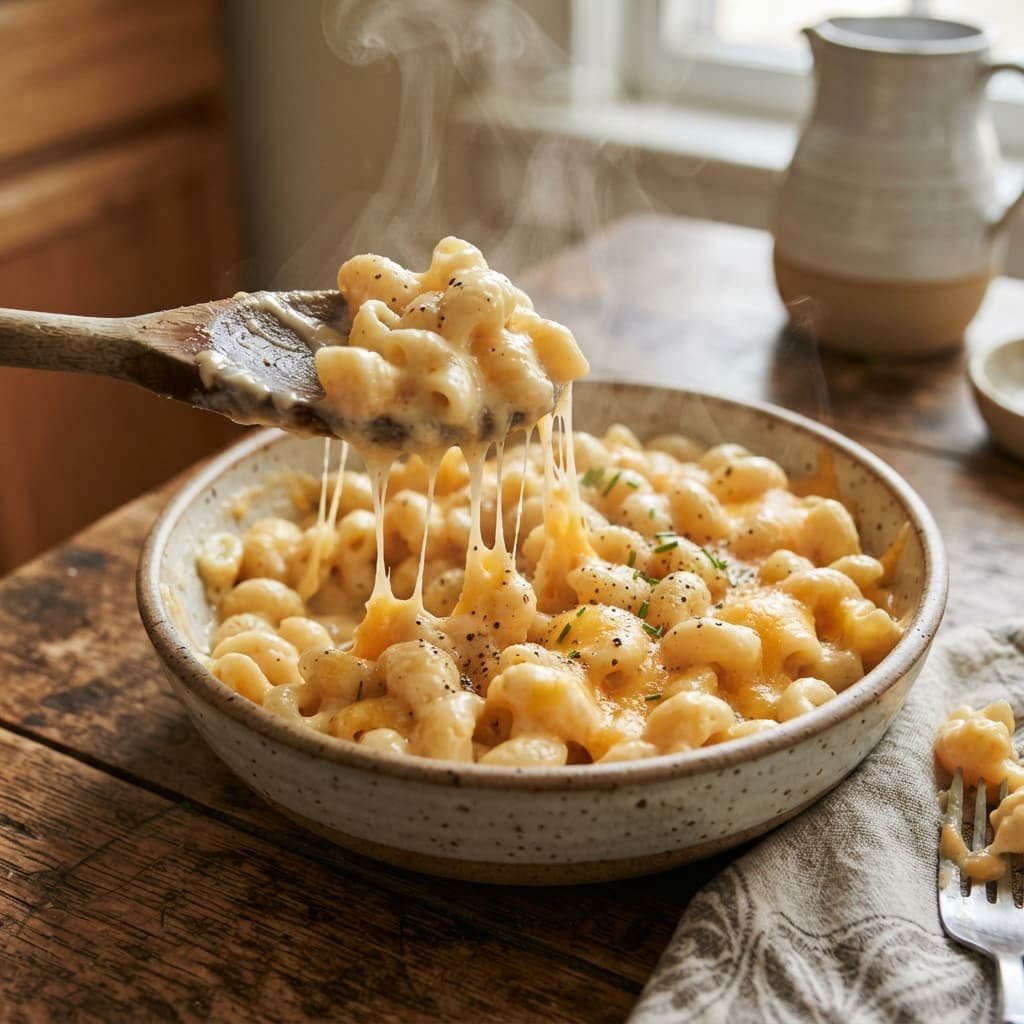
No roux, no flour, no baking. Just elbow macaroni folded into a glossy cheddar sauce in one pot, in about 20 minutes.
Ingredients
- 8 oz elbow macaroni
- 3 tbsp butter
- 1 cup whole milk
- 2 cups sharp cheddar cheese, freshly shredded
- 1/2 cup Gruyere, Monterey Jack, or Parmesan, freshly shredded
- Salt and black pepper, to taste
- Pinch of smoked paprika or mustard powder (optional)
- Reserved pasta water, as needed
Instructions
- Boil the pasta: bring a large pot of salted water to a boil, add the macaroni, and cook until just al dente, 7 to 8 minutes. Reserve 1/2 cup of the pasta water, then drain.
- Make the sauce base: return the empty pot to low heat and melt the butter. Pour in the milk and warm it gently until it is hot and steaming, but not boiling.
- Melt the cheese: take the pot off the heat and add the cheese in small handfuls, stirring until each handful melts before adding the next.
- Combine: return the pasta to the pot and fold it through the sauce until every piece is coated. Add a splash of reserved pasta water, a little at a time, until the sauce turns glossy and loose enough to coat a spoon.
- Season and serve: season with salt, pepper, and a pinch of paprika or mustard powder if you like. Serve right away while the sauce is hot and creamy.
Nutrition (estimated, per serving)
About 480 kcal, 44 g carbohydrates, 20 g protein, 24 g fat, 14 g saturated fat, 680 mg sodium, 2 g fiber, and 4 g sugar. Values are estimates and will change with the cheese and milk you use.
You do not need flour to make a creamy, comforting bowl of mac and cheese. In fact, if you are looking for a quick stovetop version, skipping the flour can make the whole process easier. This simple mac and cheese without flour uses the starch from the pasta, warm milk, butter, and freshly grated cheese to create a sauce that coats every noodle. There is no roux to make, no flour to cook out, and no second saucepan waiting in the sink.
The whole thing takes about 20 minutes, which makes it especially handy when you need an easy dinner and do not want to turn cooking into a project. The trick is not complicated: cook the pasta until it is just tender, save some of that starchy cooking water, and add the cheese gently over low heat. Those small details are what keep the sauce creamy instead of oily or grainy.
Why You Will Love This Recipe
- One pot, 20 minutes. Dinner is on the table fast, and there is barely anything to wash up.
- No roux, no flour. You skip the whisking, the cooking-out step, and the worry about a floury taste.
- Real cheese flavor. Sharp cheddar leads, with Gruyere, Monterey Jack, or Parmesan rounding it out.
- Flexible portions. It makes about four servings as a main dish, or around six smaller side portions.
- Easy to adapt. Stir in broccoli, chicken, or bacon, swap the pasta, or add a little heat.
Ingredients and Notes
Everything here is short and ordinary, which is part of the point. The cheese does most of the work, so it is worth choosing it with a little care.
- Elbow macaroni (8 oz): the classic shape, with plenty of curves to hold sauce. Shells or cavatappi work well too.
- Butter (3 tbsp): adds richness and helps the sauce come together. Salted or unsalted both work; taste before adding extra salt.
- Whole milk (1 cup): gives the sauce a good balance of richness and looseness. Lower-fat milk works, but the sauce will be a little thinner.
- Sharp cheddar (2 cups, freshly shredded): the main flavor. Grate it from a block for the smoothest melt.
- Gruyere, Monterey Jack, or Parmesan (1/2 cup): Gruyere adds a nutty note, Monterey Jack melts very smoothly, and Parmesan adds savory depth. Pick the one you like, or mix two.
- Salt and black pepper: season at the end, because the cheese already brings salt.
- Smoked paprika or mustard powder (optional): a small pinch sharpens the cheese flavor without making the dish spicy.
- Reserved pasta water: the starchy water you save before draining. A splash at a time loosens the sauce and helps it cling.
How to Make Mac and Cheese Without Flour
There are five steps, and none of them needs much attention on its own. What matters is the order, and keeping the heat low once the cheese goes in.
1. Cook the Macaroni
Bring a pot of water to a boil and season it generously with salt. Add the macaroni and cook until it is just al dente, usually 7 to 8 minutes. Before draining, scoop out about 1/2 cup of the cooking water. That cloudy water is not waste; it is full of starch, and it is the easiest way to adjust the sauce later. Drain the pasta, but do not rinse it. Rinsing washes away surface starch that helps the sauce hold on.
2. Warm the Butter and Milk
Put the same pot back on the stove and melt the butter over medium-low heat. Add the milk and warm it gently. You want it hot enough to combine with the cheese, but not boiling. Boiling the dairy at this stage does not make the sauce better. It can make the cheese more likely to split.
3. Add the Cheese Slowly
Turn the heat down to low, and take the pot off the heat if it feels too hot. Add the shredded cheese a handful at a time, stirring after each addition until it melts. This is one of the most important parts of the recipe. Dumping all the cheese in at once makes it harder for it to melt evenly, and it is more likely to clump. Gentle heat gives the cheese time to melt into the warm dairy instead of seizing.
4. Add the Pasta
Return the cooked macaroni to the pot and stir until the noodles are evenly coated. If the sauce looks too thick, add a tablespoon or two of the reserved pasta water and stir again. Keep adding small amounts until the sauce reaches the consistency you like. Remember that mac and cheese thickens as it sits, so it is usually better to leave it a touch looser than you think it needs to be.
5. Season and Serve
Taste before adding more salt, because cheddar and the other cheeses can already be quite salty. Add black pepper and, if you like, a small pinch of paprika or mustard powder. Serve immediately while the sauce is hot and creamy.
Pro Tips for the Creamiest Sauce
- Grate your own cheese. Packaged shredded cheese is often coated to keep it from clumping, and that coating can make the sauce grainy. A block and a grater take a couple of minutes and melt far more smoothly.
- Keep the heat low. Cheese does not need aggressive heat to melt. Low and slow is what keeps the sauce glossy.
- Add cheese in handfuls. Each handful should disappear into the sauce before the next one goes in.
- Do not boil the sauce. Once the cheese is in, high heat can push the fat and protein apart, and the sauce turns oily.
- Save the pasta water even if you think you will not need it. It is the simplest fix for a sauce that is too thick, and it works better than plain water.
- Serve it right away. This is at its best hot, straight from the pot, before the sauce has time to set.
Common Mistakes to Avoid
Using Too Much Heat
This is probably the easiest way to ruin an otherwise good cheese sauce. If the cheese gets too hot, it can separate and leave you with a greasy sauce and little clumps. Low heat and patience are much more useful than turning the burner up.
Forgetting the Pasta Water
You may not need the whole 1/2 cup you save, but having it available gives you control over the final texture. Add it a little at a time rather than pouring it all in.
Rinsing the Pasta
Rinsing cooked macaroni washes away surface starch. For this recipe, that starch is part of the sauce. Unless you are making a cold pasta salad, there is usually no reason to rinse.
Overcooking the Pasta
Very soft pasta can become mushy once it is mixed with the hot cheese sauce. Cook it to al dente so it still has enough structure when you combine everything.
Using Only a Very Dry Cheese
Some aged cheeses do not melt into a smooth sauce as easily as younger, softer ones. If you are using a strongly flavored aged cheese, combine it with a cheese that melts well, such as Monterey Jack or young cheddar.
Variations
- Broccoli mac and cheese: stir in steamed broccoli florets at the end, just until heated through.
- Chicken or bacon: add diced cooked chicken or crispy bacon for a heartier main dish. Leftover Southern fried chicken, diced, works well here too.
- Gluten-free: use a certified gluten-free macaroni or another short gluten-free pasta. Watch the cooking time, since gluten-free pasta can go from firm to soft quickly.
- Baked: transfer the finished mac and cheese to a baking dish, add extra shredded cheese and a gluten-free breadcrumb topping if you like, and bake at 375 F for 15 to 20 minutes.
- Spicy: add a pinch of cayenne, chopped jalapenos, or a little hot sauce to taste.
- Extra smooth: swap half the cheddar for American cheese, which melts into a very silky sauce.
- Caramelized onions: fold in caramelized onions for a sweet, savory depth.
How to Store and Reheat
Homemade mac and cheese is best when eaten fresh, but leftovers can still be good. Store cooled leftovers in an airtight container in the refrigerator and use them within 3 days. The sauce will become noticeably thicker when cold. That is normal.
For stovetop reheating, place the mac and cheese in a saucepan over low heat and add a splash of milk, stirring until it loosens and heats through. If you are using a microwave, heat it in short intervals, stirring between each one. Avoid blasting it on high heat for several minutes. That is a quick way to turn the sauce grainy.
You can freeze mac and cheese, but the texture may change after thawing. Dairy sauces do not always come back the same. If you decide to freeze it, thaw it in the refrigerator and reheat gently with a little milk. For the best texture, though, this is one of those dishes that is better made fresh.
What to Serve With Mac and Cheese
This mac and cheese can easily stand on its own, but a few simple sides make it a fuller meal. For a weeknight dinner, serve it with steamed broccoli, a simple green salad, or roasted vegetables. For a larger gathering, it works well alongside roasted meats, barbecue, or fried chicken.
It also pairs well with chicken and waffles on a comfort-food spread, with Dave’s hot chicken when you want something spicy next to something creamy, or with a light chickpea salad to balance the richness. If you are serving it as a side dish, keep the portions smaller because the cheese sauce is rich.
Frequently Asked Questions
What can I use instead of flour in mac and cheese?
Pasta starch is the simplest substitute. Save some of the starchy water from cooking the pasta and use it to loosen and thicken the sauce. Cornstarch mixed with cold milk is another option, but this recipe uses neither flour nor cornstarch. The pasta starch and the melted cheese do the thickening.
What happens if you do not use flour in mac and cheese?
The sauce is usually lighter and a little less stable than a roux-based sauce. It still turns creamy if you keep the heat low, add the cheese gradually, and use a little pasta water to adjust the texture. It thickens as it cools, so serve it while it is hot.
How do you make mac and cheese with 3 ingredients?
At its simplest, you need pasta, cheese, and milk. Cook the pasta, warm the milk with a little butter if you have it, and melt the cheese in gently off the heat. This recipe adds butter, salt, and pepper, but the core of it is just those three.
How do you thicken mac and cheese without flour?
Save some of the water used to cook the pasta. That starchy water helps the sauce cling to the noodles and gives it body. Add it a tablespoon at a time until the sauce coats a spoon. Letting the finished dish sit for a minute or two also thickens it, since the pasta keeps absorbing liquid.
Why is my flourless mac and cheese grainy?
The most common reasons are too much heat, adding the cheese too quickly, or using pre-shredded cheese. Take the pot off the heat, add the cheese a handful at a time, and use freshly grated cheese. If the sauce has already split, a splash of warm milk and gentle stirring can sometimes bring it back.
Can I make mac and cheese without flour and cornstarch?
Yes. This recipe uses neither. The pasta’s natural starch and the cheese provide the thickness. You do not need a starch slurry at all if you keep the heat low and use a little reserved pasta water.
Can I use evaporated milk in mac and cheese without flour?
Yes. Evaporated milk can make the sauce rich and creamy, and it is a useful alternative to whole milk. Use the same amount, warm it gently, and do not let it boil. Half-and-half works the same way if that is what you have.
Related Recipes
- Dave’s Hot Chicken Recipe
- Southern Fried Chicken Recipe
- How to Fry Chicken Wings
- Chicken and Waffles Recipe
- Creamy Chicken Soup Recipe
- Chickpea Salad Recipe
- Caramelized Onion Dip Recipe
- Too Much Chocolate Cake Recipe
- Recipe for Banana Bread
- Dave’s Hot Chicken Fallout Meal
Disclaimer: This recipe is for home cooking and general information only. Nutrition values are estimates and will vary with the brands and exact ingredients you use. If you have a food allergy or a medical condition, check the labels on your ingredients and consult a professional before making changes to your diet.

Shafia writes kitchen recipes and food guides for Kitchennista. She focuses on clear, practical cooking ideas that readers can follow at home. Her work aims to make everyday cooking simpler and more enjoyable.