
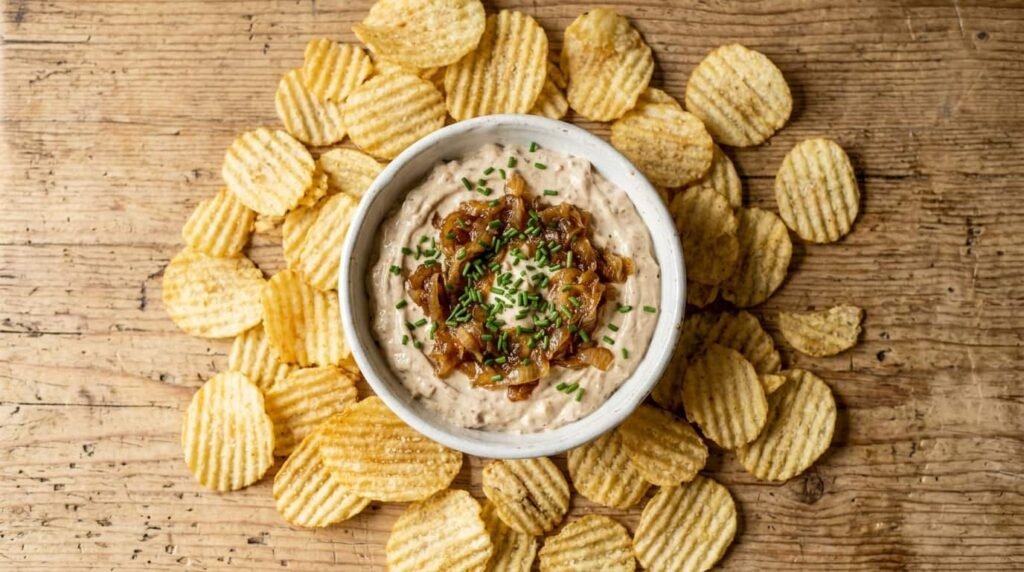
Caramelized Onion Dip
Ingredients
Instructions
Caramelized onion dip is one of those recipes that quietly takes over every table it lands on. Slow-cooked onions turn sweet and jammy, then get folded into a tangy cream cheese and sour cream base until the whole bowl tastes like the best version of the onion dip you grew up eating, minus the powdered soup packet. It takes some patience at the stove, but almost none of it is active work, and the payoff is a dip that disappears faster than anything else on the table.
Why You’ll Love This Caramelized Onion Dip
This isn’t the dehydrated onion soup mix dip from your childhood pantry. The onions here are cooked low and slow until they’re deeply golden brown, which pulls out their natural sugars and gives the dip a rounded, almost nutty sweetness that powdered mixes can’t fake. It’s also genuinely make-ahead friendly. The flavor actually improves after a few hours in the fridge, which makes it one of the easiest appetizers to have ready before guests show up. And it’s forgiving. Yellow onions, sweet onions, or a mix all work, so you can make this with whatever’s in your pantry.
Ingredients You’ll Need
The onion side of this recipe is simple: yellow onions, a little butter, and a splash of olive oil so the butter doesn’t burn before the onions release their moisture. Sweet onions like Vidalia work too if you want an even milder, sweeter finish.
For the base, cream cheese gives the dip its body while sour cream and mayonnaise loosen it up so it’s scoopable instead of stiff. If you only have Greek yogurt, it can replace some or all of the sour cream, though the dip will taste slightly tangier and a bit thinner. Worcestershire sauce and a little onion powder round out the savory notes without making the dip taste artificial, and garlic adds depth without overpowering the onions. Fresh chives at the end give it color and a mild bite. Dried chives work in a pinch, use about a third of the amount.
How to Make Caramelized Onion Dip
Start the onions in butter and olive oil over medium-low heat, not medium or higher. This is the step people rush, and it’s the one that decides whether your dip tastes like this recipe or like plain sautéed onions. Slice the onions thin and even, a mandoline helps here but a sharp knife works fine too. Add a little salt early to help draw out moisture, then let them cook slowly, stirring every few minutes so nothing on the bottom scorches. Somewhere around the 30 minute mark you’ll notice the onions turning from translucent to a deep amber color and smelling almost sweet. That’s the signal you’re close. Keep going another 10 to 15 minutes until they’re a rich golden brown and jammy in texture, not just softened.
Let the onions cool before mixing them into the dairy base. Warm onions will melt the cream cheese unevenly and can make the dip separate or turn oily once chilled. Spreading them on a plate speeds up cooling to about 15 minutes instead of leaving them in a bowl. Once the base is mixed smooth, fold in the cooled onions gently so you keep some texture instead of turning everything into a paste.
Pro Tips for the Best Caramelized Onion Dip
Patience matters more than any specific ingredient here. Onions caramelized in 15 or 20 minutes over higher heat will taste browned but not truly sweet, since the slow breakdown of sugars needs low, steady heat over time. If your onions start sticking or browning unevenly, add a tablespoon of water to the pan and scrape up the browned bits, this keeps the flavor in the pan instead of burning onto the bottom.
Room temperature cream cheese blends far more smoothly than cold cream cheese straight from the fridge, so pull it out while the onions cook. And don’t skip the resting time in the fridge. An hour is the minimum, but overnight is where this dip really comes together, since the onion flavor has time to spread through the whole base instead of sitting in pockets.
Common Mistakes to Avoid
The most common issue is impatience with the onions, cranking the heat to speed things up almost always leads to spots of char instead of even caramelization, and burnt onions taste bitter, not sweet. Another frequent mistake is mixing warm onions directly into cold cream cheese, which causes the fat in the dairy to separate slightly once it’s chilled again.
Skipping the salt during the onion cooking stage is another one worth avoiding, since salt helps pull moisture out early and speeds up even browning. Finally, don’t skip tasting before you chill the dip. Cold temperatures mute salt and seasoning, so a dip that tastes perfectly balanced warm can taste flat once refrigerated. A quick extra pinch of salt right before serving usually fixes this.
Variations and Substitutions
Red onions or shallots can replace some or all of the yellow onions for a slightly sharper, more complex flavor. For a smokier version, stir in a small pinch of smoked paprika or a spoonful of crumbled cooked bacon. Cheese lovers can fold in a handful of shredded gruyere or sharp white cheddar for a richer, slightly nutty finish that leans closer to French onion soup.
For a lighter version, swap the mayonnaise for additional Greek yogurt and use light cream cheese, though the texture will be a bit less rich. This recipe is also naturally gluten-free as long as your Worcestershire sauce is labeled gluten-free, since some brands contain trace wheat.
Storage and Make-Ahead Tips
Caramelized onion dip stores well in an airtight container in the fridge for up to 5 days, and honestly tastes even better on day two once the flavors have had time to settle. This makes it an ideal dip to prep the day before a party instead of scrambling the morning of.
Freezing isn’t recommended. The dairy base, especially the sour cream and mayonnaise, tends to separate and turn grainy once thawed, and no amount of stirring fully brings back the original creamy texture. If you want a freezer-friendly shortcut, caramelize a big batch of onions on their own and freeze just those in a flat layer in a freezer bag for up to 2 months, then thaw and mix the dip fresh whenever you need it.
What to Serve With Caramelized Onion Dip
Classic potato chips are the obvious pairing, especially ridged ones sturdy enough to scoop up the onions without breaking. Pretzel crisps, bagel chips, and toasted baguette slices all work well too if you want something a little more substantial. For a lighter option, thick-cut veggies like carrots, celery, and mini bell peppers hold up well against the creamy texture. Leftovers also make a great sandwich spread or burger topping, and a spoonful stirred into scrambled eggs is worth trying if you end up with extra.
Frequently Asked Questions
Can I make caramelized onion dip ahead of time?
Yes, and it’s actually recommended. Make it up to 2 days in advance and store it covered in the fridge, the flavor improves as it sits.
Can I freeze caramelized onion dip?
Freezing the finished dip isn’t recommended because the dairy base separates and turns grainy once thawed. You can freeze just the caramelized onions on their own for up to 2 months and mix the dip fresh later.
Why aren’t my onions caramelizing?
The heat is usually too high or too low. Medium-low heat with occasional stirring over 40 to 45 minutes is the range that works, rushing it with high heat browns the outside without breaking down the sugars inside.
Can I use a different type of onion?
Yellow onions give the classic balance of sweet and savory, but sweet onions like Vidalia, red onions, or shallots all caramelize well and each bring a slightly different flavor.
Is this dip gluten-free?
Yes, as long as you check that your Worcestershire sauce is labeled gluten-free, since some brands include a small amount of wheat.
How long does this dip last in the fridge?
Stored in an airtight container, it stays good for up to 5 days.


Pingback: California Pizza Kitchen Menu: Prices & Best Picks 2026