
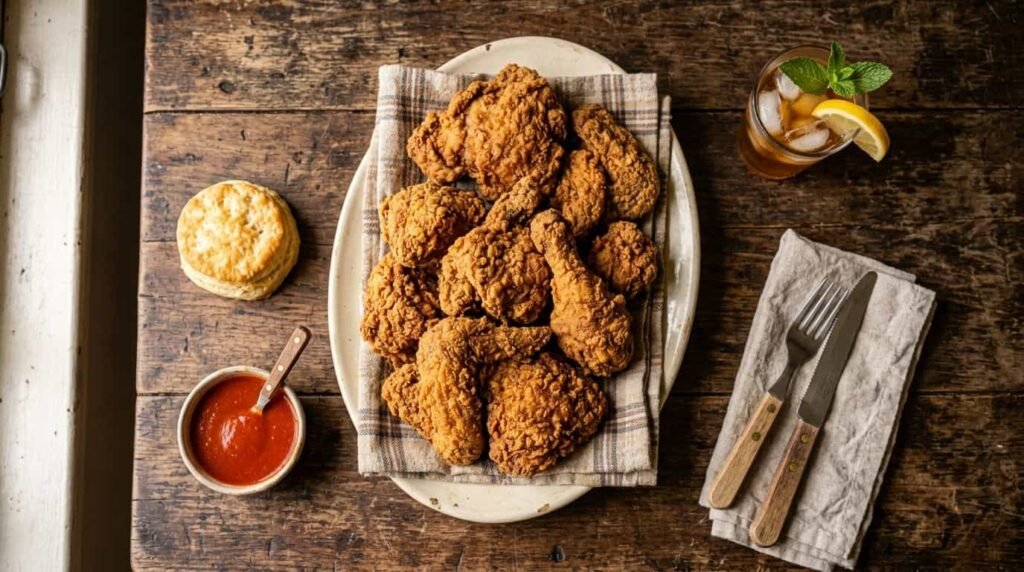
Southern Fried Chicken
Ingredients
Instructions
There’s a reason Southern fried chicken shows up at every Sunday supper, church picnic, and family reunion across the South. Done right, it’s got a crust that shatters the second you bite into it and meat underneath that stays shockingly juicy, and once you know the handful of steps that actually matter, it’s not hard to pull off in your own kitchen.
Why You’ll Love This Southern Fried Chicken
This recipe leans on a buttermilk and hot sauce soak to tenderize the chicken from the inside, then a seasoned flour dredge with a little cornstarch mixed in for extra crackle. It’s the kind of fried chicken that holds its crunch even after it cools a bit, which makes it perfect for packing into a lunchbox or setting out on a platter for a crowd. The seasoning is bold without being one-note, and nothing here requires special equipment beyond a deep pot or a cast iron skillet.
Southern Fried Chicken Recipe
Chicken: Bone-in, skin-on pieces work best here. Thighs and drumsticks are the most forgiving since the extra fat keeps them juicy, but breasts fry up beautifully too if you slice larger ones in half so they cook evenly with the smaller pieces.
Buttermilk and hot sauce: The acid in buttermilk breaks down the proteins in the chicken so it stays tender, while the hot sauce adds a background warmth rather than actual heat. No buttermilk on hand? Stir a tablespoon of lemon juice or white vinegar into regular milk and let it sit for five minutes.
Flour and cornstarch: All-purpose flour is the base of the crust, and the cornstarch is the secret to a lighter, shatter-crisp coating instead of a heavy one. If you need this gluten free, a 1:1 gluten free flour blend swaps in fine.
Seasonings: Cajun or Creole seasoning, smoked paprika, garlic powder, onion powder, salt, black pepper, and a touch of cayenne go both into the marinade area and the flour, so the flavor builds in layers instead of sitting only on the surface.
Oil: Peanut oil is the traditional choice for its high smoke point and neutral flavor, though vegetable or canola oil both work fine.
How to Make Southern Fried Chicken
Start the marinade well ahead of time, ideally the night before. The chicken sits in buttermilk spiked with hot sauce, and the longer it soaks, the more tender and flavorful it gets. When you’re ready to cook, whisk your seasoned flour together in one dish and beat your eggs in another. Pull each piece of chicken from the buttermilk, dip it in the egg, then press it firmly into the flour mixture so the coating really grabs on. This is the step people tend to rush, but pressing hard here is what gives you that thick, craggy crust instead of a thin, patchy one.
Once every piece is coated, let them rest on a wire rack for ten to fifteen minutes before frying. This short rest lets the coating dry slightly and adhere better, so it doesn’t slide off in the oil. Heat your oil to 350°F in a deep pot or cast iron skillet, filling it no more than halfway for safety. Fry the chicken in small batches, dark meat for 12 to 14 minutes and white meat for 8 to 10, turning occasionally until the crust is deep golden brown and the thickest part reads 165°F. Move the pieces to a wire rack (never paper towels) so steam can escape instead of softening the bottom of the crust.
Pro Tips for Extra Crispy Chicken
Use a thermometer, not guesswork. Oil that’s too cool leads to greasy chicken, while oil that’s too hot burns the crust before the inside finishes cooking. Bring your chicken closer to room temperature for about 20 minutes before frying so it cooks more evenly. Fry in small batches so the oil temperature doesn’t crash the second you add chicken. And season your chicken in more than one place: in the buttermilk, in the egg wash, and in the flour, so every bite is well flavored, not just the crust.
Common Mistakes to Avoid
Skipping the rest after breading. Frying immediately after dredging often means the coating slides right off in the oil.
Overcrowding the pan. Too many pieces at once drops the oil temperature fast, which leads to soggy, greasy chicken instead of a crisp crust.
Draining on paper towels. The trapped steam softens the bottom of the crust almost instantly. A wire rack keeps air moving around the chicken.
Double dipping the coating. It might sound like a shortcut to extra crunch, but a single, well-pressed layer of seasoned flour gives plenty of crackle without turning the crust thick and doughy.
Covering the chicken right after frying. A lid traps steam and undoes all that crispy work in minutes. Let it sit uncovered on the rack instead.
Variations and Substitutions
For a spicier version, add extra cayenne or a splash more hot sauce to the buttermilk soak. Swap the all-purpose flour for a gluten free blend if needed, and check that your seasoning mixes are gluten free too. You can also do a boneless version with chicken tenders or thighs, which cook faster, usually 6 to 8 minutes per batch. An air fryer works for a lighter take: coat the chicken the same way, spray lightly with oil, and cook at 375°F for about 20 to 25 minutes, flipping halfway.
Storage and Reheating Instructions
Leftover fried chicken keeps in the fridge for 3 to 4 days in an airtight container. To reheat and keep the crust crisp, skip the microwave and use the oven instead, at 375°F for 15 to 20 minutes on a wire rack set over a baking sheet. An air fryer at 350°F for about 8 to 10 minutes also brings the crunch back nicely. To freeze, let the chicken cool completely, then freeze pieces in a single layer before transferring to a freezer bag for up to 3 months. Thaw overnight in the fridge before reheating.
What to Serve With Southern Fried Chicken
Classic Southern sides round out the plate: creamy mac and cheese, collard greens, buttery mashed potatoes, coleslaw, and a basket of biscuits are all traditional pairings. For something lighter, a simple cucumber and tomato salad or cornbread on the side balances the richness of the fried chicken well.
Frequently Asked Questions
What is the best oil temperature for frying chicken?
350°F is the sweet spot. Anything much lower leads to greasy chicken, and anything much higher burns the crust before the meat cooks through.
Why did my fried chicken turn out greasy?
Usually it’s oil that wasn’t hot enough to begin with, or the pan was overcrowded, which drops the temperature and lets the coating soak up oil instead of frying in it.
Can I make fried chicken ahead of time?
You can marinate the chicken up to 24 hours ahead, which actually improves the flavor and texture. Frying is best done close to serving time, though leftovers reheat well in the oven.
How do I know when fried chicken is fully cooked?
The most reliable way is a meat thermometer inserted into the thickest part of the chicken, away from the bone, reading 165°F.
Can I use chicken breasts instead of a whole cut-up chicken?
Yes, just slice larger breasts in half crosswise so they’re a similar thickness to the thighs and drumsticks and finish cooking at the same time.

Pingback: Dave's Hot Chicken Recipe: Easy Copycat (2026 Guide)
Pingback: How to Fry Chicken Wings for Crispy Results (2026)