
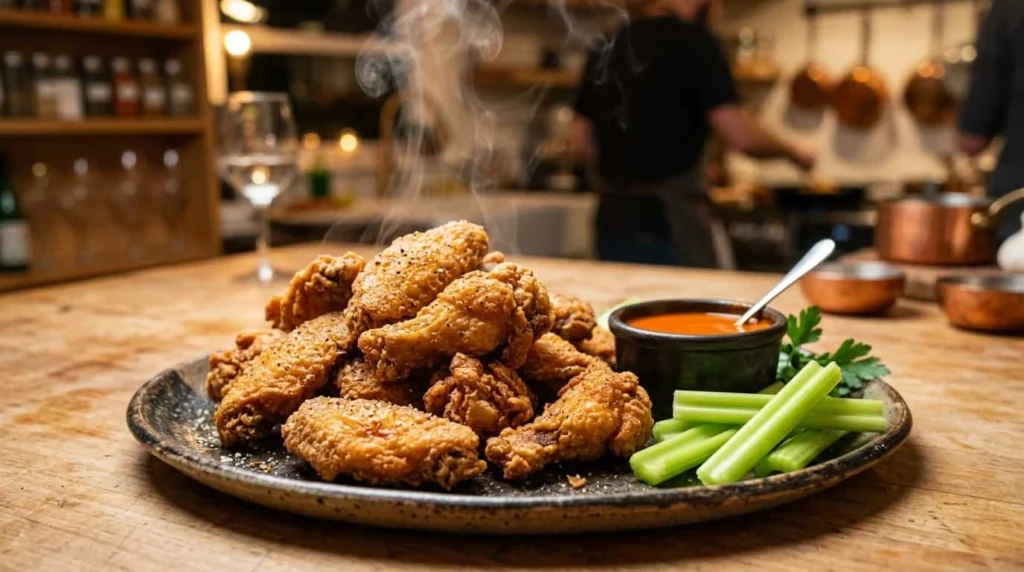
How to Fry Chicken Wings (Crispy Every Time)
There’s a right way to fry chicken wings, and it has almost nothing to do with fancy equipment. All you need is a heavy pot, some oil, and a thermometer you trust. I’ve made batches of fried chicken wings more times than I can count on a regular stovetop, no deep fryer required, and the method below is the one I keep coming back to because it delivers a shatter crisp skin and a juicy inside every single time. If you’ve ever pulled soggy or pale wings out of hot oil and wondered what went wrong, this guide walks through exactly how to fry chicken wings the way restaurants do, from prepping the wings to getting the oil temperature right to keeping every batch crispy while the rest finish cooking.
What You Need to Fry Chicken Wings
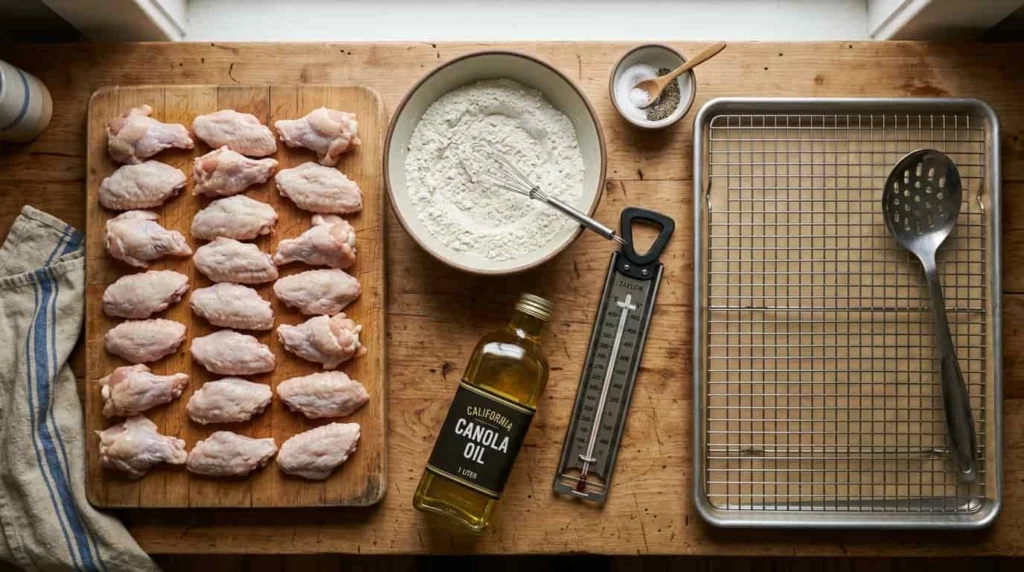
Frying wings at home doesn’t require a countertop fryer. A heavy pot or Dutch oven holds heat steadily, which matters more than the equipment itself.
- Chicken wings:
Fresh or thawed, with drumettes and flats separated. Party wings, which come pre-cut into wingettes and drumettes, save you a step. - Oil:
A neutral oil with a high smoke point, such as canola, vegetable, or peanut oil. You’ll want enough to submerge the wings by an inch or two, so plan on roughly six cups for a standard pot. - Coating:
All-purpose flour, cornstarch, or a mix of both. Cornstarch alone gives a lighter, shatter crisp shell, while flour adds a slightly heartier crust. A spoonful of baking powder stirred into either one helps pull moisture out of the skin for extra crunch. - Seasoning:
Kosher salt, black pepper, paprika, garlic powder, and onion powder are a solid base. Cayenne if you like heat. - A thermometer:
A clip-on candy thermometer or an instant read thermometer is the single most useful tool here. Guessing at oil temperature is where most home cooks go wrong. - A wire rack and rimmed baking sheet:
For draining the wings without steaming them soft, which is what happens when they sit on paper towels in a pile.
How to Fry Chicken Wings Step by Step
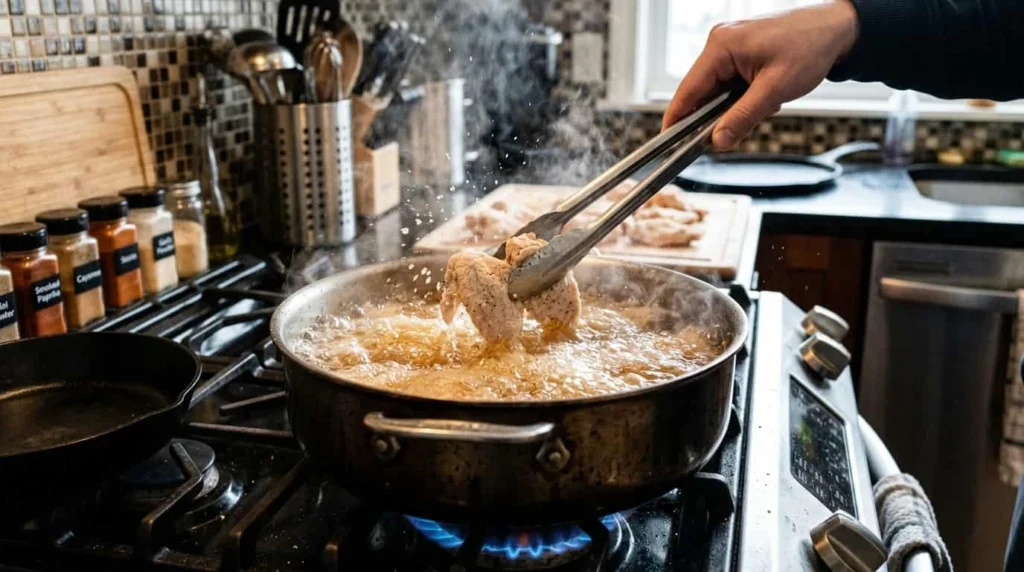
This is the core method, and it works whether you’re making a small batch for two or feeding a crowd.
- Pat the wings completely dry. Use paper towels and don’t rush this step. Surface moisture is the main reason oil spatters and the reason coatings slide off instead of sticking.
- Season the wings directly. Salt and pepper them first, then let them sit for a few minutes so the seasoning has time to reach the meat, not just the surface.
- Coat the wings. Toss them in your flour, cornstarch, or flour and cornstarch mixture until every piece is evenly covered. Shake off the excess so the coating stays thin.
- Heat the oil to 350°F. Use a deep, heavy pot and fill it with two to three inches of oil. Clip your thermometer to the side so it reads the oil, not the bottom of the pot.
- Fry in small batches. Lower the wings in gently with tongs or a spider strainer. Crowding the pot drops the oil temperature fast, which is exactly how you end up with greasy, limp wings instead of crispy ones.
- Cook until golden, about 8 to 10 minutes. Flip the wings once or twice so they brown evenly on all sides. They’re done when the coating is deep golden brown and the internal temperature reads at least 165°F.
- Drain on a wire rack, not a paper towel pile. Set the rack over a rimmed baking sheet so air circulates underneath and the bottoms stay crisp instead of steaming.
- Repeat with the remaining batches, letting the oil climb back to 350°F between each one.
What’s the Best Oil Temperature for Frying Chicken Wings?
The best oil temperature for frying chicken wings is 350°F. At that temperature the meat has enough time to cook through to a safe internal temperature while the skin crisps without scorching. Some recipes push the oil to 375°F for a quicker, extra crackly crust, but 350°F is the safer, more forgiving target for a home stovetop where the temperature naturally dips once you add cold chicken. Keep it between 325°F and 375°F throughout the fry, and never let it climb past 400°F, since the coating will burn before the meat finishes cooking.
How to Make Fried Chicken Wings Extra Crispy
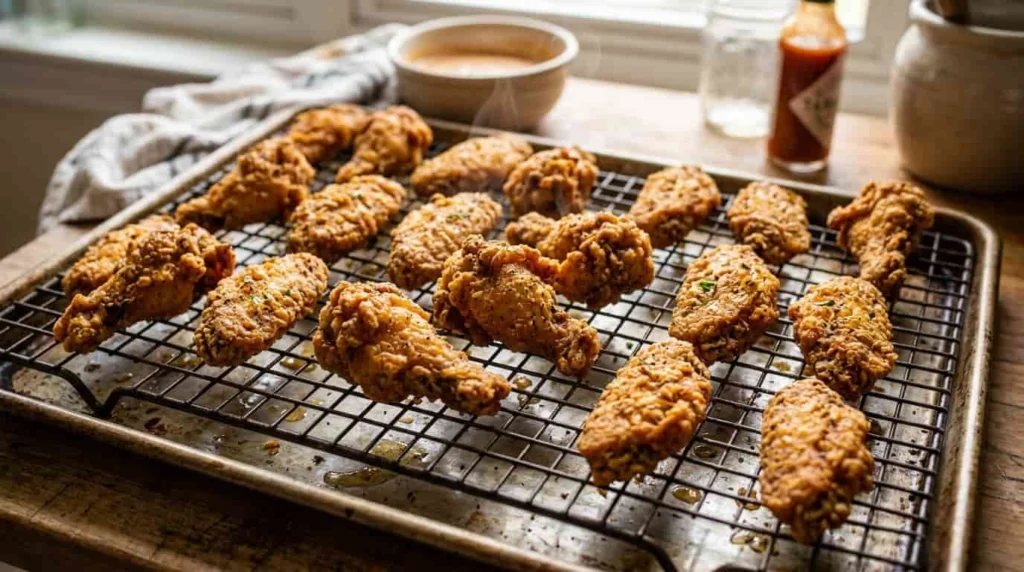
A few small choices separate good wings from genuinely crispy ones.
- Dry brine ahead of time. Salt the wings and leave them uncovered on a rack in the fridge for a few hours, or overnight if you can plan that far ahead. This draws moisture out of the skin before it ever hits the oil.
- Use cornstarch, or a cornstarch and flour blend. Cornstarch fries up lighter and shatters more than straight flour, which is why so many restaurant style wings lean on it.
- Add a little baking powder to the coating. It raises the surface pH slightly and helps the skin dry out and blister as it cooks, similar to what happens with oven roasted wings.
- Don’t skip the resting rack. Wings that sit in their own grease go soft within minutes. A wire rack keeps hot air moving around every side.
- Consider a double fry. Fry the wings once at 325°F until just cooked through, let them rest for five minutes, then fry a second time at 375°F for a couple of minutes to build a thicker, extra crunchy crust. This is the technique behind a lot of the crispiest wings you’ll find at wing focused restaurants.
- Fry, then sauce, not the other way around. Toss wings in sauce right before serving so the crust doesn’t have time to go soft.
Can You Fry Frozen Chicken Wings?
You can fry frozen chicken wings, but thawing them first gives you a better, more even result. Frozen wings drop the oil temperature much further than thawed ones, which means longer cook times and a higher chance of a crust that’s brown outside while the center is still cold. If you’re working from frozen, thaw the wings overnight in the refrigerator when you have time, or submerge them in a bowl of cold water for one to two hours if you’re in a hurry. Pat them completely dry before seasoning and coating, since ice crystals melting on the surface will make the coating slide right off in the oil.
Common Mistakes to Avoid When Frying Chicken Wings
- Skipping the thermometer. Eyeballing oil temperature almost always leads to wings that are either greasy or burnt on the outside.
- Overcrowding the pot. Fry in small batches of six to eight wings at a time so the oil recovers quickly between additions.
- Wet wings. Any surface moisture causes spattering and keeps the coating from sticking.
- Piling hot wings together. Stacked wings trap steam and soften the crust within minutes. Spread them out on a rack instead.
- Sauced too early. Wet sauce added before serving softens even a perfectly fried crust.
Sauces and Serving Ideas for Fried Chicken Wings
Once the wings are golden and drained, the sauce is where you can really make them your own. Classic Buffalo sauce, built from hot sauce and melted butter, is the obvious pick, but honey and hot sauce whisked together makes a sticky, sweet heat glaze that works just as well. A dry rub of smoked paprika, garlic powder, and brown sugar is a good option if you’d rather keep the skin fully crisp with no sauce at all. Serve fried chicken wings with celery and carrot sticks and a cold ranch or blue cheese dip on the side, which cuts through the richness and heat.
Do I need to boil chicken wings before frying?
No, boiling isn’t necessary. Frying cooks raw wings through in about the same time it takes the coating to turn golden, so par-boiling just adds an extra step and can actually water down the flavor and texture of the skin.
How long does it take to fry chicken wings?
Most wings take 8 to 10 minutes at 350°F, or a couple of minutes less if the oil is closer to 375°F. The exact time depends on the size of the wings and how many you’re frying per batch, so always confirm doneness with an internal temperature of at least 165°F rather than relying on the clock alone.
Should I use flour or cornstarch for fried chicken wings?
Cornstarch tends to fry up lighter and crispier, while flour gives a slightly thicker, more traditional crust. Many home cooks split the difference and use a combination of both, which is a common approach in restaurant style recipes.
What’s the best oil for frying chicken wings?
Any neutral oil with a high smoke point works well, including canola, vegetable, and peanut oil. Avoid oils with strong flavors, like olive oil, since they can overpower the chicken and tend to break down at lower temperatures than frying requires.


Pingback: How long do you fry chicken wings? Time & Temp Guide