
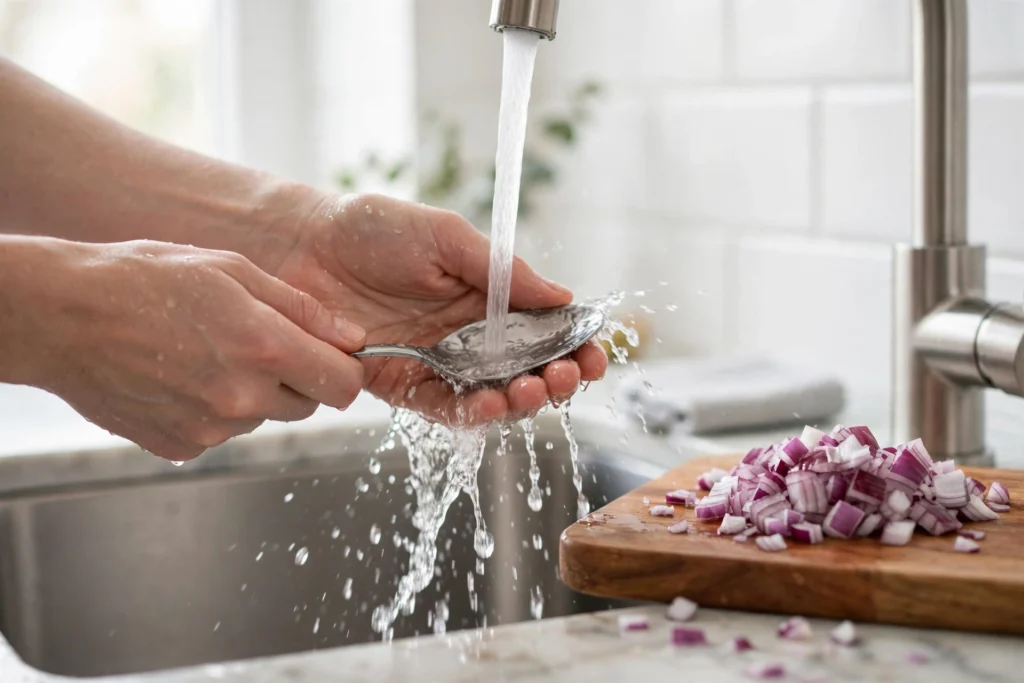
Rub your hands on stainless steel under cold running water for 30 seconds. That is the fastest answer to how to get rid of onion smell from hands. A spoon, the side of the sink, or the flat of a knife all work. The steel grabs the sulfur compounds, and the water washes them away. If you have no steel handy, lemon juice is the next best fix, and it takes about a minute. Below: all five ranked by speed, the ones that waste your time, and how to stop the smell before it starts.
Quick answer: Stainless steel under cold running water for 30 seconds is the fastest fix. Rub your palms, fingers, and nails on a spoon, your sink, or a steel soap bar while the water runs. No steel nearby? Rub half a lemon over your hands for a minute, then wash with soap and cold water. Skip hot water and soap alone.
Why onion smell sticks to your hands
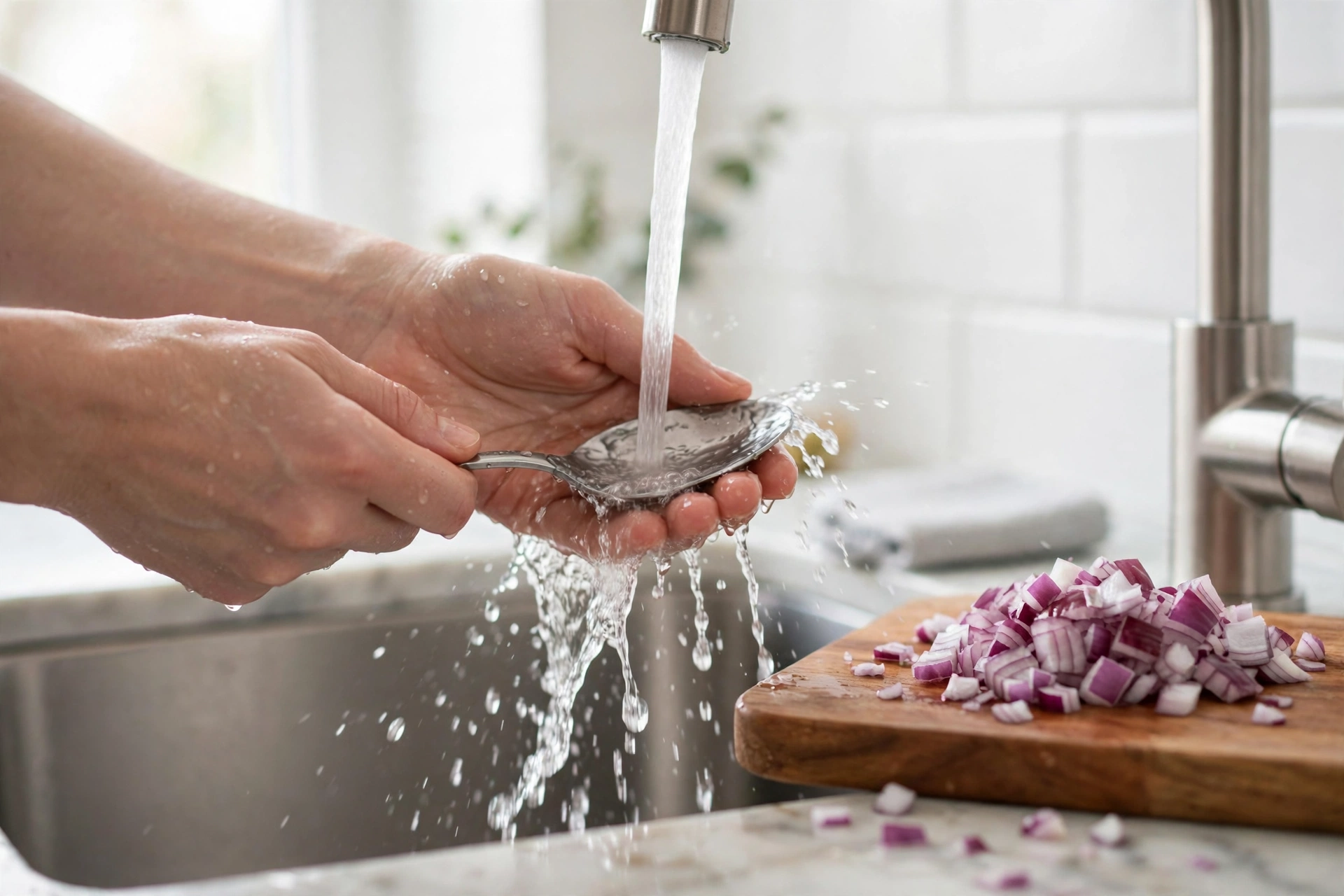
An onion keeps its sulfur compounds locked away while it sits whole. The knife breaks that deal. Cutting tears open the cells, and enzymes inside turn the sulfur into new, smelly compounds that settle on your skin. That is why your eyes water and your hands smell together.
The smell sticks because those sulfur compounds dissolve in the natural oils on your skin. They sink into fingerprints and hide under nails. A quick rinse moves the juice off the surface, but the compounds in the oils stay put, so the smell can survive a hand wash and return once your hands warm up. That smell is the price of a good caramelized onion dip or a pot of Texas Roadhouse chili. The fix is to know which trick pulls the sulfur off your skin.
How to get rid of onion smell from hands: 5 methods ranked by speed
These five methods all work, but not equally fast. Stainless steel wins on speed, since it needs nothing you have to buy or squeeze. Lemon comes next. The other three take a couple of minutes.
| Method | Time | What you need | Best for |
|---|---|---|---|
| Stainless steel under cold water | 30 seconds | A spoon, sink, or steel soap bar | Fastest fix |
| Lemon juice | About 1 minute | Half a lemon | No steel nearby |
| Baking soda paste | About 2 minutes | Baking soda and water | Sensitive skin |
| Vinegar rinse | About 2 minutes | White vinegar and water | Strong smell |
| Salt scrub | About 2 minutes | Fine salt and soap | Under nails |

1. Stainless steel under cold water (30 seconds)
Try this one first. It is fast, it costs nothing, and most kitchens already have what it takes: a spoon, a faucet, or a stainless steel sink. Steel bars sold as odor-removing soap work the same way.
- Turn on the cold tap and let the water run.
- Hold a stainless steel spoon in one hand, or use the side of a stainless steel sink.
- Rub your palms, fingers, fingertips, and nails against the steel for 30 seconds while the water runs.
- Wash with soap and cold water.
- Smell your fingertips. If a trace is left, repeat the rub once more.
Keep the tap cold for the rub and the rinse. Warm water feels nicer, but cold water is the version that works here. Pay extra attention to your fingertips and nails, where the smell hides.
Why does it work? Nobody has fully pinned down the mechanism. The common explanation is that sulfur compounds in onion juice bind to the metal and leave your skin. America’s Test Kitchen tested the stainless steel trick on garlic, which carries the same kind of sulfur compounds, and found that it does help, while noting the mechanism has not been verified by science. In my kitchen it is the first thing I reach for.
2. Lemon juice (about 1 minute)
Lemon is the best backup when there is no steel in reach, or when you want a second pass after the steel rub. The acid cuts through the onion oils, and the citrus scent covers what is left while you rinse. A lime works the same way.
Squeeze half a lemon into your palm, or rub the cut half over your hands. Work it between your fingers and around your nails for about a minute. Rinse with cold water, then wash with soap and add hand cream, since lemon juice dries skin out. Skip it with a fresh cut. It stings, so use the baking soda paste below instead.
3. Baking soda paste (about 2 minutes)
Baking soda is the gentle option. It is mildly gritty, so it lifts the oily layer that holds the smell, and it is kind to irritated skin. Pick it if you have a paper cut, cracked knuckles, or hands dry from washing dishes.
Mix one tablespoon of baking soda with just enough water to make a thick paste. Rub it over your hands for about a minute, getting between your fingers and under your nails. Rinse with cold water, wash with soap, and add hand cream, since the paste can dry your skin.
4. Vinegar rinse (about 2 minutes)
White vinegar is the pantry fix for a smell that has settled in, like after dicing five onions for soup. Its sharp smell is strong, but it fades fast once you rinse, and it takes the onion smell with it.
Pour a small splash of white vinegar into your cupped hands, or mix equal parts vinegar and water in a bowl and dip your hands in. Rub for about a minute, then rinse with cold water and wash with soap. Do not use it on broken skin. It stings just like lemon juice.
5. Salt scrub (about 2 minutes)
A salt scrub is the best pick when the smell is stuck under your nails and around your cuticles. The fine grains reach the small spaces a flat rub misses, and the salt lifts the oils off your skin.
Wet your hands, pour a teaspoon of fine table salt into your palm, and add a drop of hand soap. Rub gently for about a minute, working the salt around your nails and fingertips. Rinse with cold water and wash again with plain soap. Use fine salt, not coarse kosher salt. The point is to lift the smell, not scrape your skin raw.
What does not work
Hot water is the most common mistake. It feels like it should help, but the smell often hangs around longer after a hot wash, so keep the tap cold for the first rinse and save warm water for the soap wash after. Soap alone is the second one. Soap lifts grease and dirt, but the sulfur compounds sit in the oils on your skin and around your nails, and a plain soap wash often leaves them behind.
Scrubbing with anything rough is a bad idea. Steel wool, scouring pads, and stiff brushes damage the top layer of skin, and raw skin holds smells worse. Gentle rubbing with salt or baking soda is as rough as you should ever get with your hands. Covering the smell up does not count as removing it. Hand sanitizer, perfume, and scented lotion mask the onion for a few minutes and then wear off, and sanitizer dries your hands out. Scrubbing harder is not the answer on your hands, just like it is not the answer on a scorched pot. If the onion smell came with a burnt pan, here is how to clean a burnt pan without baking soda. Your hands deserve the same gentle approach.
How to stop onion smell before it starts
Gloves are the only method that truly keeps the smell off your hands. A pair of thin disposable gloves takes ten seconds to put on and saves you the whole cleanup, and they are worth it when you are dicing a big pile of onions for a party or a freezer batch. A thin coat of cooking oil on your hands before you chop is the next best thing. Rub a few drops of neutral oil over your palms and fingers, chop the onion, then wash with soap. The oil sits between your skin and the juice, so less of it soaks in.
Cutting the onion under running water is a trick you will see online. It keeps the juices off your hands, but most cooks skip it, because a wet onion slips around the board and the knife work gets clumsy. Rinse your hands under cold water the moment you finish chopping instead, before the smell settles in. A sharp knife also helps, since it crushes fewer cells, and chilling the onion for 30 minutes before you cut it slows the enzymes. I chop herbs right after onions, and my guide on how to keep cilantro fresh in the fridge covers the other half of that prep.
What I do in my kitchen
I keep a stainless steel soap bar next to the sink, beside the dish soap. When I finish chopping onions, I rub my hands on it under cold water for 30 seconds, wash with soap, and check my fingertips. Most days that is the whole routine. If the bar is in the dishwasher, or I am cooking at a friend’s place, I grab half a lemon from the fridge. It is the backup I trust.
For big cooking days, when I am dicing four or five onions for a freezer batch, I wear disposable gloves. I deal with the smell right away, while the cutting board is still out. Once the onion juice dries on your skin, every method takes longer. Thirty seconds now beats two minutes later. When I prep ginger alongside them, I follow my own notes on how to store ginger root so the rest stays fresh.
FAQs
How long does onion smell last on hands?
It usually fades within a few hours, but it can linger into the next day if the juice dried on your hands. Stainless steel under cold water removes it in about 30 seconds. Soap alone often leaves a trace that returns when your hands warm up.
Does stainless steel really remove onion smell from hands?
Yes, and it is the fastest method most cooks know. Sulfur compounds are thought to bind to the metal and leave your skin, though the exact mechanism has not been verified. America’s Test Kitchen tested the trick on garlic and found that it does help.
Will lemon juice get rid of onion smell on hands?
Yes. Rub half a lemon over your hands for about a minute, getting between your fingers and around your nails, then rinse with cold water and wash with soap. Skip it with a fresh cut, since it stings. Baking soda paste is the gentler backup.
Can I use hand sanitizer to remove onion smell?
No. It only covers the smell for a few minutes and does not lift the sulfur compounds off your skin. Once the alcohol smell fades, the onion smell is usually still there. Use stainless steel or lemon juice instead, then wash with soap.
Why does soap alone not remove onion smell from hands?
Soap lifts grease and dirt from the surface, but the sulfur compounds dissolve into the oils on your hands and settle around cuticles and under nails. A plain soap wash often leaves them behind. Soap works best as the second step, after steel or lemon has loosened the smell.
How do I keep my hands from smelling like onion when I cook?
Wear thin disposable gloves while you chop. That is the only method that keeps the smell off completely. A thin coat of cooking oil before chopping also helps. Rinse your hands under cold water when you finish, and use a sharp knife, which crushes fewer cells.
Onion smell is a small problem with a fast fix. Rub, rinse, wash, and get back to cooking.

Sufyan Liaqat writes kitchen recipes, guides, and food content for Kitchennista. He focuses on practical advice that helps readers cook with confidence at home. His work covers everyday recipes and useful kitchen ideas.