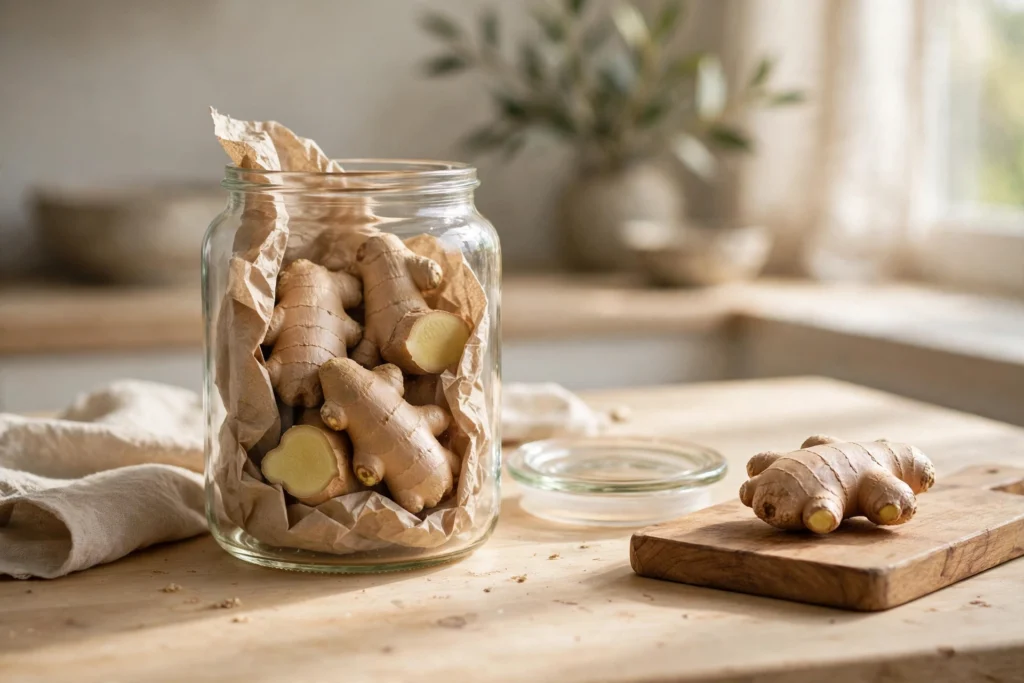
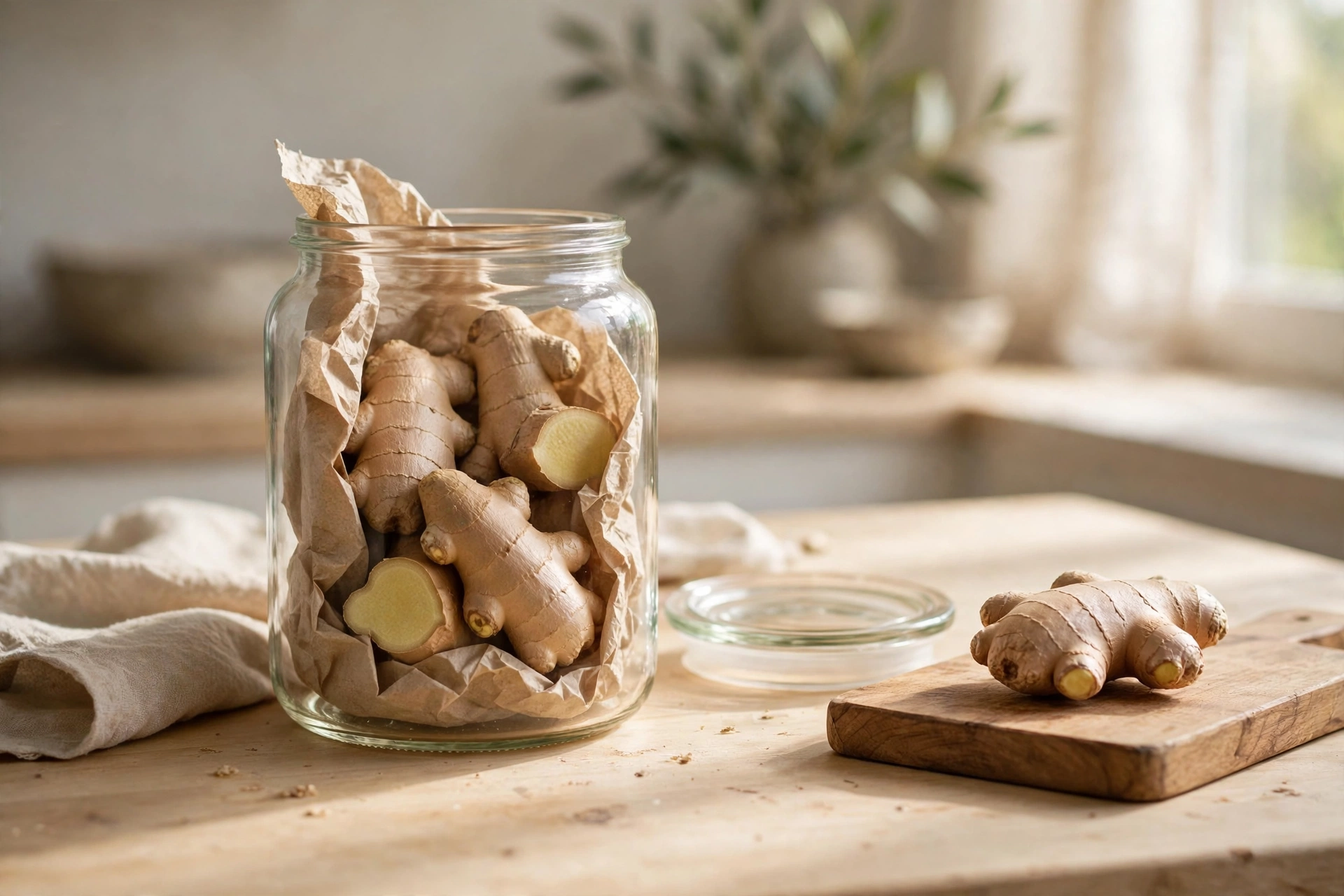
Here is how to store ginger root so it lasts: wrap it in a dry paper towel, put it in a zip-top bag with the air pressed out, and keep it in the fridge crisper drawer. Done that way, fresh ginger stays firm and fragrant for 4 to 6 weeks. For longer storage, freeze it whole and it keeps its best quality for about 3 months. Left on the counter, it dries out in 1 to 2 weeks. The fridge method takes about a minute, and it is the one I use most weeks.
Quick answer: Wrap unpeeled ginger in a paper towel, put it in a zip-top bag, and keep it in the crisper drawer. It lasts 4 to 6 weeks. For months of storage, freeze it whole in a sealed bag. It keeps its best quality for about 3 months and grates easily straight from the freezer. Skip the counter unless you plan to use it within a week or two.
How long does ginger root last?
It depends on where you keep it. The fridge beats the counter by a long way, and the freezer beats both.
| Method | How long it lasts | Best for |
|---|---|---|
| Counter, cool dark spot | 1 to 2 weeks | Using it right away |
| Fridge, unpeeled | 4 to 6 weeks | Everyday cooking |
| Fridge, peeled | 2 to 3 weeks | Ginger you already peeled |
| Freezer, whole | Best quality about 3 months | Long-term storage |
These times are what published guides report, including Iowa State University Extension’s AnswerLine guide on storing fresh ginger. They are conservative on purpose. Frozen ginger stays safe indefinitely at 0°F (-18°C), but the flavor and texture fade after a few months, so use it by 3 months.
How fresh the ginger was when you bought it matters too. A firm piece bought this week will outlast a wrinkled one that sat in the store bin for a month. Pick one spot and leave it there instead of moving it between the counter and the fridge.
How to pick fresh ginger root at the store
Good storage starts at the store. A piece that is already tired will not get better in your fridge.
Pick it up and squeeze it. It should feel firm all the way through, with no soft spots, and heavy for its size. The skin should look smooth and tight, not wrinkled. Snap off a small knob if you can. Fresh ginger snaps cleanly and smells sharp and citrusy right away.
Check the creases between the knobs, where mold hides first as pale fuzzy spots. Skip any piece with mold, dark wet patches, or a sour smell. Young ginger has thin, almost papery skin and a milder flavor, and it stores the same way.
Buy only what you will use in the next month, and freeze the rest that day. A big hand looks like a bargain until half of it wrinkles in the drawer.
How to store ginger root in the fridge
This is the default method. It takes about a minute and keeps ginger good for 4 to 6 weeks.
- Leave the skin on. Do not peel ginger until you are ready to use it. The skin is its best protection against drying out and mold.
- Pat the ginger dry with a clean towel. Any dampness left on the skin invites mold, especially in the creases.
- Wrap it loosely in a dry paper towel. The towel soaks up moisture before it can pool on the skin.
- Slide it into a zip-top bag and press out most of the air before you seal it. A produce bag works, but a zip-top bag seals better and keeps fridge smells out.
- Put the bag in the crisper drawer and swap the paper towel for a fresh one if it feels damp, usually once a week or so.
Check the piece once a week when you tidy the fridge. If a cut end has dried out, trim a thin slice off before you use it.
Peeled ginger needs a different setup. Put it in a small airtight container in the fridge, where it lasts 2 to 3 weeks. Some people cover peeled ginger with cold water and change it every few days, which works too, but a dry container is less fuss and keeps the flavor stronger.
The crisper drawer is the same spot where I keep lettuce fresh for two weeks, and the same rules apply: cold and dry, out of the way of anything that drips.
How to store ginger root in the freezer
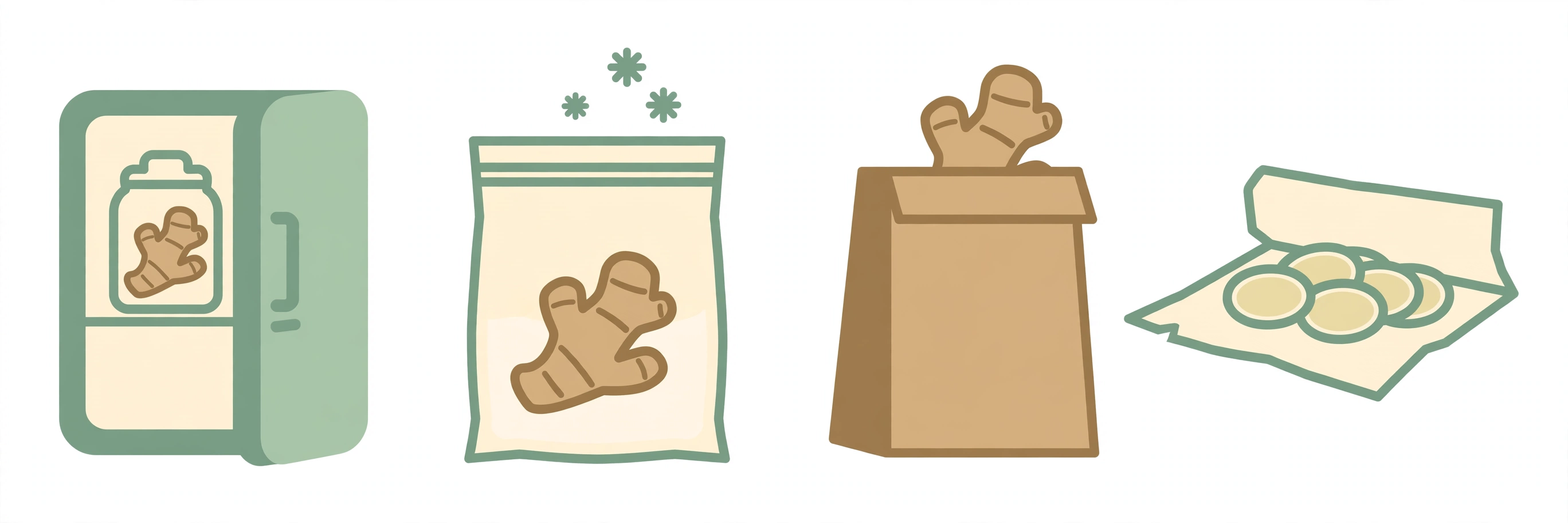
Freezing is the best option when you bought too much or you only use ginger now and then. Put the whole unpeeled piece in a zip-top bag, press out the air, label the bag with the date, and lay it flat in the freezer. It keeps its best quality for about 3 months.
You can also freeze it grated or sliced. Grate a big batch, pack it into tablespoon-sized portions, and freeze them flat in a bag so you can snap off what you need. Sliced ginger works the same way and is handy for tea and stir fries. Label the bag either way. Frozen ginger all looks the same after a month.
You do not need to thaw it. Frozen ginger grates beautifully straight from the freezer, and the cold actually makes it easier to grate fine. A microplane turns a frozen knob into a snowy pile in seconds. I grate it straight into gingerbread cookies and hot tea this way all winter.
I label the bag with the date, the same habit I use when I freeze cream cheese. Flat freezing also saves space, which is the same reason I freeze cooked rice in portions, as I explain in my guide on whether you can freeze cooked rice.
Can you store ginger root on the counter?
Yes, for 1 to 2 weeks, in a cool, dark spot away from the stove and out of direct sunlight. A pantry shelf or a cupboard works. In a warm kitchen it dries out faster, and a week is more realistic.
The counter only makes sense when you know you will use the piece up quickly. If you cook with ginger once a week, the fridge is a better home for it. A warm pantry dries ginger out the same way it hardens brown sugar, so if yours has gone rock solid, here is how to soften brown sugar without a microwave.
What not to do
Most ginger goes bad because of small mistakes, not because it was old.
- Do not wash ginger before you store it. Water trapped in the creases turns to mold. Wash it when you use it, not before.
- Do not toss it loose in the fridge. It dries out fast and picks up the smell of whatever is next to it.
- Do not peel the whole piece at once. Peeled ginger dries out in days, while the skin keeps unpeeled ginger good for weeks.
- Do not leave a cut piece unwrapped. Cover the cut end or the whole piece dries out from the cut.
- Do not freeze it in an open or half-sealed bag. Freezer burn ruins the flavor, and the ginger picks up smells from everything else in there.
- Do not ignore a damp paper towel. Swap it for a dry one or mold follows, usually within days.
How to tell ginger root has gone bad
Ginger gives you clear signs when it is done. Trust your eyes and nose before the calendar.
Mold is the big one. Look for fuzzy white, green, or black spots, usually in the creases or on a cut end. If it is only a small spot on the surface, cut well past it, at least an inch in every direction, and use the rest right away. If the mold has spread or the flesh underneath is discolored, throw the whole piece out.
Wrinkles mean it has dried out. Wrinkled ginger that still smells sharp is usually fine to use, though the flavor is weaker and it is harder to grate. If it feels light and bends instead of snapping, it is past its best.
Soft or mushy spots are a clear toss, and so is a sour or musty smell. Fresh ginger smells bright, sharp, and a little citrusy. If it smells like nothing at all, the flavor is gone even if it looks fine.
Sprouting looks worse than it is. Small green shoots mean the ginger is trying to grow, not that it has gone bad. Cut them off and use the rest as normal.
What I do in my kitchen
I buy one hand of ginger at a time on the weekend shop. The piece I will use this week goes in the fridge, wrapped in a paper towel in a zip-top bag in the crisper drawer. Whatever is left over gets frozen whole the same day, before it can wrinkle.
On Sundays I check the paper towel when I tidy the fridge and swap it if it feels damp. That is the whole routine, and it takes less than a minute. The frozen piece lives by the ice cube trays, labeled with the date. I grate it straight from frozen into tea, stir fries, and baking. I never thaw it first, and I never peel more than I need for one meal.
FAQs
How long does ginger root last in the fridge?
Unpeeled ginger root lasts 4 to 6 weeks in the fridge when you wrap it in a paper towel and keep it in a zip-top bag in the crisper drawer, according to published guides. Peeled ginger lasts 2 to 3 weeks refrigerated. Check it weekly and swap the paper towel if it feels damp.
Can you freeze ginger root?
Yes. Freeze it whole and unpeeled in a sealed zip-top bag with the air pressed out. It keeps its best quality for about 3 months and stays safe indefinitely at 0°F (-18°C). Grate it straight from frozen with a microplane, no thawing needed.
Should you peel ginger before storing it?
No. Leave the skin on until you are ready to use it. The skin protects the flesh from drying out and from mold. Peeled ginger only lasts 2 to 3 weeks in the fridge, while unpeeled ginger lasts 4 to 6 weeks.
Can you store ginger root on the counter?
Yes, for 1 to 2 weeks, in a cool, dark spot away from the stove and direct sunlight. In a warm kitchen it dries out faster, so the fridge is a better bet if you will not use it within a week or two.
How can you tell if ginger root has gone bad?
Look for mold, soft or mushy spots, and a sour or musty smell. Wrinkled ginger that still smells sharp is dried out but usually fine to use. Cut off small moldy spots generously, and throw the piece out if the mold has spread or the flesh is soft all the way through.
Can you store peeled ginger in water?
You can. Put peeled ginger in a small container, cover it with cold water, and keep it in the fridge, changing the water every few days. It lasts about 2 to 3 weeks this way. A dry container works just as well and is less fuss, so water storage is optional.
Does frozen ginger taste the same as fresh?
Almost. Frozen ginger keeps most of its heat and aroma, especially when you grate it straight from the freezer into cooking. It loses some bite after 3 months, so use it by then for the best flavor. It is not great for recipes where you eat it raw in big pieces.
A hand of ginger costs little and lasts weeks with almost no effort. Wrap it, bag it, and put it in the crisper drawer, and it will be there when the next recipe calls for it.

Sufyan Liaqat writes kitchen recipes, guides, and food content for Kitchennista. He focuses on practical advice that helps readers cook with confidence at home. His work covers everyday recipes and useful kitchen ideas.