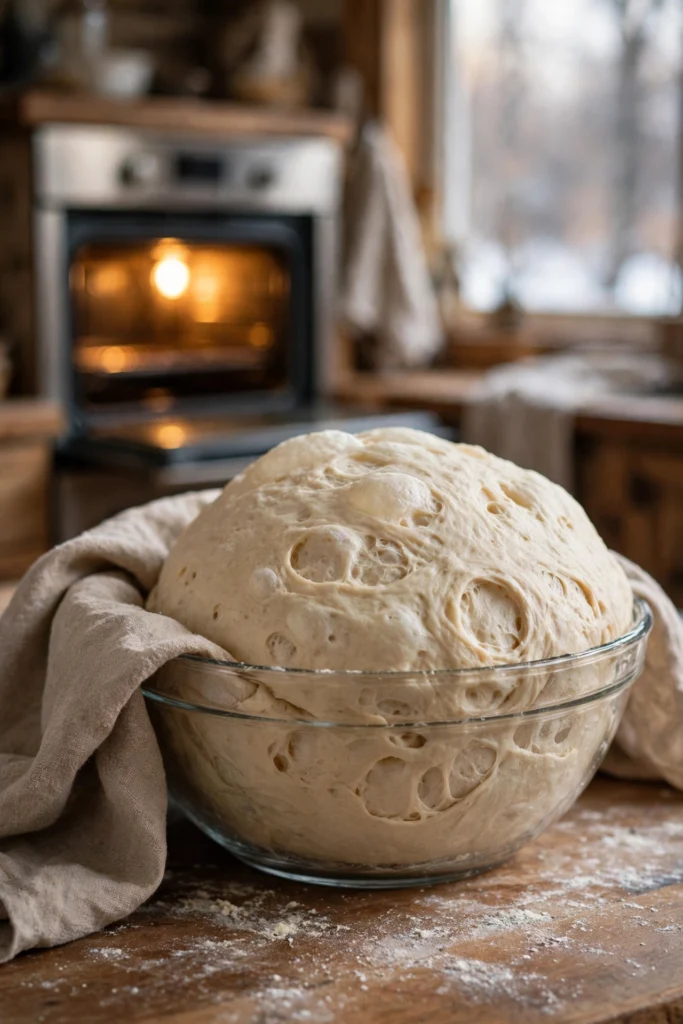
Why is my bread dough not rising in a cold kitchen? Because yeast is alive, and cold slows it down. Below about 68°F (20°C), a rise meant to take an hour can take three or four. Your dough is probably fine. It is just cold. The fix is simple: warm it up, give it longer, and test the yeast before you throw anything away.
Quick answer: Cold is the most likely reason. Yeast works fastest when dough sits at 75–80°F (24–27°C), and below 68°F (20°C) it slows to a crawl. Move the bowl to a warm spot, like an oven with the light on, and give it 25–50% more time. If nothing moves after 2 hours in the warmth, test the yeast.
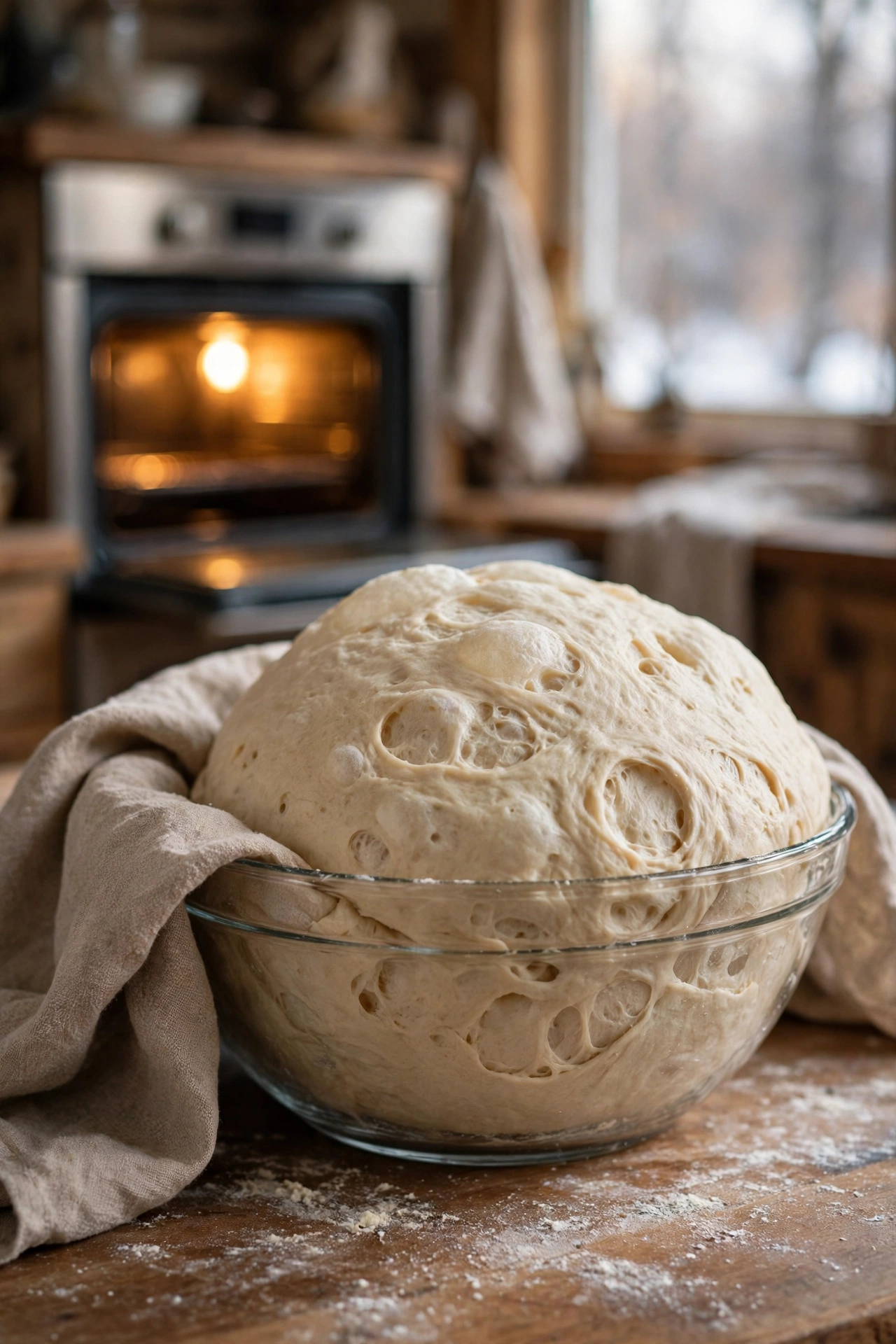
Why your bread dough is not rising in a cold kitchen
Yeast is alive. It eats the sugars in flour and gives off carbon dioxide, and those gas bubbles push the dough up. Around 75–80°F (24–27°C), it works fast. Below 68°F (20°C) it gets sluggish, and in the low 60s it barely moves. It is not dead. It is just cold.
Winter kitchens make this worse. A kitchen that feels fine at 65°F is already cool for dough. A stone counter pulls heat out of the bowl, and a draft keeps the dough colder than the room. Most recipes assume dough near 75°F.
Dough temperature matters more than room temperature. A dough mixed with cold tap water can start at 65°F and stay there for hours. Warm the water and you warm the dough from the inside. Check it with a thermometer after mixing; 75–80°F means you are in good shape.
The 6 reasons your dough will not rise
1. The kitchen is too cold
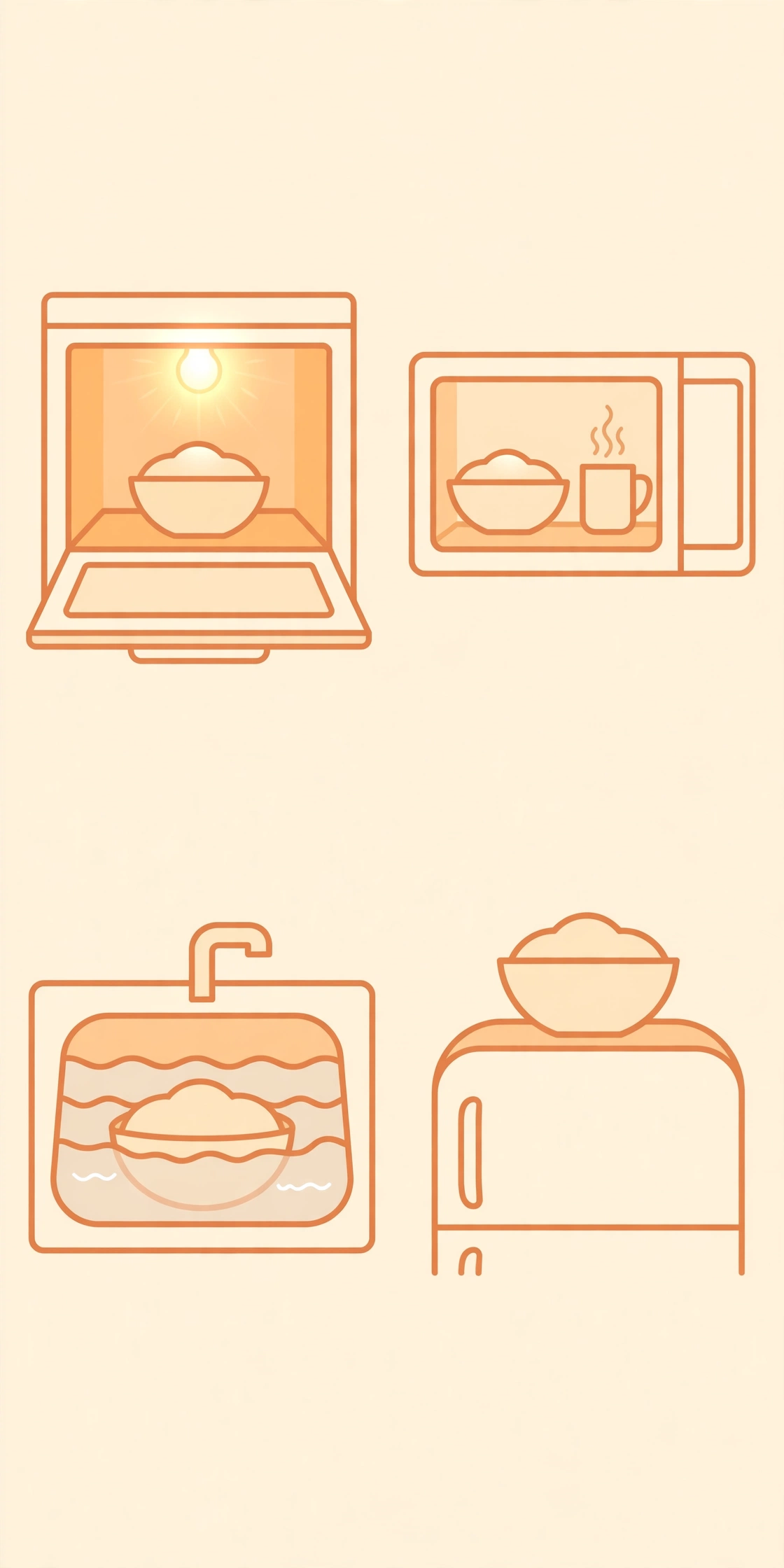
This is the usual suspect, and the one most people overlook. Under 70°F, dough rises slowly. Under 65°F, it crawls. The fix is a warm proofing spot. An oven with only the light on holds around 75–80°F, and a microwave with a mug of hot water works the same way.
2. The water was too cold, or too hot
Water temperature sets the dough temperature at the start. For active dry yeast, use water at 105–110°F (41–43°C), warm on your wrist, not hot. Above about 130°F (54°C), yeast starts to die, and a dough mixed with water that hot will never rise. If the water was too cold, the yeast is only asleep.
3. The yeast is old or dead
Yeast does not last forever. An opened jar in a warm cupboard loses strength over months, so keep opened yeast in the fridge or freezer. Before you blame the cold, test it. Stir one packet (2 1/4 teaspoons) of yeast and a teaspoon of sugar into 1/2 cup of warm water at 105–110°F (41–43°C). Wait 10 minutes. Foam means the yeast is alive and the cold is your problem. No foam means the yeast is dead.
4. The salt went in wrong
Salt keeps yeast in check, which is good in the right amount. If salt sits directly on dry yeast while you mix, it can slow the yeast down before it gets going. Mix the salt into the flour first, or add it after the yeast and water have met. Too much salt will also slow a rise, so measure it. A typical loaf uses about 2% salt by flour weight.
5. You did not give it enough time
This is the reason nobody wants to hear, and the most common one after cold. Home bakers tend to underferment their bread. They get tired of waiting and bake too early, and the loaf comes out squat with a dense crumb. In a cold kitchen, add 25–50% to the rise time. Judge by growth, not by the clock. Mark the bowl with a rubber band.
6. The dough is too stiff or under-kneaded
A dry, stiff dough rises slowly because the yeast struggles to move and make gas. If you added flour until the dough stopped sticking, you added too much. The dough should feel tacky, not dry. Under-kneading does the same thing. A dough that has not been kneaded enough has weak gluten, so the gas escapes instead of pushing the dough up. Knead until smooth, springing back slowly when poked.
How long a rise takes at each temperature
| Kitchen temperature | What happens | First rise |
|---|---|---|
| 80°F (27°C) | Rises fast, can overproof | 1 to 1 1/2 hours |
| 75°F (24°C) | Steady rise | 1 1/2 to 2 hours |
| 70°F (21°C) | Slow but fine | 2 to 3 hours |
| 65°F (18°C) | Sluggish | 3 to 4 hours |
| 60°F (16°C) or below | Barely moves | 4+ hours, or overnight |
These times assume the dough is close to room temperature.
How to get your dough rising again in 5 steps
- Check the dough temperature with an instant-read thermometer. Aim for 75 to 80 degrees Fahrenheit (24 to 27 Celsius). If it reads below 68 degrees Fahrenheit (20 Celsius), the yeast is working very slowly.
- Move the bowl to the warmest spot in your kitchen: the oven with the light on, the microwave with a mug of hot water beside it, or a warm water bath in the sink.
- Give the dough 25 to 50 percent more time than the recipe says. In a cold kitchen, judge the rise by size, not by the clock.
- If nothing has moved after 2 hours in the warmth, test the yeast. Stir a packet of yeast and a teaspoon of sugar into half a cup of water at 105 to 110 degrees Fahrenheit and wait 10 minutes. Foam means the yeast is alive.
- Once the dough has roughly doubled and passes the poke test, shape it and bake. If the yeast test showed no foam, discard the dough and start again with fresh yeast.
Three warm spots are worth knowing. The oven with the light on is the easiest. Put the covered bowl inside and stick a note on the oven that says do not turn on. The microwave trick needs no power. Heat a mug of water for 2 minutes, leave the mug inside, and put the covered bowl next to it. For very cold dough, fill the sink with warm water around 105–120°F, set the sealed bowl in it, and swap the water when it cools.
King Arthur Baking’s bread coach gives the same three tricks in their guide to dough that will not rise. A proofing box set to 80–85°F does the same job, and the top of the fridge works too. Check the dough after an hour, since a warm spot can overshoot.
Can this dough still be saved?
Most of the time, it can be saved. If the dough has risen even a little, smells yeasty, and feels alive when you poke it, it just needs warmth and time. Move it and check again in an hour. A cold dough can take 2 hours to show anything, then suddenly take off.
Start over only if the yeast test came back flat, the water was above 130°F and killed the yeast, or the dough sat for 8 hours or more with no change and now smells sharply sour or like alcohol. Even a failed dough makes decent flatbread. Roll it thin, brush it with olive oil, and bake it hot for 10 to 12 minutes.
A note for sourdough bakers
Everything above applies to sourdough too, only slower. A starter is wild yeast, and it follows the same temperature rules. In a cold kitchen a starter can take 8 to 12 hours to peak instead of 4 to 6, so keep it in the same warm spot you use for dough. If your starter smells sharp or like nail polish remover, that is usually hunger, not death. Read why a sourdough starter smells like acetone for the fix. Once your starter is doubling reliably again, try a chocolate sourdough loaf. The cocoa hides extra tang from a slow winter ferment.
What I do differently in a cold kitchen
Winter changes my whole routine, and it starts before I touch the flour. I warm the water first and check it with a thermometer, every time. I keep the bowl off the stone counter on a folded towel. I mark the dough level with a rubber band. And I plan for the extra hour. If a recipe says the rise takes 1 hour, I assume 1 1/2 in winter and start earlier. I pick the warm spot before I mix, not after the dough has sat cold for an hour.
FAQs
How long does bread dough take to rise in a cold kitchen?
At 75°F (24°C) a first rise takes about 1 to 2 hours. At 65°F (18°C) plan on 3 to 4 hours, and at 60°F (16°C) or below it can take 4 hours or more, sometimes overnight. The clock matters less than the dough. Judge by size: it should roughly double, look puffy, and pass the poke test before you shape it.
Can I put bread dough in the oven with the light on to rise?
Yes, and it is one of the easiest warm spots in a cold kitchen. The light alone usually warms the oven to around 75 to 80°F (24 to 27°C). Put a note on the oven door so nobody turns it on by accident, and check the dough after an hour so it does not overproof.
What temperature kills yeast in bread dough?
Yeast starts to die above about 130°F (54°C), so never use water hotter than that. For active dry yeast, aim for water at 105 to 110°F (41 to 43°C). Water straight from a hot tap can be hotter than you think, so check it with a thermometer or the inside of your wrist.
How do I know if my yeast is dead?
Stir one packet (2 1/4 teaspoons) of yeast and a teaspoon of sugar into 1/2 cup of warm water at 105 to 110°F (41 to 43°C). Wait 10 minutes. If it foams and smells yeasty, the yeast is alive. If the water stays flat and still, the yeast is dead and the dough will not rise, so start a new batch with fresh yeast.
Can I leave bread dough out overnight in a cold kitchen?
Yes, if the kitchen stays cool but not freezing, around 60 to 65°F (16 to 18°C). A slow overnight rise works well and often tastes better. Cover the bowl tightly so the surface does not dry out, and check it in the morning. If it has more than tripled or smells strongly of alcohol, it overproofed.
My dough rose a little, then stopped. Is it ruined?
Probably not. A dough that rose partway and stalled is usually just cold. Move it to a warm spot and give it another hour or two. If it starts moving again, shape and bake it. Only start over if a yeast test shows the yeast is dead, or the dough sat for 8 hours or more with no change at all.
Once the dough is rising, put it to work. A honey wheat bread is a forgiving first loaf after a cold-kitchen rescue. And if the yeast has beaten you today, banana bread with 2 bananas needs no yeast at all.

Sufyan Liaqat writes kitchen recipes, guides, and food content for Kitchennista. He focuses on practical advice that helps readers cook with confidence at home. His work covers everyday recipes and useful kitchen ideas.