Why does my sourdough starter smell like acetone? In most cases, because it is hungry. The yeast and bacteria in the jar have run out of food, and the smell is how they tell you. It is alarming the first time. Nail polish remover is not a smell you expect from bread. But a starter that smells like acetone is usually still alive, and usually easy to bring back.
Quick answer: An acetone or nail polish remover smell usually means your starter is hungry, not dead, especially if it is young or has gone too long between feedings. Discard most of it, keep 20–50g, and feed it a larger ratio such as 1:3:3 or 1:5:5 every 8–12 hours until the smell fades. Throw it out only for fuzzy mold, pink or orange streaks, or a truly putrid smell.
Why does my sourdough starter smell like acetone in the first place?
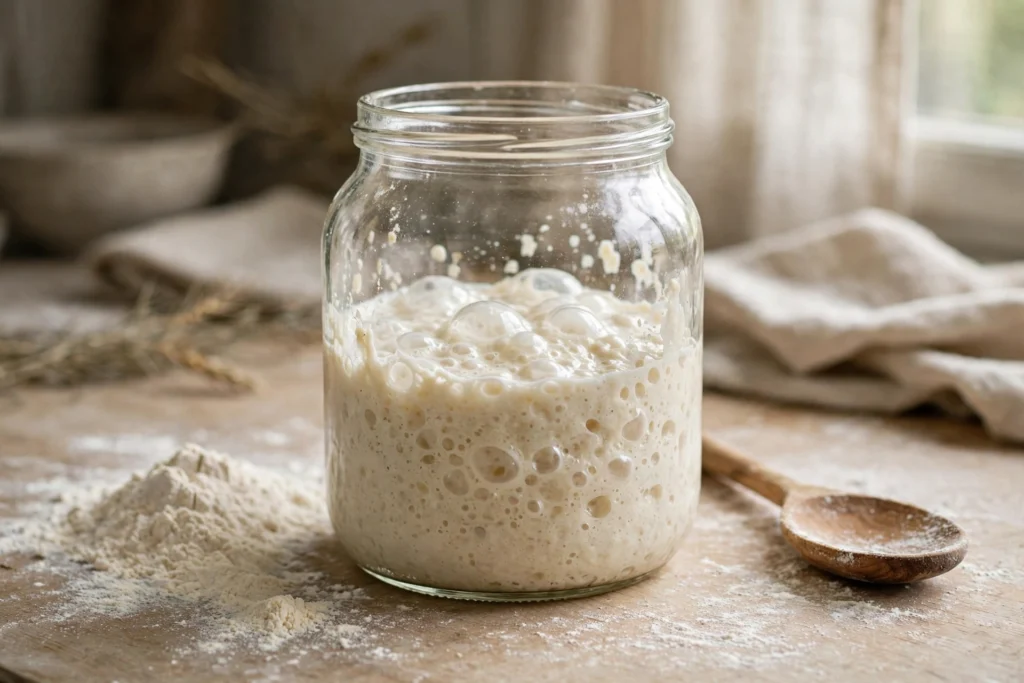
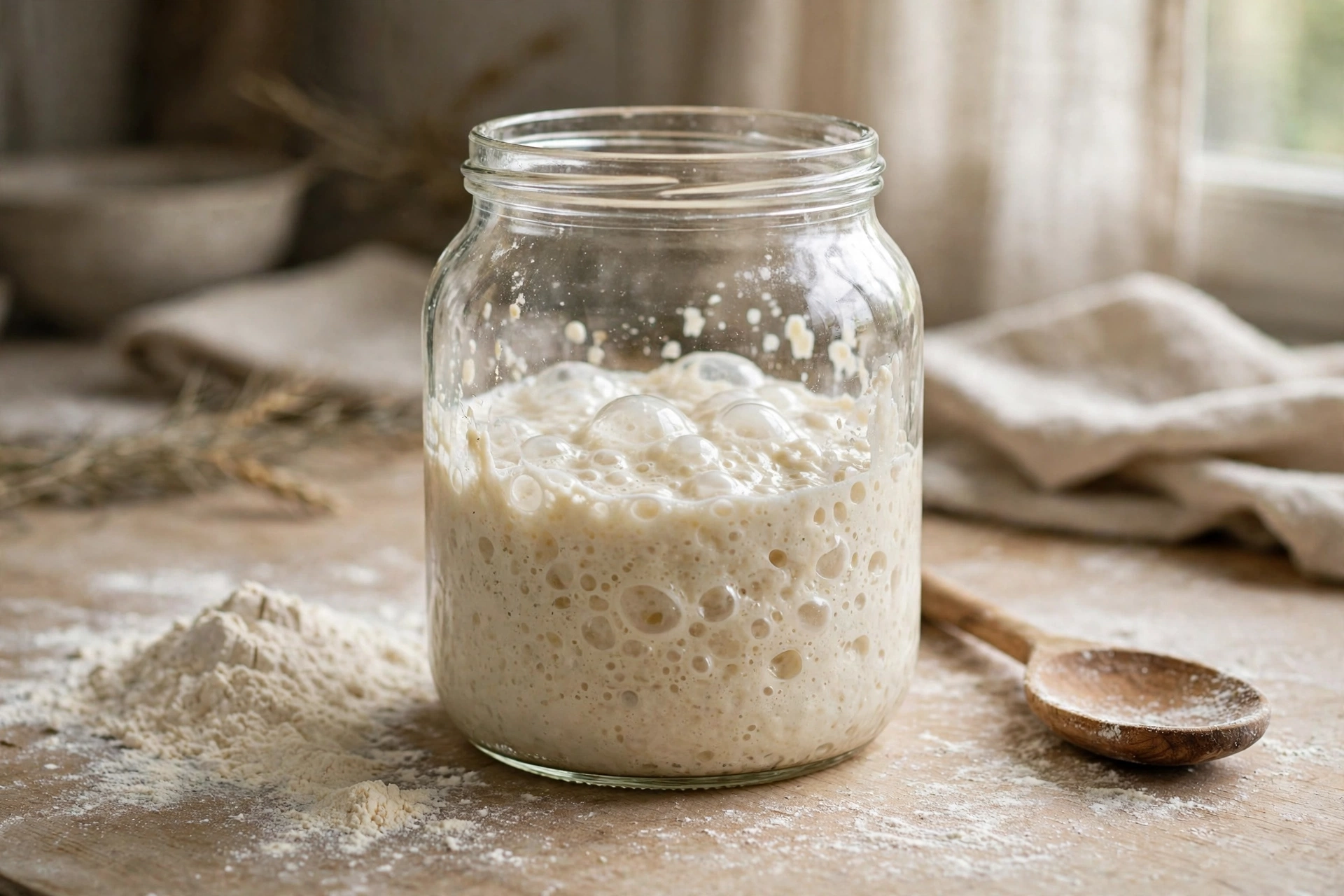
A sourdough starter is a live culture of wild yeast and lactic acid bacteria living in flour and water. Every time you feed it, the yeast eats the starches in the flour and makes carbon dioxide, the bubbles that push it up, plus alcohol and organic acids. That is normal fermentation. It is why a healthy starter smells tangy at its peak, a bit like yogurt or green apple.
When the food runs out, the balance shifts. The stressed yeast makes more sharp-smelling compounds, including acetone and other ketones, while the bacteria keep making acid. That is the chemical, nail-polish-remover note. It is a hunger signal, not a death certificate.
You may also see a dark liquid on top. That is hooch, the alcohol the yeast produces, and it often shows up with the acetone smell. Stir it back in or pour it off. Either way, the fix is the same. Feed it.
Smell decoder: acetone vs alcohol vs vinegar vs yeasty vs putrid
Not every strong smell means the same thing. A starter changes smell through its feeding cycle. Mild and floury after feeding, ripe and fruity as it rises, then sharp toward alcohol and acetone after it peaks and falls. Where yours sits in that cycle matters more than any single sniff. A sharp smell right after feeding is more worrying than the same smell 24 hours after the last feed.
| Smell | What it usually means | What to do |
|---|---|---|
| Acetone / nail polish remover | Hungry starter, past its peak, gone too long without feeding | Discard and feed a larger ratio, twice a day for a few days |
| Alcohol / beer / wine | Also hungry, or just past peak after rising and falling | Feed it; it is often fine at the next feeding |
| Vinegar / sharp sour | Bacteria have had the upper hand, often in a warm kitchen | Feed more often, or with a larger ratio, until the smell softens |
| Yeasty / floury / ripe-sweet, like banana or apple | A healthy starter around its peak | Nothing. This is what you want to bake with |
| Putrid / rotten / like old socks | Something has gone wrong beyond hunger | Check for mold and colored streaks below; if in doubt, start over |
New starter vs established starter
Age changes the answer, and this is where most new bakers panic unnecessarily.
New starter, under 14 days old. Strange smells are normal while a starter is getting established. In the first week or so, the culture is still sorting itself out. It can smell like acetone, vinegar, old cheese, or even feet on different days. Day-7 starters smelling like nail polish remover come up all the time in baking groups, and the advice is always the same. Keep feeding it and ignore the smell while it is getting established. Do not throw it out for smell alone at this stage. What matters is whether it is starting to rise and bubble, even a little, after feeding.
Established starter, weeks or months old. If a starter that used to smell mild and rise well suddenly smells like acetone, something changed. A missed feeding, a longer gap than usual, or a warmer kitchen. The fix is the same, but the cause is usually a routine slip rather than the culture finding its feet.
In both cases, smell alone is not a reason to throw the whole starter away. The reasons to start over are things you can see, not things you can smell.
How to fix a starter that smells like acetone

This is the fix most sourdough guides recommend. It takes two to three days, not one feeding.
- Discard most of it. Pour off all but 20–50g of starter. Keeping a small amount and feeding it well beats keeping a large jar and feeding it a little. A big old starter on a small feed stays hungry.
- Feed it a larger ratio. Add flour and water at 1:3:3 or 1:5:5 by weight. For example, 20g starter, 60g flour, 60g water, or 20g starter, 100g flour, 100g water. A bigger feed gives the yeast more to eat and dilutes the acids that built up.
- Use strong bread flour if you have it. A hungry starter often recovers better on strong bread flour than on plain flour. There is more in it for the yeast to work with.
- Feed every 8–12 hours. Twice a day, not once, until the smell fades and the starter is rising reliably again. Keep the routine going for at least two or three feedings before judging it.
- Keep it somewhere warm but not hot. Around 24–26°C (75–78°F) suits most starters. Above 28°C (82°F) a starter eats faster and goes hungry sooner, so it may need the larger ratio or twice-a-day feeds in summer.
- Judge it by the rise, not the smell. The real sign of recovery is doubling within 4–8 hours of feeding and holding bubbles through the jar. Once it does that two feedings in a row, go back to your normal schedule.
To see how the smell changes across the feeding cycle, read The Sourdough Journey’s guide to acetone-smelling starters.
When to worry: throw it out
An acetone smell alone is not a reason to throw a starter out. Throw it out only if you see one of these:
- Fuzzy mold. White, green, black or grey fuzz on the surface or sides. A dark liquid (hooch) is not mold. Mold is fuzzy and sits on top.
- Pink or orange streaks. Pink or orange patches mean unwanted bacteria have taken hold. This is the one color change that means start over.
- A truly putrid smell. Rotten, like old socks or garbage, rather than sharp and chemical. Acetone smells strong but clean, almost like a solvent.
- No activity at all after several days of proper feeding. A new starter can take two weeks to get going, so this applies to an established starter that has gone flat and stays flat, or a new starter with no bubbles or rise at all after two weeks of twice-daily feeds.
If none of those apply, keep feeding. A starter that smells like acetone but still bubbles and rises is a starter that wants food, not a funeral.
Does the smell bake off?
Yes, mostly. The acetone smell comes from volatile compounds, and most of them leave during baking. A loaf baked from a starter that smelled a bit sharp at feeding time does not taste like nail polish remover. It tastes like sourdough, perhaps a little more tangy than usual. Still, do not bake with a starter at its worst. Feed it once or twice first and bake when it is at its peak. A very acidic starter can also make dough sluggish and over-sour the loaf.
Once your starter is doubling again, put it to work. A chocolate sourdough loaf makes a good first bake after a rescue. The recipe walks through every step.
How to stop it coming back
Once the smell is gone, keep it gone with a routine that matches your kitchen.
- Feed it on a schedule it can keep up with. Once a day is enough at room temperature in a cool kitchen; in a warm kitchen, or with a very active starter, twice a day or a larger ratio works better.
- Use a bigger ratio when you will be away. If you will miss a day, feed 1:5:5 instead of 1:1:1 before you go. More food means a longer runway.
- Fridge it if you bake once a week or less. Feed it, let it rise for an hour or so, then refrigerate. Take it out a day or two before baking and give it two room-temperature feeds before you use it.
- Watch the temperature. The same starter that is happy on once-a-day feeds in winter may need twice-a-day feeds in summer. The acetone smell is often the first sign the season changed before the routine did.
If you bake sourdough most weeks and wonder how it fits a lighter way of eating, read whether sourdough bread is good for weight loss.
The kitchen has more small, fixable problems like this. Brown sugar that has turned into a brick, for example, is a storage problem with a simple fix, just like a hungry starter. See how to soften brown sugar quickly without a microwave. And if you bake with cream cheese, it is worth knowing what freezing does to it before you stock up. See can you freeze cream cheese.
FAQs
What is the biggest mistake you can make with a sourdough starter?
Throwing it out too early. Most new starters smell strange, look flat for days, or go quiet in the first two weeks, and new bakers often throw one out that was about to turn the corner. The other common mistake is feeding a large jar a tiny amount of flour, so the starter stays hungry no matter how often you feed it. Keep a small amount, 20–50g, and feed it well.
What are the signs of an overfed starter?
An overfed starter is rare, but the signs are a starter that never seems to rise much, smells very mild and floury all the time, and produces a weak, pale loaf. More often, what looks like overfeeding is underfeeding in disguise: a starter fed once a day in a warm kitchen is hungry by the next morning. If your starter smells like acetone, it is underfed, not overfed. Feed it more, not less.
How do I know when my starter is ready?
A starter is ready to bake with when it reliably doubles in size within 4–8 hours of feeding at room temperature, is full of bubbles, and smells ripe and fruity rather than sharp. The float test, dropping a spoonful in water to see if it floats, is a rough guide, not a guarantee. The rise is the real test: if it doubles two feedings in a row, it is ready.
How often should I feed my starter?
At room temperature, once or twice a day, depending on how warm your kitchen is and how active the starter is. A starter that smells like acetone needs twice a day at a larger ratio until it recovers. If you bake once a week or less, keep the starter in the fridge and feed it once a week, then give it two room-temperature feeds before baking day.

Sufyan Liaqat writes kitchen recipes, guides, and food content for Kitchennista. He focuses on practical advice that helps readers cook with confidence at home. His work covers everyday recipes and useful kitchen ideas.