
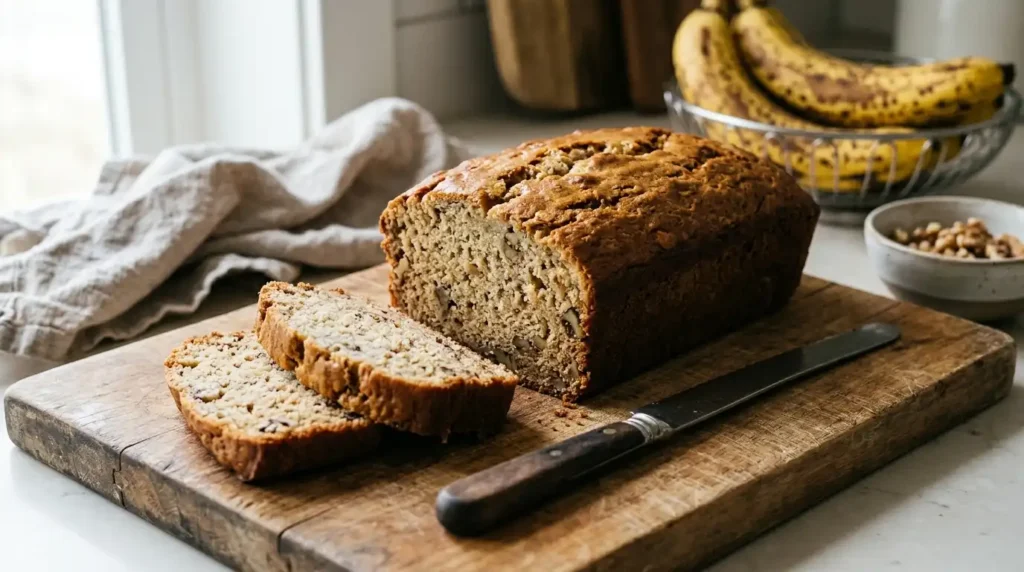
Sugar Free Banana Bread That’s Moist and Naturally Sweet
If you’ve been searching for a sugar free banana bread that doesn’t taste like a science experiment, you’re in the right place. This loaf skips the white sugar, brown sugar, and even the honey or maple syrup that a lot of “healthier” recipes still sneak in, and it leans on very ripe bananas plus a 1:1 sugar substitute to get that classic sweet, tender crumb. I tested this recipe four times in my own kitchen before landing on the banana-to-sweetener ratio that actually works, because the first two attempts came out either bland or gummy in the middle.
The good news is that sugar free banana bread is genuinely easy once you understand the two things that make it work: ripeness and moisture. Get those right and you can skip sugar entirely without sacrificing flavor or texture.
Is Banana Bread Naturally Sugar Free?
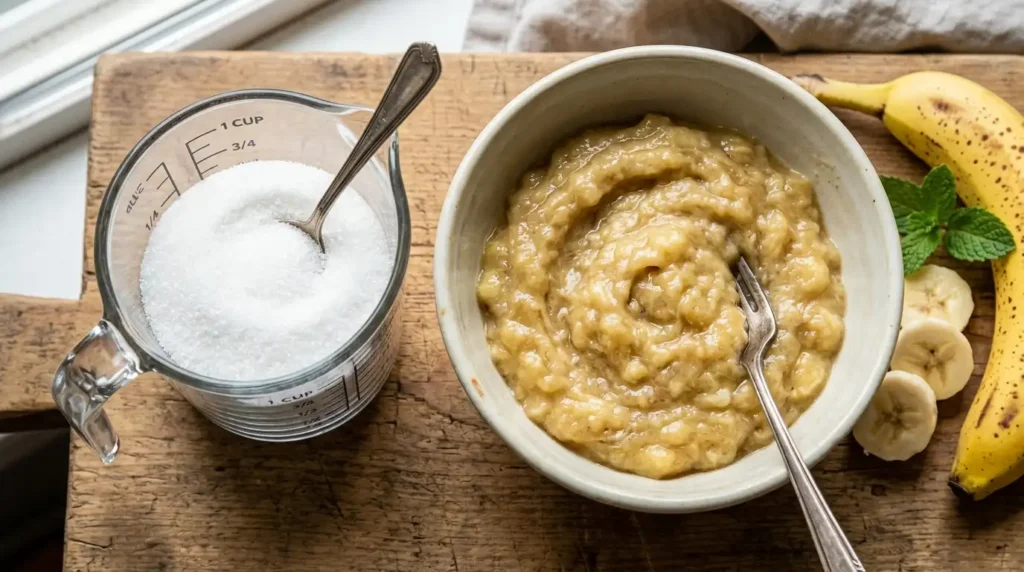
No, traditional banana bread is not sugar-free; most recipes call for a full cup of white or brown sugar on top of the sugar already in the bananas. This recipe removes the added sugar completely and replaces it with a granulated monk fruit or erythritol blend, which measures cup for cup like sugar but doesn’t spike blood sugar the way table sugar does. The bananas themselves still contain natural sugar, so this loaf is sugar-free in the sense of no added sugar, not zero grams of sugar total.
Ingredients You Need for Sugar Free Banana Bread
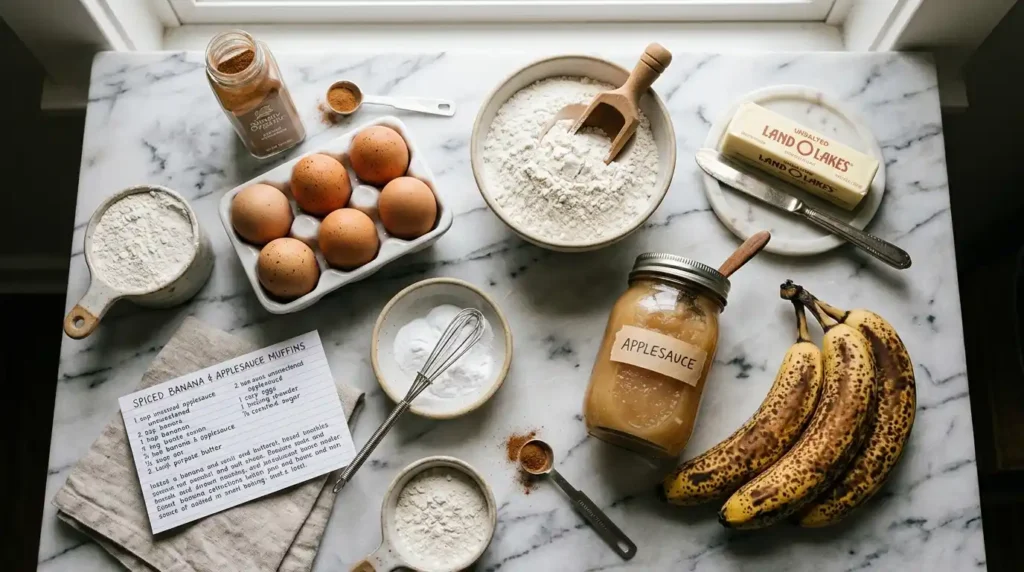
You likely have most of this in your kitchen already:
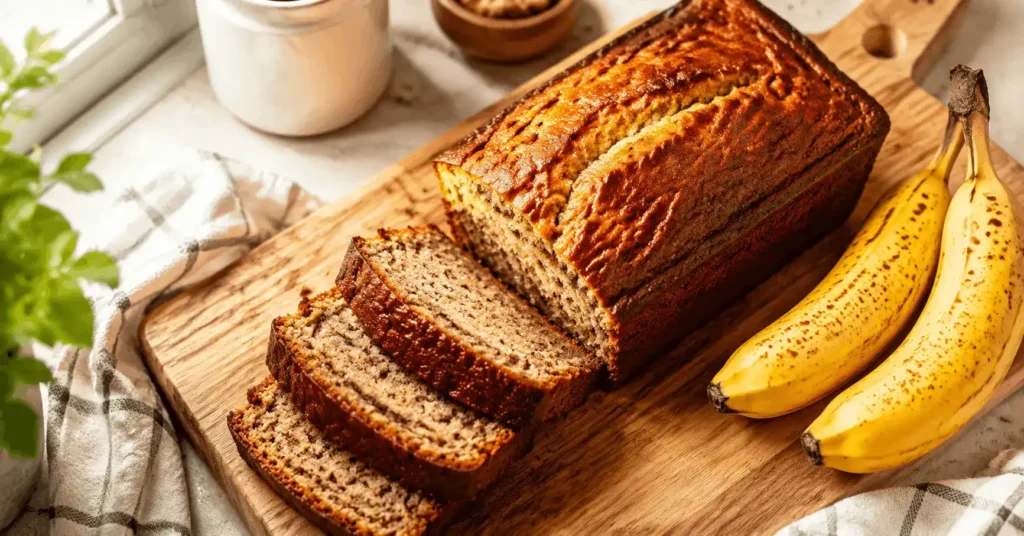
- Very ripe bananas – look for skins that are heavily speckled with brown, almost fully black is even better. This is where most of the natural sweetness comes from.
- Granulated monkfruit or erythritol sweetener – a 1:1 sugar substitute. Stevia works too, but you’ll use less of it since it’s more concentrated.
- Eggs – for structure and to help the loaf rise properly without a lot of added fat.
- Melted butter or neutral oil – butter for flavor, oil if you want an even softer, more tender crumb.
- Unsweetened applesauce – this is the moisture trick that keeps sugar free banana bread from drying out, since sugar normally holds onto water in baked goods and you’re taking it away.
- All-purpose flour – or a 1:1 gluten free flour blend if you need this loaf gluten free.
- Baking soda, cinnamon, and salt – the baking soda needs something acidic to react with, which is exactly what the applesauce and ripe bananas provide.
You can also stir in walnuts, pecans, or sugar free chocolate chips, but keep the mix-ins to about a half cup so they don’t weigh down the batter.
How to Make Sugar Free Banana Bread Step by Step
- Preheat your oven to 350°F and line a 9×5 loaf pan with parchment paper so the bread lifts out cleanly.
- Mash the bananas until mostly smooth, a few small lumps are fine and actually add nice texture to the finished loaf.
- Whisk the wet ingredients together in one bowl: mashed banana, melted butter, applesauce, eggs, and vanilla extract.
- Combine the dry ingredients in a separate bowl: flour, sweetener, baking soda, cinnamon, and salt.
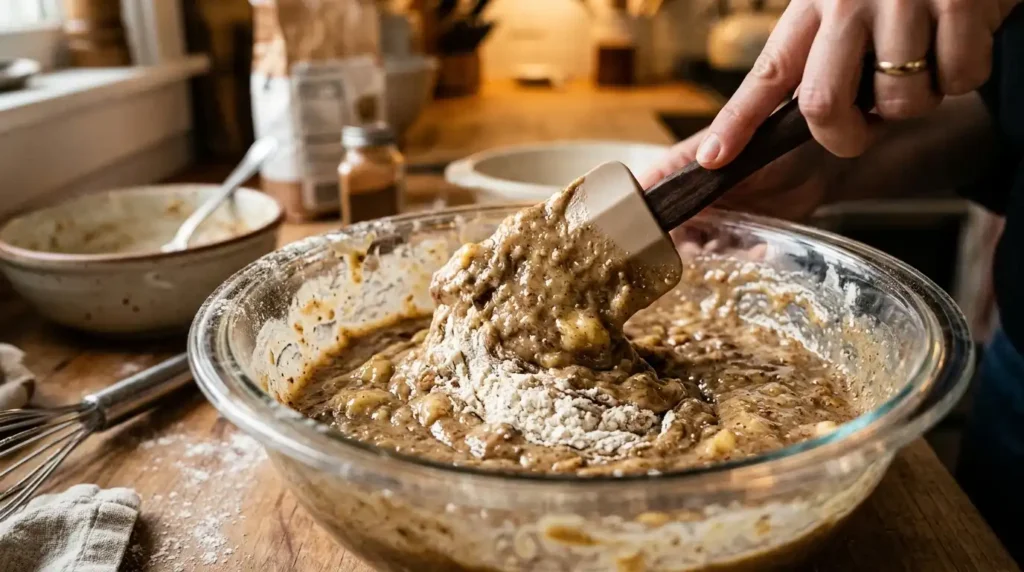
- Fold the dry mixture into the wet mixture using a spatula. Stop as soon as the flour disappears. Overmixing is the number one reason banana bread turns dense, since it develops too much gluten.
- Pour the batter into the pan and smooth the top.
- Bake for 45 to 55 minutes. Around the 30 minute mark, loosely tent the top with foil so it doesn’t over-brown while the center finishes cooking.
- Cool for at least 15 minutes in the pan, then transfer to a wire rack. Sugar free banana bread firms up as it cools, so resist slicing it while it’s still warm.
Best Sugar Substitutes for Banana Bread
Not every sweetener behaves the same way once it hits the oven, so here’s how the common options stack up.
Monkfruit and erythritol blends are the easiest swap because they measure exactly like sugar and don’t leave a bitter aftertaste in most brands. They’re the sweetener I reach for most often in this recipe.
Stevia is far more concentrated, so a little goes a long way. If a recipe calls for a cup of sugar, you typically only need a fraction of that in pure stevia, and using too much can turn the loaf bitter.
Xylitol works well in baking and has a mild cooling sweetness, but it’s toxic to dogs, so it’s worth skipping if you have a pup who likes to counter-surf.
Honey and maple syrup are natural, but they’re still sugar and will affect blood sugar the same way white sugar does, so they don’t belong in a true sugar free loaf, even though plenty of recipes online label them that way.
Is Sugar Free Banana Bread Good for Diabetics?
It can be, depending on the ingredients and portion size. Swapping added sugar for a non-nutritive sweetener like monkfruit or erythritol removes one of the biggest blood sugar spikers in a typical loaf, but the bananas and flour still contribute carbohydrates. A single slice of this recipe made with all-purpose flour comes in lighter on sugar than a standard banana bread, but it isn’t carb free. If blood sugar management is a concern, using a gluten free or almond flour blend lowers the carb count further, and sticking to one slice paired with a source of protein, like a spoonful of Greek yogurt or a boiled egg, helps blunt any rise in blood sugar. As always, check with your doctor or dietitian before making changes to a diabetes management plan.
Tips for the Moistest Sugar Free Banana Bread
Since you’re removing an ingredient that normally locks in moisture, a few small adjustments make a big difference:
- Use bananas that are almost too ripe to eat plain. The starches have converted to natural sugars by this point, and the extra liquid keeps the crumb soft.
- Don’t skip the applesauce. It’s doing double duty as both a moisture source and a mild natural sweetener.
- Underbake by a minute or two rather than over. Pull the loaf when a toothpick has a few moist crumbs clinging to it, not when it comes out bone dry.
- Store it wrapped, not open. Sugar free banana bread dries out faster than a sugared version, so tight wrapping matters more here than in a standard recipe.
- Let it rest overnight if you can. The flavor and moisture actually improve on day two, once the banana flavor has had time to settle through the crumb.
Storage, Freezing, and Reheating
Keep sugar free banana bread tightly wrapped at room temperature for up to 3 days, or in the refrigerator for up to a week if your kitchen runs warm. For longer storage, wrap the fully cooled loaf in foil, slide it into a freezer bag, and freeze it for up to 3 months. Thaw it overnight in the refrigerator or at room temperature for a few hours, then warm individual slices in the toaster or a 300°F oven for a few minutes to bring back that just-baked texture.
A Loaf Worth Baking Again
Sugar free banana bread proves you don’t need a cup of sugar to get a loaf that’s moist, tender, and genuinely craveable. Once you’ve got the banana-to-sweetener ratio down, this becomes one of those recipes you make on repeat, especially when a bunch of bananas on the counter goes from perfect to overripe overnight. Give it a try this week, and let me know in the comments what mix-ins you added.
What’s the Best Sugar Substitute for Banana Bread?
A granulated monkfruit or erythritol blend is generally the best pick because it swaps in at a 1:1 ratio with sugar and bakes without a strong aftertaste. Stevia works too, but you’ll need much less of it, and pure honey or maple syrup should be avoided if the goal is genuinely no added sugar.
How Do I Ripen Bananas Fast for This Recipe?
Bake unpeeled bananas on a lined tray at 300°F for 15 to 20 minutes, until the skins turn fully black, then let them cool before mashing. This softens them and concentrates the natural sugars almost as well as a week on the counter would.
Can I Turn This Recipe Into Muffins?
Yes. Drop the oven temperature to 325°F and divide the batter into a lined muffin tin, filling each cup about three-quarters full. Bake for 20 to 25 minutes, or until a toothpick comes out clean.
Can I Make This Recipe Gluten Free?
Swap the all-purpose flour for a 1:1 gluten free baking blend and the rest of the recipe stays the same. Almond flour can work in a pinch, but it needs an extra egg to hold the loaf together since it doesn’t absorb liquid the same way wheat flour does.

Pingback: Roasted Red Pepper Soup: A Creamy Cozy Recipe