
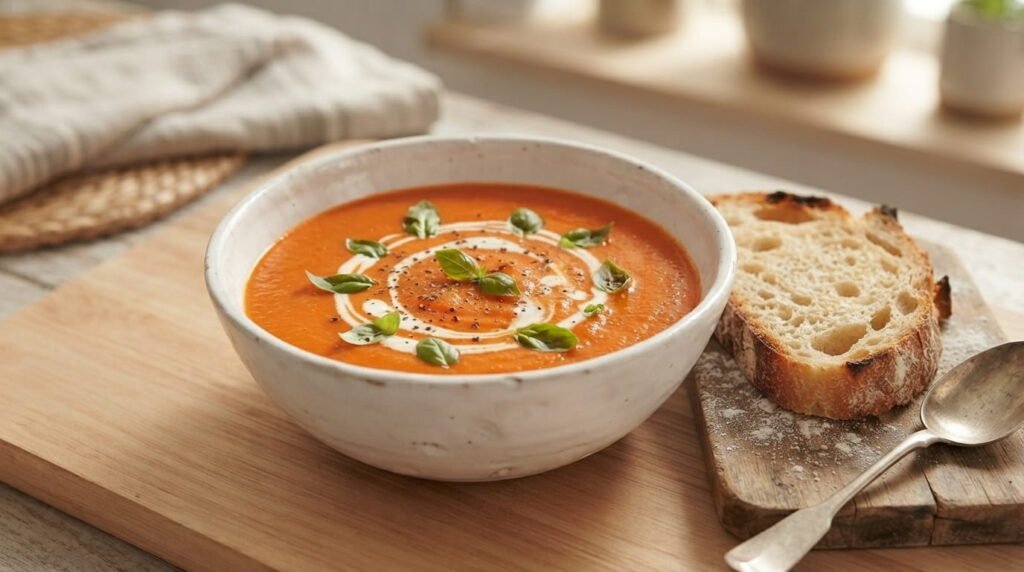
Roasted Red Pepper Soup: Creamy, Smoky, and Easy
Roasted red pepper soup is a simple way to turn a few vegetables into a deeply flavorful meal. Roasting the peppers first brings out their natural sweetness and adds a light smoky flavor that you simply don’t get from raw peppers. Once they’re combined with sautéed onion, garlic, broth, and a little cream, the result is smooth, rich, and comforting without being overly heavy.
The best part is that you don’t need to spend hours making it. Jarred roasted peppers can get dinner on the table in around 30 minutes, while fresh peppers are worth the extra effort when you have time to roast them yourself.
This soup is also easy to adjust. Keep it vegetarian with vegetable broth, make it dairy-free with unsweetened plant milk, add chili flakes for heat, or serve it with grilled cheese and crusty bread for a complete meal.
What Does Roasted Red Pepper Soup Taste Like?
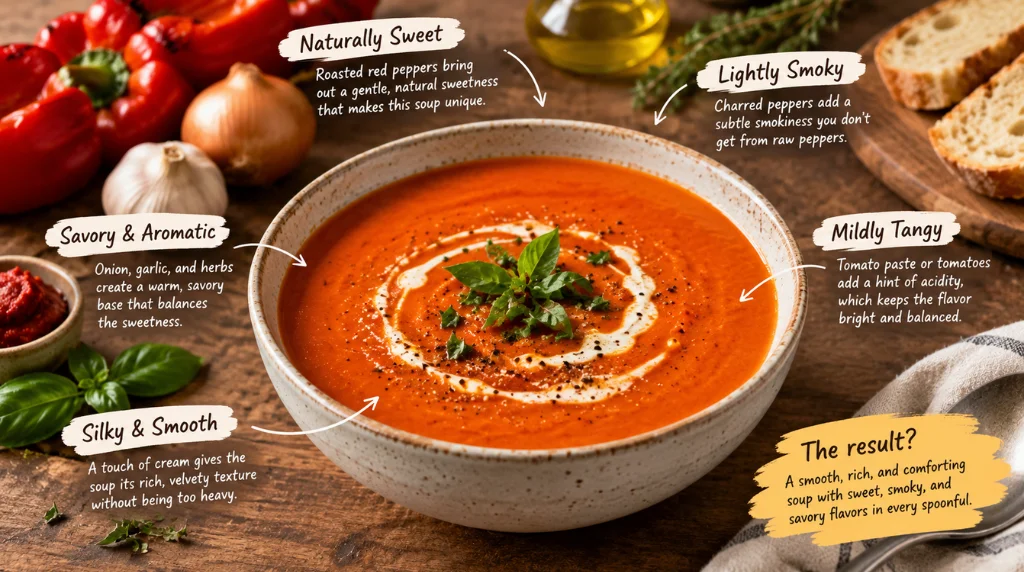
Roasted red pepper soup has a naturally sweet, slightly smoky flavor with a savory base from onion, garlic, and broth. It is generally milder and sweeter than tomato soup, although tomato paste or tomatoes can be added for acidity and extra depth.
The texture should be completely smooth and velvety if that’s the style you’re after. A small amount of cream makes the soup richer, but you don’t need a large quantity to get a luxurious texture.
One useful thing to know before you start: the peppers determine much of the final flavor. Sweet, ripe red bell peppers will produce a noticeably better soup than pale or underripe peppers.
Fresh Peppers or Jarred Peppers: Which Is Better?
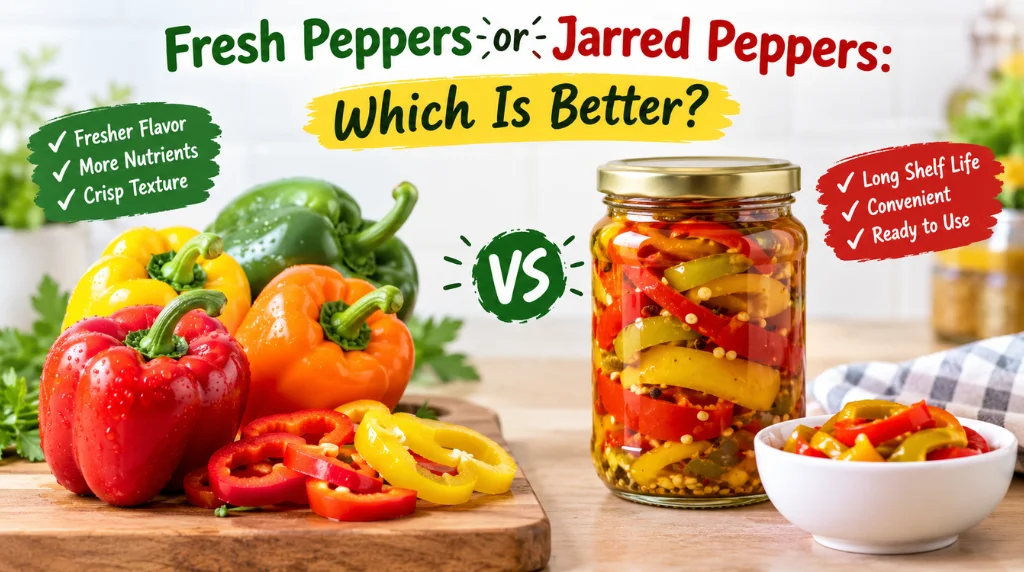
Both options work, but they suit different situations.
| Option | Best for | Main advantage | Trade-off |
|---|---|---|---|
| Fresh red peppers | Maximum flavor | Fresh char and sweetness | Takes more time |
| Jarred roasted peppers | Quick weeknight meals | Convenient and consistent | Can contain extra salt or brine |
| Homemade roasted peppers | Larger batches | Control over roasting and seasoning | Requires peeling |
When fresh peppers are worth it
Fresh red bell peppers are a good choice when you want a stronger roasted flavor. Cut them in half, remove the seeds and membranes, and place them skin-side up under a broiler or roast them at high heat until the skins become heavily blistered and blackened.
Put the hot peppers in a covered bowl for roughly 10 minutes. The trapped steam helps loosen the skins, making them easier to peel.
Don’t worry if a few tiny pieces of skin remain. The soup will be blended, so perfection isn’t necessary.
When jarred peppers make more sense
Jarred roasted red peppers are one of those shortcuts that actually works well. Drain them thoroughly before using them. If they’re packed in brine, excess liquid can make the soup saltier than expected. If they’re packed in oil, draining helps you control the amount of oil in the recipe.
For a fast lunch or weeknight dinner, I’d reach for the jar without hesitation.
Ingredients You’ll Need
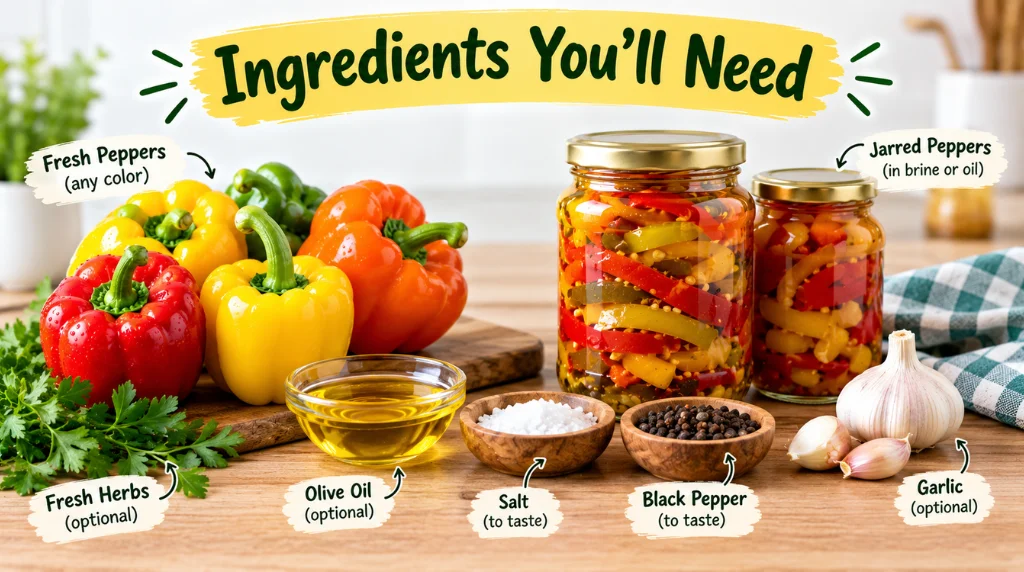
You don’t need an elaborate ingredient list to make roasted red pepper soup.
The main ingredients
Roasted red bell peppers: These provide the color, sweetness, and main flavor. Use homemade or jarred peppers.
Onion: Cooked slowly until soft, onion creates the savory foundation of the soup.
Garlic: A small amount adds warmth and depth. Add it after the onion has softened so it doesn’t burn.
Carrot: Optional, but useful if you want additional sweetness and body.
Tomato paste: A spoonful adds savory depth and a little acidity. You can also use crushed tomatoes if you prefer a more tomato-forward soup.
Vegetable or chicken broth: Use vegetable broth for a vegetarian soup. Start with less broth than you think you need; you can always thin the soup later.
Cream or milk: Heavy cream gives the richest result, while regular milk produces a lighter soup. Unsweetened plant milk can be used for a dairy-free version.
Olive oil: Use it to soften the aromatics and add a little richness.
Salt and black pepper: These bring the flavors together.
Fresh herbs: Basil, thyme, or parsley all work well.
For extra heat, add red pepper flakes. Smoked paprika is another good option if you want to emphasize the roasted flavor.
How to Make Roasted Red Pepper Soup
The soup follows a simple sequence: soften the aromatics, add the vegetables and broth, simmer, blend, and finish.
1. Cook the onion and carrot
Heat olive oil in a large pot over medium heat. Add diced onion and carrot, if using, and cook until the onion becomes soft and translucent.
This usually takes around five minutes.
Don’t rush this step. The onion isn’t just there to fill the pot; it develops sweetness as it cooks. If it is still crunchy when you add the liquid, the finished soup can taste less developed.
2. Add garlic and tomato paste
Stir in minced garlic and tomato paste. Cook for about one minute, stirring frequently.
You want the garlic to become fragrant and the tomato paste to darken slightly, but don’t let either burn.
If the bottom of the pot starts catching, reduce the heat and add a small splash of broth.
3. Add the roasted peppers and broth
Add the roasted red peppers and broth. If you’re using crushed tomatoes or fresh herbs, add them now as well.
Bring everything to a gentle simmer.
You don’t need a violent boil. A gentle simmer gives the vegetables time to soften and allows the flavors to come together without reducing the liquid too quickly.
4. Simmer
Let the soup simmer for approximately 15 to 20 minutes.
If you’re using jarred peppers, they are already cooked, so this stage is mainly about bringing the flavors together. If you roasted fresh peppers yourself, simmering also helps soften any remaining vegetable pieces.
5. Blend until smooth
An immersion blender is the easiest option because you can blend the soup directly in the pot.
If you’re using a countertop blender, work in batches and never fill the blender to the top with hot liquid. Hot soup produces steam, and that pressure can force the lid upward.
Blend until the soup reaches the texture you like.
For an exceptionally smooth soup, blend a little longer than you initially think necessary.
6. Add the cream
Lower the heat and stir in cream, milk, or your chosen dairy-free alternative.
Warm the soup gently rather than bringing it to a hard boil. This is especially helpful when using dairy.
Taste before adding more salt. Jarred peppers, broth, and tomato products can all contain different amounts of sodium.
How Do You Make Roasted Red Pepper Soup Extra Creamy?
A creamy texture isn’t necessarily about adding lots of cream.
First, make sure the vegetables are soft enough to blend properly. Then blend thoroughly. If the soup is still slightly coarse, continue blending rather than immediately adding more dairy.
You can also improve the body by:
-
Using a little carrot along with the peppers
-
Adding a modest amount of cream
-
Blending in a spoonful of Greek yogurt after removing the soup from high heat
-
Adding soaked cashews for a dairy-free creamy version
-
Reducing excess liquid before blending
One of the easiest mistakes is adding too much broth at the beginning. A thin soup is harder to fix without changing its flavor. It’s much easier to start with a smaller amount and add more after blending.
What If the Soup Is Too Thin?
Don’t automatically reach for flour.
Place the soup back over medium-low heat and simmer it uncovered for several minutes. Some of the water will evaporate, leaving you with a thicker, more concentrated soup.
If you want even more body, add another roasted pepper and blend again.
A small amount of cream, Greek yogurt, or soaked cashews can also make the soup feel thicker.
If you’re using tomato paste, remember that it contributes body as well as flavor, so it can be helpful when building the base.
What If the Soup Is Too Thick?
This one is easy to correct.
Add warm broth a little at a time, blending or stirring after each addition. Milk or cream can also be used if you want to increase richness.
Avoid adding a large amount of liquid at once. You may end up going from thick soup to watery soup and then have to reduce it again.
Common Mistakes to Avoid
Using too much broth
This is probably the easiest way to dilute the pepper flavor. The peppers should remain the star of the soup.
Burning the garlic
Garlic cooks quickly. Add it after the onion has softened and keep it moving in the pot.
Skipping the drain step with jarred peppers
If your peppers are packed in salty brine, pouring the entire jar into the soup can throw off the seasoning.
Boiling after adding cream
A strong boil can cause dairy to separate. Keep the heat gentle once cream or milk has been added.
Not tasting before seasoning
The salt level of broth, peppers, tomatoes, and other ingredients can vary. Taste the soup near the end and adjust gradually.
Expecting every red pepper to taste equally sweet
Fresh peppers vary. If your peppers aren’t particularly sweet, tomato paste, carrot, or a small amount of naturally sweet roasted vegetables can help balance the flavor.
How Can You Make It Vegan?
Roasted red pepper soup is easy to make vegan.
Use vegetable broth instead of chicken broth and replace dairy cream with an unsweetened plant-based alternative. Cashew cream is another option if you want a thicker, richer texture.
Be careful with flavored plant milks. A sweet or vanilla-flavored milk can completely change the character of a savory soup.
For the simplest dairy-free version, use unsweetened oat, soy, or another neutral plant milk.
How Can You Add More Heat?
The base recipe is fairly mild, so it’s easy to make it spicy.
Add crushed red pepper flakes while the soup simmers. This gives the heat time to spread through the pot.
You can also add a pinch of cayenne or blend in a small amount of fresh chili.
For a smoky-spicy version, smoked paprika combined with chili flakes works particularly well with roasted peppers.
Start small. It’s much easier to add heat than to rescue a soup that has become too spicy.
What Goes Well With Roasted Red Pepper Soup?
A bowl of soup can be a light meal on its own, but a few simple sides make it much more satisfying.
Grilled cheese
This is probably the most natural pairing. The crisp bread and melted cheese provide a savory contrast to the sweet, smooth soup.
Crusty bread
A warm slice of sourdough, baguette, or focaccia is perfect for dipping.
Garlic croutons
Crunchy croutons give the soup some texture, which is especially useful because the soup itself is completely smooth.
Green salad
A simple salad with a sharp vinaigrette can balance the richness of a creamy soup.
Chicken
For a heartier dinner, stir shredded cooked chicken into individual bowls or serve it alongside the soup.
For toppings, try fresh basil, parsley, cracked black pepper, a drizzle of olive oil, toasted seeds, croutons, or a small swirl of cream.
Can You Make Roasted Red Pepper Soup Ahead of Time?
Yes. In fact, this is a good make-ahead soup.
After cooking, let it cool before transferring it to an airtight container. Refrigerate it and reheat gently when you’re ready to serve.
The flavor can become more rounded after the soup rests because the ingredients have more time to blend together.
If you know you’ll be making it ahead, you can also prepare the soup without the cream and add the dairy or plant milk while reheating. This can make the final texture easier to control.
How Long Does Roasted Red Pepper Soup Last in the Refrigerator?
Store the cooled soup in a sealed container in the refrigerator and use it within about five days.
When reheating, use medium-low heat and stir occasionally. If the soup has thickened in the refrigerator, add a small splash of broth or milk to loosen it.
Always check the soup before serving. If it has an unusual smell, appearance, or texture, don’t use it.
Can You Freeze Roasted Red Pepper Soup?
Yes, roasted red pepper soup generally freezes well.
For the best texture, freeze the soup before adding cream if you have the option. Dairy can sometimes separate slightly after freezing and thawing, although blending or stirring during reheating can help restore a smoother consistency.
Cool the soup first, then transfer it to freezer-safe containers. Leave some space at the top because the liquid will expand as it freezes.
Label the container with the date and use it within roughly three months for the best quality.
Thaw it in the refrigerator overnight when possible. Reheat gently on the stovetop, then add cream or milk toward the end if you held it back.
Can You Make This Soup Without a Blender?
A blender gives the smoothest result, but you can still make a rustic version without one.
Cook the vegetables until extremely soft, then mash them thoroughly with a potato masher. The soup won’t have the silky texture of a blended roasted red pepper soup, but it can still taste good.
If you have an immersion blender, that’s the easiest middle ground. It also saves you from transferring hot soup between containers.
Is Roasted Red Pepper Soup Healthy?
The nutritional profile depends heavily on the ingredients and portions.
Red bell peppers provide vegetables and naturally occurring nutrients, while the amount of cream, oil, cheese, or other toppings affects the overall richness of the finished bowl.
If you want a lighter soup, use vegetable broth and a modest amount of cream or unsweetened plant milk. You can also rely on roasted peppers and carrots for body rather than using a large amount of dairy.
It’s better to think of the recipe as flexible rather than labeling one version universally “healthy.” A cream-heavy bowl and a vegetable-forward broth-based version will have different nutritional profiles.
Easy Ways to Change the Recipe
Once you’ve made the basic version, it’s easy to adjust.
For a smoky soup: Add smoked paprika and use peppers with plenty of char.
For extra tomato flavor: Add crushed tomatoes or increase the tomato paste.
For a vegan soup: Use vegetable broth and unsweetened plant milk or cashew cream.
For a spicy soup: Add chili flakes, cayenne, or fresh chili.
For more protein: Serve with shredded chicken, white beans, or another protein-rich side.
For extra richness: Finish with cream, Greek yogurt, or a drizzle of good olive oil.
For a thicker soup: Reduce the broth slightly or add another roasted pepper.
The key is to make one change at a time. That way, you can tell which adjustment actually improves the soup rather than changing five ingredients and losing track of the balance.
A Simple Roasted Red Pepper Soup Routine
When making this soup regularly, the easiest workflow is to keep a jar of roasted peppers in the pantry.
On a busy evening, sauté onion and garlic, add tomato paste, pour in broth, add drained peppers, and simmer. Blend everything, adjust the consistency, then finish with cream or plant milk.
For a weekend version, roast a larger batch of fresh red peppers. Use some immediately for soup and save the rest for sandwiches, salads, pasta, or sauces.
That approach gives you the flavor of homemade roasted peppers without having to roast them every time you want soup.
The Best Way to Make This Soup
The most important lesson with roasted red pepper soup is that the method matters more than a long ingredient list. Give the onion time to soften, don’t burn the garlic, control the amount of broth, and blend the soup thoroughly.
If you have fresh peppers and extra time, roast them yourself for a deeper charred flavor. If dinner needs to happen quickly, use jarred roasted peppers and focus on building a good aromatic base.
Once the soup is blended, taste it before deciding what it needs. It may need more salt, a little broth, extra acidity, a touch of cream, or simply another minute of simmering. Those small adjustments are what turn a basic vegetable soup into a bowl that’s balanced, smooth, and satisfying.
Do I have to peel roasted red peppers for soup?
No, but peeling heavily charred fresh peppers can give the soup a cleaner flavor and smoother texture. Jarred peppers are generally already peeled. If a few small pieces of skin remain, thorough blending can usually take care of them.
Can I use jarred roasted red peppers?
Absolutely. Drain them well before adding them. They’re especially useful when you want roasted red pepper soup without spending time roasting and peeling fresh peppers.
Why is my roasted red pepper soup bitter?
Bitterness can come from badly burned garlic, excessively charred pepper skin, or certain smoked or dried seasonings. If using fresh peppers, remove heavily blackened skin after steaming. Also taste the soup before adding more smoked paprika or chili.
How do I make roasted red pepper soup without cream?
Use unsweetened plant milk, cashew cream, Greek yogurt if dairy is acceptable, or simply leave the cream out. Blending the vegetables thoroughly can still produce a smooth soup.
Can I add tomatoes?
Yes. Tomatoes add acidity and savory depth. Tomato paste gives you a concentrated flavor without making the soup strongly tomato-based, while crushed tomatoes create a more tomato-forward version.
What herbs go with roasted red pepper soup?
Basil, thyme, and parsley are reliable choices. Basil gives the soup a fresh, slightly sweet finish, while thyme adds a more savory note.
Can I make roasted red pepper soup spicy?
Yes. Add red pepper flakes, cayenne, or fresh chili. Add a small amount first and taste before increasing the heat.
How do I fix soup that tastes too sweet?
Balance it gradually rather than adding a large amount of another ingredient. A little acidity from tomato or another suitable acidic ingredient can help, while additional salt and black pepper can bring the savory flavors forward.


Pingback: Panda Express Kung Pao Chicken Copycat (Better at Home)
Pingback: Mississippi Pot Roast Instant Pot Recipe (5 Ingredients)
Pingback: Sautéed Green Beans Recipe (Quick & Easy 15-Minute Side)