
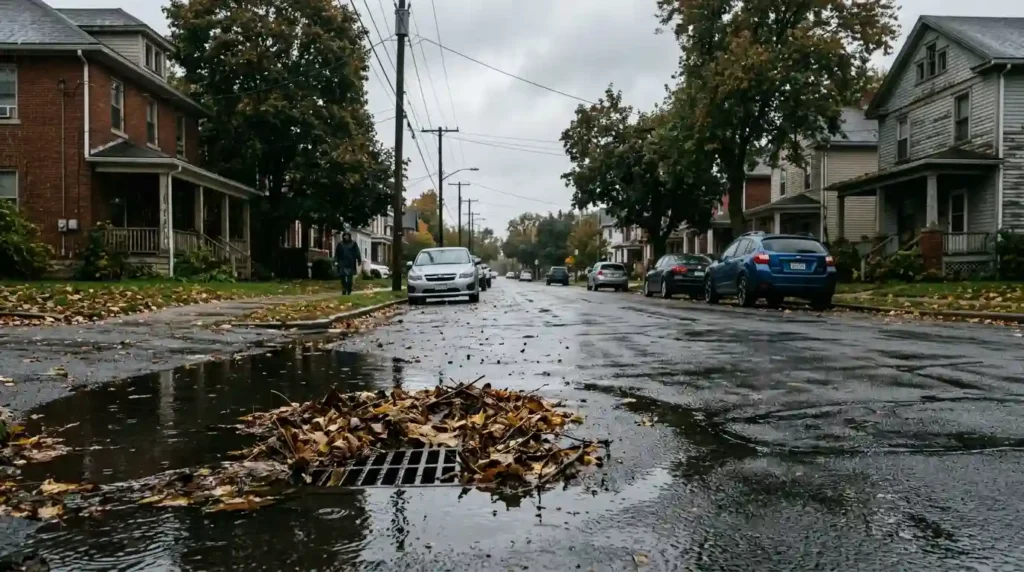
Storm Drain Cleaning Service: What to Know Before You Hire (or DIY)
If water is pooling near your driveway or your street floods every time it rains, you probably need a storm drain cleaning service, not just a plumber for the inside of your house. Storm drains handle rainwater and runoff, and when they clog with leaves, sediment, or trash, that water has nowhere to go except your yard, garage, or foundation. This guide breaks down what these services actually do, what they cost, how to tell when you need one, and how to pick a company that won’t overcharge you for a job a rake could have solved.
What a Storm Drain Cleaning Service Actually Does
A storm drain cleaning service clears the pipes, catch basins, and curb inlets that carry rainwater away from streets, parking lots, and properties. This is different from the drain cleaning you’d call for a clogged kitchen sink. Storm systems are larger, often shared with a municipality or HOA, and they deal with outdoor debris instead of grease or hair.
Most companies start with a camera inspection to see what’s actually blocking the line: tree roots, silt, trash, or a collapsed section of pipe. From there, technicians typically use high-pressure water jetting or a vacuum truck to break up and remove the blockage. For heavier commercial or municipal jobs, crews may also do vacuum excavation around catch basins or televise the line afterward to confirm it’s flowing properly.
Signs Your Storm Drain Needs Professional Cleaning
You don’t need to wait for a full flood to justify calling someone. Watch for these warning signs:
- Water pooling near a drain grate even after light rain
- A slow-draining gutter, downspout, or curb inlet during a storm
- A musty smell rising from a drain cover
- Visible sediment or debris piled at the drain opening
- Repeated water intrusion into a garage, basement, or crawl space
- Local street flooding that clears up within a day or two of a heavy storm elsewhere
Any one of these on its own might be minor. Two or three together, especially if they show up every rainy season, usually means the pipe itself is partially blocked and needs more than a stick and a prayer.
How Much a Storm Drain Cleaning Service Costs
Pricing depends heavily on whether the job is residential, commercial, or municipal, and on how much of the system needs work.
- Basic residential drain clearing (a single blocked line or catch basin) often runs in the same ballpark as general drain cleaning, roughly $150 to $400, depending on access and how far the clog sits from an opening.
- Camera inspection add-on typically adds a flat fee, sometimes waived if you book a full cleaning at the same visit.
- Hydro jetting for tougher sediment or root intrusion usually costs more than a basic snake job because of the equipment and labor involved.
- Commercial and municipal contracts are usually priced per linear foot of pipe cleaned or per catch basin serviced, since those jobs cover much longer runs.
Get at least two quotes before you commit, and ask whether the price includes the camera inspection, debris disposal, and a follow-up visit if the clog returns within a set window.
DIY Storm Drain Maintenance vs. Calling a Professional
Not every drain issue needs a truck with a vacuum hose. If you’re dealing with a surface-level drain grate covered in leaves, you can often clear it yourself:
- Wear gloves and use a rake, shovel, or stiff brush, never your bare hands
- Clear leaves and debris from the grate itself, not just the surface around it
- Bag the debris instead of hosing it into the street, since that debris often just moves downstream to the next drain
- Check the drain again after the next storm to confirm water is flowing
Call a professional storm drain cleaning service when the problem is inside the pipe rather than on the surface. Signs it’s beyond DIY territory include water backing up well below the grate, a smell that doesn’t go away after clearing visible debris, or flooding that keeps returning despite a clean-looking drain cover. At that point you’re likely dealing with sediment buildup, a root intrusion, or a structural issue that needs a camera and proper equipment to diagnose.
How Often Should Storm Drains Be Cleaned?
Most residential storm drains benefit from a professional inspection and cleaning once a year, ideally before your region’s heaviest rainy season. Properties with mature trees nearby, older pipe systems, or a history of flooding often need it twice a year, once in fall after leaves drop and once in spring. Commercial properties and municipalities typically follow a set maintenance schedule, cleaning higher-risk drains annually and lower-risk ones every two to three years.
What to Expect During a Storm Drain Cleaning Appointment
A typical visit follows a similar pattern across most companies, though the scale varies by property type.
- Site walkthrough. The technician locates every drain, catch basin, and curb inlet on the property and asks about past flooding or slow drainage.
- Camera inspection. A small camera runs through the pipe to identify the blockage type and location before any equipment touches it.
- Cleaning. Depending on the clog, the crew uses jetting, a vacuum truck, or mechanical tools to clear sediment, roots, or trash.
- Debris removal. Everything pulled from the line gets hauled away and disposed of according to local regulations, since storm drain debris often can’t just go in a regular dumpster.
- Follow-up camera check. A second pass confirms the line is clear and flowing before the crew leaves.
Ask upfront whether the quote includes all five steps. Some budget providers skip the follow-up check, which means you won’t know for certain the clog is actually gone until the next storm tests it.
Choosing the Right Storm Drain Cleaning Service
A few questions separate a reliable storm drain cleaning service from one that will leave you calling again in three months:
- Do they use a camera to confirm the clog before and after cleaning, or just guess and jet?
- Are they licensed and insured for the type of property you have, residential versus commercial?
- Do they dispose of debris properly instead of dumping it back into another drain downstream?
- Will they put the scope, price, and any follow-up guarantee in writing before starting work?
If a company can’t answer these clearly, keep calling around. Storm drain work is outdoor infrastructure work, and cutting corners here shows up as flooding, not just a slow drain.
Why Clean Storm Drains Matter Beyond Flooding
Flooding is the obvious reason to keep storm drains clear, but it isn’t the only one. Storm drains typically empty straight into local creeks, rivers, or the nearest waterway without any treatment in between. Whatever gets left on the pavement, oil, fertilizer, pet waste, cigarette butts, eventually washes into that system and out into the environment.
That’s part of why many cities regulate storm drain maintenance under stormwater compliance rules, sometimes tied to the EPA’s NPDES program. Commercial properties, HOAs, and multi-unit buildings can face inspection requirements or fines if their storm drain system isn’t maintained on a documented schedule. If you manage a commercial property or run an HOA, ask a storm drain cleaning service whether they provide inspection reports or documentation you can keep on file. It’s far cheaper to show a clean maintenance record than to explain a citation after an inspector finds a clogged, overflowing catch basin.
For homeowners, the stakes are more personal: foundation damage, soil erosion, and basement leaks are the direct result of water that had nowhere else to go. A drain that backs up onto your lawn during every storm is slowly undermining the ground around your home, even when it doesn’t look dramatic in the moment.
Before the Next Storm Hits
A clogged storm drain rarely announces itself until water is already where it shouldn’t be. If you’ve noticed slow drainage, standing water, or recurring flooding near your property, it’s worth getting a camera inspection now rather than waiting for the next downpour to make the decision for you. A straightforward call to a licensed storm drain cleaning service today can save a much more expensive cleanup later.
How much does storm drain cleaning cost?
Basic residential jobs typically fall between $150 and $400, while hydro jetting or root removal costs more due to equipment and labor. Commercial and municipal contracts are usually priced per linear foot or per catch basin instead of a flat fee.
How do I know if my storm drain is clogged?
Look for standing water near the grate after rain, a slow-draining curb inlet during a storm, sediment piled at the opening, or a musty smell coming from the drain cover. Repeated flooding in the same spot every rainy season is the clearest sign.
Can I clean a storm drain myself?
You can clear surface debris like leaves and trash from a grate with a rake or shovel. Anything blocking the inside of the pipe, such as sediment buildup or root intrusion, needs a professional with jetting equipment and a camera to diagnose safely.
Who is responsible for cleaning storm drains, me or the city?
It depends on location and drain type. Municipalities typically maintain drains under public streets, while homeowners and HOAs are usually responsible for drains, downspouts, and catch basins located on private property. Check with your local public works department if you’re unsure which category your drain falls into.