Pizza Sauce vs Marinara Sauce: What’s the Real Difference?
If you’ve ever stood in the pasta aisle staring at two nearly identical red sauces, the pizza sauce vs marinara question can feel more confusing than it should be. Both are tomato based, both smell like a Sunday kitchen, and both can technically end up on a pie. But they aren’t built the same way, and using the wrong one changes your dish more than you’d expect.
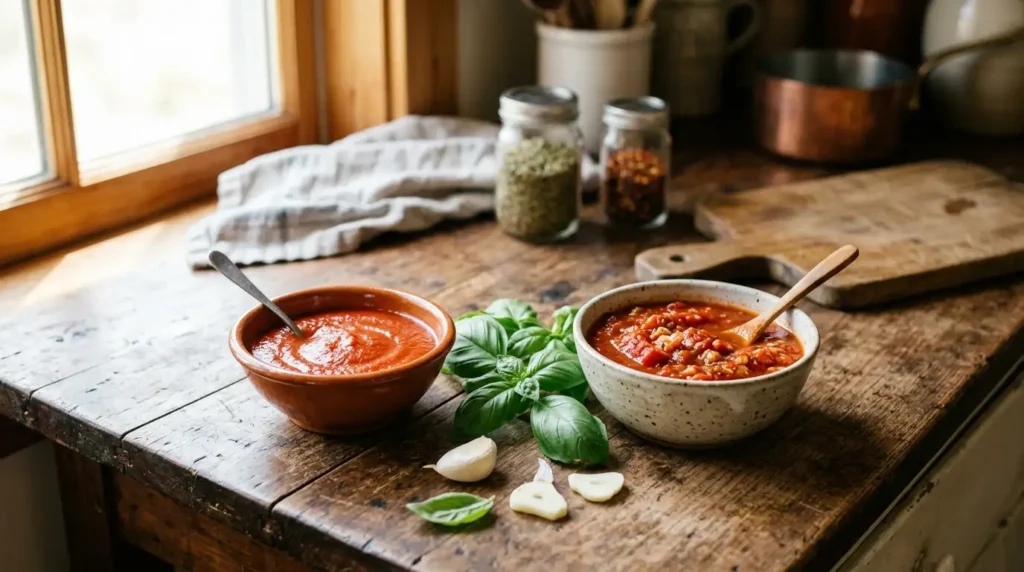
Here’s the short version. Pizza sauce is usually raw and thick, made to sit under cheese and bake in the oven. Marinara is cooked on the stove first, thinner, and meant to stand on its own as a pasta or dipping sauce. Everything else, the ingredients, the texture, the flavor, comes down to that one difference in method.
What Is Pizza Sauce?
Pizza sauce is the flavorful base you spread on dough before the cheese and toppings go on. Most traditional versions are never cooked on the stove at all. The tomatoes are pureed or crushed, seasoned, and spread on raw, then the heat of the oven finishes the job while the pizza bakes.
Traditional pizza sauce usually includes:
- Pureed or crushed tomatoes, sometimes with a spoonful of tomato paste for body
- Olive oil
- Garlic and onion powder rather than fresh
- Dried oregano, basil, salt, and pepper
- A small pinch of sugar to balance the acidity
Because it skips a long simmer, pizza sauce keeps a brighter, tangier tomato flavor that holds up under melted mozzarella without turning muddy. It’s also thick enough to cling to the dough instead of soaking in and leaving you with a soggy crust, which matters most on thin-crust and Neapolitan-style pies where there’s no room for excess moisture.
What Is Marinara Sauce?
Marinara is a classic Italian tomato sauce that’s simmered on the stovetop, usually for twenty to forty five minutes, until the flavors deepen and the acidity mellows out. It’s meant to be eaten as its own dish, tossed with pasta, ladled over meatballs, or served warm as a dipping sauce for breadsticks and mozzarella sticks.
A typical marinara includes:
- Crushed, diced, or whole peeled tomatoes (San Marzano if you’re going for the real deal)
- Fresh garlic and onion
- Olive oil
- Fresh or dried basil, oregano, and parsley
- Optional red pepper flakes or a splash of wine for depth
Because it actually cooks, marinara develops a rounder, more complex flavor than pizza sauce. It’s also thinner and a little chunkier, since the tomatoes break down slowly instead of being blended smooth from the start.
Pizza Sauce, Marinara, or Pomodoro? Where the Confusion Starts
Part of why pizza sauce vs marinara trips people up is that a third sauce, pomodoro, sits right in the middle and gets lumped in with both. Pomodoro is a smooth, quick-cooked tomato sauce that Italians often use as a pizza base too, which is why some pizzerias list “pomodoro” on the menu instead of “marinara” or “pizza sauce.”
The easiest way to keep the three straight:
- Pizza sauce is raw or barely cooked, thick, and made to finish on the pie.
- Marinara is simmered longer, chunkier, and built to be eaten as its own dish.
- Pomodoro sits in between, smooth like pizza sauce but lightly cooked like marinara, and often the closest thing to what you’d actually get in Naples.
If a recipe or a jar just says “tomato sauce” without more detail, it’s usually closer to marinara than true pizza sauce, so read the ingredient list before you commit it to a pie.
Common Mistakes When Swapping the Two
Most sauce mix-ups on pizza night come down to a few small, fixable habits.
Not accounting for moisture. Marinara and pomodoro carry more liquid than pizza sauce, and skipping the step of draining or reducing it is the single biggest reason a home pizza turns soggy.
Over-seasoning an already-seasoned sauce. Jarred marinara has already been simmered with garlic, herbs, and salt. Piling on more Italian seasoning before it hits the dough can push the flavor from bold into bitter.
Using pizza sauce straight from the fridge on pasta. Because it’s never been cooked, cold pizza sauce tastes flat and acidic on noodles. A quick simmer first fixes almost all of that.
Assuming thickness equals quality. A thinner marinara isn’t a worse marinara. It’s simply built for a different job, coating strands of pasta rather than sitting still under cheese.
Pizza Sauce vs Marinara Sauce: Key Differences at a Glance
| Feature | Pizza Sauce | Marinara Sauce |
|---|---|---|
| Cooking method | Usually uncooked before baking | Simmered on the stove |
| Texture | Thick, smooth | Thinner, often chunky |
| Flavor | Mild, tangy, built to support toppings | Bold, herby, complex on its own |
| Best use | Pizza base | Pasta, dipping sauce, seafood |
| Tomatoes used | Pureed or crushed | Whole, diced, or crushed |
| Cook time | None until it hits the oven | 20 to 45 minutes |
In my own kitchen, this is the difference I notice fastest. A jarred marinara tastes fully seasoned and rounded straight out of the jar, because it’s already been cooked. A good pizza sauce tastes almost too simple on a spoon, sharp and tomatoey, and that’s exactly the point. It’s meant to finish cooking on the pizza itself, not before.
Can You Use Marinara Sauce on Pizza?
Yes, marinara works on pizza in a pinch, but expect a wetter crust and a stronger, herbier flavor than a classic pizza sauce would give you. It’s a better match for thicker crusts like Sicilian or deep dish, since thin and Neapolitan styles are more likely to turn soggy under a looser sauce.
If you only have marinara on hand, spread it in a slightly thinner layer than you would pizza sauce, and pat any extra liquid off with a paper towel first. That one step makes a noticeable difference in how the crust bakes.
Can You Use Pizza Sauce for Pasta?
Technically yes, though it won’t taste quite like a finished marinara. Because pizza sauce is raw, it can taste sharp or under seasoned straight from the jar when it’s not backed by a hot crust and melted cheese. Simmer it on the stove for ten to fifteen minutes with a little extra garlic, oregano, and a splash of olive oil, and it rounds out into a passable stand in for pasta night.
How to Turn One Sauce Into the Other
Both swaps are easier than people expect, and neither requires a grocery run.
Marinara into pizza sauce: Reduce it on the stove for a few extra minutes to thicken it, or stir in a spoonful of tomato paste. This tightens the texture so it won’t soak into the dough.
Pizza sauce into marinara: Add a splash of water or tomato juice to loosen the texture, then simmer it for fifteen to twenty minutes with fresh garlic and herbs. Cooking it develops the depth that raw pizza sauce doesn’t have on its own.
Is pizza sauce the same as marinara sauce?
No. Pizza sauce is typically raw and thick, spread on dough before baking, while marinara is cooked on the stove and served as a finished sauce for pasta or dipping. They share a tomato base but differ in texture, cook time, and use.
What’s the difference between marinara and spaghetti sauce?
Marinara is a quick, lighter sauce made mostly from tomatoes, garlic, and herbs, usually ready in under 45 minutes. Spaghetti sauce is often a broader term that can include meat, more vegetables, and a longer simmer, giving it a heavier, richer profile than a classic marinara.
Why is pizza sauce usually uncooked?
Cooking a tomato sauce twice, once on the stove and again in the oven, tends to make it overly thick or slightly bitter. Leaving it raw before baking preserves a brighter tomato flavor and lets the sauce finish cooking directly on the pizza, which is especially important for Neapolitan and New York style pies.
Can I use pizza sauce as a dip?
You can, but it will taste thinner and sharper than the dips people usually expect, since it hasn’t been cooked or seasoned as heavily as marinara. For dipping breadsticks or mozzarella sticks, marinara is the better match because the stovetop simmer gives it a rounder, more finished flavor.
Is pizza sauce or marinara better for you?
Neither sauce is automatically the healthier pick, since it comes down to the specific recipe or brand. Store-bought versions of both can vary quite a bit in added sugar and sodium, so if that matters to you, it’s worth comparing labels rather than assuming one style is lighter than the other. Homemade versions of either sauce let you control salt, sugar, and oil directly, which is usually the bigger factor than whether the sauce is labeled pizza sauce or marinara.
Which Sauce Should You Use?
If you’re building a pizza from scratch, reach for a proper pizza sauce, thick, raw, and lightly seasoned so it can finish cooking under the cheese. If you’re making pasta, dressing a bowl of mozzarella sticks, or want a sauce that tastes complete on its own, marinara is the one to grab. Keep both on hand if you can. A jar of each covers pizza night and pasta night without a single substitution, though now you know exactly how to fake it if you’re only stocked with one.
Next time a recipe just says “tomato sauce,” you’ll know which one actually belongs on the plate.