12 Easy Hearts of Palm Recipes for Salads, Dips, and More
If you’ve got a can of hearts of palm sitting in your pantry and no plan for it, these hearts of palm recipes will fix that fast. I tested a batch of these in my own kitchen over the past few months, and the short version is this: hearts of palm are one of the most underused vegetables in the average grocery cart. They’re crunchy, mild, and quietly good in everything from a five-minute salad to a full dinner.
What Are Hearts of Palm Recipes?
Hearts of palm are the tender inner core of certain palm trees, most often the peach palm, sold canned or jarred after being harvested and preserved in brine. They taste mild and slightly nutty, somewhere between an artichoke heart and white asparagus, with a firm, crisp bite when raw and a softer texture once cooked.
Most home cooks meet hearts of palm in a can at the grocery store, usually near the artichoke hearts and olives. They’re grown in tropical regions like Brazil, Costa Rica, and Ecuador, and a single stalk can take a couple of years to mature before harvest. That slow growth is part of why sustainably sourced brands matter here. Look for labels that mention regenerative harvesting or certifications, since responsible producers cut in a way that lets the palm keep growing rather than clear-cutting it.
How to Prepare Hearts of Palm Before Cooking
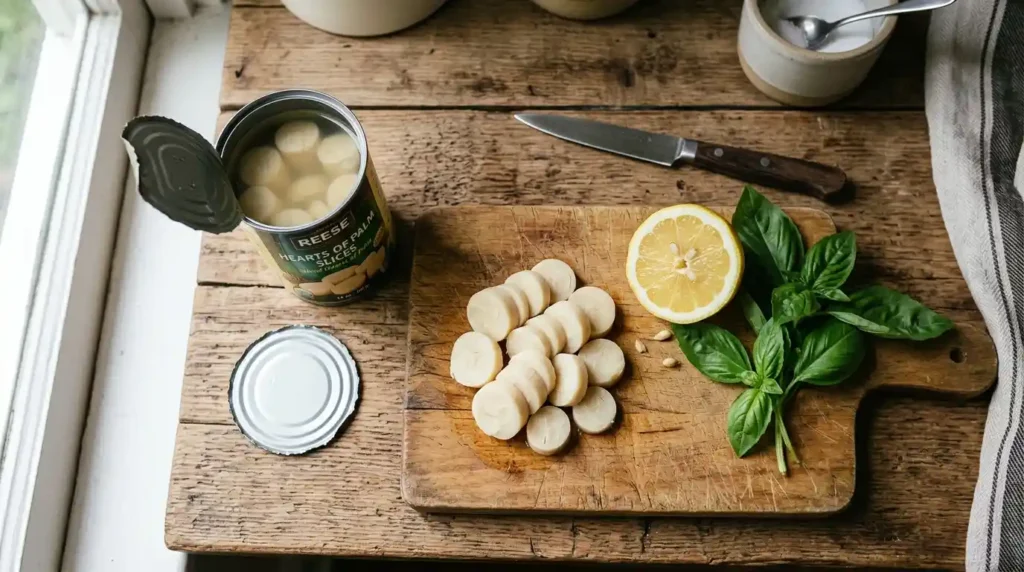
Prepping hearts of palm takes about two minutes, which is honestly half the appeal. Drain the can, then rinse the pieces under cold water to wash off the brine, which can taste sharp and slightly tinny straight from the can. Pat them dry with a paper towel, especially if you’re planning to fry or sear them, since excess moisture keeps them from browning.
From there, you can slice them into rounds for salads, shred them lengthwise for a “crab” or “tuna” texture, or leave them whole for roasting and grilling. They don’t need to be cooked at all if you’re using them raw in a salad, but a quick sear, roast, or fry brings out a slightly sweeter, nuttier flavor that raw hearts of palm don’t have.
How to Store Hearts of Palm Recipe
Unopened cans or jars of hearts of palm keep at room temperature for months, so they’re a smart pantry staple to stock up on when they go on sale. Check the expiration date on the label and use them before that date for the best texture. Once you open a can, the rules change: transfer any leftover hearts of palm to an airtight container, cover them with fresh water or their original brine, and refrigerate. Use them within about five to seven days for the best flavor and crunch.
If you’ve already cooked hearts of palm into a dish like a dip or a batch of crab cakes, treat leftovers like you would any cooked vegetable dish. Store them in a sealed container in the fridge for three to four days, and reheat gently so the texture doesn’t turn mushy.
Hearts of Palm Recipes for Fresh Salads
This is where most people start, and for good reason. Raw hearts of palm bring a satisfying crunch without any real prep work, so they’re an easy way to upgrade a basic salad.
- Hearts of palm and avocado salad: Toss sliced hearts of palm with avocado, butter lettuce, thinly sliced red onion, and toasted walnuts, then dress with olive oil and lemon juice. The creamy avocado plays well against the crisp, tangy hearts of palm.
- Tomato and hearts of palm salad: Combine chopped tomatoes, sliced hearts of palm, and fresh basil with a simple olive oil and vinegar dressing for a five-minute side dish that goes with almost anything off the grill.
- Hearts of palm and asparagus salad: Blanch fresh asparagus, then toss it with sliced hearts of palm, lemon zest, and shaved Parmesan for a spring-ready plate that also works as a light lunch on its own.
Hearts of Palm Recipes for Dips and Spreads
Chopped or pulsed in a food processor, hearts of palm turn into a creamy base for dips that taste far richer than the short ingredient list suggests.
- Hearts of palm spread: Finely chop hearts of palm and mix with mayonnaise, Parmesan, and green onion, then bake until hot and bubbly for a warm party dip that pairs well with crackers or crusty bread.
- Vegan crab dip: Blend hearts of palm with a plant-based cream cheese base, Old Bay-style seasoning, and lemon juice, then bake until golden for a dairy-free dip that holds its own next to the real thing.
- Hearts of palm and artichoke dip: Swap half the artichokes in a classic hot dip recipe for chopped hearts of palm to add a slightly sweeter, less acidic edge to a familiar favorite.
Hearts of Palm Recipes That Taste Like Seafood
This is where hearts of palm really earn their reputation. Shredded, they have a stringy, flaky texture that mimics crab or lobster meat surprisingly well, which is why so many vegan and vegetarian recipes lean on them for seafood-style dishes.
- Hearts of palm crab cakes: Shred hearts of palm and mix with breadcrumbs, Dijon mustard, and Old Bay seasoning, then pan-fry until golden. Serve with a squeeze of lemon and a quick remoulade.
- Hearts of palm ceviche: Marinate chopped hearts of palm in lime juice, diced tomato, red onion, and cilantro for a citrusy, no-cook appetizer that’s popular throughout Central and South America.
- Crispy fried hearts of palm “calamari”: Cut hearts of palm into rings, coat in a seasoned flour batter, and fry until crisp for a plant-based take on fried calamari, served with cocktail sauce for dipping.
- Hearts of palm clam chowder: Chop hearts of palm into bite-size pieces and simmer them into a creamy potato-based chowder for a dairy-free, seafood-inspired soup that holds up well as leftovers.
Hearts of Palm Recipes for Tacos and Sandwiches
Shredded and seasoned, hearts of palm hold sauce and spice well, which makes them a solid stand-in for fish or chicken in handheld meals.
- Crispy hearts of palm tacos: Shred and pan-fry seasoned hearts of palm until crisp on the edges, then pile into warm tortillas with shredded cabbage and a squeeze of lime for a fast weeknight taco night.
- Vegan tuna salad sandwich: Mash hearts of palm with vegan mayo, celery, and a little seaweed flake or nori for an ocean-y flavor, then pile onto toasted bread for a sandwich that fools most people at first bite.
- Hearts of palm “lobster” roll: Toss shredded hearts of palm with vegan mayo, lemon juice, and a pinch of Old Bay, then tuck into a toasted, buttered bun for a plant-based nod to the New England classic.
Global Hearts of Palm Recipes to Try
Hearts of palm show up far beyond salads and dips in the countries where they actually grow, and a few of those dishes are worth borrowing for your own kitchen.
- Brazilian hearts of palm rice: Sauté chopped hearts of palm with garlic and onion, then stir into cooked rice with a squeeze of lime for a simple side dish common along Brazil’s coast.
- Hearts of palm empanadas: Fold diced hearts of palm, corn, and a touch of cream cheese into empanada dough, then bake or fry until golden for a handheld snack popular throughout South America.
- Hearts of palm and chickpea tinga: Simmer shredded hearts of palm and chickpeas in a smoky chipotle-tomato sauce for a spiced, saucy filling that works over rice or tucked into tortillas.
Are Hearts of Palm Healthy?
Yes, hearts of palm are a genuinely healthy addition to most diets. A typical serving is low in calories and fat while offering a solid amount of fiber, potassium, and antioxidants, which is part of why they show up so often in keto, low-carb, and gluten-free meal plans. They’re naturally plant-based, so they fit vegan and vegetarian diets without any modification.
That said, hearts of palm aren’t a significant source of protein compared to legumes or tofu, so they’re best treated as a vegetable and texture swap rather than a full protein replacement. Canned versions also carry some sodium from the brine, so rinsing them well before use helps cut down on that.
If sustainability matters to you when you shop, it’s worth checking the label before you buy. Look for brands that mention regenerative or ethical harvesting practices, or certifications like USDA Organic or Fair Trade. Responsible producers cut palms in a way that lets new shoots regrow, while less careful harvesting can strip a region of its palms entirely, so a few extra seconds reading the can pays off for the ecosystem the ingredient comes from.
Give Hearts of Palm a Spot in Your Regular Rotation
Hearts of palm are one of those pantry staples that quietly upgrade whatever you’re already cooking, from a Tuesday night salad to a full seafood-style dinner. Start with whichever recipe matches what’s already in your fridge, keep a couple of cans on hand, and you’ll likely find yourself reaching for them more often than you expect.
What are hearts of palm made of?
Hearts of palm are the tender inner core of certain palm tree varieties, most commonly the peach palm. They’re harvested by cutting down the tree and removing the outer bark and fibrous layers until only the pale, edible center remains, which is then packed in brine and sold canned or jarred.
Do you have to cook hearts of palm Recpie before eating them?
No, hearts of palm are safe to eat straight from the can once drained and rinsed. Many salads and ceviche-style recipes use them raw for their crisp texture, while dishes like crab cakes or fried “calamari” cook them briefly to bring out a sweeter, softer bite.
What do hearts of palm taste like?
Hearts of palm have a mild, slightly nutty flavor often compared to artichoke hearts, with a crisp texture similar to raw asparagus. They take on other flavors easily, which is why they work so well in dishes seasoned to taste like crab, tuna, or lobster.
Can you eat hearts of palm right out of the can?
Yes, canned hearts of palm are fully cooked during processing and safe to eat directly after rinsing. They’re a popular quick snack on their own, sometimes served with just a squeeze of lemon or a dollop of dressing.