
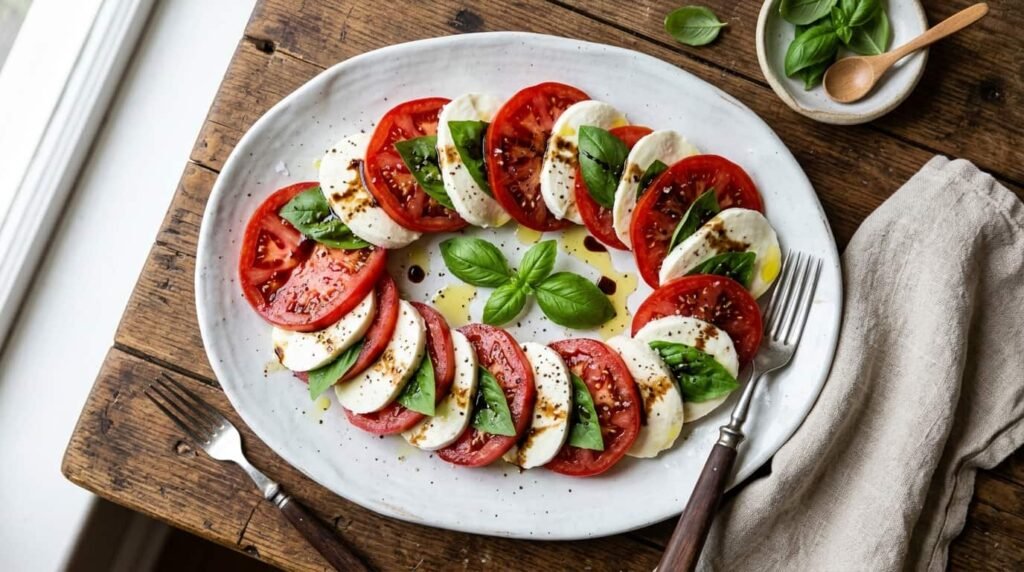
Classic Caprese Salad
Ingredients
Instructions
Caprese Salad Recipe: The Simple Italian Recipe That Never Goes Out of Style
Caprese salad is proof that three good ingredients beat ten mediocre ones. Ripe tomatoes, fresh mozzarella, and fragrant basil, finished with olive oil and a little salt, is one of those dishes where the recipe is almost beside the point. What actually matters is technique: how you slice, salt, and layer those three ingredients decides whether you end up with something restaurant-worthy or a soggy, watery plate of disappointment. This guide walks through the classic version along with the small details that separate a good caprese salad from a great one.
Named after the island of Capri, where the tomato, mozzarella, and basil combination is said to have originated, caprese salad shows up on nearly every Italian menu for a reason. The colors mirror the Italian flag, the flavors are bright and clean, and it takes about fifteen minutes with zero cooking. It works as a side dish, a light lunch, or an appetizer for a summer dinner party, and it’s endlessly easy to scale up for a crowd.
Why Caprese Salad Works So Well
There’s a reason this combination has stuck around for a century. Tomatoes bring acidity and sweetness, fresh mozzarella brings a creamy, mild contrast, and basil adds a peppery, slightly sweet note that ties everything together. Olive oil rounds out the texture, and a drizzle of balsamic glaze adds just enough tang and sweetness to make the whole plate sing.
Because the ingredient list is so short, quality does a lot of the heavy lifting. This isn’t a recipe where a mediocre tomato can hide behind a sauce or a dozen spices. That’s also what makes it such a good summer dish: when tomatoes are actually in season, this salad barely needs any help at all.
Ingredients You’ll Need
Tomatoes: Heirloom tomatoes are the classic choice because of their varied colors and deep, sweet flavor, but ripe vine tomatoes or a mix of large and cherry tomatoes work fine too. Look for tomatoes that feel heavy for their size, smell like tomatoes at the stem, and give slightly when pressed. Avoid anything mealy or pale pink, since underripe tomatoes will make the whole salad taste flat.
Fresh mozzarella: This is not the place for low-moisture, shredded pizza mozzarella. You want fresh mozzarella packed in water or brine, sometimes labeled “fior di latte” or sold as mozzarella balls (bocconcini). It should feel soft and slightly springy, almost like it could tear with your hands. Burrata is a great substitute if you want something even creamier.
Basil: Fresh basil only. Dried basil doesn’t have the same peppery brightness and will make the salad taste muted. Use whole small leaves for presentation, or tear larger leaves so they don’t overwhelm each bite.
Olive oil and balsamic: A good extra virgin olive oil matters here since it’s doing real flavor work, not just adding fat. For the balsamic, a thick glaze or reduction clings to the salad better than thin vinegar straight from the bottle, which tends to pool at the bottom of the plate and make everything soggy.
Salt and pepper: Flaky sea salt gives a nice textural pop compared to fine table salt. Freshly cracked black pepper is worth the extra ten seconds over pre-ground pepper from a jar.
How to Make Caprese Salad
Start by slicing your tomatoes into even rounds, about a quarter-inch thick. This is the step most people skip, but salting the tomatoes lightly and letting them rest on paper towels for ten minutes pulls out excess liquid that would otherwise water down the plate. Pat them dry before assembling.
While the tomatoes rest, slice the mozzarella to roughly match the tomato thickness. This makes each bite balanced instead of all cheese or all tomato.
To assemble, arrange the tomato and mozzarella slices on a platter, alternating and slightly overlapping so both colors are visible. Tuck basil leaves between the slices rather than piling them on top, which distributes the flavor more evenly through the dish. Drizzle with olive oil first, then the balsamic glaze in thin lines, and finish with flaky salt and pepper right before serving.
Pro Tips for the Best Results
Salting and drying the tomatoes is the single biggest difference between a caprese salad that looks like the picture and one that turns into a puddle on the plate. Don’t skip it, even if you’re short on time.
Bring the mozzarella to room temperature before serving. Cold mozzarella straight from the fridge is firmer and less flavorful than mozzarella that’s had twenty or thirty minutes to warm up on the counter.
Season in layers rather than all at once at the end. A little salt on the tomatoes while they rest, then a final pass of salt and pepper after assembly, builds more even flavor than one big sprinkle at the finish.
If you’re using a thin balsamic vinegar instead of a glaze, reduce it in a small saucepan over medium heat until it coats the back of a spoon. This takes about ten minutes and keeps the vinegar from thinning out the plate.
Common Mistakes to Avoid
The most common issue is a watery, diluted salad, which almost always comes down to skipping the salting step or slicing the tomatoes too far in advance. Assemble the platter close to serving time rather than hours ahead.
Another frequent mistake is using low-moisture, part-skim mozzarella meant for melting on pizza. It has a rubbery texture and a much saltier flavor than fresh mozzarella, and it throws off the whole balance of the dish.
Cutting the basil with a knife well ahead of time will cause it to bruise and turn dark. Tear it by hand right before assembling, or leave the leaves whole if they’re small enough.
Finally, avoid drowning the salad in balsamic vinegar straight from the bottle. It’s thinner than a glaze, pools at the bottom of the platter, and can overpower the more delicate tomato and mozzarella flavors.
Variations and Substitutions
Caprese salad is easy to riff on once you know the base technique. Swap in burrata for an even creamier version, or add sliced avocado for extra richness. Peach caprese, made with sliced ripe peaches in place of some or all of the tomatoes, is a popular summer twist. Chopped caprese, where everything is diced and tossed together rather than layered, works well as a side for a crowd or as a topping for bruschetta.
For a heartier, main-dish version, try caprese chicken, where grilled chicken breast is topped with the same tomato, mozzarella, and basil combination and a balsamic drizzle. Caprese skewers (cherry tomato, a small mozzarella ball, and a basil leaf on a toothpick) make a great party appetizer. And a caprese sandwich, built on ciabatta with a smear of basil pesto, turns the salad into a handheld lunch.
For a dairy-free version, thinly sliced avocado can stand in for the mozzarella, though the texture and flavor will be noticeably different. This salad is naturally gluten-free and vegetarian as written, and it fits easily into a low-carb or keto plan since it has no added sugar or starch.
Storage and Make-Ahead Tips
Caprese salad is best assembled and eaten the same day, ideally within an hour of putting it together, since the tomatoes will continue to release liquid the longer they sit dressed. If you need to prep ahead, slice the tomatoes and mozzarella separately, store them in the fridge in separate airtight containers, and assemble just before serving.
Leftovers can be stored in an airtight container in the refrigerator for up to two days, though the texture will soften and the tomatoes will release more liquid. Drain off any excess liquid before serving leftovers, and let the salad sit at room temperature for about fifteen minutes to bring back some of the mozzarella’s texture. This salad does not freeze well; the tomatoes turn mushy and the mozzarella becomes watery once thawed.
What to Serve With Caprese Salad
Caprese salad pairs naturally with crusty bread or grilled focaccia to soak up the olive oil and balsamic. It also works well alongside grilled proteins like chicken, shrimp, or a simple steak, since the acidity in the tomatoes cuts through richer, fattier dishes.
For a full Italian-style spread, serve it next to pasta with a light sauce, a plate of prosciutto and cured meats, or a simple green salad. A crisp rosé or a light, chilled white wine complements the fresh flavors without competing with them.
Frequently Asked Questions
Why is my caprese salad watery?
This almost always comes from unsalted, freshly sliced tomatoes releasing their liquid onto the plate. Salt the tomato slices and let them drain on paper towels for ten minutes before assembling, and pat them dry before layering.
Can I make caprese salad ahead of time?
You can slice the tomatoes and mozzarella a few hours ahead and store them separately in the fridge, but wait to assemble and dress the salad until right before serving to avoid excess liquid and wilted basil.
What’s the best mozzarella for caprese salad?
Fresh mozzarella packed in water, sometimes labeled fior di latte, is the classic choice. Avoid low-moisture, shredded mozzarella meant for melting, since it has a firmer, rubbery texture that doesn’t suit this dish.
Is caprese salad served cold or at room temperature?
Room temperature. Cold mozzarella straight from the refrigerator is firmer and less flavorful, so let it sit out for twenty to thirty minutes before serving for the best texture and taste.
Can I use dried basil instead of fresh?
Fresh basil is strongly recommended. Dried basil has a muted, dusty flavor that doesn’t provide the bright, peppery note fresh leaves bring to the dish.
How do I keep caprese salad from getting soggy?
Salt and drain the tomatoes before assembling, use a thick balsamic glaze rather than thin vinegar, and assemble the platter as close to serving time as possible.


Pingback: 12 Easy Hearts of Palm Recipes You'll Make Again