
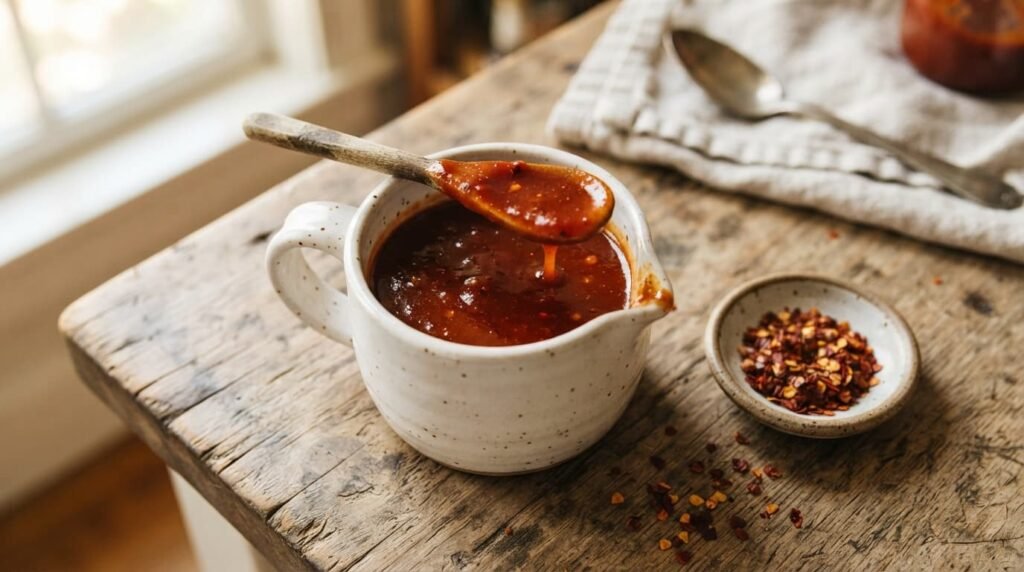
Carolina BBQ Sauce Recipe
This Carolina BBQ sauce recipe is the tangy, vinegar-forward sauce I keep coming back to every time I fire up the smoker. It comes together in one saucepan in about 20 minutes, uses ingredients you probably already have in the pantry, and tastes like something you’d find on a picnic table in the Piedmont. If you’ve only ever had thick, ketchup-heavy bottled sauce, this one is going to feel like a completely different condiment, and that’s the point.
I’ve made a dozen versions of this over the years, tweaking the ratio of vinegar to ketchup until it landed somewhere between the thin, peppery Eastern North Carolina style and the slightly thicker, sweeter Lexington sauce from the west. The result is a sauce that clings just enough to pulled pork without drowning it, with a sharp tang up front and a mellow sweetness that shows up a beat later.
What Is Carolina BBQ Sauce?
“Carolina BBQ sauce” isn’t one single recipe. It’s a family of regional sauces, and which one you grew up eating usually depends on which side of North Carolina, or which part of South Carolina, your family is from.
- Eastern North Carolina sauce is thin, vinegar-based, and almost never touches tomato. It’s closer to a seasoned vinegar mop than a traditional bottled sauce, and it’s traditionally splashed over whole-hog barbecue.
- Western (Lexington/Piedmont) North Carolina sauce keeps the vinegar backbone but adds ketchup and a bit more sugar, giving it more body and a rounder, slightly sweeter flavor.
- South Carolina mustard sauce, sometimes called Carolina Gold, swaps the tomato out for yellow mustard, giving it a bright yellow color and a sharper, tangier bite.
This recipe borrows from all three, leaning vinegar-forward like the Eastern style but with the ketchup and brown sugar of the Western version, plus a spoonful of mustard for that classic Carolina tang. It’s the sauce I reach for most, because it works on almost anything that comes off a grill or smoker.
The regional split goes back to how barbecue itself was cooked in each part of the state. In the east, whole hogs were smoked low and slow overnight, and the thin vinegar sauce was mopped over the meat throughout cooking, which is why it’s sometimes called a mop sauce or Lexington dip in its western form. In the Piedmont region around Lexington, cooks focused on pork shoulder instead of the whole hog, and the sauce picked up ketchup and sugar along the way to complement the smaller, richer cut. Neither version is more “authentic” than the other. They’re just two answers to the same regional question.
Ingredients for This Carolina BBQ Sauce Recipe
You need eight ingredients, most of which are already in your fridge or pantry:
- Apple cider vinegar – the backbone of any real Carolina sauce. It brings the sharp, tangy flavor that cuts through rich, smoky pork. White vinegar works in a pinch, but it’s flatter and less fruity.
- Ketchup – adds a little sweetness, color, and body so the sauce isn’t as thin as a straight vinegar mop.
- Dark brown sugar – balances the acidity without turning the sauce into a sweet, Kansas City-style glaze.
- Yellow mustard – a small amount rounds out the tang and nods to the mustard-based sauces of South Carolina.
- Worcestershire sauce – adds savory depth and a little umami that keeps the sauce from tasting one-note.
- Hot sauce – Texas Pete is the regional favorite and genuinely from North Carolina, but any hot sauce you like will work.
- Salt and black pepper – to season and sharpen everything else.
- Crushed red pepper flakes (optional) – for a low, steady heat rather than a sharp bite.
How to Make Carolina BBQ Sauce
This is a dump-and-simmer recipe, so there’s no real technique to master, just a little patience while it thickens.
- Combine everything in a saucepan. Add the vinegar, ketchup, brown sugar, mustard, Worcestershire, hot sauce, salt, and pepper to a medium saucepan and whisk until smooth.
- Bring it to a simmer. Set the pan over medium heat until the mixture reaches a rapid simmer, then immediately lower the heat so it’s just gently bubbling.
- Let it reduce. Simmer for 15 to 18 minutes, whisking occasionally, until the sauce turns glossy and thickens slightly. It will still be thinner than a bottled BBQ sauce, and that’s correct.
- Taste and adjust. Pull it off the heat, taste, and tweak. More brown sugar softens the tang, more vinegar sharpens it, more hot sauce brings the heat up.
- Cool before using or storing. Let it come to room temperature before pouring it over meat or transferring it to a jar.
Tips for the Best Carolina BBQ Sauce
A few small things make a real difference between an average batch and a great one:
- Don’t rush the simmer. The 15 to 18 minutes isn’t just for thickening, it’s also when the raw edge comes off the vinegar and mustard and the flavors actually start to marry.
- Taste it cold, not just hot. Sauce mellows and changes as it cools, so a batch that tastes sharp straight off the stove often tastes perfectly balanced once it’s chilled.
- Whisk before every use. Some separation is normal in the fridge, especially with a vinegar-heavy sauce like this one, so give the jar a good shake or whisk before pouring.
- Make it a day ahead for a party. If you’re serving a crowd, mix the sauce the night before. It gives the flavors more time to settle and takes one more thing off your plate on the day of.
Is Carolina BBQ Sauce Sweet or Tangy?
Carolina BBQ sauce is tangy first, with only a light sweetness in the background. Unlike Kansas City or Memphis-style sauces, which lean heavily on sugar and molasses, Carolina sauce is built around vinegar, so the dominant flavor is sharp and slightly peppery rather than sweet. If you want more sweetness, simply add extra brown sugar a tablespoon at a time until it matches your taste.
Recipe Variations
Once you’ve made the base recipe once, it’s easy to steer it toward whichever regional style you prefer.
- More Eastern-style: Cut the ketchup in half, or leave it out entirely, and add a splash more vinegar for a thinner, sharper mop sauce.
- More Western-style: Add an extra tablespoon of ketchup and brown sugar for a thicker, slightly sweeter sauce that clings better to pulled pork.
- Carolina Gold (mustard style): Swap most of the ketchup for extra yellow mustard and stir in a spoonful of honey for the classic South Carolina profile.
- Spicier sauce: Add cayenne pepper along with the red pepper flakes for a sauce with real heat instead of a background warmth.
- Smoky sauce: A pinch of smoked paprika or a few drops of liquid smoke gives the sauce a campfire quality even if you’re cooking indoors.
What to Serve Carolina BBQ Sauce With
This sauce earns its keep well beyond pulled pork.
- Pulled pork sandwiches, tossed right into the meat or drizzled on top with slaw.
- Smoked or grilled chicken, brushed on during the last few minutes of cooking so it doesn’t burn.
- Ribs, as a finishing glaze once they come off the smoker.
- Fries or chicken tenders, as a tangy dipping sauce.
- Grilled vegetables, tossed on right after they come off the heat.
Storing and Reheating Leftover Sauce
Homemade Carolina BBQ sauce doesn’t have the preservatives that bottled sauces do, so treat it like any fresh condiment.
- Refrigerator: Store in an airtight jar for up to two weeks. The flavor actually improves after a day or two as everything melds together.
- Freezer: Pour cooled sauce into a freezer-safe container, leaving room for expansion, and freeze for up to three months.
- Reheating: Warm gently in a small saucepan over low heat, or microwave in short bursts, whisking between each one since the sauce can separate slightly in storage.
Frequently Asked Questions
What’s the difference between Eastern and Western Carolina BBQ sauce?
Eastern North Carolina sauce is thin, vinegar-based, and skips tomato products almost entirely. Western North Carolina, or Lexington-style, sauce keeps the vinegar but adds ketchup and a bit more sugar, giving it a thicker texture and a rounder, less sharp flavor.
Is Carolina BBQ sauce spicy?
Not by default. The base recipe has only a small amount of hot sauce and optional red pepper flakes, so it lands closer to tangy than hot. You can easily bump up the heat with extra hot sauce or cayenne if you want more kick.
Can I make Carolina BBQ sauce ahead of time?
Yes, and it’s actually better that way. Making it a day or two before you need it gives the vinegar, sugar, and mustard time to mellow and blend, so the flavor is smoother than sauce used the same day it’s made.
How long does homemade Carolina BBQ sauce last in the fridge?
Stored in an airtight container, homemade Carolina BBQ sauce keeps well for about two weeks in the refrigerator. Because it lacks the preservatives found in store-bought bottles, it won’t last as long as a commercial sauce, so plan to use it within that window.
Can I use this sauce on something other than pork?
Definitely. The tangy profile works well on grilled or smoked chicken, beef, shrimp, and even roasted vegetables, so don’t limit it to just pulled pork.
Once you’ve made a batch, you’ll probably find yourself reaching for it over bottled sauce more often than not. It’s simple enough to whip up on a weeknight, but the flavor holds its own against anything smoked low and slow all weekend.


Pingback: Mae Ploy Sweet Chili Sauce: Uses, Buying & Storage Guide
Pingback: What Is Big Arch Sauce? McDonald's New Burger Sauce, Explained
Pingback: Pizza Sauce vs Marinara Sauce: What's the Real Difference?