Shit on a Shingle Recipe: Creamy Chipped Beef on Toast
This shit on a shingle recipe turns a handful of pantry staples, dried beef, butter, flour, and milk, into a rich, salty, comforting sauce spooned over crisp toast. It sounds rough around the edges, but it is one of the fastest, cheapest, most satisfying breakfasts you can put together, and it has been feeding hungry people for well over a century.
What Is Shit on a Shingle?
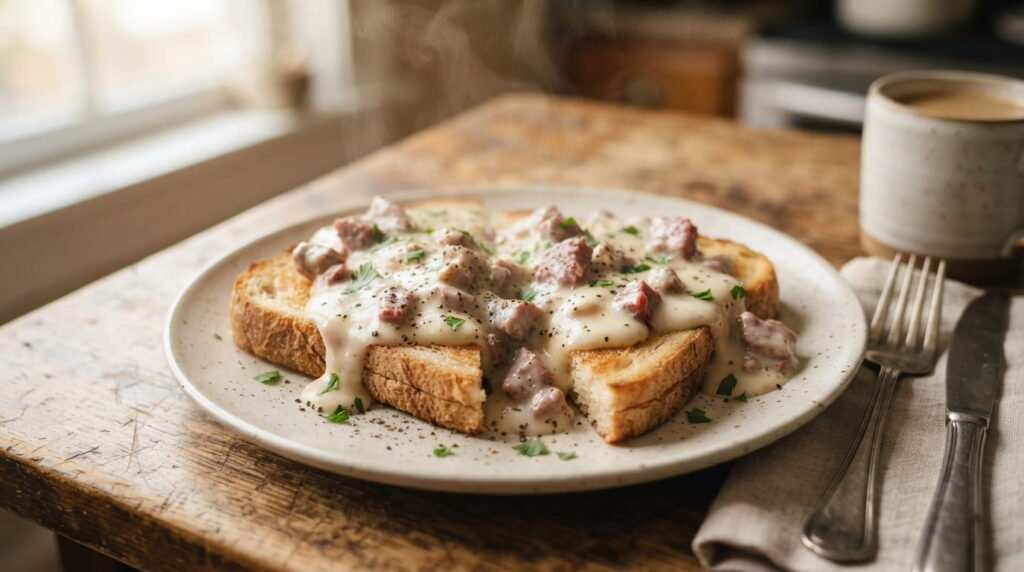
Shit on a shingle, often shortened to S.O.S., is creamed chipped beef served over toast. Thin, salty strips of dried beef get folded into a buttery white sauce, then poured over toasted bread that acts as the “shingle.” It takes about 20 minutes start to finish, uses five or six ingredients, and tastes far better than the name suggests.
The Military History Behind the Name
The dish traces back to the 1910 edition of the Manual for Army Cooks, which listed it under the far more polite name “stewed, chipped beef.” Cooks were feeding sixty men at a time with pounds of dried beef, melted fat, flour, and canned evaporated milk, so the recipe had to be cheap, shelf-stable, and quick to stretch across a mess hall line.
The nickname “shit on a shingle” caught on with American soldiers during World War II, when the dish showed up on mess trays with exhausting regularity. “Shingle” referred to the toast underneath, and the other half of the name referred to how the creamed beef looked once it landed on the plate. Soldiers were not being kind, but plenty of them still ate it happily, and many carried a soft spot for it home with them.
That soft spot is a big part of why this dish has stuck around. Ask around and you will find people whose grandfathers, fathers, or mothers made this exact meal on Sunday mornings, usually with a story attached about who served in which branch. The dish is essentially a simple béchamel, one of the five French mother sauces, dressed down with military rations instead of restaurant ingredients. That is also why versions of it show up outside the U.S. Army, including the British Royal Navy’s take made with sautéed kidneys instead of beef.
Ingredients for This Shit on a Shingle Recipe
You only need a short list to make this shit on a shingle recipe at home:
- Dried beef – thin, salty slices, often sold in small jars or pouches near the canned meats or deli counter. Buddig brand is common and widely available.
- Butter – unsalted, since the dried beef already brings plenty of salt.
- All-purpose flour – for the roux that thickens the sauce. A gluten-free blend works as a swap.
- Whole milk – gives the sauce body. Some cooks stir in evaporated milk for extra richness, which is closer to the original military version.
- Black pepper – the classic seasoning. A pinch of cayenne or a dash of Worcestershire sauce is a common modern add-in.
- Bread for toasting – thick-cut white bread, Texas toast, or brioche all hold up well under the gravy. English muffins and split biscuits work too.
We tested this recipe with both jarred dried beef and thinly sliced deli roast beef, and the jarred version wins for authenticity, but a deli counter substitute works in a pinch if you can’t find the packaged kind.
How to Make Shit on a Shingle Step by Step
- Prep the beef. Rinse the dried beef briefly under cool water to knock back some of the salt, then pat it dry and tear or slice it into small strips.
- Build the roux. Melt the butter in a skillet over medium heat, then whisk in the flour. Cook for two to three minutes, stirring constantly, until it turns pale gold and smells slightly nutty.
- Add the milk. Pour in the milk gradually, whisking the whole time so no lumps form. Keep whisking until the sauce thickens enough to coat the back of a spoon, usually three to five minutes.
- Stir in the beef. Add the dried beef strips and black pepper, then simmer for another minute or two just to warm the meat through. If the sauce gets too thick, splash in a little more milk.
- Toast the bread. While the sauce finishes, toast your bread until golden and sturdy enough to hold up under gravy.
- Serve. Plate two slices of toast per person, ladle the creamed beef generously over the top, and eat it while it is hot.
Tips for Rinsing and Seasoning the Beef
Dried beef is salty enough on its own that most recipes skip added salt entirely. Rinsing it under cool water for a minute or two, then patting it dry, cuts down on that saltiness without washing away the flavor. If your beef still tastes too sharp after rinsing, soak it in warm water for five to ten minutes before draining and chopping.
A few things worth knowing before you start:
- Whisk the milk in slowly. Dumping it all in at once is the most common reason the sauce turns lumpy.
- Keep the heat at medium. High heat scorches the milk and gives the sauce a slightly burnt, bitter edge.
- Undercooking the roux leaves a raw, floury taste, so give it the full two to three minutes before adding milk.
- If you want a deeper flavor, sear the beef strips in the butter for a minute before adding the flour. Some home cooks call this “frizzling” the beef, and it brings out a toastier, more savory flavor in the finished gravy.
Variations on the Classic Recipe
While chipped beef is traditional, plenty of home cooks build this dish around whatever protein they have on hand.
- Ground beef. Brown it first, drain the excess fat, then stir in the flour and proceed as usual. It gives the dish a heartier, more casserole-like texture.
- Chicken or turkey. Shredded, cooked poultry swaps in cleanly for a lighter version with less sodium.
- Tuna. A regional Lenten favorite in parts of the mid-Atlantic, made the same way but with canned, drained tuna instead of beef.
- Vegetarian. Tofu crumbles, sautéed mushrooms, or tempeh stand in for the meat, with sautéed onion or spinach added for extra flavor.
- Gluten-free. Swap the flour for a gluten-free blend and serve over gluten-free toast, biscuits, or roasted potatoes instead of bread.
- Low-carb. Ladle the gravy over roasted cauliflower steaks or portobello mushroom caps instead of toast.
What to Serve With Shit on a Shingle
This dish is rich enough to stand alone, but a few sides round out the plate nicely:
- Scrambled or fried eggs on the side for a full breakfast spread
- Crispy hash browns or breakfast potatoes underneath the gravy instead of toast
- Fresh fruit to balance out the salt and richness
- A simple green salad if you are serving it for lunch or dinner instead of breakfast
Bring This Classic to Your Own Kitchen
Shit on a shingle earns its place in the comfort food hall of fame the same way biscuits and gravy or beans on toast do: a handful of cheap ingredients, one skillet, and a payoff that outperforms the effort every time. Make it once with the classic dried beef version, then try one of the variations above and see which one becomes your family’s go-to. If you give this shit on a shingle recipe a try in your own kitchen, let us know how you served it.
Frequently Asked Questions
Why is it called shit on a shingle?
The nickname comes from U.S. military slang popularized during World War II. “Shingle” referred to the slice of toast underneath, while the cruder half of the name described how the creamed beef looked once it landed on a mess tray. Despite the name, the dish is a mild, French-style béchamel sauce built around dried beef.
What is chipped beef made of?
Chipped beef is thin, dried, salted, and pressed slices of beef, similar in concept to a milder, less chewy cousin of beef jerky. It is shelf-stable and sold in small jars or thin plastic pouches, usually near the canned meats or in the refrigerated deli section of the grocery store.
Can you use ground beef instead of dried beef?
Yes. Brown the ground beef first and drain off the excess fat, then build the roux and sauce directly in the same pan. Ground beef is milder and less salty than dried beef, so taste the sauce and add a bit more salt or pepper as needed.
How do you store and reheat leftovers?
Store the creamed beef gravy in an airtight container in the fridge for two to three days. Reheat it gently on the stovetop with a splash of milk to loosen the sauce back up, and always toast fresh bread rather than reheating soggy toast from the fridge.