
Gluten Free BBQ Sauce: Homemade Recipe + Best Brands
Good gluten free BBQ sauce should taste like BBQ sauce, not a substitute. The tricky part isn’t flavor, it’s the ingredients hiding gluten where you’d never think to look: malt vinegar, soy sauce, even the “natural flavors” line on a bottle you’ve bought for years. Below is a homemade version I’ve tested in my own kitchen, plus a rundown of which store-bought brands you can actually trust and which ones need a second look at the label.
Is BBQ Sauce Gluten Free?
Some is, some isn’t. A basic BBQ sauce made from tomato, vinegar, sugar, and spices is naturally gluten free, but many bottled versions add soy sauce, malt vinegar, or modified food starch, all common gluten sources. The safest route is a sauce labeled “certified gluten free,” or one you make yourself with ingredients you’ve checked.
Where Gluten Hides in BBQ Sauce
Most of the risk comes down to four ingredients:
- Malt vinegar. It’s brewed from barley, so it’s never gluten free, no matter how it’s processed afterward.
- Soy sauce. Traditional soy sauce is fermented with wheat. Look for tamari or coconut aminos instead, both of which deliver the same umami punch without the gluten.
- Worcestershire sauce. Most brands use a wheat-based soy sauce as a base ingredient. Lea & Perrins is gluten free in the US, and French’s Worcestershire is also safe, but check the bottle each time since formulas change.
- Modified food starch and caramel color. These can be derived from wheat or corn depending on the manufacturer, and US labels don’t always spell that out clearly. When the label just says “modified food starch” with no source named, treat it as a maybe.
Ketchup is usually fine (Heinz is gluten free in the US), but flavored or “reduced sugar” ketchups sometimes add thickeners worth double-checking.
How to Make Gluten Free BBQ Sauce at Home
Homemade is the easiest way to know exactly what’s in your sauce, and it comes together in one saucepan in under 20 minutes. This version leans smoky and slightly sweet, the kind that works on ribs, chicken, or a pulled pork sandwich without overpowering it.
Ingredients (makes about 1.5 cups):
- 1 cup gluten free ketchup
- 3 tablespoons apple cider vinegar
- 3 tablespoons molasses
- 2 tablespoons brown sugar
- 1 tablespoon gluten free tamari
- 1 teaspoon smoked paprika
- 1 teaspoon garlic powder
- ½ teaspoon onion powder
- ¼ teaspoon black pepper
- ¼ teaspoon cayenne (optional, for a little heat)
Instructions:
- Combine all the ingredients in a small saucepan and whisk until smooth.
- Bring to a gentle simmer over medium-low heat, whisking occasionally so the sugars don’t scorch on the bottom.
- Let it simmer uncovered for 10 to 12 minutes, until it thickens enough to coat the back of a spoon.
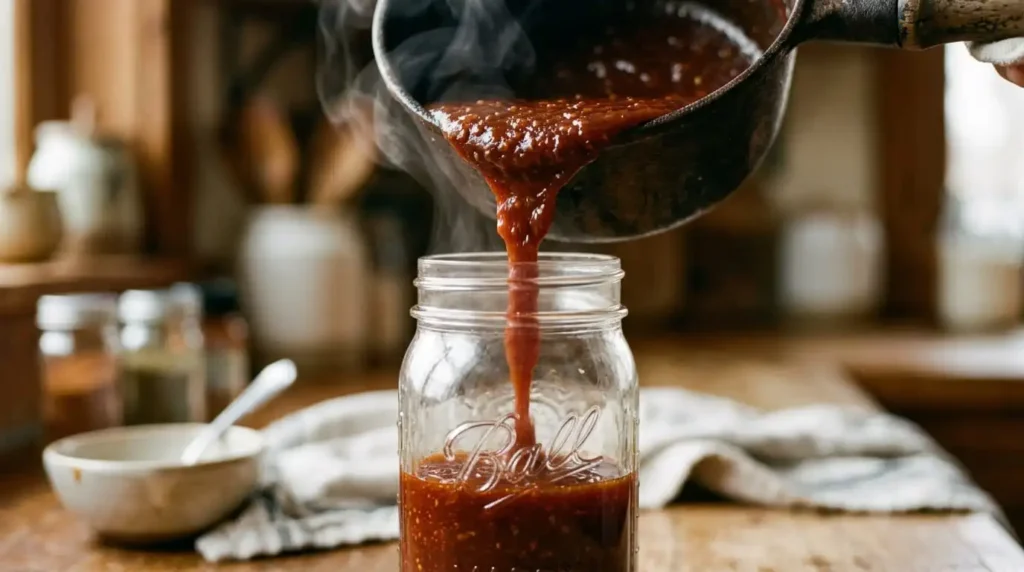
- Remove from the heat and let it cool before transferring to a jar. The sauce will thicken further as it cools.
That’s it, no cornstarch or xanthan gum needed. The ketchup and molasses do the thickening work on their own once the sauce reduces slightly.
Flavor Variations Worth Trying
Once the base recipe is down, it’s easy to steer it toward a regional style:
- Carolina-style: Cut the brown sugar in half and double the vinegar for a thinner, tangier sauce that leans mustard-forward if you stir in a tablespoon of gluten free Dijon.
- Kansas City-style: Add an extra tablespoon of molasses and a pinch more brown sugar for a thicker, sweeter glaze that caramelizes well on the grill.
- Spicy: Stir in a teaspoon of chipotle powder or a dash of hot sauce along with the cayenne.
- Honey BBQ: Swap the brown sugar for two tablespoons of honey for a lighter, less molasses-forward sweetness.
Best Store-Bought Gluten Free BBQ Sauce Brands
If you’d rather buy than make, these brands are widely available in the US and clearly labeled gluten free, though it’s still worth checking the specific flavor you’re grabbing since formulas vary within a product line.
- Stubb’s Original BBQ Sauce. Certified gluten free, no high-fructose corn syrup, and a smoky, not-too-sweet flavor that works on almost anything off the grill.
- Bone Suckin’ Sauce. Certified gluten free and kosher, sweetened with honey and molasses for a sticky finish that’s especially good on ribs.
- Sweet Baby Ray’s (select varieties). The Original and Honey varieties are labeled gluten free, but not every flavor in the lineup is, so check the bottle each time.
- Jack Daniel’s BBQ Sauce. Only some flavors are gluten free, specifically Original No. 7, Honey Smokehouse, Hickory Brown Sugar, and Spicy BBQ. The others are not, so this is one where the flavor name really matters.
- 1849 BBQ Sauce. Made in small batches in San Francisco with no artificial ingredients or high-fructose corn syrup, and labeled gluten free.
- Lillie’s Q. Certified gluten free with a lineup of regional styles, including a Carolina Gold and a Memphis-style, if you want to try more than one profile without making several batches yourself.
- Bachan’s Japanese Barbecue Sauce. Not a traditional American-style sauce, but a solid gluten free option if you want something built on tamari, ginger, and garlic instead of tomato and vinegar.
Quick Label Checklist
Before a sauce goes in your cart, scan for these four things:
- A “certified gluten free” seal, or a clear “gluten free” statement on the front label.
- Malt vinegar anywhere in the ingredient list. If it’s there, skip it.
- “Soy sauce” without the word tamari next to it.
- “Modified food starch” or “natural flavors” with no source specified. It’s not automatically unsafe, but it’s worth a quick look at the brand’s website or a call to their customer line if you’re being strict about it.
When you’re standing in the grocery aisle, the fastest check is the label itself. Look for a “certified gluten free” seal, and scan the ingredient list for malt vinegar, soy sauce, or unspecified “modified food starch.” If a sauce doesn’t carry a gluten free label at all, don’t assume it’s safe just because the ingredients look clean. Formulas change, and cross-contamination during manufacturing is a real risk for anyone with celiac disease.
What to Serve It With
This sauce isn’t fussy about what it goes on. A few ways I use it most:
- Chicken thighs or drumsticks. Brush it on during the last 10 minutes of grilling so the sugar caramelizes instead of burning.
- Pulled pork. Stir a few tablespoons into shredded pork before piling it onto gluten free buns or lettuce wraps.
- Ribs. Baste generously in the last 15 minutes of cooking, then let the sauce set for a minute before slicing.
- Roasted vegetables. Toss cauliflower or sweet potato wedges in a thinned-out version (a splash of water loosens it) before roasting for a smoky-sweet side.
- Burgers. A spoonful in place of ketchup adds more depth than most people expect.
It also works as a dipping sauce for gluten free chicken tenders, or stirred into baked beans for extra flavor without opening a second jar of anything.
How Long Does Homemade Gluten Free BBQ Sauce Last?
Stored in a sealed jar in the refrigerator, homemade BBQ sauce keeps for about two to three weeks thanks to the vinegar and sugar acting as natural preservatives. For longer storage, it freezes well for up to three months. Pour it into an ice cube tray for small, thaw-as-needed portions, or use a freezer-safe jar and leave room at the top for expansion.
The Takeaway
Homemade gluten free BBQ sauce takes less time than a trip to the store, and it puts you in full control of what’s in the jar. If you’d rather buy one, stick to brands with a clear gluten free label and double-check the specific flavor, since not every sauce in a product line is made the same way. Either way, your next cookout doesn’t have to come with a side of label-reading anxiety.
Try this sauce on a batch of grilled chicken thighs or pulled pork this weekend, and let it become your new go-to.
Common Questions
Is Worcestershire sauce gluten free?
It depends on the brand. Lea & Perrins and French’s Worcestershire sauce are both gluten free in the US, but many other brands use a wheat-based soy sauce as a base ingredient, so it’s worth checking each bottle rather than assuming.
Is Kraft BBQ sauce gluten free?
Some Kraft BBQ sauce flavors are gluten free and some aren’t, so this is a check-the-label situation rather than a blanket yes or no. The ingredient list and allergen statement on the bottle are the most reliable source.
Can I use regular ketchup instead of gluten free ketchup?
In the US, Heinz ketchup is gluten free, so it works fine in this recipe. If you’re using a different brand, especially a flavored or reduced-sugar version, check the label for added thickeners first.
What can I use to thicken BBQ sauce without gluten?
Cornstarch, arrowroot powder, and xanthan gum are all gluten free thickeners that work well in BBQ sauce. In the homemade recipe above, though, the ketchup and molasses do the thickening on their own once the sauce reduces, so you likely won’t need to add anything extra.


Pingback: Is Worcestershire Sauce Gluten-Free? (2026 Brand Guide)