
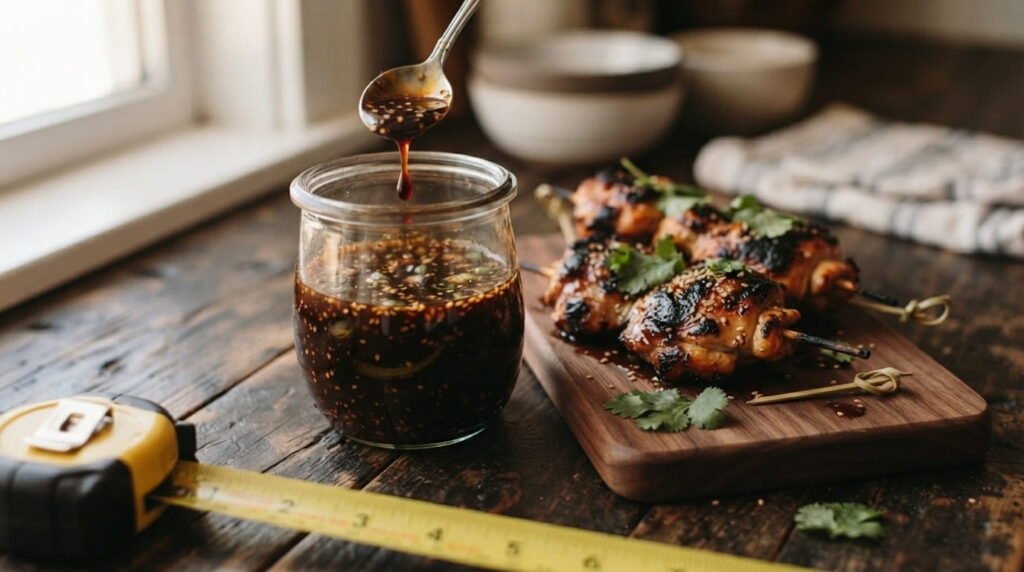
Easy Japanese BBQ Sauce Recipe: Homemade, Sweet & Savory
A good barbecue sauce should do more than add sweetness. It should bring out the natural flavor of grilled food, add moisture, and create a delicious coating without overpowering the main ingredients. That’s exactly what this Japanese BBQ sauce recipe does. Made with soy sauce, mirin, brown sugar, garlic, ginger, and sesame oil, it delivers a balanced combination of salty, sweet, and savory flavors.
Unlike traditional American barbecue sauce, which often uses tomatoes, vinegar, and smoky spices, Japanese-style barbecue sauce focuses on umami and aromatic ingredients. It works beautifully with grilled chicken, beef, pork, seafood, tofu, and vegetables. You can prepare it in one saucepan with everyday ingredients, and the entire cooking process takes around 15 minutes.
The best part is its flexibility. Use it as a marinade before cooking, brush it over food during the final minutes of grilling, or serve it as a dipping sauce at the table. Once you understa
nd how the ingredients work together, adjusting the flavor to suit your meals becomes simple.
What Is Japanese BBQ Sauce?
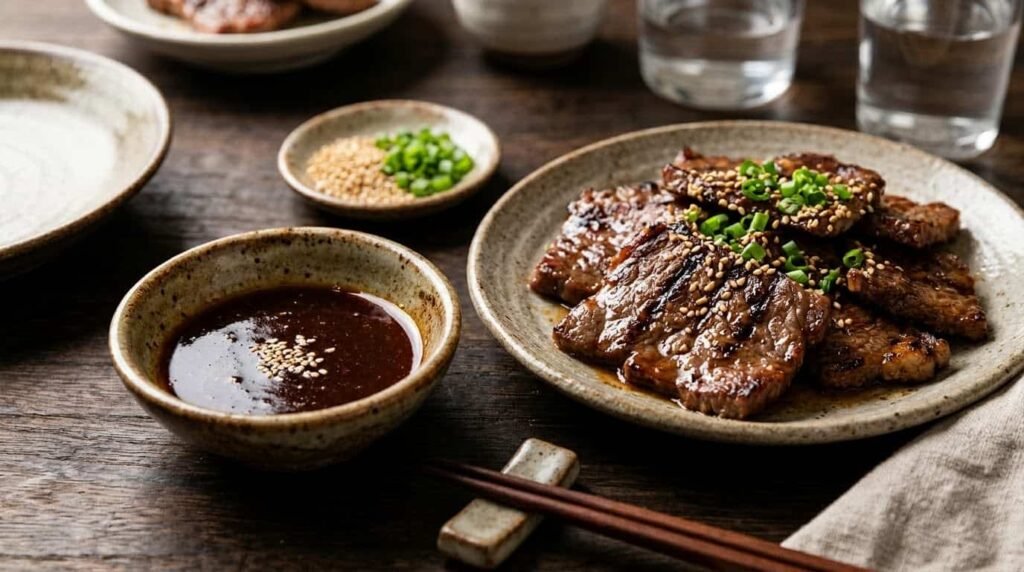
Japanese BBQ sauce is a savory, slightly sweet sauce commonly made with soy sauce, mirin, sugar, garlic, and ginger. It is inspired by Japanese grilling traditions, particularly yakiniku, where thin slices of meat are cooked over a grill and enjoyed with flavorful dipping sauces.
One thing worth understanding is that Japanese BBQ sauce does not refer to just one traditional recipe. Different Japanese sauces have different ingredients, textures, and purposes.
For example, yakiniku sauce is generally served with grilled meat, while teriyaki sauce is used to coat ingredients during cooking. Commercial Japanese-style barbecue sauces may combine characteristics of both.
The homemade version in this recipe takes inspiration from yakiniku-style flavors. Soy sauce provides saltiness and umami, mirin contributes sweetness and shine, and fresh garlic and ginger add depth.
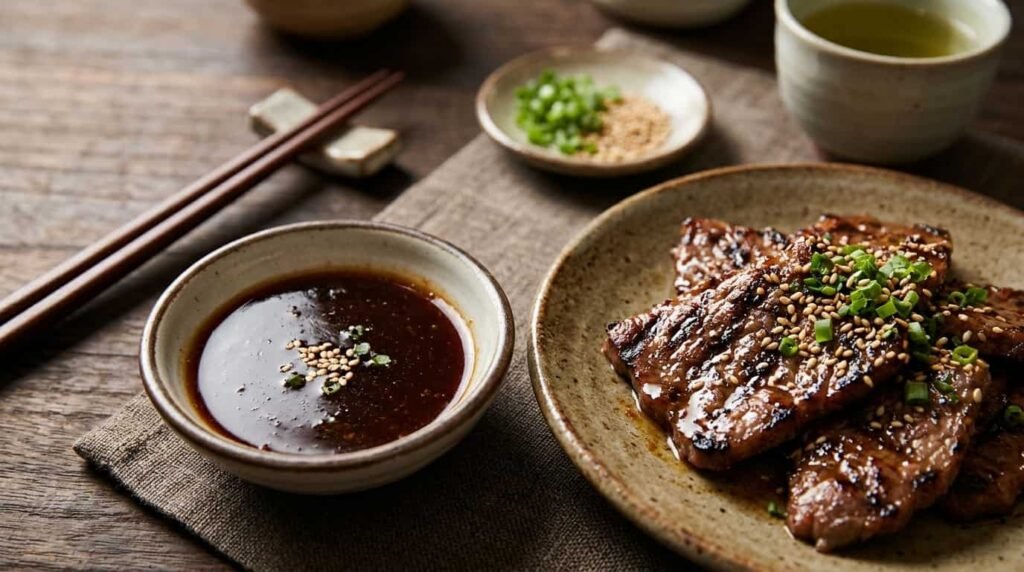
It has a thinner consistency than many American barbecue sauces but can be reduced slightly to create a thicker glaze.
Japanese BBQ Sauce Ingredients and Why They Matter
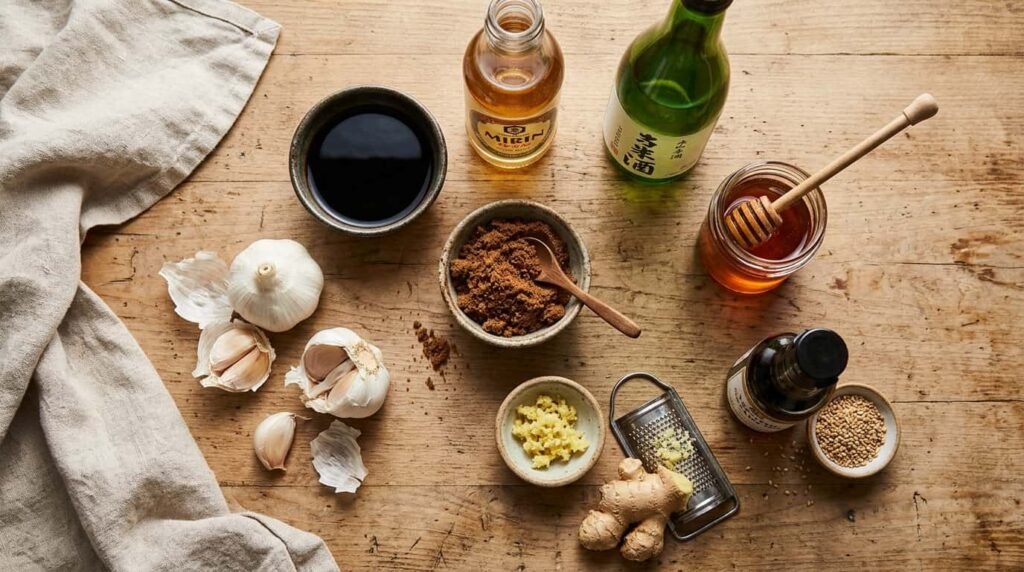
You don’t need a long shopping list to prepare this sauce. Most ingredients are available at regular grocery stores, while Japanese ingredients such as mirin and sake can usually be found in Asian supermarkets.
Here is what you need.
| Ingredient | Amount | Purpose |
|---|---|---|
| Japanese soy sauce | 1/2 cup | Provides saltiness and umami |
| Mirin | 1/4 cup | Adds sweetness and gloss |
| Sake | 2 tablespoons | Adds depth of flavor |
| Brown sugar | 2 tablespoons | Balances the salty ingredients |
| Honey | 1 tablespoon | Adds sweetness and body |
| Fresh garlic | 3 cloves | Creates a savory aroma |
| Fresh ginger | 1 tablespoon | Adds warmth and freshness |
| Toasted sesame oil | 1 teaspoon | Provides a nutty finish |
Understanding the Main Ingredients
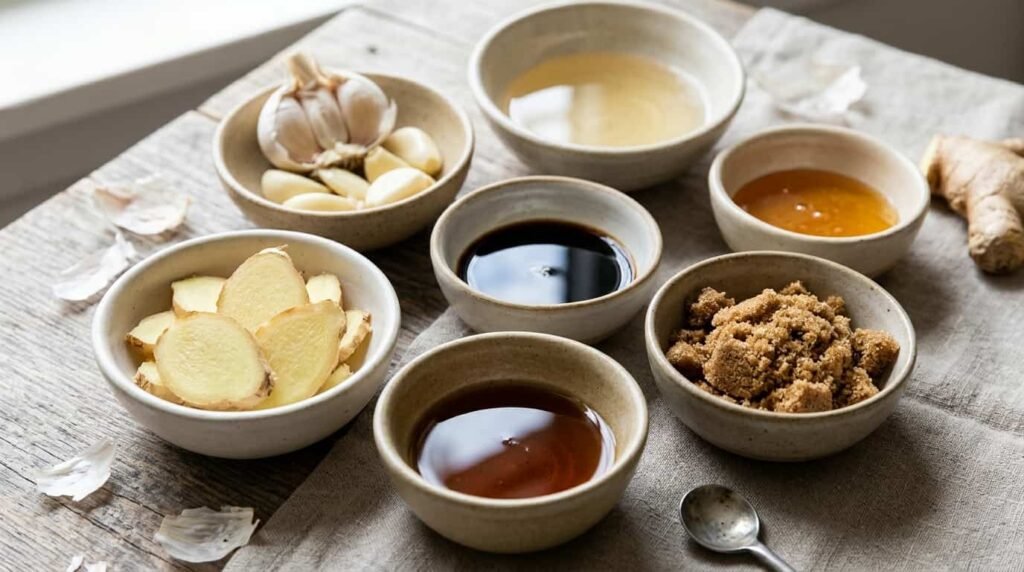
Soy sauce: Regular Japanese soy sauce, commonly called koikuchi shoyu, is a good choice. It gives the sauce its deep color and savory foundation. If you prefer a gluten-free option, use certified gluten-free tamari.
Mirin: This Japanese sweet rice seasoning provides a mild sweetness that tastes different from ordinary sugar. It also helps give the finished sauce an attractive shine. Use genuine mirin when possible rather than a heavily sweetened substitute.
Sake: Japanese cooking sake adds another layer of flavor. It is optional, so you can leave it out if you don’t have it.
Brown sugar and honey: These ingredients balance the saltiness of soy sauce. They also help the sauce develop a slightly sticky texture when reduced.
Garlic and ginger: Freshly minced garlic and grated ginger provide a stronger, fresher flavor than dried alternatives. They make a noticeable difference in the finished sauce.
Sesame oil: A small amount of toasted sesame oil adds nuttiness. It is best added after cooking so its aroma remains noticeable.
How to Make Japanese BBQ Sauce at Home
<text> </text>
This easy homemade Japanese BBQ sauce takes approximately 15 minutes to prepare. You only need a small saucepan, a whisk, and a clean storage jar.
Preparation time: 5 minutes
Cooking time: 8–10 minutes
Total time: Approximately 15 minutes
Yield: About 1 cup
Difficulty: Easy
Step 1: Prepare the Ingredients
Measure your soy sauce, mirin, sake, brown sugar, and honey before turning on the stove.
Finely mince the garlic and grate the fresh ginger. Smaller pieces distribute their flavor more evenly throughout the sauce.
If you want a smoother finished texture, grate the garlic and ginger finely instead of chopping them.
Step 2: Combine the Liquid Ingredients
Place a small stainless-steel or enamel-coated saucepan over medium heat.
Add the soy sauce, mirin, sake, brown sugar, and honey. Whisk everything together until the sugar begins to dissolve.
Avoid using high heat. The goal is to warm the ingredients gradually rather than cook them aggressively.
Step 3: Add Garlic and Ginger
Stir the minced garlic and grated ginger into the saucepan.
Allow the mixture to reach a gentle simmer. You should see small bubbles forming around the edges.
Stir occasionally to prevent the sugar from collecting at the bottom of the pan.
Step 4: Simmer Until Slightly Thickened
Continue simmering for approximately 8–10 minutes.
As the liquid reduces, the flavors become more concentrated. The sauce should look slightly glossy and lightly coat the back of a spoon.
Don’t expect it to become as thick as commercial barbecue sauce. Japanese-style dipping sauces are often thinner, making them easier to pour and use with grilled food.
If you want a thicker glaze, simmer it for another minute or two while watching carefully.
Step 5: Add Sesame Oil
Remove the saucepan from the heat.
Stir in the toasted sesame oil and allow the sauce to cool.
Adding sesame oil at the end helps preserve its distinctive nutty aroma.
Step 6: Cool and Store
Once the sauce has cooled, transfer it to a clean, airtight glass jar.
You can use it immediately, but allowing it to rest in the refrigerator for several hours gives the garlic and ginger more time to blend with the other ingredients.
For an especially balanced flavor, prepare it the day before you plan to grill.
What Does Japanese BBQ Sauce Taste Like?
Japanese BBQ sauce has a combination of sweet, salty, savory, and slightly aromatic flavors.
The soy sauce creates a deep umami base, while mirin and honey soften its saltiness. Garlic and ginger provide warmth without making the sauce excessively spicy.
Toasted sesame oil adds a nutty finish that works particularly well with grilled meats and vegetables.
The flavor is also different from ordinary American barbecue sauce. You won’t find the familiar tomato-heavy taste or strong smoky flavor unless you add those ingredients yourself.
A useful way to understand the balance is to consider how the sauce behaves with different foods:
-
With grilled chicken, it provides sweetness and savory depth.
-
With beef, its salty umami flavor complements the richness of the meat.
-
With salmon, a thin coating adds flavor without completely covering the fish.
-
With vegetables, it creates a delicious seasoning for mushrooms, zucchini, and eggplant.
Japanese BBQ Sauce vs. Teriyaki Sauce: What’s the Difference?
Japanese BBQ sauce and teriyaki sauce share several ingredients, but they aren’t exactly the same.
Teriyaki traditionally refers to a Japanese cooking method in which ingredients are grilled or broiled with a shiny seasoning made using soy sauce, mirin, and sugar. The resulting sauce is commonly used as a coating during cooking.
Yakiniku sauce, on the other hand, is associated with grilled meat and is commonly served as a dipping sauce.
Here’s a simple comparison:
| Feature | Japanese BBQ Sauce | Teriyaki Sauce |
|---|---|---|
| Main ingredients | Soy sauce, mirin, garlic, ginger | Soy sauce, mirin, sugar |
| Flavor | Savory, sweet, aromatic | Sweet, salty, savory |
| Texture | Usually pourable | Often thicker when reduced |
| Main use | Marinade, glaze, dipping | Cooking glaze and seasoning |
| Additional ingredients | May include sesame, fruit, or miso | Varies by recipe |
There is considerable overlap between homemade recipes. You can use this Japanese BBQ sauce as a teriyaki-style glaze, but the additional garlic, ginger, and sesame give it a different flavor profile.
How Can You Customize Japanese BBQ Sauce?
One advantage of making barbecue sauce at home is that you can adjust the ingredients without starting from scratch.
A little more sweetness, acidity, or spice can change how the sauce works with a particular meal.
Make It Spicy
If you enjoy spicy food, add a pinch of red pepper flakes or a small amount of chili paste.
Gochujang is another option, although it introduces Korean flavors rather than making the sauce traditionally Japanese.
Start with a small quantity and taste before adding more.
Give It More Umami
For a deeper savory flavor, mix in half a teaspoon of miso paste.
White miso works well because its flavor is relatively mild. Dissolve it into the warm sauce and taste before adding extra soy sauce.
Remember that miso already contains salt, so adding too much can make the finished sauce overly salty.
Add a Little Tanginess
A teaspoon of rice vinegar can balance the sweetness and brighten the overall flavor.
This variation works especially well with fatty foods such as pork belly and beef short ribs.
Add the vinegar gradually because too much acidity can overpower the other ingredients.
Make It Fruitier
Grated apple or pear can add natural sweetness and a fruitier flavor.
This is particularly useful when preparing a sauce for grilled beef or pork.
However, fresh fruit changes the texture and storage characteristics. Strain the sauce if you prefer a smoother consistency and keep it refrigerated.
Prepare a Gluten-Free Version
Replace ordinary soy sauce with certified gluten-free tamari or gluten-free soy sauce.
Check the labels on mirin, sake, and any additional seasonings because products and manufacturing processes can vary.
Best Ways to Use Homemade Japanese BBQ Sauce
A jar of homemade sauce can be used in several ways beyond grilling. Its balanced flavor makes it suitable for quick meals, marinades, and dipping.
1. Japanese BBQ Chicken
<text> </text>
Chicken thighs are an excellent choice because they remain juicy when cooked properly and pair well with sweet and savory sauces.
Coat the chicken with some Japanese BBQ sauce and refrigerate it for approximately 2–4 hours.
Remove the chicken from the marinade before cooking. Grill or pan-cook until the thickest part reaches a safe internal temperature of 165°F (74°C).
Brush with a separate portion of fresh sauce during the final minutes of cooking.
2. Grilled Beef and Steak
<text> </text>
This sauce works especially well with flank steak, short ribs, and thinly sliced beef.
For a stronger flavor, marinate beef for around 30 minutes to 2 hours, depending on the thickness of the cut.
Avoid using excessive sauce during high-heat grilling because the honey and brown sugar can burn before the meat finishes cooking.
3. Japanese BBQ Salmon
<text> </text>
Salmon benefits from the combination of soy sauce, ginger, and a little sweetness.
Brush a thin layer over the fish before baking or grilling. Add another light coating near the end of cooking.
Because salmon cooks relatively quickly, there’s no need for a long marinade. Even 15–30 minutes can provide plenty of flavor.
4. Tofu and Vegetable Skewers
<text> </text>
Japanese BBQ sauce is not limited to meat.
Firm tofu, mushrooms, zucchini, bell peppers, and eggplant all work well with this seasoning.
Press excess moisture from tofu before marinating it. This helps the surface brown instead of steaming.
For vegetables, use a light coating rather than soaking them in sauce. Too much liquid can make grilling difficult.
5. Rice Bowls and Stir-Fries
<text> </text>
A small amount of sauce can transform a simple rice bowl into a flavorful meal.
Serve it over steamed rice with grilled chicken, sautéed vegetables, sesame seeds, and sliced green onions.
You can also add a tablespoon or two to a vegetable stir-fry near the end of cooking. Toss quickly to distribute the flavor without allowing the sugars to burn.
Common Mistakes to Avoid When Making Japanese BBQ Sauce
Even a simple sauce can turn out differently depending on how you prepare it.
These are some common problems and how to prevent them.
Cooking at excessively high heat: High temperatures can scorch the sugar and create a bitter taste. Maintain a gentle simmer instead.
Adding too much sesame oil: Toasted sesame oil has a strong aroma. One teaspoon is enough for this recipe. Adding considerably more can overpower the soy, garlic, and ginger.
Using too much soy sauce: Different soy sauce brands have different salt levels. Measure the ingredients carefully and taste the sauce before making adjustments.
Expecting a thick barbecue consistency: This recipe is designed to remain relatively pourable. Reducing it too much can make it overly salty and sticky.
Brushing raw marinade onto cooked food: Never use marinade that has contacted raw meat as a finishing sauce unless it has been handled and cooked safely. The easiest solution is to reserve a separate portion before adding raw meat.
Adding sesame oil too early: Prolonged heating reduces its fresh toasted aroma. Stir it in after removing the saucepan from the heat.
How to Store Japanese BBQ Sauce Safely
Homemade Japanese BBQ sauce doesn’t contain the same preservatives as many commercial bottled products. Proper storage is therefore important.
Allow the sauce to cool, then transfer it to a clean, airtight container.
Keep it refrigerated at 40°F (4°C) or below. For a conservative homemade storage guideline, use it within approximately one week.
Always use a clean spoon when removing sauce from the jar. Introducing food particles or raw meat juices can contaminate the remaining sauce.
Can You Freeze Japanese BBQ Sauce?
Yes. Freezing is a practical option if you prepare a larger batch.
Divide the sauce into small freezer-safe containers or portions. Leave a little room for expansion, seal the containers, and label them with the preparation date.
Thaw the required amount in the refrigerator rather than leaving it at room temperature for several hours.
Stir the sauce before using it because its ingredients may separate slightly after freezing.
Do not freeze a batch that has already been contaminated by contact with raw meat.
Final Thoughts
Making Japanese BBQ sauce at home is a simple way to add more flavor to everyday meals without depending on bottled condiments. Soy sauce, mirin, garlic, ginger, and a little sweetness create a versatile combination that works with grilled meat, seafood, vegetables, and rice bowls.
The key is keeping the balance right. Don’t overcook the sauce, use sesame oil sparingly, and adjust the sweetness or acidity according to the food you’re serving.
Prepare a small batch, store it properly, and experiment with different combinations. Once you find your preferred balance, this homemade Japanese BBQ sauce can become a regular part of your kitchen routine.
Is Japanese BBQ sauce the same as Bachan’s sauce?
Not exactly. Bachan’s is a commercial Japanese-style barbecue sauce brand. Its bottled sauces have their own ingredient combinations and flavor profiles.
This homemade recipe uses a similar general flavor direction, combining soy sauce, mirin, garlic, ginger, and sweetness. However, the exact taste and consistency will differ.
Can I make Japanese BBQ sauce without mirin?
Yes. Mirin provides sweetness and depth, but you can make a substitute if you cannot find it.
Use a little sake with additional sugar, or use a mild rice-based cooking alternative suitable for your dietary requirements.
The flavor won’t be identical to a version made with genuine mirin, but it can still produce a pleasant sauce.
Is Japanese BBQ sauce spicy?
Traditional-style Japanese BBQ sauces are not necessarily spicy. Most versions focus on sweet, salty, and savory flavors.
You can make this recipe spicy by adding chili flakes, chili paste, or another preferred seasoning.
Can I use Japanese BBQ sauce as a marinade?
Yes. It works well as a marinade for chicken, beef, pork, tofu, and some seafood.
For food safety, always refrigerate meat while marinating. Keep a separate portion of fresh sauce for serving or glazing.
Discard leftover marinade that has contacted raw meat unless you bring it to a full boil before using it for another purpose.
How long should I marinate chicken in Japanese BBQ sauce?
Chicken thighs and breasts can generally be marinated for around 2–4 hours in the refrigerator.
You can leave them longer when needed, but extended exposure to salty marinades may change the texture of the meat.
Always cook chicken to an internal temperature of 165°F (74°C).
What can I use instead of sake?
Sake is optional in this recipe. You can leave it out or replace it with a small amount of water and adjust the sweetness if necessary.
The sauce will still have plenty of flavor from soy sauce, mirin, garlic, and ginger.
Is Japanese BBQ sauce gluten-free?
Not automatically. Ordinary soy sauce often contains wheat.
Choose certified gluten-free tamari or soy sauce, and check the ingredient labels on your other seasonings before preparing a gluten-free version.
Can I use this sauce for vegetables?
Absolutely. It pairs well with mushrooms, zucchini, eggplant, bell peppers, and firm tofu.
Brush a small amount over vegetables while grilling or toss them with the sauce during the final stage of stir-frying.

Shafia writes kitchen recipes and food guides for Kitchennista. She focuses on clear, practical cooking ideas that readers can follow at home. Her work aims to make everyday cooking simpler and more enjoyable.



Pingback: Sweet and Spicy Bacon Burger Recipe: The Ultimate Guide