
How Long to Fry Chicken Wings for Perfectly Crispy Results
If you’re wondering how long to fry chicken wings, the short answer is 8 to 10 minutes for unbreaded wings and 10 to 12 minutes for breaded wings, in oil heated to 350°F. But the exact time shifts depending on wing size, whether they’re breaded, and whether you’re frying in a deep pot or a skillet. Get the timing wrong and you end up with wings that are either raw near the bone or dry and tough. Here’s exactly how long to fry chicken wings so they turn out crispy on the outside and juicy inside, every single time.
Chicken Wing Fry Times at a Glance
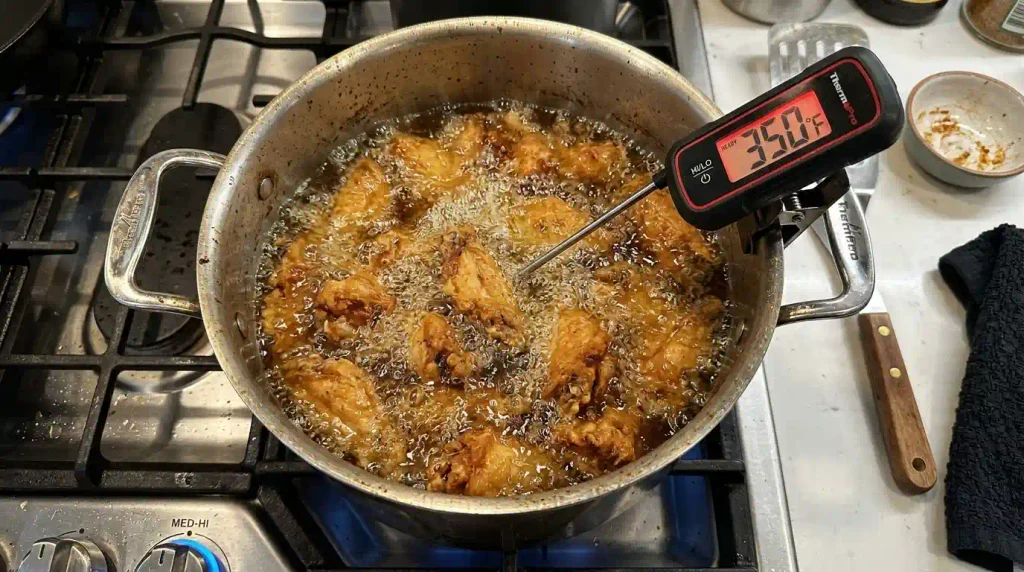
For most home setups, fry chicken wings at 350°F until they hit an internal temperature of at least 165°F, which usually takes 8 to 10 minutes for plain wings and 10 to 12 minutes for breaded ones. Larger party wings or whole wings (not cut into flats and drumettes) can take a couple of minutes longer.
| Wing Type | Oil Temp | Fry Time |
|---|---|---|
| Unbreaded, cut wings | 350°F | 8-10 minutes |
| Breaded or battered wings | 350-375°F | 10-12 minutes |
| Pan-fried wings | Medium-high | 6-7 minutes per side |
| Frozen wings (not thawed) | 325-350°F | 14-16 minutes |
| Double-fried wings | 325°F then 375°F | 6-7 min, then 3-4 min |
How Long to Fry Chicken Wings by Method
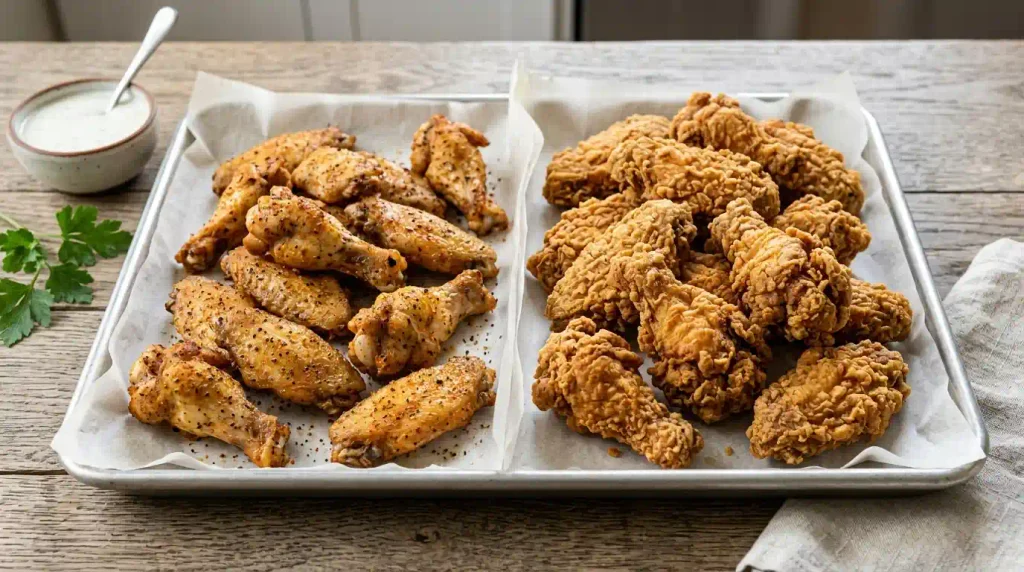
Not all fried wings are cooked the same way, and the method you choose changes the clock.
Deep-fried, unbreaded wings. This is the classic bar-style wing: seasoned, dropped straight into hot oil with no coating. Fry them in oil at 350°F for 8 to 10 minutes, flipping once or twice so every side gets even color. You’re looking for a deep golden-brown skin and an internal temperature of 165°F or higher. I’ve made these dozens of times for game day, and the wings almost always land right around the 9-minute mark once the oil holds steady at temperature.
Breaded or battered wings. A flour or batter coating insulates the meat slightly, so these need a little longer, typically 10 to 12 minutes at 350°F. The coating should be crisp and deeply golden, not pale. If the outside is browning too fast while the inside is still pink near the bone, your oil is running hotter than it should be.
Pan-fried wings. With just enough oil to come partway up the wings in a skillet, cook over medium-high heat for 6 to 7 minutes per side, for a total of 12 to 14 minutes. Resist the urge to move them constantly. Let each side sit undisturbed so it browns properly before flipping.
Frying frozen wings. Frying wings straight from frozen isn’t ideal, since ice on the surface can cause dangerous oil splatter and uneven cooking. If you’re in a pinch, drop the oil temperature slightly to 325-350°F and add 5 to 6 extra minutes, checking internal temperature closely since frozen wings cook unevenly.
Whatever method you use, fry in batches. Crowding the pot drops the oil temperature fast, and wings that sit in lukewarm oil soak up grease instead of crisping up.
Wing size also plays a bigger role than most recipes admit. Party-sized wings, or wings that haven’t been split into flats and drumettes, can run a couple of minutes longer than the times above. When in doubt, pull the largest wing in the batch and check it first, since it’s the one most likely to still be underdone.
What Oil Temperature Is Best for Frying Chicken Wings
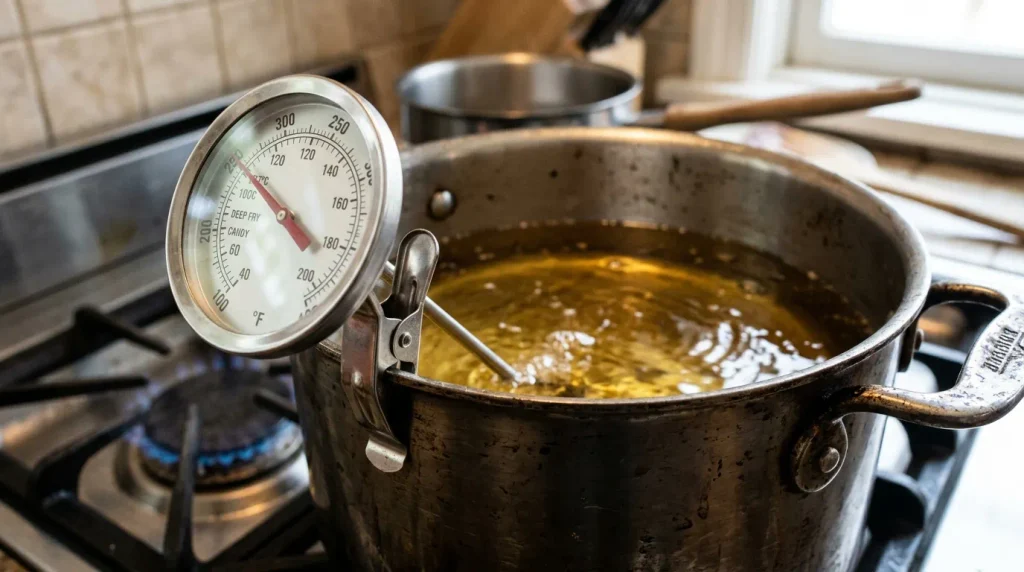
The oil temperature matters as much as the timer. 350°F is the sweet spot for most fried chicken wings recipes: hot enough to crisp the skin through the Maillard reaction, but not so hot that the outside burns before the meat cooks through. Some cooks prefer to preheat oil to 365-375°F, since adding cold wings drops the temperature by 15 to 25 degrees almost immediately, and this buffer helps the oil recover faster.
Use a neutral, high-smoke-point oil such as peanut, canola, or vegetable oil, and keep a thermometer clipped to the pot. Oil that drifts below 325°F gives you greasy, soggy wings; oil that spikes above 400°F scorches the coating before the meat is safe to eat.
How to Tell When Fried Chicken Wings Are Done
Color is a decent visual cue, but it lies. Wings can look golden-brown and still be underdone near the bone, especially thicker drumettes. The only reliable way to know your wings are done is a meat thermometer.
The USDA minimum safe internal temperature for chicken is 165°F. For wings specifically, most experienced fryers push a little past that, cooking to 175-185°F. Wings are a mix of dark and light meat with a fair amount of connective tissue, and that extra 10 to 20 degrees gives the collagen more time to render into gelatin, which is what makes fried wings taste juicy rather than chewy. Insert the thermometer into the thickest part of the meat without touching bone, since bone conducts heat and will give you a falsely high reading.
If your juices run clear and the meat pulls easily from the bone, that’s a good secondary sign the wings are ready to come out.
Double-Frying for Extra-Crispy Wings
If you’ve ever had wings with that shatteringly crisp, almost lacquered skin, there’s a good chance they were double-fried. The technique is simple: fry once at a lower temperature to cook the meat through, let the wings rest so surface moisture escapes, then fry a second time at a higher temperature to blast the skin crispy.
A typical double-fry timeline looks like this: fry at 325°F for 6 to 7 minutes, rest the wings on a wire rack for 10 to 15 minutes, then return them to oil heated to 375°F for another 3 to 4 minutes until deep golden and audibly crackly. This extra step takes more time, but it’s the difference between wings that stay crisp for twenty minutes and wings that stay crisp even after they’ve been tossed in sauce.
Frying Frozen Chicken Wings
It’s tempting to skip the thaw step, but frozen wings fry unevenly and can spatter hot oil when the ice hits the pot. If you must fry from frozen, lower the oil to 325°F, extend the fry time by roughly 5 to 6 minutes beyond a normal batch, and check the internal temperature of a few wings before pulling the whole batch. For consistent results, thaw wings fully in the refrigerator overnight, then pat them completely dry before seasoning. Dry skin fries crispier than damp skin, no matter how long you leave the wings in the oil.
Common Mistakes That Keep Wings From Getting Crispy
A handful of small errors are behind most disappointing fried wings:
- Overcrowding the pot. Too many wings at once drops the oil temperature and steams the wings instead of frying them. Fry in batches of 6 to 8, depending on pot size.
- Skipping the dry-off step. Wet skin creates steam, and steam is the enemy of crispiness. Pat wings dry with paper towels before seasoning or breading.
- Not using a thermometer. Guessing at oil temperature or wing doneness is the fastest way to end up with undercooked centers or burnt coatings.
- Sauce added too early. Toss wings in sauce right before serving, not while they’re still resting. Sauce sitting on hot, crisp skin turns it soggy within minutes.
- Frying cold wings straight from the fridge. Letting wings sit at room temperature for 15 to 20 minutes before frying helps them cook more evenly.
How long do you fry chicken wings at 350 degrees?
At 350°F, plain unbreaded wings typically need 8 to 10 minutes, while breaded or battered wings need closer to 10 to 12 minutes. Always confirm with a meat thermometer rather than relying on time alone, since wing size and oil recovery speed vary between setups.
How do you know when fried chicken wings are done?
Fried chicken wings are done once they reach an internal temperature of at least 165°F, though most cooks aim for 175-185°F for juicier, more tender meat. The skin should be deep golden-brown and the juices should run clear when pierced.
Can you fry frozen chicken wings without thawing?
You can, but it’s not recommended. Ice on the surface can cause oil to spatter, and frozen wings cook unevenly since the outside cooks faster than the still-frozen center. If frying from frozen, lower the oil to 325°F and add about 5 to 6 extra minutes, checking temperature carefully.
Why aren’t my fried chicken wings crispy?
Soggy wings are almost always caused by oil that’s too cool, wings that weren’t patted dry before cooking, an overcrowded pot, or sauce added too far ahead of serving. Fixing any one of these usually solves the crispiness problem.
Next time you’re setting up the fryer for game day or a weeknight dinner, use these times as a starting point and let your thermometer make the final call. That’s the difference between decent wings and the ones everyone reaches for first.


Pingback: Dave's Hot Chicken Fallout Meal: Full Guide (2026)