
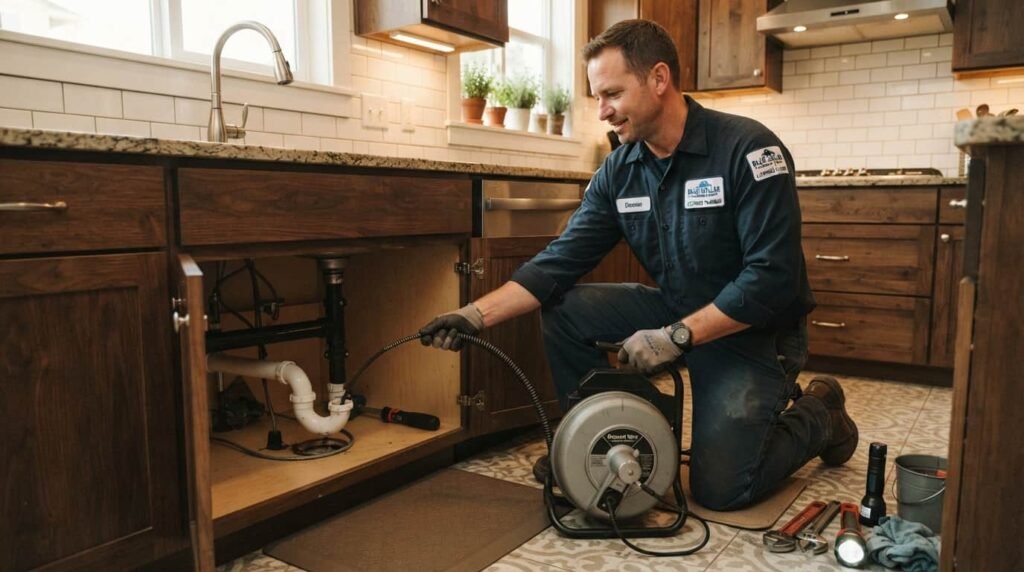
Professional Drain Cleaning Services: What They Do and What They Cost in 2026
Professional drain cleaning services remove the buildup inside your pipes instead of just poking a hole through a clog and hoping for the best. If you’ve ever poured a bottle of drain cleaner down a slow sink and watched the problem come right back a week later, you already know why that distinction matters. A licensed plumber uses tools like motorized snakes and hydro jetters to clear the blockage and scrub the pipe walls clean, which is the only way to actually stop a clog from returning.
Kitchen drains take a particular beating. Grease that looked liquid going down the sink cools and hardens against the pipe wall, and it grabs onto everything that flows past it after that: coffee grounds, rice, the last bit of pasta water. That’s why so many “mystery clogs” in a home start at the kitchen sink even when the backup shows up somewhere else in the house.
What Professional Drain Cleaning Services Actually Involve
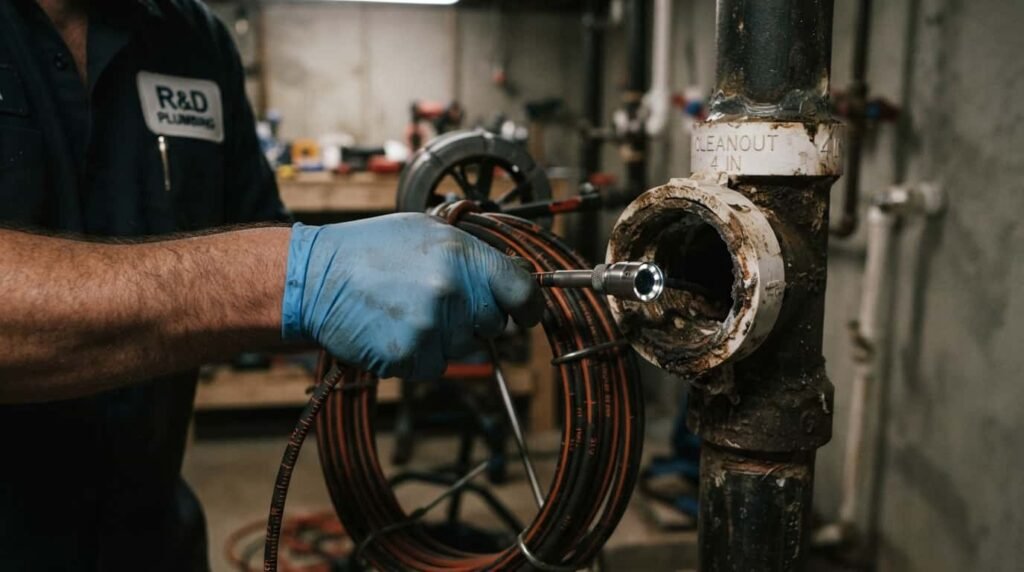
A typical visit starts with a plumber asking about the symptoms: which drains are slow, how long it’s been happening, and whether it’s one fixture or several. That last detail matters more than people expect. A single slow sink usually points to a local clog. Multiple drains backing up at once, especially the lowest drain in the house, often points to the main sewer line.
From there, the plumber picks a method based on the clog’s location and severity:
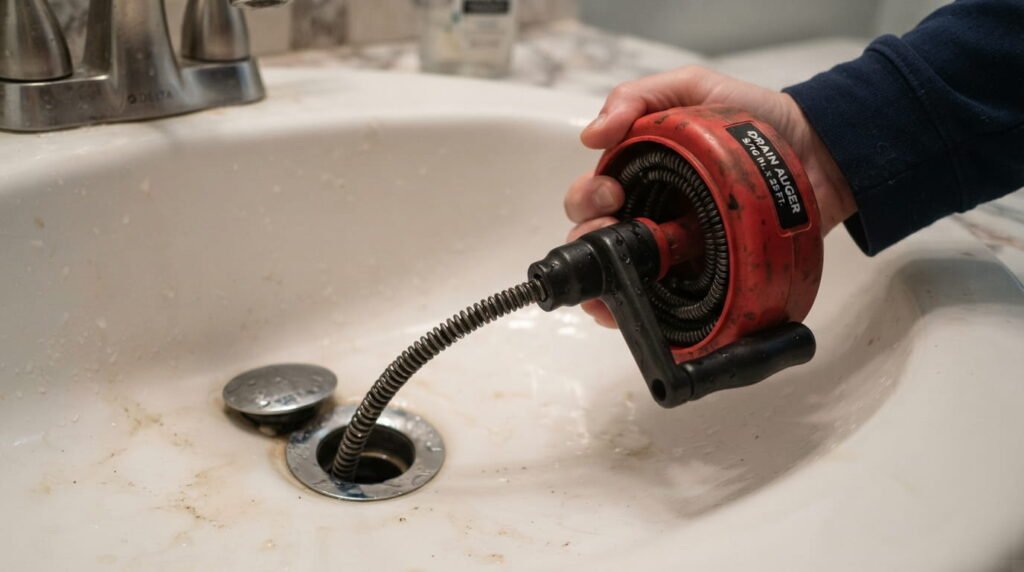
- Drain snaking (augering): A flexible cable with a cutting head feeds into the pipe, breaks up the blockage, and pulls debris back out or pushes it downstream.
- Hydro jetting: A hose blasts water at 1,500 to 4,000 PSI through a multi-directional nozzle, stripping grease, soap scum, and mineral buildup off the entire interior of the pipe, not just the clogged section.
- Camera inspection: A waterproof camera on a flexible line lets the plumber see exactly what’s causing the blockage, whether it’s a foreign object, root intrusion, or a collapsed section of pipe, before deciding on a fix.
Many plumbers use these together. Snaking clears an initial path so the camera or jetter can get through, then hydro jetting finishes the job by cleaning the pipe walls end to end.
Signs You Need Professional Drain Cleaning Services
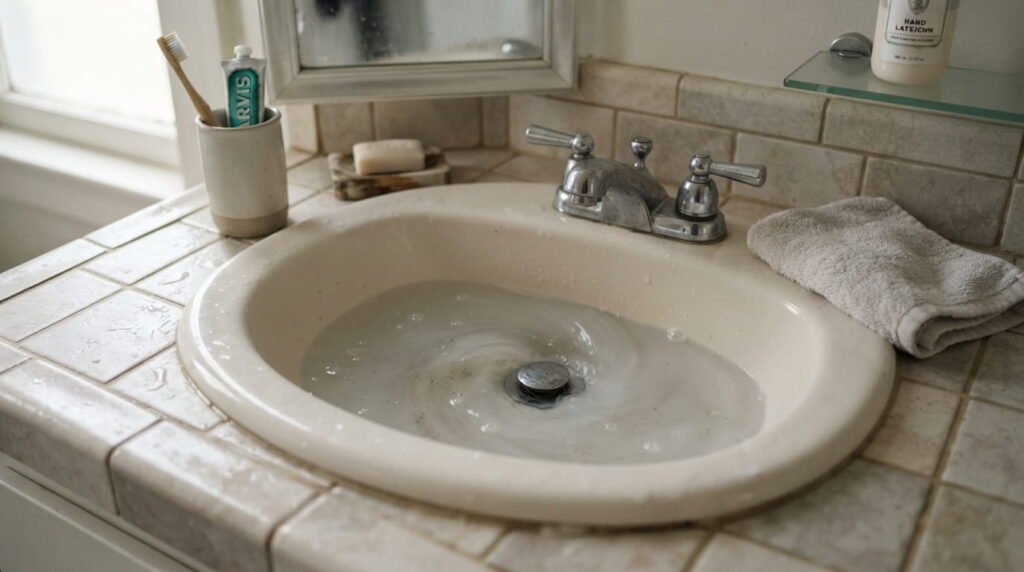
A few warning signs mean it’s time to call a plumber rather than reach for another bottle of chemical cleaner:
- Water draining slower than usual in a sink, tub, or shower
- Gurgling sounds coming from drains or toilets
- A foul odor near a floor drain, garbage disposal, or basement fixture
- Recurring clogs in the same drain every few months
- Multiple fixtures backing up around the same time
Any one of these on its own might be minor. Several of them together, especially recurring clogs or multiple drains acting up at once, usually means there’s buildup or a blockage further down the line than a plunger or a store-bought cleaner can reach.
Snaking vs. Hydro Jetting: Which Method Do You Need
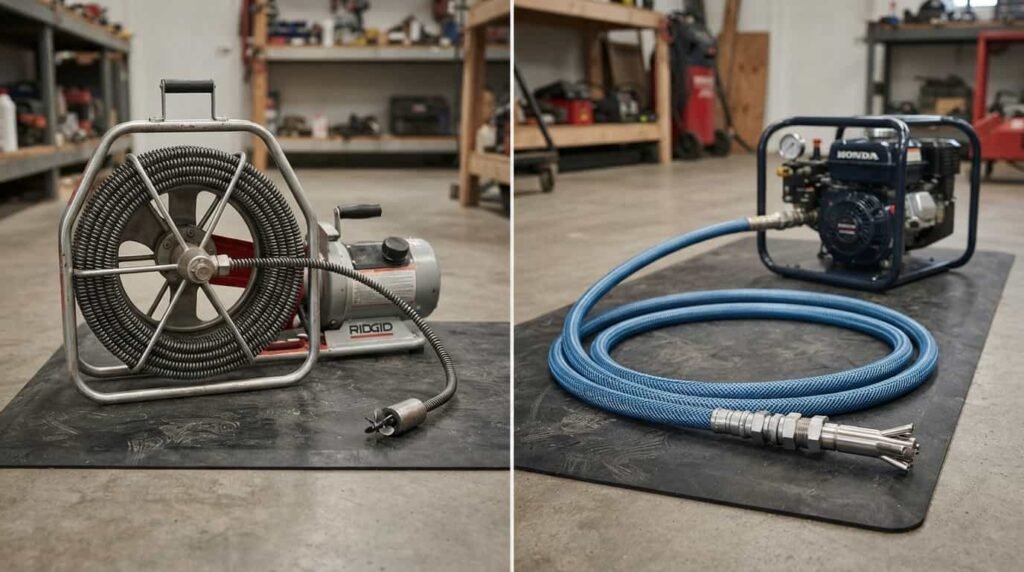
Snaking is the faster, cheaper option, and for a straightforward, single-fixture clog, like a bathroom sink blocked by hair or a toilet stuck on too much paper, it’s usually the right first call. The cable navigates bends in the pipe, breaks through the blockage, and gets water flowing again within an hour in most cases.
The tradeoff is that snaking only punches a channel through the clog. Grease, soap scum, and mineral deposits that coated the pipe walls before the blockage formed are mostly still there, which is why the same drain can clog again in a matter of months.
Hydro jetting costs more upfront, but it cleans the full diameter of the pipe. For kitchen lines carrying regular grease, for recurring clogs in the same spot, or for tree root intrusion in an older sewer line, that thorough cleaning tends to be the better long-term value even though the sticker price is higher on the day of service.
A good rule of thumb: if a drain has needed snaking more than twice in the past year, hydro jetting will likely save money over the next twelve months instead of paying for repeat visits.
How Much Do Professional Drain Cleaning Services Cost

Pricing depends on the drain type, the clog’s location, and which method the job needs.
- Snaking a single fixture (sink, tub, shower, or toilet): roughly $100 to $275
- Snaking a main sewer line: roughly $150 to $500, since the cable has to travel much farther and the equipment is heavier
- Hydro jetting: roughly $350 to $1,400, depending on clog severity, pipe accessibility, and whether a cleanout is already in place
- Camera inspection: often $125 to $500 when added separately, though many plumbers include a basic inspection in the service call
A cleanout that’s easy to access keeps costs on the lower end of these ranges. A job that requires pulling a toilet or digging up part of a yard to reach a line pushes costs toward the higher end. Getting a quote from a couple of licensed local plumbers before booking is a reasonable way to confirm you’re paying a fair rate for the specific job.
How Often Should You Schedule Professional Drain Cleaning Services
Most homes do fine with professional drain cleaning once a year. That single visit removes the grease, soap scum, and mineral buildup that accumulates even when drains seem to be working fine, and it catches early signs of pipe wear before they turn into a bigger repair.
A few situations call for more frequent service:
- Larger households: more people using the same plumbing daily means faster buildup, so every six months is worth considering
- Heavy home cooking: if grease and oil regularly go down the kitchen sink, a cleaning every nine to twelve months keeps it from coating the pipe walls
- Older plumbing: homes over 30 years old, or with cast iron pipes, tend to accumulate corrosion and buildup faster
- Tree roots near sewer lines: roots can work their way into small cracks and joints, so annual inspection matters even without an active clog
Between professional visits, flushing drains with hot water weekly and being mindful about what goes down the kitchen sink go a long way toward stretching that schedule out.
Quick Answer: Can I Just Use a Store-Bought Drain Cleaner Instead
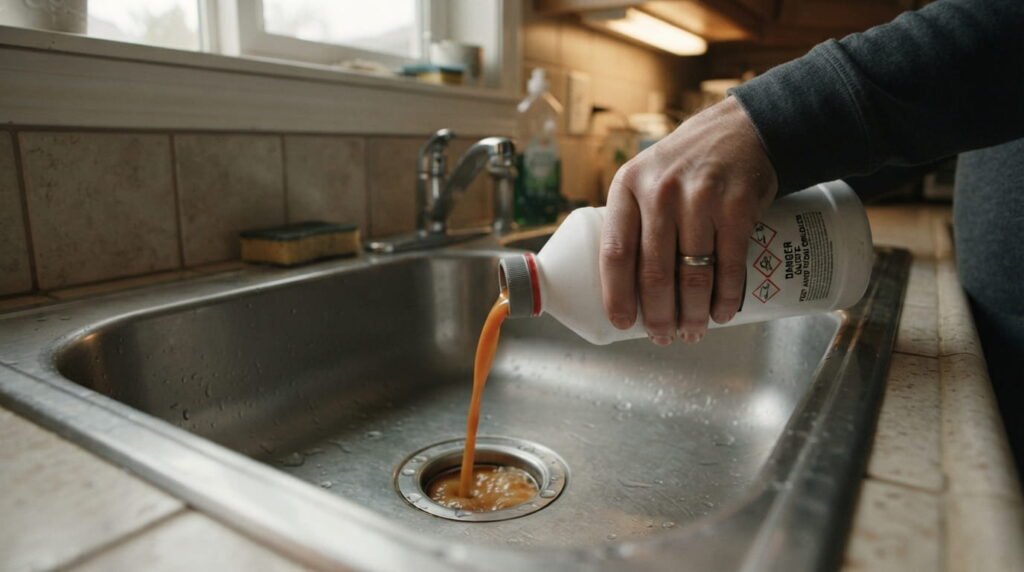
For a single minor clog near the drain opening, a plunger or a hand snake from the hardware store often does the job. For anything beyond that, professional drain cleaning is the safer choice. Chemical drain cleaners can corrode older pipes, they rarely clear the full blockage, and they leave a caustic mess for a plumber to deal with if the clog comes back and a professional visit ends up being necessary anyway.
That last part matters more than most people realize. When a plumber arrives at a drain that’s full of standing water mixed with chemical cleaner, it creates a genuinely hazardous work environment, with a real risk of skin or eye contact with caustic residue. Sticking to mechanical methods like a plunger or a basic hand snake for minor clogs, and calling a professional for anything more stubborn, keeps both your pipes and the person eventually working on them safer.
How long does professional drain cleaning take?
A single fixture, like a sink or tub drain, usually takes under an hour from arrival to flowing freely again. Main sewer line jobs or a stubborn, long-standing blockage can take several hours, especially if a camera inspection or hydro jetting is part of the visit.
Does homeowners insurance cover drain cleaning?
Standard homeowners insurance typically doesn’t cover routine drain cleaning or clogs caused by normal wear and tear. If a sudden sewer backup causes water damage inside the home, some of that damage may be covered under a separate sewer backup endorsement, which is usually an optional add-on rather than part of a standard policy.
Is hydro jetting safe for older pipes?
Hydro jetting is generally safe, but pipe age and material matter. Homes built before 1970, or with older cast iron lines, should have a plumber assess pipe condition first, since jetting at full pressure on a badly deteriorated pipe can occasionally worsen an existing weak spot. A brief camera inspection beforehand is the standard way plumbers rule this out.
What’s the difference between drain clearing and drain cleaning?
Drain clearing usually means punching a hole through the clog just enough to get water flowing again, which is why the blockage often returns within weeks. Drain cleaning removes the buildup from the entire pipe interior, not just the clogged section, so the results last longer.
Why DIY Methods Fall Short on Recurring Clogs
A plunger and a hand snake handle the easy cases well: a clog right at the drain opening, caused by something soft enough to break up or pull out. Where DIY methods run into trouble is depth and thoroughness. A hand snake typically reaches 15 to 25 feet, which is plenty for a sink trap but nowhere near enough for a main sewer line problem. And neither a plunger nor a store-bought cleaner removes buildup coating the pipe walls, which is exactly the buildup that causes the next clog.
Recurring clogs in the same drain are usually a sign that the underlying cause hasn’t actually been addressed, just pushed through temporarily. That’s the gap professional drain cleaning services are built to close: removing the cause, not just clearing the symptom for a few weeks.
How to Choose a Professional Drain Cleaning Company
A few questions help separate a solid choice from a company that’s just going to punch a cheap hole through the clog and leave:
- Is the plumber licensed and insured? This protects you if something goes wrong during the job.
- Does the quote distinguish between clearing and cleaning? Some low-cost offers only clear a path through the clog rather than cleaning the full pipe, so the blockage tends to return sooner.
- What does the guarantee actually cover, and for how long? A short guarantee window, especially under 30 days, is often a sign the company expects you’ll need a return visit.
- Do they offer a camera inspection when needed? For recurring or unexplained clogs, seeing the actual condition of the pipe beats guessing at it.
Getting two or three quotes from local, licensed plumbers before booking a non-emergency job is one of the simplest ways to make sure the price and the scope of work both make sense.
Keeping Drains Clear Between Visits
A little routine care between professional cleanings goes a long way, especially in the kitchen. Letting grease cool and go in the trash instead of the sink, running hot water after washing greasy dishes, and using a sink strainer to catch food scraps all reduce how fast buildup forms. None of that replaces an annual professional drain cleaning, but it does stretch the time between visits and makes each one more effective when it happens.
If a drain is already slow, gurgling, or backing up, that routine maintenance won’t fix it. At that point, professional drain cleaning services are the more reliable path back to a pipe that actually drains the way it’s supposed to, rather than one that’s just temporarily quiet until the next clog forms.


Pingback: Plumbing Drain Cleaning Services: Costs, Signs & FAQs - kitchennista.com