
Septic Tank Installation Cost in 2026: Full Price Guide
Septic tank installation cost typically runs between $3,500 and $12,500, with most homeowners landing around $8,000 for a complete system. If you’re building on land without a municipal sewer connection, or your old tank is failing, that number is the one your budget needs to start with. The final price depends on your soil, the type of system your property requires, tank size, and how much excavation the crew has to do to get there.
This guide breaks down what drives septic tank installation cost up or down, what a typical quote should include, and where homeowners tend to get surprised by the bill.
Quick Answer: What Does Septic Tank Installation Really Cost?
For a standard three- to four-bedroom home with decent soil, expect to pay $6,000 to $10,000 for a full installation, tank included. Simpler anaerobic systems on easy-to-dig, well-draining lots can come in closer to $3,500. Tight lots, high water tables, or clay-heavy soil push costs toward $15,000 to $20,000, since they often require an engineered aerobic or mound system instead of a conventional gravity-fed one.
Labor, excavation, and the drain field usually cost more than the tank itself. The tank is often only $500 to $2,500 of the total bill.
Septic Tank Installation Cost by System Type
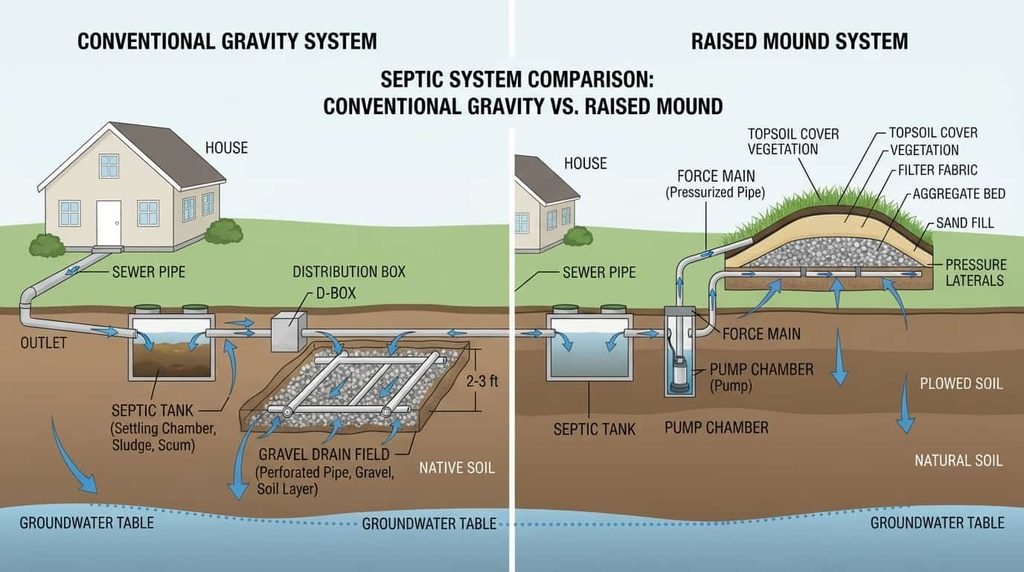
The single biggest factor in septic tank installation cost is which system your soil and lot size can support.
Anaerobic (conventional) systems are the standard choice and the cheapest, generally running $3,000 to $8,000. These use gravity and naturally occurring bacteria to break down waste before it moves to a drain field. They need a decent amount of land and soil that drains reasonably well.
Aerobic systems cost roughly $10,000 to $20,000. They use an air pump to speed up bacterial treatment, which means a smaller drain field, making them the go-to option on small or oddly shaped lots.
Beyond those two, a handful of alternative designs solve specific site problems:
- Mound systems ($10,000–$20,000): sit above grade using sand or gravel, built for high water tables
- Chambered systems ($5,000–$12,000): a good fit for rocky soil or a high water table
- Sand filter systems ($7,000–$18,000): add a filtration step for poor-draining soil
- Drip distribution systems ($8,000–$18,000): disperse effluent slowly across the yard, useful on tight or sloped lots
If a soil test shows your property can handle a conventional system, that alone can save you thousands over an engineered alternative.
Septic Tank Cost by Size (and Number of Bedrooms)
Tank size is set by how many bedrooms your home has, since that determines expected daily water use. Most states require at least a 1,000-gallon tank regardless of home size.
| Tank Size | Bedrooms | Average Tank Cost |
|---|---|---|
| 500 gallons | 1 | $500–$900 |
| 750 gallons | 2 | $700–$1,200 |
| 1,000 gallons | 3–4 | $900–$1,500 |
| 1,200 gallons | 5–6 | $1,200–$1,600 |
| 1,500 gallons | 6–7 | $1,500–$2,500 |
Undersizing a tank to save money backfires fast. A tank that’s too small for your household needs pumping every year instead of every three to five, and it’s more prone to backups when several appliances run at once.
What Affects Septic Tank Installation Cost
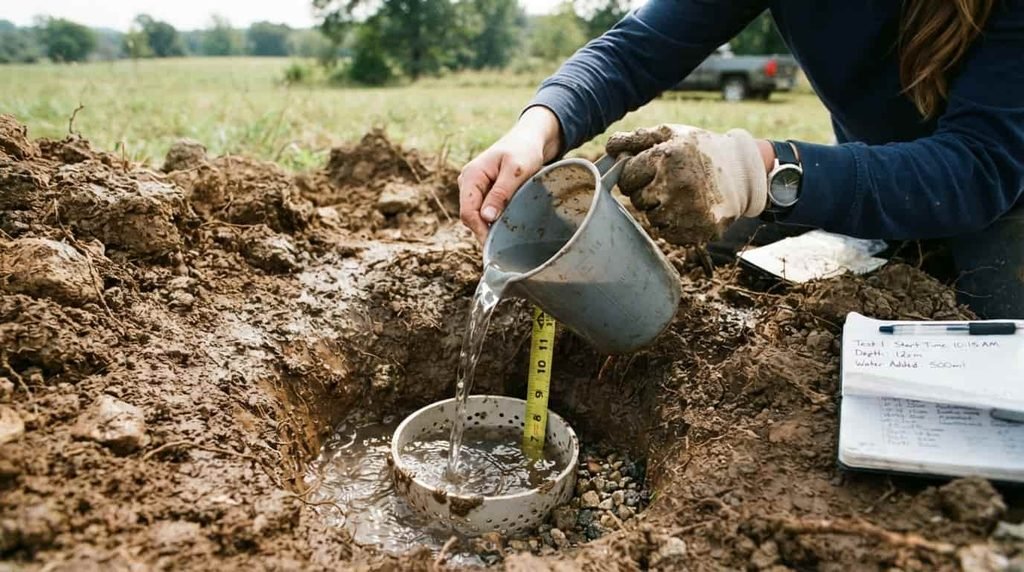
A few site-specific factors swing the total more than the tank itself does.
Soil and percolation testing. A perc test ($700–$2,000) tells the installer how quickly your soil absorbs water, which decides whether you need a conventional or engineered system. Sandy soil is the cheapest to work with; clay and rocky soil push costs up because they need larger or specially designed drain fields.
Tank material. Concrete ($700–$2,000) is the most common choice thanks to its 20- to 30-year lifespan and resistance to cracking under pressure. Plastic and polyethylene tanks ($500–$2,000) are lighter and cheaper to install but aren’t approved in every state. Fiberglass ($1,200–$2,000) costs a bit more but resists corrosion better than either.
Excavation and land prep. Digging the trench and tank bed typically adds $1,500 to $6,300, more on properties with tree roots, ledge rock, or limited equipment access.
Permits. Most counties require a permit before you dig, running $450 to $2,300 depending on location.
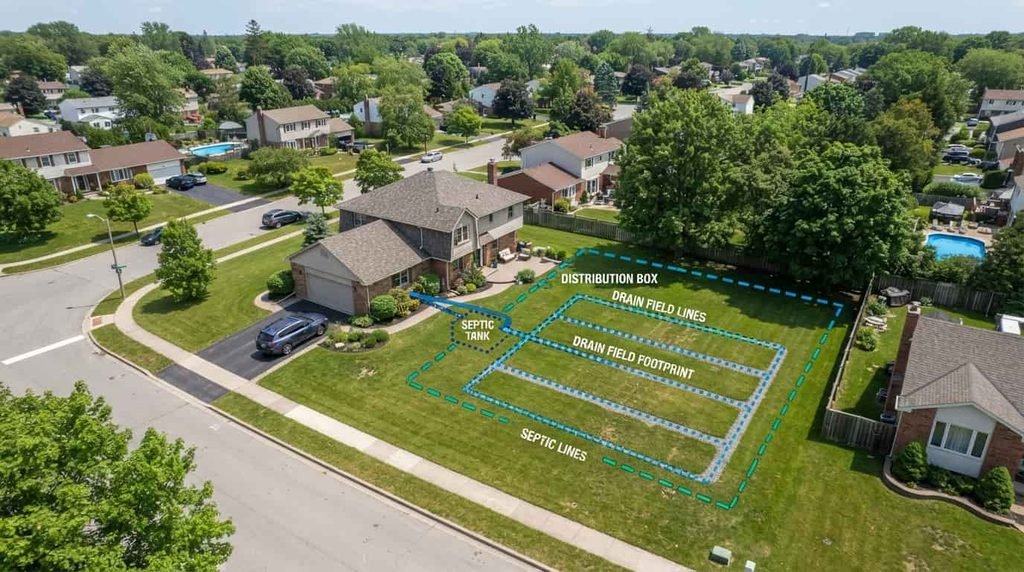
Drain field (leach field) installation. This underground network of pipes disperses treated wastewater into the soil and can add $5,000 to $12,000 on its own, with the total depending on the system type paired with it.
Repair vs. Replace: Which Costs Less?
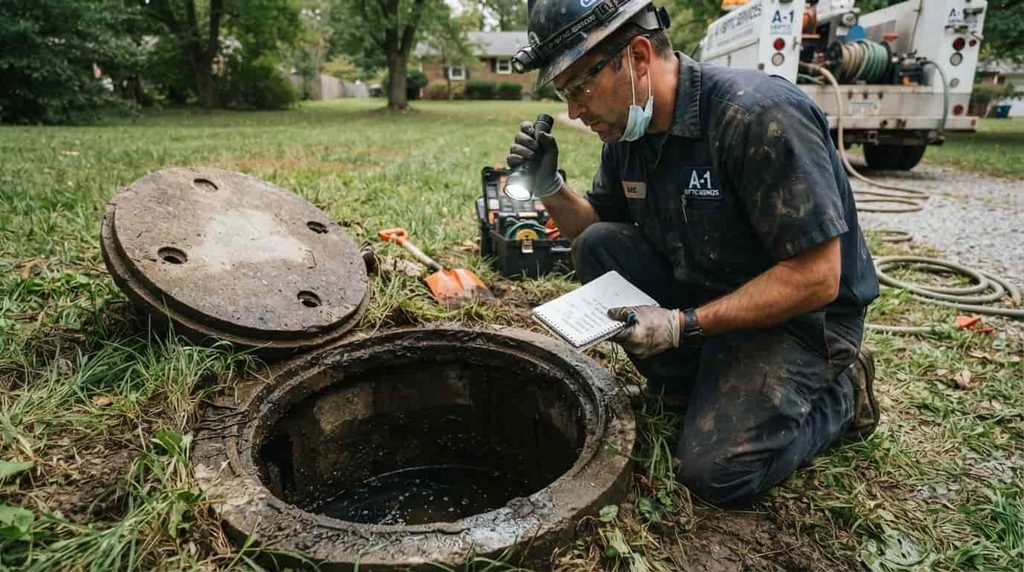
Not every septic problem calls for a brand-new system. Septic tank repairs generally run $500 to $3,000, covering things like a cracked baffle ($250–$900), a failed pump ($250–$1,300), or a clogged filter ($50–$300). A full septic system replacement, by comparison, typically lands between $5,000 and $15,000, and can climb past $20,000 if the drain field also needs rebuilding.
A contractor will usually recommend repair over replacement when the tank itself is structurally sound and the problem is isolated to one component. Full replacement becomes the better financial call when the tank is a steel model over 15 years old, the concrete shows structural cracking, or the drain field has failed completely rather than just slowed down. Steel tanks in particular corrode from the inside and aren’t worth patching once they start leaking.
If you’re not sure which category your situation falls into, a septic inspection ($200–$900) before committing to any quote is worth every dollar. It’s far cheaper than paying for a replacement you didn’t actually need, or discovering mid-project that a repair wasn’t enough.
Hidden and Additional Costs to Budget For
These line items catch a lot of homeowners off guard because they aren’t always included in a first quote:
- Old tank removal, if you’re replacing an existing system: $45–$200 per hour of labor
- Riser installation, which makes future inspections and pumping easier to access: $300–$600
- Land clearing ahead of excavation: $1,200–$4,800
- Landscaping restoration after the crew backfills: $5–$24 per square foot
- Distribution box replacement, if the old one is damaged: $500–$1,500
Ask any contractor for a written, itemized quote before signing anything, and confirm whether permits, the perc test, and cleanup are already built into the number they gave you.
How to Lower Your Septic Tank Installation Cost
Septic tank installation cost is one of those home projects where the cheapest quote is rarely the best value, but there are still legitimate ways to bring the number down:
- Get at least three quotes. Installation labor rates and equipment access vary a lot by contractor, even within the same town.
- Time it for the off-season. Some installers offer lower rates outside of spring and summer, when demand for excavation work peaks.
- Choose the simplest system your soil allows. Don’t upgrade to aerobic or mound systems unless your perc test actually requires it.
- Handle landscaping restoration yourself. Backfilling and reseeding are jobs many homeowners can do without hiring it out.
- Keep up with maintenance. Pumping every three to five years, at $300 to $600 a visit, is far cheaper than premature tank failure.
Frequently Asked Questions
What is the cheapest type of septic tank to install?
A conventional anaerobic septic system is the cheapest option, typically $3,000 to $8,000 including the tank and installation. Within that category, plastic and polyethylene tanks are the least expensive material, running $500 to $2,000, though not every state allows them.
How long does a new septic tank last?
Most septic tanks last 15 to 40 years depending on material and maintenance. Concrete tanks typically last 20 to 30 years, while steel tanks tend to corrode and fail closer to the 15-year mark. Regular pumping every three to five years is the single biggest factor in reaching the higher end of that range.
Is it cheaper to repair a septic tank than replace it?
Yes, in most cases. Septic tank repairs average $500 to $3,000, while a full replacement runs $5,000 to $15,000 or more. Repair only makes sense when the tank itself is structurally sound; a cracked concrete shell or a corroded steel tank usually means replacement is the more cost-effective long-term choice.
How do I know what size septic tank I need?
Tank size is based on your number of bedrooms, since that determines expected daily wastewater volume. A three- to four-bedroom home typically needs a 1,000-gallon tank, while homes with six or more bedrooms need 1,500 gallons or more. Most states set a legal minimum of 1,000 gallons regardless of home size, so check local code before assuming a smaller tank will pass inspection.
The Bottom Line
Septic tank installation cost varies widely because it depends on your specific soil, lot size, and local permitting rules as much as it does on the tank itself. Budgeting $8,000 as a starting point is reasonable for most homes, but get a soil test and at least three written quotes before you commit. That single step does more to control your final cost than any material or size choice you’ll make along the way.
If you’re planning a bigger property project this year, it’s worth mapping out your full renovation budget early. Small utility decisions like this one tend to have a way of reshaping the rest of the plan.