Salad in a Jar: The Layering Method for Crisp, No-Soggy Lunches
A salad in a jar is a make-ahead lunch packed in a mason jar so the dressing stays separated from the greens until you’re ready to eat. It sounds like a small trick, but it’s the difference between a lunch that’s crisp on day five and one that turns into a sad, wilted mess by lunchtime tomorrow. Once you know the layering order, it takes about five minutes per jar and you can knock out a whole week of lunches in one sitting.
How Do You Make Salad in a Jar?
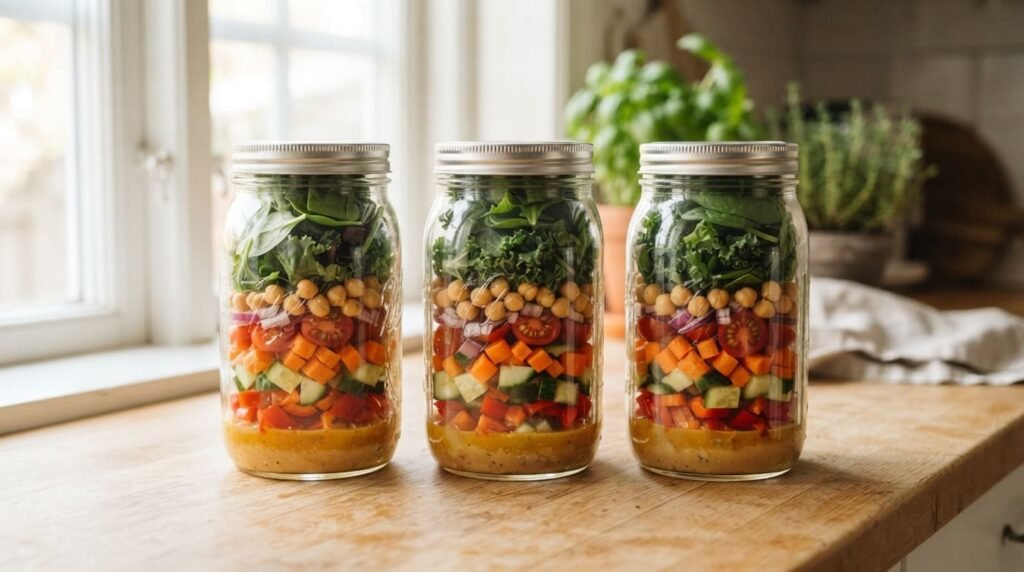
Pour your dressing into the bottom of a wide-mouth jar, then layer in hardy vegetables, protein and grains, then softer add-ins, and finish with the leafy greens on top. Seal the lid and keep the jar upright in the fridge. When you’re ready to eat, shake it well and dump everything into a bowl. As long as the greens never touch the dressing, they’ll stay crisp for days.
The Right Order to Layer a Salad in a Jar
The whole method comes down to one rule: keep anything wet as far from the greens as possible. Here’s the order that works every time.
- Dressing first. Two to three tablespoons goes in the bottom of the jar. This is the layer that would wilt your greens instantly, so it needs the most distance from them.
- Hard, crunchy vegetables. Cucumbers, carrots, bell peppers, red onion, and radishes sit right on top of the dressing. They’re sturdy enough to marinate a bit without turning to mush, and some people even like how they pick up a little flavor from the dressing while the jar sits in the fridge.
- Protein and grains. Chickpeas, black beans, cooked quinoa, shredded chicken, or cubed tofu go next. These hold their texture well and add the staying power that turns a salad in a jar into an actual meal instead of a snack.
- Softer ingredients. Cheese, olives, and anything that shouldn’t sit directly in dressing but also isn’t as delicate as lettuce.
- Nuts and seeds. A thin layer of pepitas, sunflower seeds, or walnuts near the top adds crunch and acts as a buffer.
- Greens on top. Lettuce, spinach, kale, or arugula go in last, packed in fairly tight. This is what keeps the whole jar from shifting around and what protects the greens from ever touching moisture.
Screw the lid on tight, and the jar is good to go straight into the fridge.
Why Salad in a Jar Works So Well for Meal Prep
The appeal isn’t just about avoiding soggy lettuce. Once you’ve prepped four or five jars on a Sunday, lunch stops being a decision you have to make every morning. You open the fridge, grab a jar, and it’s already done. Home cooks who’ve been packing salad in a jar for a while tend to notice the same thing: it’s one of the few meal-prep habits that actually sticks, because it removes the daily friction of chopping, dressing, and tossing a fresh salad from scratch every single day.
It also tends to save money. A jar built from pantry staples like beans, grains, and whatever produce is already in the crisper drawer costs a fraction of a store-bought salad, and using mason jars you likely already own means there’s no need to buy special meal-prep containers.
A Few Salad in a Jar Combos to Try
Once the layering order feels automatic, it’s easy to build your own combinations. A few reliable starting points:
- Southwest style: lime vinaigrette, corn, black beans, cherry tomatoes, shredded chicken, cotija cheese, romaine
- Mediterranean style: balsamic vinaigrette, cucumber, chickpeas, sun-dried tomatoes, feta, arugula
- Asian-inspired: sesame dressing, shredded carrots, edamame, red cabbage, chow mein noodles (added at the end so they stay crunchy), mixed greens
- Protein-forward: ranch or Greek yogurt dressing, bell peppers, quinoa, hard-boiled egg or grilled chicken, sunflower seeds, spinach
Swap in whatever vegetables you already have on hand. The layering order matters far more than the exact ingredients, so a salad in a jar is a good way to use up produce before it goes bad.
Best Jars and Sizes for Salad in a Jar
Any jar with a tight-fitting lid will technically work, but a wide-mouth mason jar makes packing and unpacking much easier since you’re not fighting a narrow opening to get a fork or spatula in. Tall, narrow jars are also better than short, wide ones because they create more distance between the dressing and the greens.
For sizing, a pint jar (16 ounces) works as a light lunch or a side salad, while a quart jar (32 ounces) is the sweet spot for a full lunch-sized salad in a jar with protein and grains included. If you’re prepping bigger portions or packing for two, a half-gallon jar can hold a full family-style salad.
Upcycled jars from pasta sauce or pickles work in a pinch too, as long as the lid seals well. Glass is generally preferred over plastic because it doesn’t hold onto smells or stain from things like beet juice or tomato sauce.
Best Dressings for Salad in a Jar
Almost any dressing works as long as you pack the jar tightly enough that it can’t slosh around. That said, thicker dressings like ranch, Greek yogurt ranch, or a creamy Italian tend to stay put better than thin vinaigrettes, which matters if you’re tossing the jar in a bag and carrying it to work.
Homemade vinaigrettes (olive oil and vinegar, balsamic, honey mustard) are popular choices because they double as a marinade for the hard vegetable layer, meaning the cucumbers and carrots actually taste better by day three or four. If you’re using a store-bought dressing, give the bottle a shake before measuring it out, since separation is common and you want an even mix hitting the bottom of the jar.
How Long Does Salad in a Jar Last?
Most salads in a jar last 4 to 5 days in the fridge when layered correctly, and a simple vegetable-and-dressing combination can sometimes stretch closer to a week. The lifespan depends heavily on what’s inside:
- Dressing and hard vegetables only: up to 7 days
- Salads with meat, chicken, or cheese: 3 to 5 days
- Salads with fresh fruit: 2 to 3 days, since fruit breaks down faster once cut
Storing the jar upright on a middle or top fridge shelf, rather than in the door where temperatures fluctuate, also helps everything stay fresher longer. If the greens start to look a little rusty-colored near the end of the week, that’s usually just oxidation from ethylene exposure and not a sign the salad has gone bad, though a smell test is always a good idea before eating.
Ingredients to Skip (or Add Right Before Eating)
Not everything belongs in a salad in a jar that’s meant to sit for several days. Skip or hold off on:
- Avocado. It browns quickly, even with lemon juice, so it’s best added the morning you plan to eat that jar.
- Croutons or anything crunchy meant to top a salad. They’ll turn soft and soggy if packed in advance.
- Delicate herbs like basil. They wilt faster than sturdier greens like kale or romaine.
- Sliced apples or pears. Like avocado, they oxidize and brown within a day or two, even when treated with lemon juice.
If you know you’ll want one of these ingredients, keep a small container of it separate and add it in right before you eat, rather than packing it into the jar itself.
How to Eat a Salad in a Jar
When lunchtime rolls around, take the jar out, screw the lid on tight if it’s loose, and give it a vigorous shake to knock the packed layers loose and start coating everything in dressing. Because the ingredients are usually packed in tight, dumping the whole jar into a bowl gives a much more even toss than trying to eat straight out of the jar with a fork. That said, if you’re eating outdoors or don’t have a bowl handy, eating directly from a wide-mouth jar is doable, it’s just a little less tidy.
Salad in a Jar FAQs
How long does salad in a jar last in the fridge? Most salads in a jar stay fresh for 4 to 5 days, and simple veggie-and-dressing combinations can last up to a week. Adding meat, cheese, or fruit shortens that window to a few days.
What’s the best dressing for salad in a jar? Thicker dressings like ranch or creamy Italian hold up best if the jar gets jostled around, but any dressing works as long as the jar is packed tightly and the dressing stays at the bottom, away from the greens.
Can you eat a salad in a jar straight from the jar? Yes, but pouring it into a bowl first usually gives a better toss and more even distribution of dressing, since the ingredients are packed in tight and hard to mix with just a fork.
What jar size is best for meal prepping salads? A wide-mouth quart jar (32 ounces) is the most popular choice for a full lunch-sized salad in a jar, while a pint jar works well for a lighter portion or side salad.
Once the layering order clicks, a salad in a jar becomes one of the easiest ways to have a real lunch ready to go all week, no soggy greens, no last-minute chopping, just grab a jar and go.