Salt and Vinegar Seasoning: The Easy Homemade Recipe You’ll Use on Everything
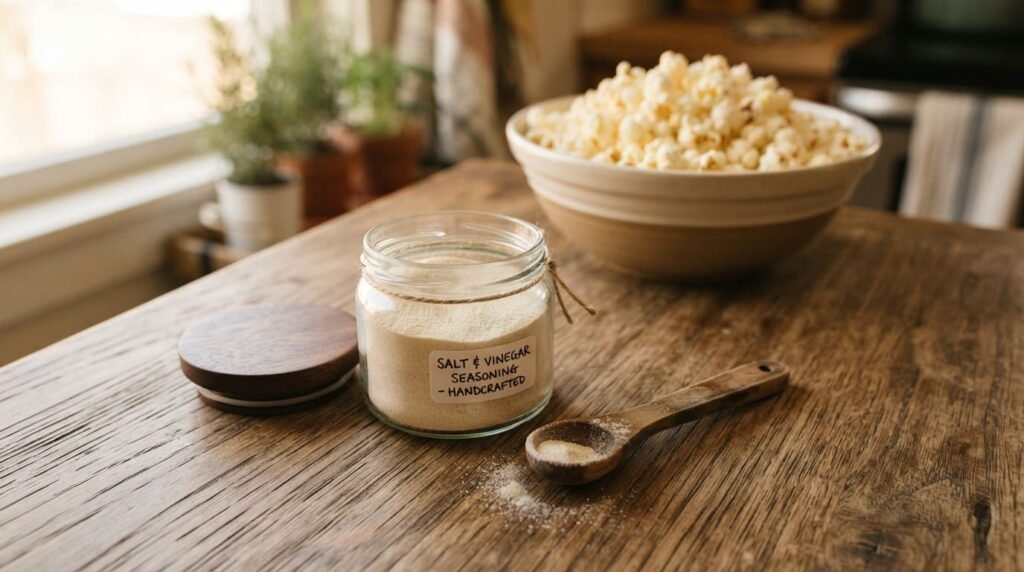
Salt and vinegar seasoning is the dry, powdery blend that gives potato chips, popcorn, and fries that sharp, mouth-puckering tang, and you can make a batch of it at home in about ten minutes. If you’ve ever flipped over a bag of salt and vinegar chips and wondered how they got that flavor without any liquid mess, the answer is vinegar powder. Once you have that one ingredient on hand, the rest of the process is just stirring.
This guide covers what the seasoning actually is, the fastest way to make it, the homemade methods that sound good but usually disappoint, and all the ways to use the finished blend beyond the chip bowl.
What Is Salt and Vinegar Seasoning?
Quick answer: Salt and vinegar seasoning is a dry spice blend made from salt and dehydrated vinegar powder, used to add a tangy, salty flavor to chips, popcorn, fries, and other snacks. It’s shelf-stable, doesn’t add any liquid to your food, and takes seconds to sprinkle on.
The “vinegar” part isn’t liquid at all. It’s vinegar that’s been dried and turned into a fine powder, usually made from white distilled vinegar or malt vinegar. That powder is what lets snack brands (and home cooks) get a strong vinegar hit without soaking the food. Most commercial blends also include a starch like maltodextrin to keep the powder from clumping, plus citric or malic acid for extra brightness.
Can You Make Salt and Vinegar Seasoning at Home?
Yes, and it’s genuinely simple once you know the shortcut. There are actually three ways people try to make this seasoning, and two of them are more trouble than they’re worth.
The air-dry method mixes cornstarch, salt, and liquid vinegar, then spreads the paste on a baking sheet to dry for up to 24 hours. It sounds low-effort, but in a humid kitchen it can stay damp for two days, and the vinegar flavor tends to fade out as it dries, leaving mostly a salty, starchy powder behind.
The boiling method simmers baking soda and white vinegar together until it reduces down to a tenth of its original volume, in theory leaving behind vinegar crystals you crush into powder. In practice, the crystals are unreliable, the process takes a long time to reduce, and it fills the kitchen with a strong vinegar smell that lingers for hours.
The shortcut method skips both of those headaches by starting with vinegar powder, which you can order online in white distilled or malt vinegar versions. You just whisk it with salt. No drying racks, no simmering pots, no waiting.
The Best Way to Make Salt and Vinegar Seasoning
This is the version worth actually keeping in your pantry. It takes one bowl and two ingredients.
What you need:
- 7 tablespoons vinegar powder (white distilled or malt vinegar powder both work)
- 1 tablespoon fine salt, or a coarser sea salt if you prefer texture
How to make it:
- Whisk the vinegar powder and salt together in a small bowl until evenly combined.
- Transfer the mix to an airtight glass or ceramic container. Plastic can work too, but glass holds up better against the powder’s tendency to absorb moisture over time.
- Store it in a cool, dry, dark spot, like a spice cabinet away from the stove. It’ll keep its punch for up to three months.
That’s the whole method. If you want a milder version, cut the vinegar powder back and add a bit more salt to taste, then adjust from there. If you like a saltier, sharper hit for wings or fries, lean the ratio the other way.
A Few Easy Variations
- Herbed version: Stir in a pinch of dried dill or parsley for a blend closer to what you’d find in a specialty spice shop.
- Garlic and vinegar: Add a small amount of garlic powder for a savory edge that works especially well on roasted potatoes.
- Pink salt swap: Swap in finely ground Himalayan pink salt if that’s what’s already in your pantry. It won’t change the flavor much, just the color of the finished blend.
How to Use Salt and Vinegar Seasoning
Once you have a jar made up, it earns its keep fast. A few of the best uses:
- Popcorn: Toss hot, freshly popped popcorn with a little oil or melted butter first, then sprinkle the seasoning on right away so it sticks. Start with about a teaspoon per batch and add more to taste.
- French fries and roasted potatoes: Sprinkle it on right after they come out of the fryer or oven, while they’re still hot enough for the powder to cling.
- Chicken wings: Add it to a dry rub before baking or air-frying for a tangy edge that plays well against crispy skin.
- Vegetables: Roasted or air-fried vegetables take well to a light dusting once they’re cooked. It’s best added post-cooking rather than to raw vegetables, since raw produce doesn’t have the dry heat needed to bring the vinegar flavor forward, and it can leave a slightly chalky texture instead.
- Marinades and dressings: In place of liquid vinegar, a small pinch adds acidity to a vinaigrette or marinade without thinning it out.
- Homemade chips: If you’re making potato or kale chips from scratch, this is the fastest way to get that classic salt and vinegar chip flavor without buying a bag.
Is Salt and Vinegar Seasoning Bad for You?
This isn’t medical advice, just general nutrition context: salt and vinegar seasoning is mostly sodium, so the main thing to watch is how much you’re using. A typical serving can carry a meaningful share of a day’s recommended sodium intake, which matters more if you’re managing blood pressure or watching your salt intake generally. Vinegar itself is just a mild acid and isn’t something most people need to worry about in the small amounts used here.
Making your own batch gives you more control than a store-bought shaker, since you decide the salt-to-vinegar-powder ratio instead of relying on a packaged formula that may include added starches or flavor enhancers. If you’re cutting back on sodium, you can lean the recipe more toward vinegar powder and use less salt, or swap in a portion of a potassium-based salt substitute and adjust to taste. As with any seasoning that’s mostly salt, moderation is the simplest approach, and anyone with a diagnosed health condition affecting sodium intake should check with a doctor or dietitian about what fits their diet.
How to Store Salt and Vinegar Seasoning
Keep the finished blend in an airtight container, away from heat, light, and humidity. Vinegar powder is hygroscopic, meaning it naturally pulls in moisture from the air, so a loosely closed bag or a container left near the stove will clump and lose potency faster. A glass jar with a tight lid, tucked into a regular spice cabinet, is the easiest way to keep it usable for up to three months.
If you notice the powder starting to cake together, a quick stir usually breaks it back up. Once it’s visibly damp or starts to smell faint instead of sharp, it’s past its best and worth replacing.
Bring the Chip-Bag Flavor Into Your Own Kitchen
Salt and vinegar seasoning is one of those pantry projects that takes almost no effort once you know the trick: skip the drying racks and the simmering pots, and go straight for vinegar powder. Mix up a batch, keep it in a jar by the stove, and you’ll find yourself reaching for it on far more than just chips. Try it on your next batch of popcorn or fries and see how quickly it becomes a regular in your spice rotation.
Frequently Asked Questions
Can you make salt and vinegar seasoning without vinegar powder?
You can try the air-dry or boiling methods using liquid vinegar, cornstarch, and salt, but both are slower and less consistent than starting with vinegar powder. The boiling method can get close to the right flavor, but it takes a long simmer and leaves a strong vinegar smell in the kitchen. For a reliable result, vinegar powder ordered online is the easier route.
What’s the difference between vinegar powder and regular vinegar?
Vinegar powder is liquid vinegar that’s been dehydrated, usually with a starch carrier, so it becomes a dry, shelf-stable powder instead of a liquid. That’s what lets you add a strong vinegar flavor to dry snacks like chips and popcorn without making them soggy. Regular liquid vinegar works fine in dressings and marinades but isn’t a direct substitute in a dry seasoning blend.
How much salt and vinegar seasoning should I use?
Start small, around a teaspoon for a bowl of popcorn or a plate of fries, and add more to taste. Because it’s concentrated, a little goes further than you’d expect, especially if you’re also salting the food separately.
Can I use this seasoning on raw vegetables or salads?
It’s better suited to cooked or roasted vegetables and dry snacks than raw produce. Without dry heat, the powder doesn’t distribute or dissolve evenly on raw vegetables and can taste chalky. For salads, a pinch stirred directly into the dressing works better than sprinkling it on raw leaves.