
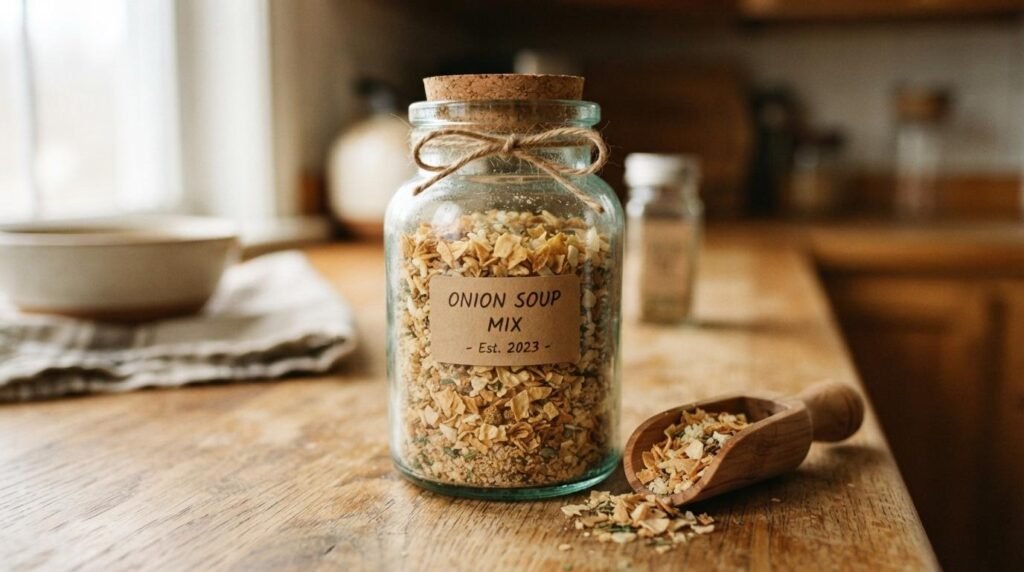
Homemade Onion Soup Mix Recipe
If you regularly buy onion soup mix packets for pot roast, French onion dip, meatloaf, or gravy, making your own is worth the few minutes it takes. This onion soup mix recipe combines dried onion, bouillon, herbs, and seasonings into a versatile blend you can keep ready in the pantry.
The biggest advantage is control. You can adjust the salt, make the onion flavor stronger, choose a vegetarian bouillon, or leave out ingredients you do not enjoy. You also avoid having to buy a packet every time a recipe calls for one.
This homemade blend is designed to work as a practical substitute for packaged onion soup mix. Keep it in a small airtight jar, and you can scoop out exactly what you need whenever a recipe calls for an envelope.
How Much Homemade Onion Soup Mix Equals One Packet?

For most recipes, use 3 level tablespoons of this homemade onion soup mix in place of one standard 1-ounce packet of onion soup mix.
That measurement is especially useful when following older recipes that simply say “1 packet” without listing the amount of seasoning.
Because commercial packets and homemade blends can vary in concentration, it is smart to taste the finished dish before adding extra salt. Bouillon is usually salty, and different brands can have noticeably different sodium levels.
If a recipe calls for two packets, start with 6 tablespoons of homemade mix.
What Goes Into an Onion Soup Mix Recipe?
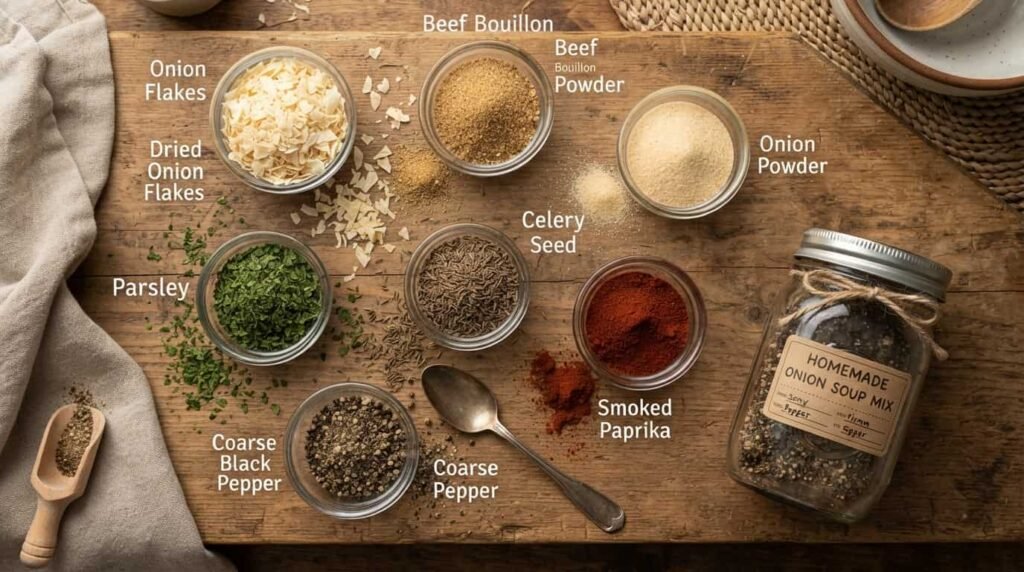
The flavor comes from combining several ingredients that each have a different job. Dried onion provides the noticeable onion pieces, while onion powder fills in the flavor between them. Bouillon supplies the savory base, and the remaining seasonings round everything out.
Ingredients
-
Dried minced onion or onion flakes: These provide the main onion flavor and the texture associated with packaged soup mix.
-
Beef bouillon granules: They add a deep, savory flavor that works particularly well in meat dishes, gravies, and pot roast.
-
Onion powder: This gives the blend a stronger and more even onion flavor.
-
Garlic powder: A small amount adds savory depth without turning the mix into a garlic seasoning.
-
Dried parsley: It contributes a mild herbal note and gives the blend some color.
-
Celery seed: Just a little adds the familiar savory character found in many soup-seasoning blends.
-
Paprika: This adds mild warmth and color.
-
Black pepper: It balances the sweetness of dried onion and gives the seasoning a little bite.
-
Salt: Add carefully because the bouillon may already contain plenty of salt.
The exact balance can be adjusted depending on how you plan to use the mix. For example, a blend intended for low-sodium cooking should rely on reduced-sodium or sodium-free bouillon rather than simply removing a large amount of salt from a standard recipe.
Homemade Onion Soup Mix Recipe
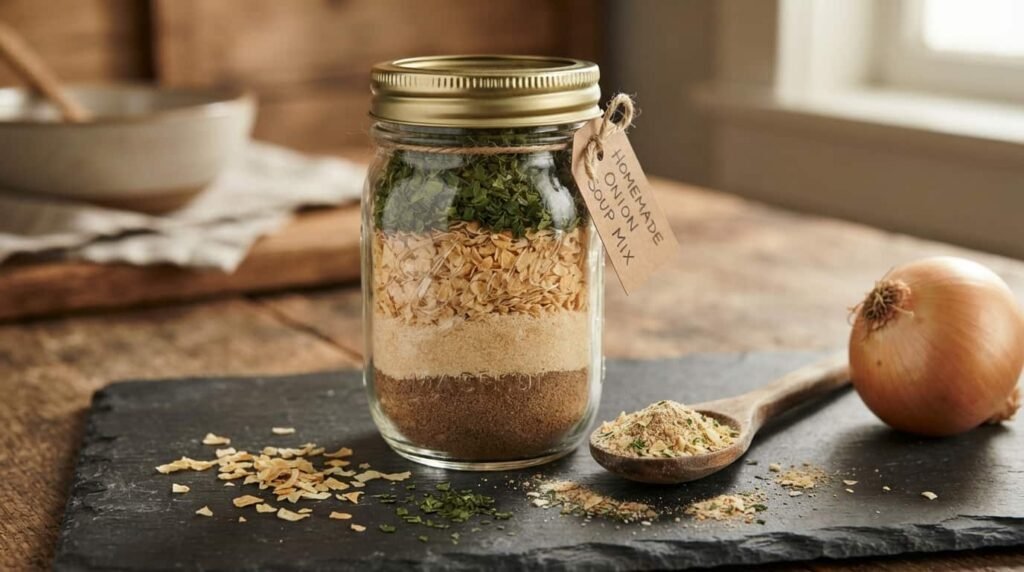
Ingredients
-
1/2 cup dried minced onion
-
1/4 cup beef bouillon granules
-
1 tablespoon onion powder
-
1 teaspoon garlic powder
-
1 teaspoon dried parsley flakes
-
1/2 teaspoon celery seed
-
1/2 teaspoon paprika
-
1/4 teaspoon black pepper
-
Salt, only if needed
Instructions
1. Combine the dry ingredients.
Add the dried onion, beef bouillon, onion powder, garlic powder, parsley, celery seed, paprika, and black pepper to a small bowl.
2. Mix thoroughly.
Use a fork or small whisk to distribute the finer powders through the dried onion. This matters because the larger onion pieces can settle separately from the powdered ingredients.
3. Check the texture.
For pot roast or other slow-cooked dishes, leaving the onion pieces intact works well. If you are making dip, you may prefer a finer mixture.
4. Grind for a smoother blend if desired.
Pulse the mixture briefly in a spice grinder or small food processor. Do not pulverize it completely unless you specifically want a powder-like seasoning. A little texture from the onion is useful.
5. Store properly.
Transfer the finished mix to a clean, dry airtight jar. Label it with the name and date.
You do not need to cook the mixture before using it. The dried ingredients are designed to release their flavor when combined with moisture and heat.
Why Use Both Dried Onion and Onion Powder?
It can seem unnecessary to use two forms of onion, but they perform different jobs.
Dried onion flakes give you pieces of onion that soften as they absorb liquid. They are especially noticeable in French onion dip, gravies, slow-cooked meat, and casseroles.
Onion powder works differently. It disperses throughout the liquid or sauce and creates a more consistent onion flavor.
Using only dried onion can make the seasoning taste uneven. Using only onion powder gives you flavor but loses the texture that makes onion soup mix recognizable.
For that reason, keeping both in the blend gives you a better all-purpose seasoning.
What Can You Make With Homemade Onion Soup Mix?
This is where the seasoning becomes particularly useful. You are not limited to soup.
French Onion Dip
Mix 3 tablespoons of onion soup mix with 16 ounces of sour cream. Refrigerate it for at least 30 minutes before serving.
That resting time is more useful than it might seem. The dried onion needs time to absorb moisture and soften, while the seasonings spread through the sour cream.
For an especially smooth dip, grind the dried onion into smaller pieces before making the mix.
Onion Soup Mix Pot Roast
Sprinkle the seasoning over a beef roast before slow cooking. You can combine it with beef broth, sliced onions, mushrooms, or other vegetables.
The bouillon and dried onion create a savory base as the roast cooks. If your broth is already salty, do not automatically add additional salt.
Meatloaf
Add several tablespoons of the mix to ground beef along with your usual meatloaf ingredients.
The seasoning is distributed throughout the meat instead of sitting only on the surface. If you are using breadcrumbs, eggs, ketchup, or another strongly seasoned ingredient, start conservatively and adjust the amount next time.
Burgers
A small amount mixed directly into ground beef can give homemade burgers extra savory flavor. Keep the quantity moderate so the seasoning does not overpower the beef.
Roasted Potatoes
Toss potato cubes with oil and a small amount of onion soup mix before roasting. The onion, garlic, and paprika create a flavorful coating as the potatoes cook.
Because bouillon can contain a lot of salt, taste the potatoes before adding additional salt.
Vegetables
Try the mix with green beans, carrots, Brussels sprouts, mushrooms, or roasted cauliflower. A little seasoning can make plain vegetables more interesting without requiring a separate sauce.
Gravy and Sauces
Whisk a spoonful into gravy, pan sauce, or a creamy sauce. Add it gradually because the seasoning becomes more concentrated as the sauce reduces.
Mashed Potatoes
A small amount mixed into mashed potatoes gives them a savory onion flavor. Start with a teaspoon or two, taste, and add more if needed.
Can You Make Onion Soup Mix Without Beef Bouillon?
Yes. Beef bouillon is useful when you want the traditional savory character, but it is not your only option.
Chicken bouillon is a good substitute when you want a milder flavor. It works particularly well with chicken, pork, potatoes, and creamy dishes.
Vegetable bouillon can be used when you want a vegetarian version. Check the ingredient label of the bouillon you choose because formulations vary.
The substitution may slightly change the final flavor, but the dried onion, onion powder, garlic, and herbs still provide the recognizable onion-seasoning profile.
How to Make a Lower-Sodium Version
The easiest way to reduce the salt in homemade onion soup mix is to start with low-sodium or sodium-free bouillon.
Do not assume that removing the added salt from the recipe automatically makes the mixture low in sodium. Bouillon can be the major source of salt in the blend.
For a lower-sodium version:
-
Choose low-sodium or sodium-free bouillon.
-
Leave out additional salt initially.
-
Mix the seasoning thoroughly.
-
Add a small amount of salt only when you are cooking and can taste the complete dish.
This approach gives you much more control than a fixed packet.
How to Make Gluten-Free Onion Soup Mix
The dried onion, onion powder, garlic powder, parsley, celery seed, paprika, and pepper are generally naturally gluten-free ingredients. The ingredient that deserves the closest attention is bouillon.
If you need the mixture to be gluten-free, check the specific bouillon package and its allergen information rather than assuming every bouillon product is gluten-free.
Also check any other packaged ingredient you add. Formulations can change, so the product label is the best source for the particular ingredient you are using.
Can You Adjust the Flavor?
Absolutely. Homemade seasoning is easier to customize than a store-bought packet.
For stronger onion flavor
Increase the dried onion flakes or add a little more onion powder. Using both gives you stronger flavor without relying entirely on one ingredient.
For more garlic
Add another small amount of garlic powder. Go slowly because too much garlic can cover the onion flavor.
For more warmth
Increase the paprika slightly or add a tiny pinch of cayenne if you enjoy heat.
For a more herbal flavor
Add a little extra dried parsley. You can also experiment with a small amount of dried thyme, although this will move the flavor away from a basic onion soup mix.
For a vegetarian blend
Replace the beef bouillon with vegetable bouillon.
One practical tip: change one ingredient at a time. If you alter several ingredients simultaneously, it becomes difficult to figure out which change improved or weakened the flavor.
Common Mistakes to Avoid
Adding too much salt
This is probably the easiest mistake to make. Bouillon already contributes salt, so adding a large amount of extra salt can make the final dish unpleasantly salty.
Using whole bouillon cubes
Bouillon cubes can work, but they need to be crushed into a fine powder before being mixed with the other ingredients. Otherwise, the seasoning will not distribute evenly.
Granules are more convenient for a dry seasoning blend.
Skipping onion powder
Dried onion and onion powder are not interchangeable in terms of texture and flavor. The flakes provide pieces of onion, while the powder spreads throughout the dish.
Storing the mix near steam
A dry seasoning blend lasts much better when protected from moisture. Do not keep the jar directly beside a kettle, dishwasher vent, or cooking surface where steam regularly reaches it.
Using too much in delicate dishes
The seasoning is concentrated. Adding several tablespoons to a lightly flavored dish can quickly make it taste salty or overly savory.
Start with less when you are experimenting, especially with sauces and vegetables.
How Should You Store Homemade Onion Soup Mix?
Keep the mixture in an airtight container in a cool, dry, dark pantry or cupboard.
A small glass jar with a tight lid works well. A food-safe spice container is also fine.
For best flavor, use the blend within about six months. Dry spices may remain usable beyond that point if they have been stored properly, but their flavor and aroma gradually weaken.
If you make a large batch, write the preparation date on the container. That simple step makes it much easier to know when it is time to prepare a fresh batch.
Avoid putting a damp measuring spoon into the jar. Moisture can cause dried ingredients to clump and can shorten the quality of the blend.
Can You Make a Bigger Batch?
Yes. This recipe is easy to scale.
If you use onion soup mix regularly, making two or three batches at once can save time. Store the extra seasoning in separate airtight containers rather than repeatedly opening one large jar.
For example, if you double the recipe, your packet substitute also doubles: 6 tablespoons equals approximately two standard packets.
Keep a measuring tablespoon in your spice drawer and the homemade blend becomes almost as convenient as reaching for a store-bought envelope.
How to Turn the Mix Into a Quick Onion Soup
Despite being mainly used as a seasoning, the mixture can also be turned into a simple soup-style broth.
Whisk about 3 tablespoons of the seasoning into 4 cups of water or low-sodium beef broth. Bring it to a gentle simmer and cook for around 10 minutes, allowing the dried onion to soften.
For a more traditional French onion soup direction, add sliced onions that have been slowly caramelized separately. Serve with toasted bread and melted cheese.
The homemade mix is best thought of as a flavor base rather than a complete replacement for slowly caramelized onions. If you want the deep sweetness of classic French onion soup, fresh onions cooked until deeply golden will give you a much richer result.
Final Thoughts
A good onion soup mix recipe does more than copy a store-bought packet. It gives you a flexible seasoning you can adjust to the dish in front of you.
Keep the basic combination of dried onion, onion powder, bouillon, garlic, herbs, and spices, then change the salt level or bouillon depending on how you plan to use it. For dip, grind the onion finer. For pot roast, leave the flakes larger. For a vegetarian version, use vegetable bouillon.
Once the mix is stored in a labeled jar, it becomes an easy pantry shortcut for meatloaf, potatoes, vegetables, gravy, dips, casseroles, and slow-cooked meals. The recipe takes only a few minutes to put together, but having it ready can save much more time later.
How many tablespoons are in one packet of onion soup mix?
For this homemade onion soup mix recipe, 3 level tablespoons are used as the substitute for one standard 1-ounce packet.
Can I use chicken bouillon instead of beef bouillon?
Yes. Chicken bouillon creates a milder version and works well with chicken, pork, potatoes, and vegetables.
Can I use vegetable bouillon?
Yes. Vegetable bouillon is a useful choice for a vegetarian onion soup mix. Check the product label to make sure it meets your dietary requirements.
How long does homemade onion soup mix last?
For the best flavor, use it within about six months when stored in an airtight container in a cool, dry place. The seasoning may remain usable longer, but the dried spices will gradually lose strength.
Can I use onion powder instead of dried onion?
You can, but the result will be different. Onion powder provides flavor without the texture of dried onion flakes. If you want the classic texture, keep some dried onion in the mixture.
Does homemade onion soup mix need refrigeration?
No. The dry seasoning itself does not require refrigeration. Store it sealed in a cool, dry pantry.
Is this onion soup mix gluten-free?
It can be, but check the bouillon label carefully. Bouillon products vary, so do not assume a particular brand or product is gluten-free without checking its current ingredient and allergen information.
Can I use this seasoning for French onion dip?
Yes. Mix 3 tablespoons with 16 ounces of sour cream and refrigerate for at least 30 minutes before serving. The resting period allows the dried onion to soften and the flavors to blend.
What if my onion soup mix tastes too salty?
The most likely culprit is the bouillon. Next time, use low-sodium or sodium-free bouillon and avoid adding salt until you have tasted the finished dish.


Pingback: Lipton Onion Soup Mix Meatloaf: The Easy Classic Recipe
Pingback: what are the best spices for cooking: 15 Must-Haves for 2026 - kitchennista.com