How to Cook Japanese Sweet Potato (Easy 2026 Guide)
If you want to know how to cook Japanese sweet potato so it comes out creamy, sweet, and almost cake-like inside, the short version is this: bake it low and slow, poke a few steam vents first, and let it rest before you cut in. But the method you pick changes the texture a lot, so it’s worth knowing your options before you turn on the oven.
I’ve made these more times than I can count in my own kitchen, testing the oven, the air fryer, the microwave, and the stovetop side by side to see which actually gets that chestnut-sweet, custardy center everyone talks about. Here’s what works, what doesn’t, and why.
What Are Japanese Sweet Potatoes?
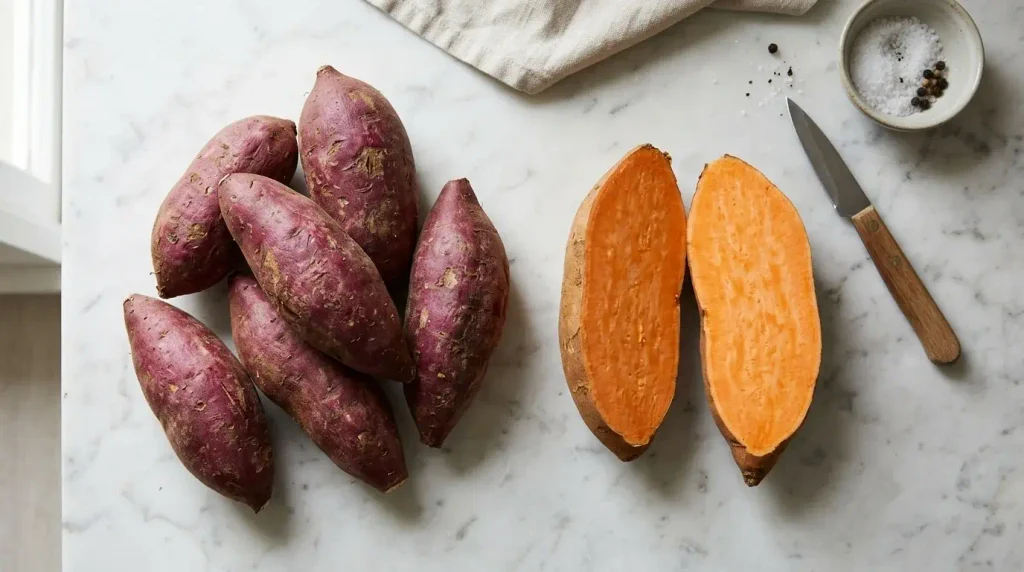
Japanese sweet potatoes, called satsumaimo in Japan, are not the same vegetable as the orange sweet potatoes most American grocery stores stock all year. They have a reddish purple skin and pale, almost cream colored flesh that turns a rich golden yellow once cooked.
The flesh is starchier and drier than an orange sweet potato, closer to a russet potato in texture, but it caramelizes as it cooks and turns noticeably sweeter, with a flavor a lot of people compare to roasted chestnuts. That sweetness isn’t just a happy accident. Slow, gentle heat activates an enzyme called amylase, which breaks the potato’s starches down into simple sugars while it bakes.
You’ll find Japanese sweet potatoes at most Asian grocery stores, and increasingly at Trader Joe’s, Whole Foods, and regular supermarkets in the produce section, sometimes labeled “Japanese yam” even though it’s a true sweet potato, not a yam. Look for smaller, smoother-skinned potatoes in the 8 to 12 ounce range. Heavier ones with fewer roots tend to be less fibrous and taste better.
One quick note: Japanese sweet potatoes are different from Okinawan sweet potatoes, which have purple flesh on the inside rather than gold. Both are delicious, but they behave a little differently in recipes, so don’t swap them without expecting some variation.
How to Cook Japanese Sweet Potato
For the best texture, bake whole, unpeeled Japanese sweet potatoes at 325°F for 70 to 90 minutes, or at 375°F for 50 to 65 minutes if you’re short on time. Poke a few holes with a fork first, place them directly on a lined baking sheet, and let them rest for 15 minutes after baking before you slice in. Low and slow gives the sweetest, cakiest result, while the higher temperature gets you a similar result faster with a slightly crisper skin.
If you only remember one thing from this guide, it’s that time and temperature matter more than any other variable. Rushing the bake with high heat gives you a potato that’s cooked through but noticeably less sweet.
How to Cook Japanese Sweet Potato in the Oven
Oven baking is the classic method, and it’s the one that gets closest to the roasted street cart potatoes sold in Japan during winter, known as yaki imo.
- Wash and scrub the potatoes well. You don’t need to peel them; the skin is edible and softens as it bakes.
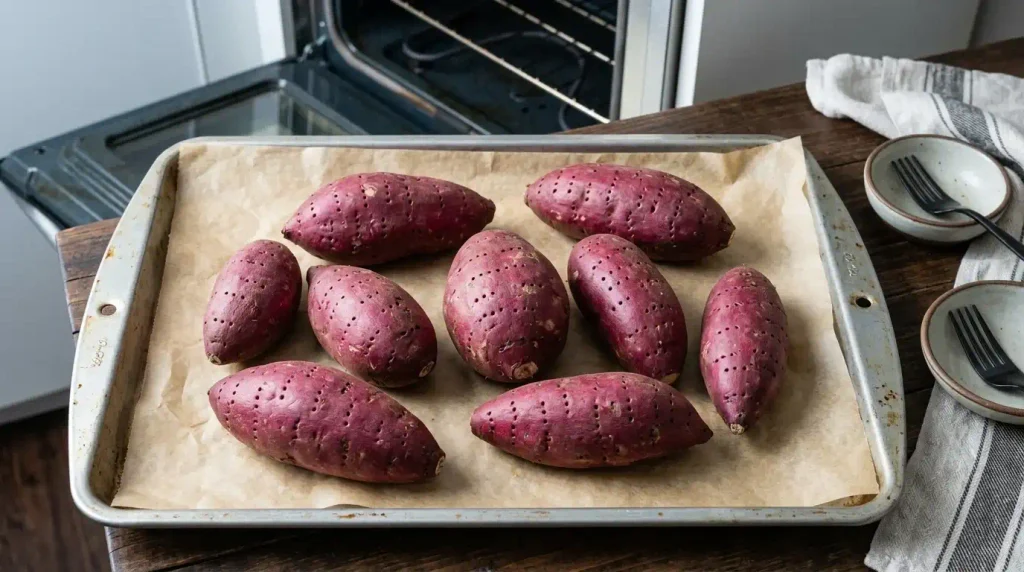
- Pat them dry, then poke 3 to 4 shallow holes in each with a fork. Don’t go too deep, since that can actually slow the cooking down.
- Place them directly on a parchment lined baking sheet or straight on the oven rack with a tray underneath to catch any drips.
- Bake at 325°F for 70 to 90 minutes for the sweetest, most cake-like texture, or at 375°F for 50 to 65 minutes if you want something a bit quicker with crispier skin.
- Check doneness by piercing with a chopstick or thin knife. It should slide in with almost no resistance.
- Turn off the oven and let the potatoes sit inside with the door closed for 15 to 20 minutes, or rest them on the counter. This finishing step matters more than people expect, since it lets the center set properly.
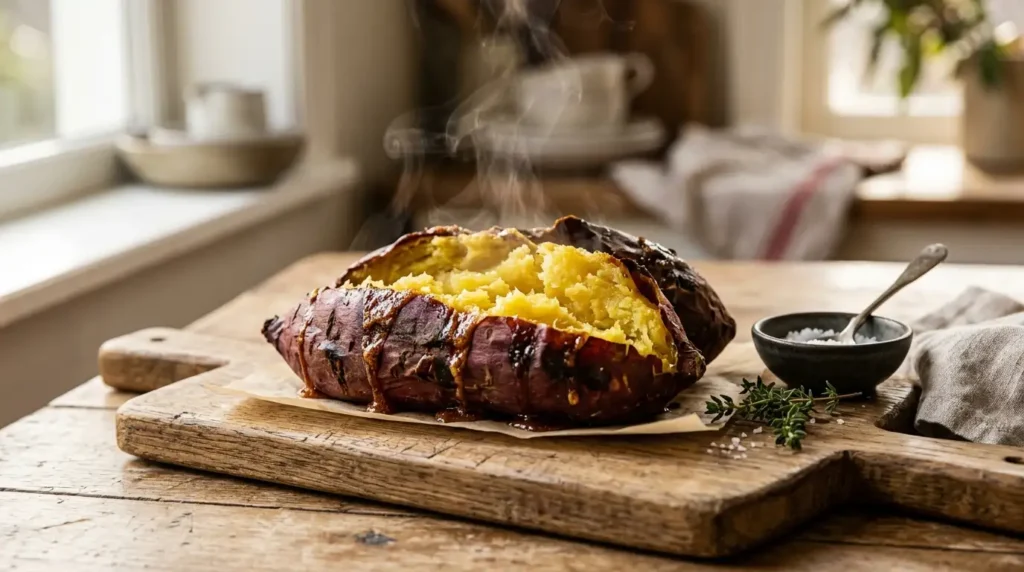
Wrapping in foil traps moisture and gives a softer, more steamed texture, while baking naked produces a drier, slightly crisp skin with caramelized, sticky sugar spots where the flesh peeks through. Both are good. It just depends what you’re after.
How to Cook Japanese Sweet Potato in an Air Fryer or Toaster Oven
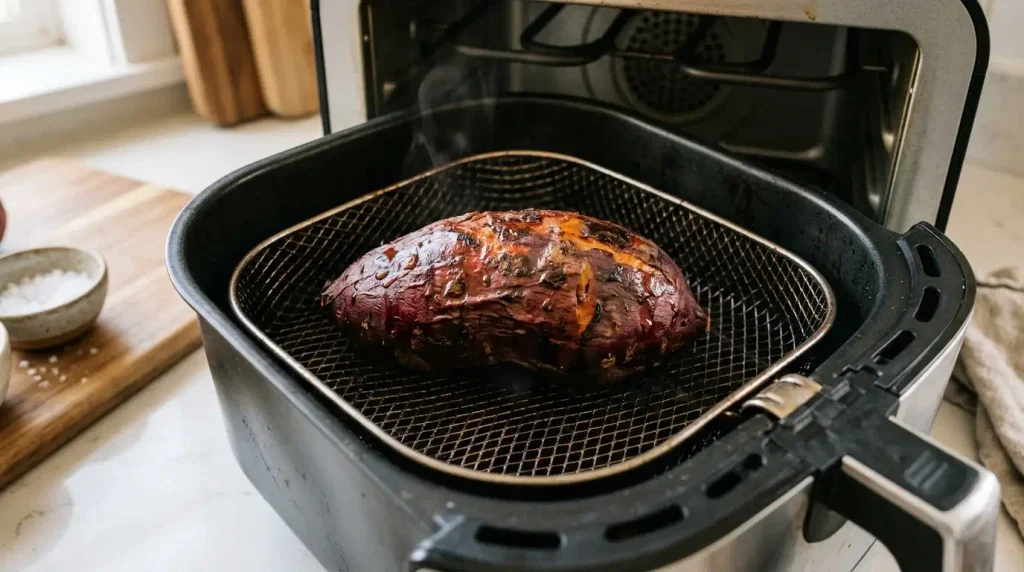
An air fryer or toaster oven is the closest thing to the oven method if your kitchen doesn’t have room for a full-size bake, and it tends to shave off 10 to 15 minutes.
- Preheat to 400°F.
- Wash, dry, and poke holes in the potato as you would for the oven.
- Air fry or toaster-oven bake for 35 to 45 minutes, flipping halfway, until a knife or skewer slides through easily.
- Let it rest for 10 minutes before cutting.
Smaller potatoes cook faster in an air fryer basket since hot air circulates all the way around them, so check for doneness a few minutes early the first time you try it.
How to Cook Japanese Sweet Potato in the Microwave
Microwaving is the fastest way to get a Japanese sweet potato on the table, and it’s genuinely useful on a weeknight, though the texture won’t be quite as sweet or fluffy as a low, slow bake.
- Wash the potato and poke several holes with a fork.
- Wrap it loosely in a damp paper towel, then place it on a microwave-safe plate.
- Microwave on high for 5 minutes, flip it, then microwave for another 4 to 6 minutes, depending on size.
- Check with a fork. If it’s not quite tender, microwave in 1-minute bursts until it is.
- Let it rest for 3 to 5 minutes before serving. It keeps cooking a little from residual heat.
If you like a crisp skin but want the speed of the microwave, finish the potato under a broiler or in a 425°F oven for 5 to 8 minutes after microwaving. It’s a good shortcut when you’re short on time but still want that roasted finish.
How to Cook Japanese Sweet Potato on the Stovetop or by Steaming
If you don’t want to turn on the oven at all, a covered cast iron skillet works surprisingly well.
- Wash the potato and wrap it in foil, or leave it bare for a slightly drier finish.
- Place it in a covered skillet over low heat.
- Cook for about 60 minutes, turning every 15 to 20 minutes so it cooks evenly.
- It’s done when a chopstick slides through with no resistance. Let it rest for 10 minutes off the heat.
Steaming is better suited to recipes than to eating the potato on its own. Chop it into 1-inch chunks, steam over boiling water for 10 to 12 minutes until fork-tender, then use it in mashes, soups, or baked goods. Whole-potato steaming tends to leave the flesh wetter and less flavorful than baking, so save it for dishes where the potato is one ingredient among several.
Tips for Perfect Texture Every Time
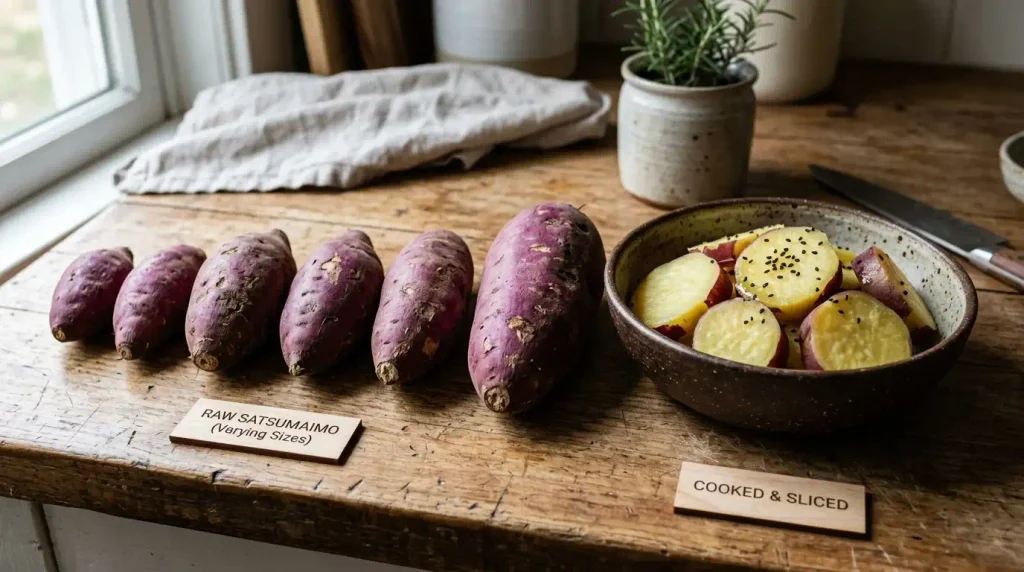
- Choose potatoes in the 8 to 12 ounce range with smooth, unblemished skin. Larger, elongated ones are often more fibrous.
- Don’t skip the resting step. Cutting into a Japanese sweet potato right out of the oven interrupts the process that makes the center creamy instead of gummy.
- Store raw, uncooked potatoes in a cool, dark, dry spot for up to a month, never in the fridge, since cold temperatures affect their texture and flavor.
- Cooked potatoes keep in the refrigerator for up to 5 days, or in the freezer for about 2 months. Thaw at room temperature or reheat in a 350°F oven.
- If your potato comes out earthy instead of sweet, it likely needed a longer, lower-temperature bake, or it wasn’t fully ripe. Japanese sweet potatoes often taste better after a short rest period post-harvest, so a very fresh one can sometimes be less sweet than expected.
Do you need to peel Japanese sweet potatoes before cooking?
No. The skin is thin, edible, and softens completely once cooked. A good scrub under running water is all the prep it needs.
What’s the difference between Japanese sweet potatoes and regular orange sweet potatoes?
Japanese sweet potatoes have purple-red skin and pale flesh that turns golden when cooked, with a drier, starchier, sweeter texture. Orange sweet potatoes stay orange throughout and have a moister, softer bite once baked.
Can you microwave Japanese sweet potatoes?
Yes, and it’s a reliable shortcut on busy nights. Wrap the potato in a damp paper towel, microwave in stages, and finish it under the broiler if you want crisp skin. It won’t be quite as sweet as an oven-baked one, but it’s still good.
How do you know when a Japanese sweet potato is done?
Pierce it with a chopstick or thin knife through the thickest part. It’s ready when there’s little to no resistance and the potato feels soft when gently squeezed with an oven mitt.
Should you wrap Japanese sweet potatoes in foil before baking?
It’s optional. Foil traps steam and gives a softer, moister result, while baking without foil produces a slightly crisp skin with caramelized sugar spots. Both are correct. It’s really a matter of preference.
Once you’ve got a batch cooked, they’re just as good sliced into wedges with a drizzle of tahini, mashed with a little miso and butter, or eaten plain with a pinch of sea salt. Try one method this week, and once you’ve got the timing down for your oven, you’ll probably never look at a regular baked potato the same way again.