
<!– Title (49 chars): Full Sheet Cake Size: Dimensions, Servings & Pans Meta description (154 chars): A full sheet cake size runs about 18×24 to 18×26 inches and feeds 70 to 117 guests, depending on slice size. See dimensions, pan tips, and batter amounts. –>
Full Sheet Cake Size: Dimensions, Servings & Pans
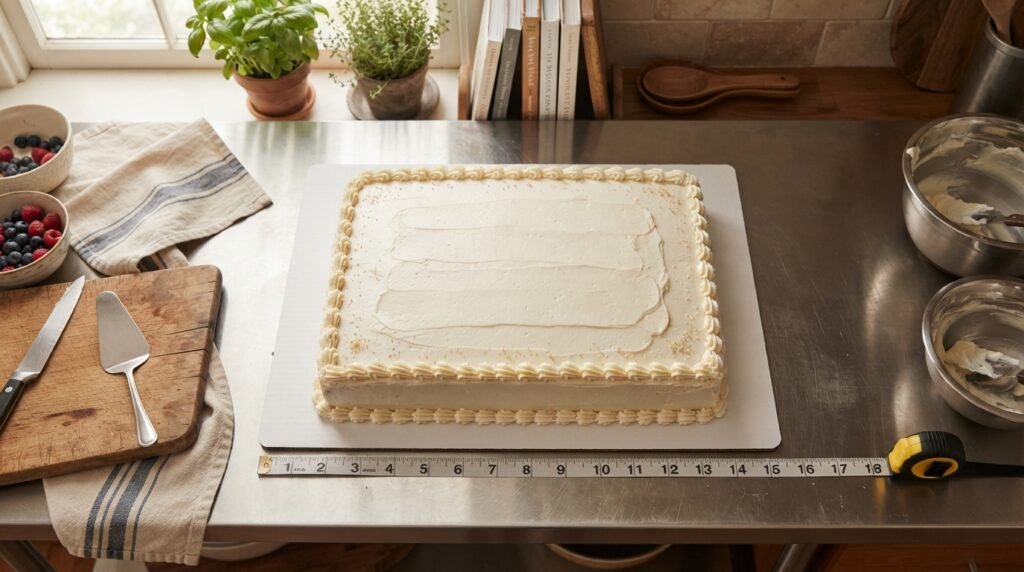
If you’ve ever stood in a bakery aisle trying to figure out what “full sheet” even means, you’re not alone. A full sheet cake size is usually 18 by 24 inches, though some bakeries and commercial pans stretch that to 18 by 26 inches, and it’s the biggest of the three standard sheet cake sizes. I’ve baked more than one of these for graduation parties and church potlucks, and the size question always comes up first, right before “how many people does this actually feed.”
This guide breaks down the real dimensions, how those numbers translate into servings, how much batter you need to fill a pan that big, and which pan to buy if you’re baking one at home instead of ordering from a bakery.
Quick Answer: How Big Is a Full Sheet Cake?
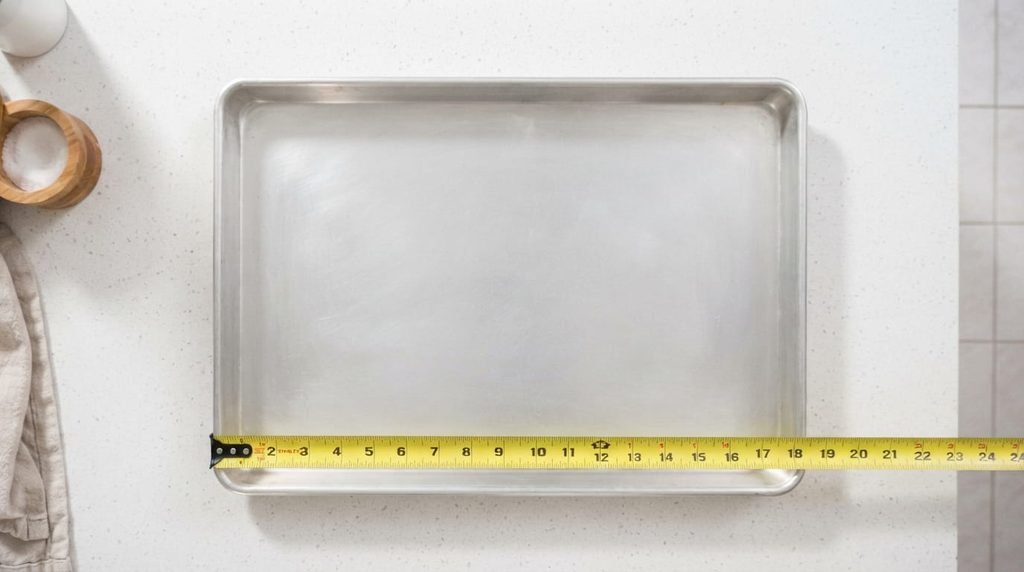
A full sheet cake measures 18 x 24 inches at most bakeries, with some commercial pans running closer to 18 x 26 inches. It’s typically 2 to 3 inches deep and serves anywhere from 70 to over 100 people, depending on how small you slice it. If you’re baking at home, know that a true full sheet pan is too large for a standard home oven, so most home bakers scale down to a half sheet instead.
Full Sheet Cake Size in Inches (Standard Dimensions)
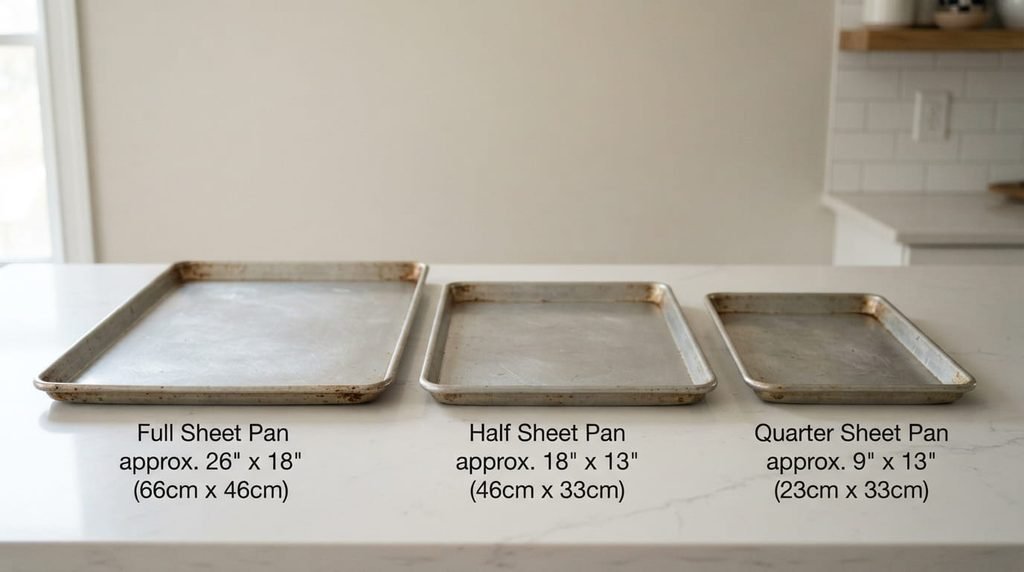
There’s no single industry standard for sheet cake sizes since pans vary by manufacturer and bakery, but a full sheet cake size generally falls into one of these ranges:
- Length: 16″ to 18″
- Width: 24″ to 26″
- Height: 2″ to 3″
The two dimensions you’ll see most often quoted are 18 x 24 inches and 18 x 26 inches. Commercial bakery supply pans, the kind used in restaurant and hotel kitchens, tend to run 18 x 26 inches, which is also the standard size of a full sheet baking pan used for cookies and roasting. Grocery store and neighborhood bakeries often use the slightly smaller 18 x 24 inch version. Either way, when someone asks for a “full sheet,” this is the ballpark they mean.
Height matters too, and it’s easy to overlook. A thin, single-layer sheet cake might only be an inch tall, while a filled, two-layer version can reach 3 to 4 inches once it’s frosted. That height changes how much batter and frosting you need, which I’ll get into below.
Full Sheet vs. Half Sheet vs. Quarter Sheet Cake Size
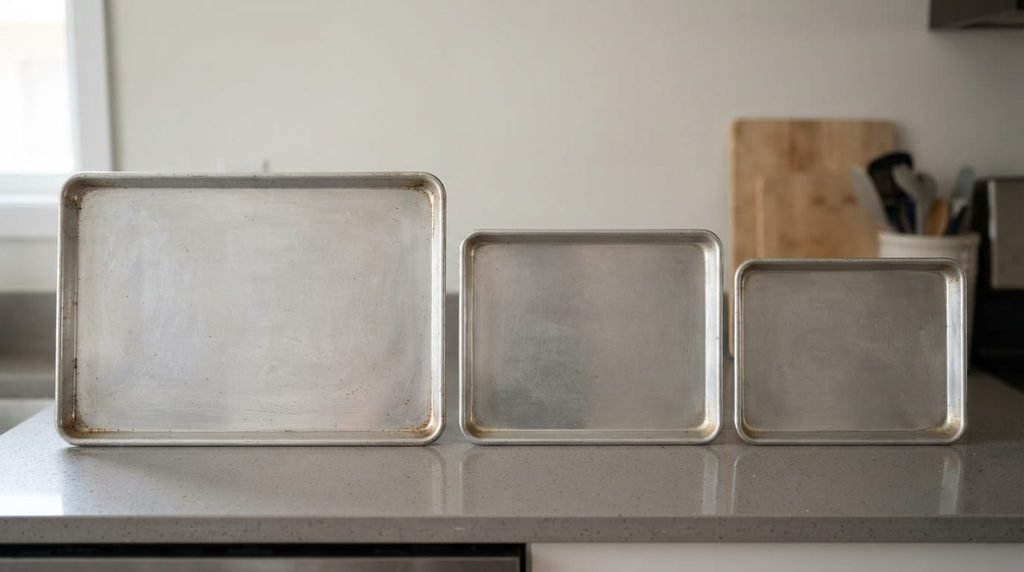
Sheet cakes scale down from the full sheet in predictable fractions, which makes ordering (or baking) easier once you know the pattern.
- Full sheet cake: 18″ x 24″ to 18″ x 26″
- Half sheet cake: 12″ x 18″ to 13″ x 18″
- Quarter sheet cake: 9″ x 13″ to 9″ x 12″
A half sheet is exactly what it sounds like, half the size of a full sheet, and it’s the size most home bakers actually use since it fits in a standard oven. A quarter sheet is half of that again. If you’re comparing pans before buying, look for ones with matching dimensions (like an 18″ full sheet paired with a 9″ x 18″ half sheet) so the math for scaling a recipe up or down stays simple.
How Many People Does a Full Sheet Cake Feed?
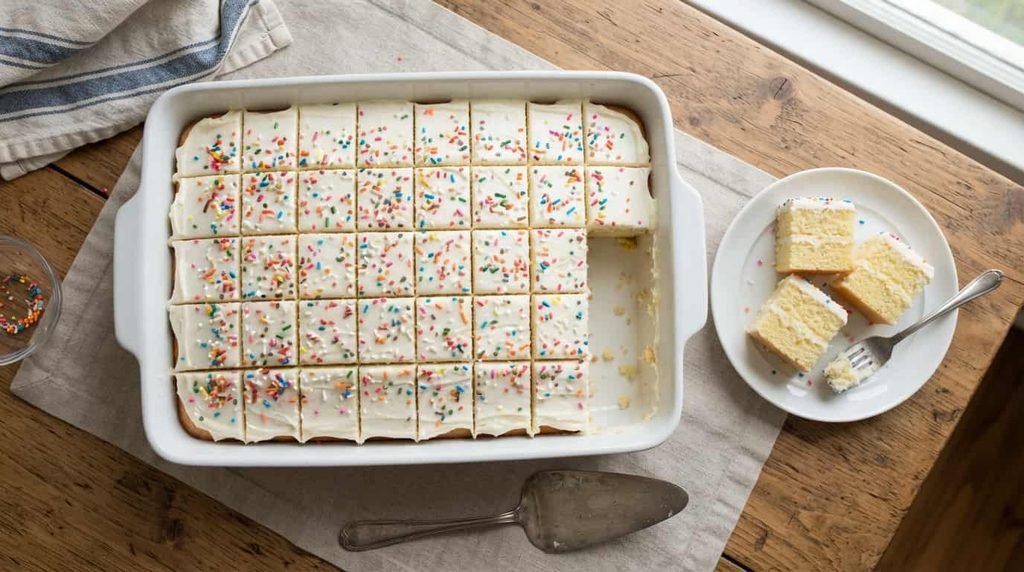
This is the question that actually drives most full sheet cake size searches, since the dimensions only matter if you know how many guests they’ll cover. The answer depends entirely on how you cut it.
Using the standard servings formula (pan area divided by slice area), an 18 x 24 inch full sheet cake works out to roughly:
- 2″ x 2″ party slices: about 108 servings
- 2″ x 3″ larger slices: about 72 servings
- 1″ x 2″ wedding-style slices: over 100 servings
For an 18 x 26 inch pan, those numbers climb slightly higher, up to around 117 servings at the smallest slice size. Most bakeries land somewhere in the middle and quote a full sheet cake as feeding 70 to 96 people, which is a safe range to plan around for a wedding, graduation, or office party.
A two-layer, filled full sheet cake generally gets cut into smaller slices than a single-layer one, since the extra height means each piece is more filling. If it’s the only dessert at the event, plan for the smaller 2″ x 2″ slice count. If it’s sharing a table with cookies, cupcakes, or a smaller display cake, the larger 2″ x 3″ count is usually plenty.
How Much Batter Do You Need for a Full Sheet Cake?
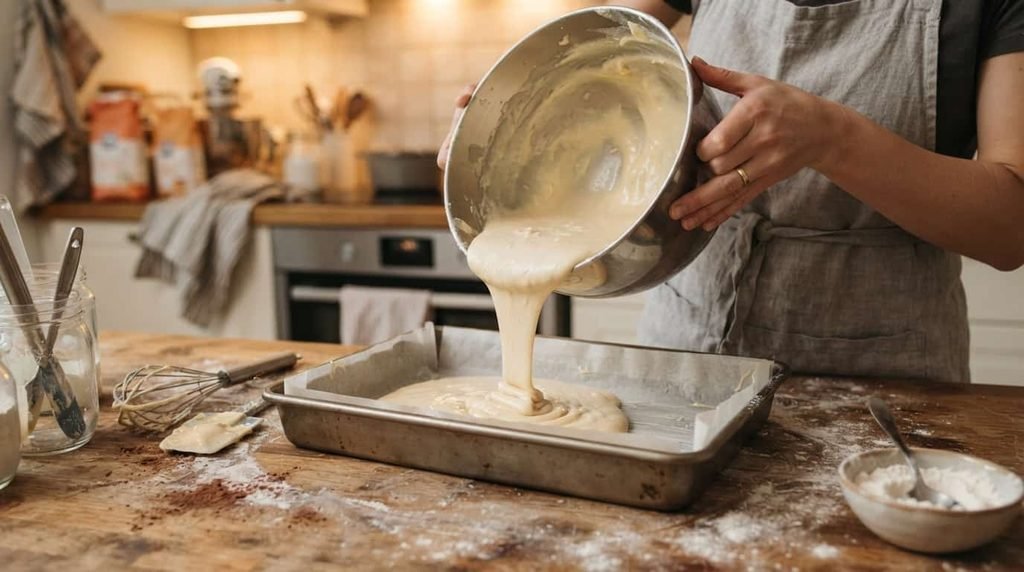
Once you know your full sheet cake size, figuring out batter is just math. For an 18 x 24 inch pan filled to a 2 inch depth, you’ll need roughly 16 to 20 cups of batter for a single layer, or double that for a two-layer cake. An 18 x 26 inch pan needs slightly more, closer to 20 to 24 cups per layer.
If your favorite cake recipe makes about 10 cups of batter (a common yield for a standard layer cake), you’ll need to make it about twice for a single full sheet layer, or four times for a two-layer version. It’s worth baking a test batch first, since recipes with more rise, like sponge cakes, fill a pan differently than a dense butter cake.
A few things that make a full sheet cake easier to pull off at home:
- Use a sheet pan extender if your pan is shallower than 2 inches, so the batter has room to rise without overflowing.
- Set flower nails or heating cores in the center of the pan so the middle bakes as evenly as the edges, since a pan this large is prone to a raw center and overbaked corners.
- Line the pan with parchment paper rather than just greasing it. A cake this size and weight is much easier to lift out cleanly with parchment to grab onto.
Choosing the Right Full Sheet Cake Pan
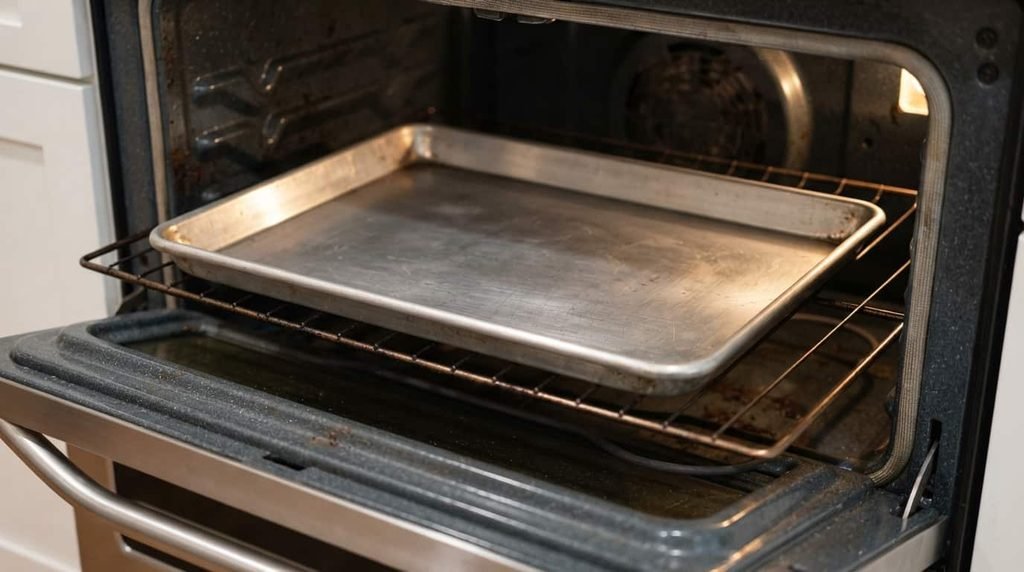
Here’s the part that surprises a lot of home bakers: a true full sheet pan, at 18 x 26 inches, doesn’t fit in most residential ovens. Standard home ovens are built around the half sheet pan (13″ x 18″), which is why that size shows up so often in home baking recipes even when a recipe calls for a “full sheet.”
If you genuinely need a full sheet cake, you have a few options:
- Order it from a bakery with commercial oven capacity, which is the simplest route for weddings and large events.
- Bake two half sheet cakes and place them side by side on a large cake board or drum, filling and frosting the seam so it reads as one continuous cake.
- Check your oven’s interior dimensions before buying a full sheet pan. Some wall ovens and commercial-style ranges can fit an 18 x 24 inch pan even if a standard 30 inch range can’t.
Whichever pan size you land on, buy one with straight sides and a light-colored, heavy-gauge aluminum finish. Dark or thin pans conduct heat unevenly across a surface this large, which is exactly what leads to dry edges and an underbaked middle.
Frequently Asked Questions
What is the standard size of a full sheet cake?
The standard full sheet cake size is 18 x 24 inches, though some commercial bakeries and pan manufacturers use 18 x 26 inches instead. Depth typically runs 2 to 3 inches. There’s no single official standard, so it’s worth confirming dimensions when ordering from a specific bakery.
How many does a full sheet cake feed?
A full sheet cake typically feeds 70 to 96 people when cut into standard 2″ x 2″ or 2″ x 3″ party slices. Cutting smaller, wedding-style 1″ x 2″ slices can stretch that to over 100 servings, while larger dessert-style slices will feed closer to 50 to 60.
Can I bake a full sheet cake in a regular home oven?
Most home ovens can’t fit a true 18 x 26 inch full sheet pan, which is sized for commercial kitchens. Home bakers typically use a half sheet pan (13″ x 18″) instead, or bake two half sheets and join them into one cake for full sheet coverage.
What’s the difference between a full sheet and half sheet cake?
A half sheet cake is exactly half the size of a full sheet, running about 12″ x 18″ to 13″ x 18″ compared to the full sheet’s 18″ x 24″ to 18″ x 26″. A half sheet feeds roughly 36 to 54 people, making it the more practical choice for home kitchens and mid-size gatherings.
If you’re planning a big celebration and trying to decide between ordering a full sheet cake or baking your own half sheets at home, hopefully these numbers take the guesswork out of it. Measure your oven, pick your slice size, and you’ll know exactly what you’re working with before you preheat.

Pingback: 8 Inch Round Cake Guide: Servings, Batter & Bake Time
Pingback: Monster Truck Birthday Cake: Ideas Anyone Can Pull Off