How Long to Pan Fry Salmon (So It’s Flaky, Not Rubbery)
Meta description: How long to pan fry salmon for perfectly flaky results: 4-6 minutes per side, plus timing by thickness, skin-on vs skinless. (164 chars)
The exact answer to how long to pan fry salmon is 4 to 6 minutes per side over medium-high heat, for a fillet that’s about an inch thick. That’s roughly 8 to 12 minutes total, and it gets you a fillet that’s golden and crisp on the outside and just barely opaque in the center. I’ve burned my fair share of salmon rushing this on a weeknight, and the fix was almost never the recipe. It was the pan not being hot enough, or me flipping too soon.
Salmon is one of those proteins that punishes impatience and rewards a little bit of trust. Once you know the timing and what to look for, you’ll stop guessing and start plating salmon that looks like it came from a restaurant kitchen instead of a rushed Tuesday dinner.
Quick Answer: How Long to Pan Fry Salmon
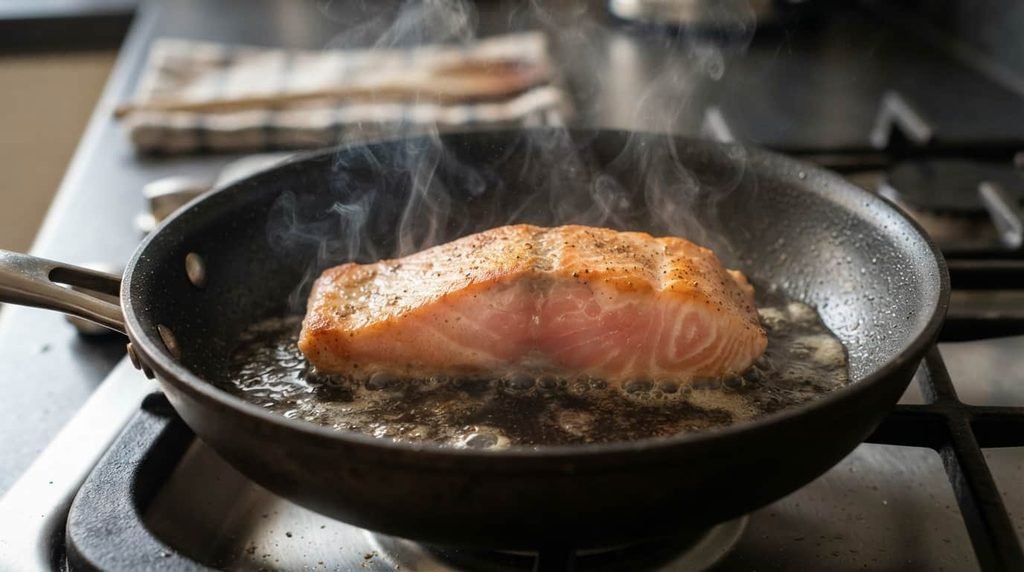
For a standard 1-inch thick fillet, cook it 4 to 6 minutes on the first side and 3 to 4 minutes on the second side over medium-high heat. That’s the number to remember if you’re mid-recipe and just need the timing. Thinner fillets need less time on each side, thicker ones need a bit more, and the internal temperature (not the clock) is what actually tells you it’s done.
What You’ll Need
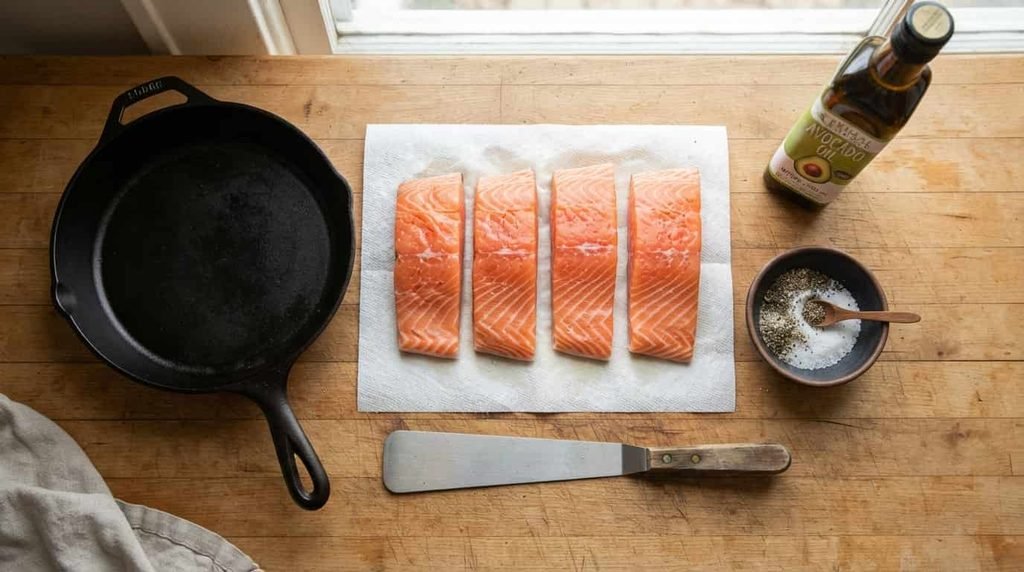
- Salmon fillets, about 1 inch thick, patted completely dry
- A high smoke point oil (avocado, canola, or vegetable oil work better than olive oil here)
- Salt and pepper
- A nonstick or well-seasoned cast iron skillet
- A thin fish spatula
- An instant-read thermometer, if you have one
Patting the fillets dry matters more than people expect. Any surface moisture steams instead of sears, and a steamed piece of salmon will never get that golden crust, no matter how long you leave it in the pan.
Step-by-Step: How to Pan Fry Salmon
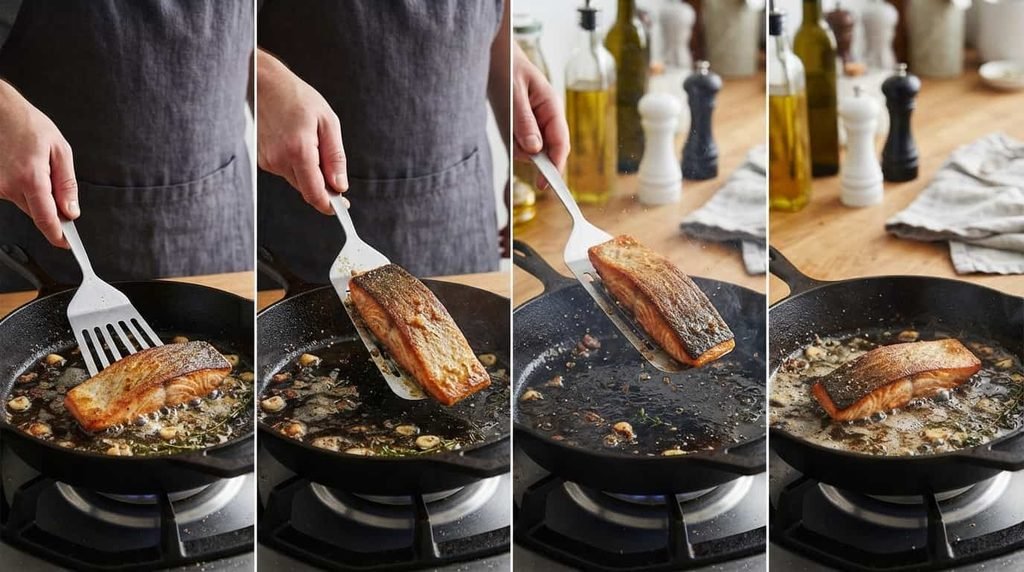
- Bring the salmon to room temperature. Let it sit out for about 10 to 15 minutes before cooking. Cold fish hitting a hot pan cooks unevenly, firm on the outside, still cold in the middle.
- Season generously. Salt and pepper on both sides, right before cooking, not earlier. Salting too far ahead pulls moisture out and works against a crisp exterior.
- Heat the oil until it shimmers. Medium-high heat, enough oil to coat the pan. If it’s not hot enough, the salmon will stick and you’ll tear the skin trying to flip it.
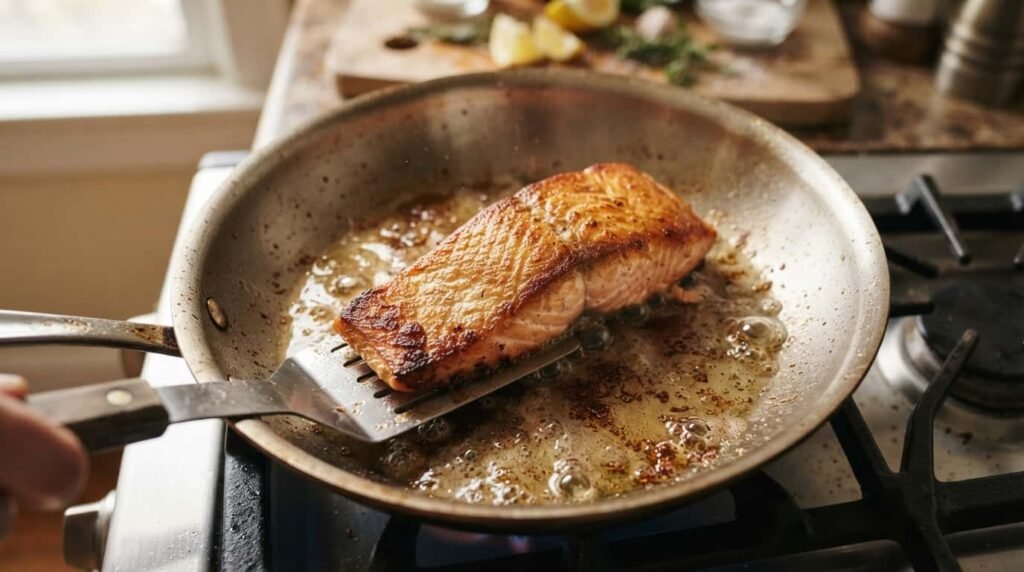
- Place the salmon skin-side down (or presentation-side down if skinless). Don’t touch it for the first several minutes. This is the step most people rush, and it’s the one that determines whether you get a real crust.
- Cook 4 to 6 minutes on the first side. Watch the edges. You’ll see the color change from translucent to opaque, creeping up the side of the fillet. Once it’s about two-thirds of the way up, it’s ready to flip.
- Flip once, using a thin spatula. If the fish resists or sticks, give it another 30 to 60 seconds. Properly seared salmon releases from the pan on its own.
- Cook 3 to 4 minutes on the second side, until the fish reaches your desired doneness.
- Check the temperature and let it rest. Pull it a few degrees before your target, since it keeps cooking briefly off the heat.
Pan Fry Salmon Timing by Thickness
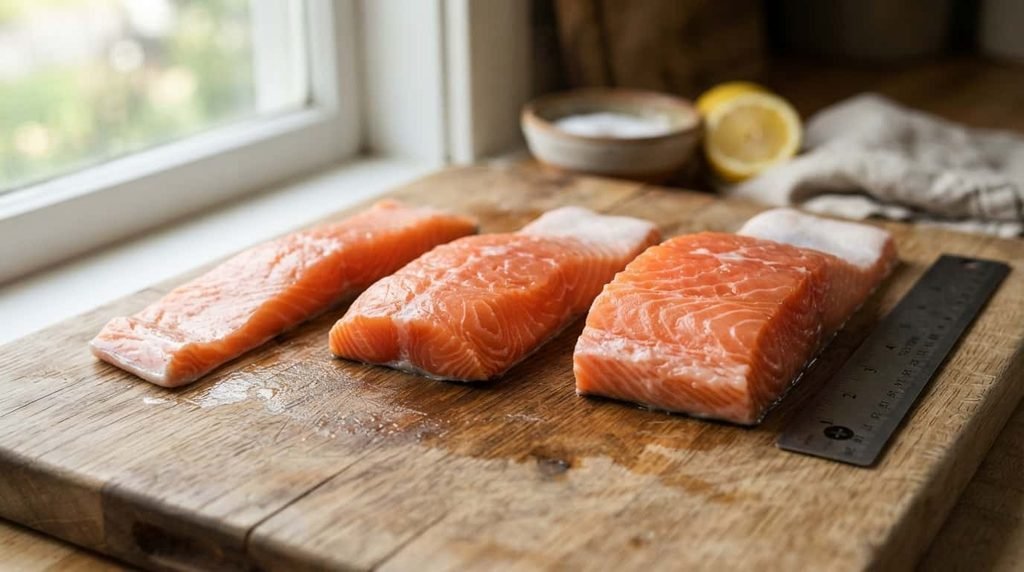
Not every fillet is the same size, and that’s the biggest reason two people can follow the same recipe and get different results.
- Thin fillets (under 3/4 inch): 2 to 3 minutes per side
- Standard fillets (about 1 inch): 4 to 6 minutes on the first side, 3 to 4 minutes on the second
- Thick fillets (1.5 inches or more): 6 to 8 minutes on the first side, 4 to 6 minutes on the second, and consider lowering the heat slightly partway through so the outside doesn’t overcook before the center catches up
If your fillets are wildly different in thickness, either cut them down to size before cooking or start checking the thinner ones first so they don’t overcook while you wait on the thicker pieces. Center-cut fillets are worth seeking out at the fish counter for this exact reason. The tail end of a whole side of salmon tapers to almost nothing, while the center holds a consistent thickness, so a center-cut piece cooks evenly from edge to edge instead of finishing thin sections while the middle is still underdone.
How to Know When Pan Fried Salmon Is Done
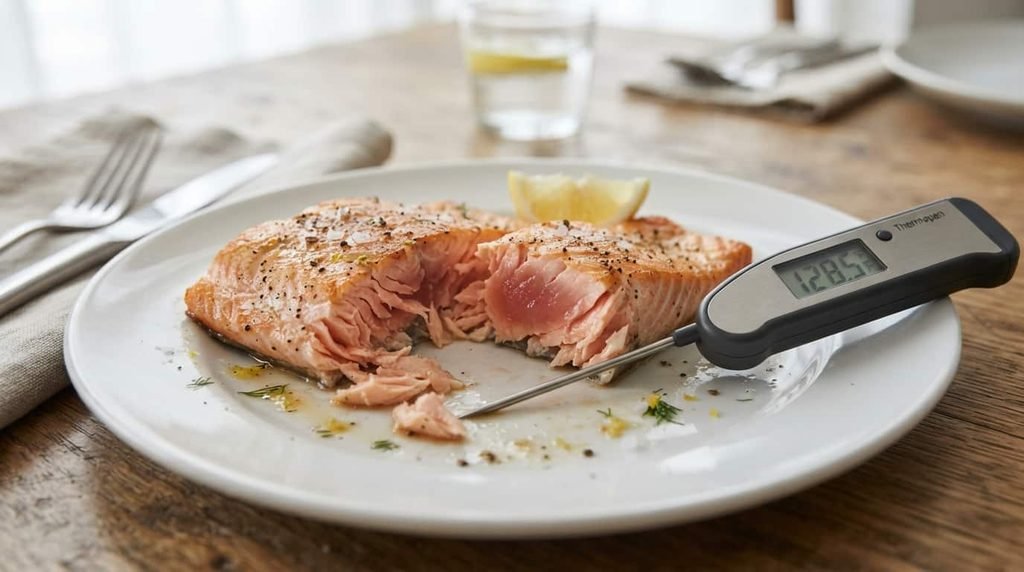
The clock gets you close, but doneness is really about temperature and texture, not minutes.
The USDA’s official recommendation is an internal temperature of 145°F, checked at the thickest part of the fillet. That’s a fully cooked, well-done piece of fish. In my own kitchen, I usually pull mine closer to 125 to 130°F for a medium doneness that’s still tender and holds together, which is how a lot of professional kitchens serve it too. If you’re cooking for someone pregnant, very young, or immunocompromised, stick with the full 145°F.
No thermometer handy? Use these cues instead:
- The flesh turns from translucent to opaque, moving from the outside in
- It flakes easily when you press it gently with a fork
- It releases from the pan on its own without sticking
If it’s still translucent and glassy in the very center, give it another minute and check again rather than guessing.
Skin-On vs. Skinless: Does It Change the Timing?
Skin-on salmon and skinless salmon cook at roughly the same speed, but the order of operations is different. With skin on, you cook it skin-side down first, letting the skin render and crisp for the majority of the cooking time, then flip briefly to finish the flesh side. That crispy skin is genuinely one of the best parts of pan frying salmon, so don’t skip it if your fillets have it.
With skinless fillets, it doesn’t matter which side goes down first. Just watch for the same visual cue: cook until the color has changed about two-thirds of the way up the fillet before flipping.
Common Mistakes That Ruin Pan Fried Salmon
- Flipping too early. If the salmon doesn’t release easily, it’s not ready. Forcing it tears the crust and leaves half the fish stuck to the pan.
- Overcrowding the pan. Fillets too close together steam each other instead of searing. Cook in batches if you need to.
- Using olive oil at high heat. It has a lower smoke point and will burn before the pan gets hot enough to sear properly. Save it for finishing, not searing.
- Skipping the pat-dry step. Wet fish equals steamed fish equals no crust, no matter how long it’s in the pan.
- Cooking straight from the fridge. Letting the fillet come to room temperature first helps it cook evenly all the way through.
Frequently Asked Questions
How long do you pan fry salmon without flipping it?
You do need to flip it once for even cooking and a crust on both sides. Cook it 4 to 6 minutes undisturbed on the first side, then flip and finish for another 3 to 4 minutes. Leaving it on one side the whole time tends to overcook the bottom before the top catches up.
Can you pan fry salmon from frozen?
It’s better to thaw it first, ideally overnight in the fridge, so it cooks evenly and gets a proper sear. Cooking from frozen usually means a longer cook time and a much harder time getting that golden crust, since the surface stays wet longer.
Why does my pan fried salmon stick to the pan?
Usually one of two reasons: the pan wasn’t hot enough before the fish went in, or you tried to flip it before a crust had formed. A properly seared piece of salmon releases from a hot, well-oiled pan on its own.
What oil is best for pan frying salmon?
A high smoke point oil like avocado, canola, or vegetable oil. They can handle medium-high heat without burning, which is exactly what you need for a good sear. Extra virgin olive oil tends to smoke and turn bitter at the temperatures pan frying calls for.
Do you need to cover the pan while cooking salmon?
No, and you generally shouldn’t. Covering the pan traps steam, which softens the crust you’re trying to build. Leave it uncovered so the surface stays dry and crisp.
Do I need to flip skin-on salmon, or can I finish it in the oven?
You can do either. Flipping it on the stovetop for a few extra minutes gives you a browned flesh side too, while finishing skin-side down under the broiler or in a hot oven keeps the crust intact and lets the heat gently cook the top through. Both methods land you around the same total cook time, so it mostly comes down to whether you want color on both sides of the fillet.
Once you’ve got the timing down, pan frying salmon becomes one of those dinners you can throw together without a recipe in front of you. Pair it with something simple, roasted potatoes, a quick salad, or steamed vegetables, and you’ve got a meal that tastes far more impressive than the ten minutes it actually took.