

Cost to Install Septic Tank and Leach Field
The cost to install septic tank and leach field typically runs $5,000 to $20,000 for a full residential system, with most homeowners landing somewhere around $8,000 to $12,000. If your property has been approved for city sewer but you’re stuck with well water and no municipal line nearby, a septic system is the only real option, and getting the budget right up front saves a lot of stress later. This guide breaks down what actually drives that price up or down, from tank size to soil conditions, so you can walk into quotes knowing what’s reasonable.
What Does Septic Tank and Leach Field Cost?
A complete septic tank and leach field installation costs $5,000 to $20,000 on average, with a national midpoint near $8,000 to $9,000 for a standard three- or four-bedroom home. The tank itself is usually the smaller expense, often $1,000 to $2,500, while the leach field, excavation, and labor make up the bulk of the bill. Properties with poor soil, high water tables, or steep grades can push total costs past $25,000 because they require an engineered or mound system instead of a conventional gravity-fed setup.
Average Cost to Install Septic Tank and Leach Field
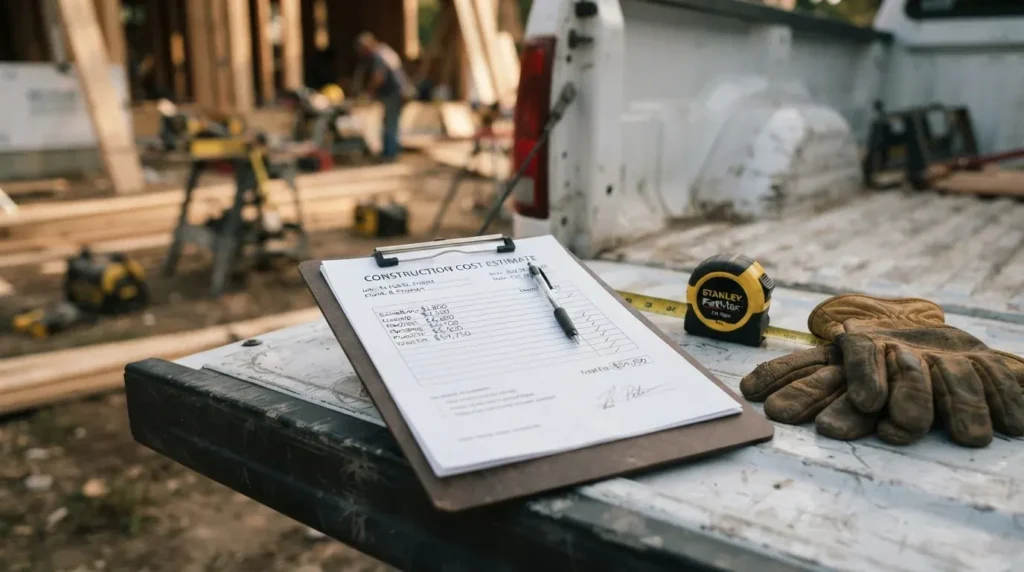
Most quotes fall into a few clear tiers depending on system type:
- Conventional (anaerobic) system: $3,500 to $8,500 installed
- Alternative system (chambered, drip distribution, constructed wetland): $4,000 to $15,000
- Engineered system (aerobic treatment unit, mound, or sand filter): $15,000 to $50,000+
Labor typically accounts for 50% to 70% of the total bill, which surprises a lot of first-time homeowners who assume the tank itself is the big-ticket item. In reality, the tank might cost $900 to $2,500 depending on material, while excavation, pipe laying, and the leach field construction eat up the rest.
Regional pricing matters too. Areas with rocky or clay-heavy soil, or states with stricter environmental permitting, tend to run 15% to 25% above the national average. If you’re getting quotes, ask whether the number includes permits and percolation testing, since some contractors quote those separately.
Septic Tank Cost by Size and Material
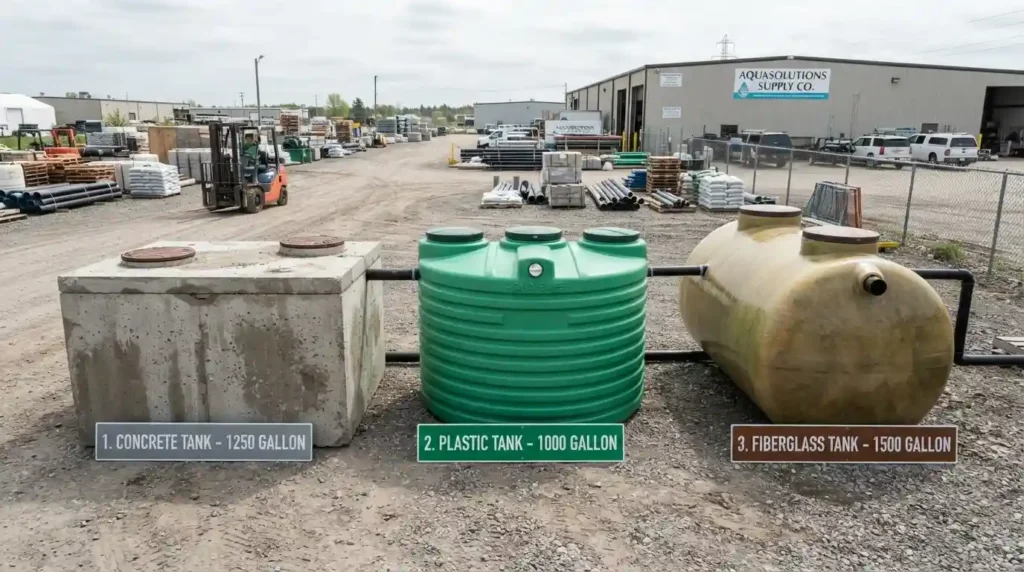
Tank size is based on the number of bedrooms in the home, not bathrooms, since bedroom count is a better proxy for how much wastewater a household actually produces.
| Tank Size (gallons) | Typical Home Size | Average Tank Cost |
|---|---|---|
| 750 | 1–2 bedrooms | $700 – $1,200 |
| 1,000 | 3 bedrooms | $1,000 – $1,500 |
| 1,250 | 4 bedrooms | $1,200 – $1,800 |
| 1,500 | 5 bedrooms | $1,500 – $2,500 |
| 1,750+ | 6+ bedrooms | $2,000 – $3,000 |
Material choice changes the price and the maintenance profile:
- Concrete ($1,000–$3,000): the most common option, durable for decades, but heavy and costly to transport.
- Plastic/polyethylene ($700–$2,500): lightweight and easy to install, though it can shift or float in high water tables.
- Fiberglass ($1,400–$2,000): a middle ground on price and strength, watertight, but also vulnerable to buoyancy issues near groundwater.
A licensed installer will usually steer you toward the material that fits your soil and water table rather than the cheapest option, and that guidance is worth listening to. A tank that floats out of the ground after a wet season costs far more to fix than the difference between materials up front.
Leach Field (Drain Field) Installation Cost
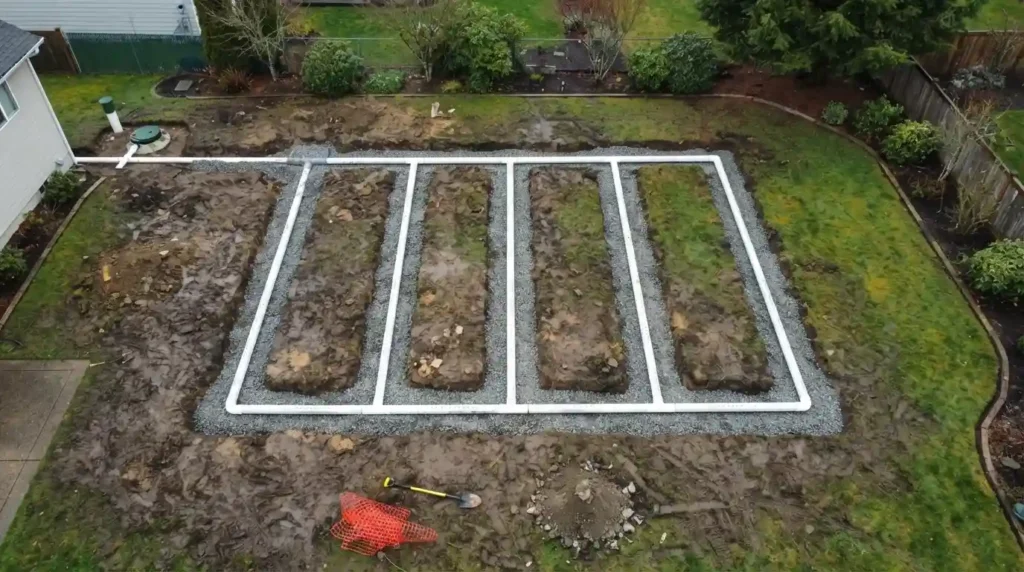
The leach field, also called a drain field, is where the real cost variability shows up. Expect to pay $3,000 to $15,000 for a new leach field, depending on size, soil type, and slope. A few specific system types carry their own price ranges:
- Anaerobic drain field: the standard gravity-fed setup, generally the cheapest option
- Mound system: elevated and sand-filled, $25,000 to $50,000+, needed when there’s only a foot or two of usable native soil
- Evapotranspiration system: $10,000 to $15,000, common in arid climates where wastewater evaporates rather than seeping into groundwater
- Drip distribution system: $6,500 to $15,000, useful for uneven terrain since it distributes wastewater evenly through emitters
Soil quality drives most of this. A percolation test, which measures how quickly water absorbs into the ground, costs $600 to $2,000 and is required before any leach field design gets approved. Sandy, well-draining soil keeps costs on the lower end. Heavy clay or rocky ground often forces an upgrade to an alternative system, which is where a $6,000 estimate can quietly become $18,000.
What Affects the Total Cost of a Septic System
Several factors combine to determine where your project lands in that $5,000 to $20,000 range:
- Household size – More bedrooms mean a bigger tank and larger leach field.
- Soil conditions – Poor drainage or high water tables often require an engineered system.
- Site accessibility – A yard that’s hard for excavation equipment to reach adds labor hours.
- Local permitting rules – Some counties require engineer-stamped designs, which adds $1,000 to $5,000.
- Tree and landscaping removal – Removing a mature tree near the planned leach field runs $400 to $1,200.
- Distance from the house – Longer pipe runs from the home to the tank and field increase materials and labor.
Homeowners who’ve been through a full septic install often say the surprise wasn’t the tank price; it was the site prep. Grading a sloped yard, rerouting a downspout, or dealing with unexpected bedrock can add thousands that never show up in the initial estimate.
Conventional vs. Aerobic vs. Engineered Systems: Cost Comparison
Choosing a system type is really a trade-off between upfront cost and how much your land can handle naturally.
Conventional anaerobic systems rely on gravity and bacteria to break down waste, cost $3,500 to $8,500, and work well on properties with decent soil and enough space. Aerobic treatment units pump oxygen into the tank to speed up decomposition, which lets them work on smaller lots or poorer soil, but they cost $10,000 to $40,000 and typically require an annual service contract plus more frequent inspections. Engineered systems, including mound and recirculating sand filter setups, run $15,000 to $50,000 or more and are reserved for properties where a standard leach field simply isn’t viable, such as shallow bedrock or a high water table.
If your soil test comes back favorable, there’s rarely a reason to pay for anything beyond a conventional system. It’s the properties that fail percolation testing where costs escalate fast, and in those cases, getting quotes from at least two septic designers is worth the extra week it takes.
Permits, Percolation Tests, and Other Hidden Costs
Budgeting for the tank and field alone will leave you short. Plan for these additional line items:
- Percolation/soil test: $600 to $2,000
- Building permit: $250 to $450
- Drain field permit: $250 to $650
- Engineering/design fees (required in many counties for alternative systems): $1,000 to $5,000
- Inspections: $150 to $450
- Old system abandonment permit (if replacing an existing system): $100 to $250
Altogether, permits, testing, and inspections commonly add $1,000 to $2,000 to a straightforward installation, and more if your county requires an engineer’s stamp. It’s worth calling your local health department before getting quotes, since septic regulations vary significantly by county and even by well proximity within the same county.
How to Save Money Without Cutting Corners
A few practical ways homeowners keep costs reasonable without risking a failed system down the line:
- Get at least three quotes, and make sure each one itemizes tank, leach field, labor, and permits separately so you’re comparing apples to apples.
- Time the project outside peak season. Spring and early summer are the busiest months for septic installers in most regions, and prices often soften in fall.
- Choose a plastic or fiberglass tank where soil conditions allow, since they cost less than concrete without sacrificing much lifespan.
- Avoid oversizing. A tank sized for eight bedrooms when you have four adds unnecessary cost with no real benefit.
- Maintain what you have. Regular pumping every three to five years, at $300 to $700 a visit, is far cheaper than a premature full replacement.
Planning Your Septic Budget
A septic tank and leach field is one of those projects where the quote you get in month one can look very different from what you actually pay by the time permits, testing, and site prep are factored in. Building in a 15% to 20% buffer above your initial estimate is a smart habit, especially if your property hasn’t had a percolation test yet. Once the system is in the ground, the real savings come from maintenance, not shortcuts, so budget for regular pumping from day one and the system should serve the house reliably for decades.
How long does a septic tank and leach field last?
A well-maintained concrete septic tank typically lasts 20 to 30 years, while the leach field usually needs replacement or rejuvenation somewhere between 15 and 25 years, depending on soil conditions and usage. Regular pumping and avoiding heavy vehicle traffic over the field both extend that lifespan.
Can I install a septic tank myself to save money?
Technically yes in some jurisdictions, but most counties require a licensed installer and a permitted design, and DIY mistakes can mean groundwater contamination or a failed inspection that costs more to fix than hiring a pro from the start. A motivated homeowner might shave $3,000 to $7,000 off labor, but the risk of getting the slope, depth, or distribution wrong is real.
How do I know if my yard needs a special leach field system?
A percolation test will tell you. If your soil drains too slowly, sits over bedrock, or has a high water table, your installer will recommend an alternative or engineered system such as a mound or aerobic setup instead of a standard gravity-fed field.
How often should a leach field be replaced?
Most leach fields last 15 to 25 years before needing replacement, though signs like soggy patches in the yard, sewage odors, or slow drains can signal trouble much earlier. Full leach field replacement costs $3,000 to $15,000, while smaller repairs run $1,000 to $5,000.