
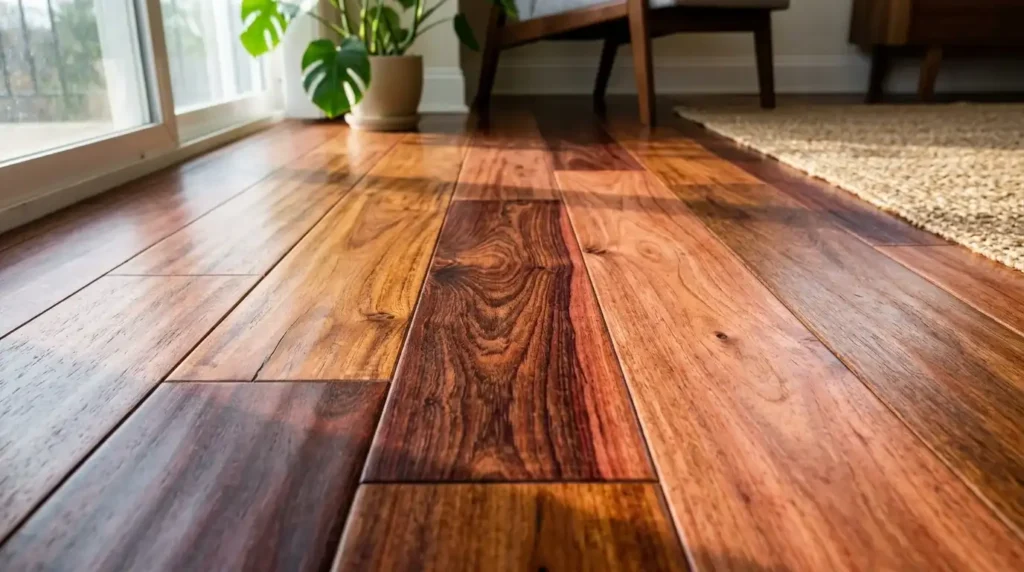
Brazilian Cherry Hardwood Flooring: What to Know Before You Buy
Brazilian cherry hardwood flooring is one of the boldest ways to warm up a home, but it isn’t a floor you pick on looks alone. Also sold as Jatoba, this exotic hardwood is prized for its deep red-brown color and its reputation as one of the hardest woods you can walk on. Before you sign off on square footage, it helps to know how it performs, what it costs installed, and where in the house it actually belongs.
What Is Brazilian Cherry Hardwood Flooring?
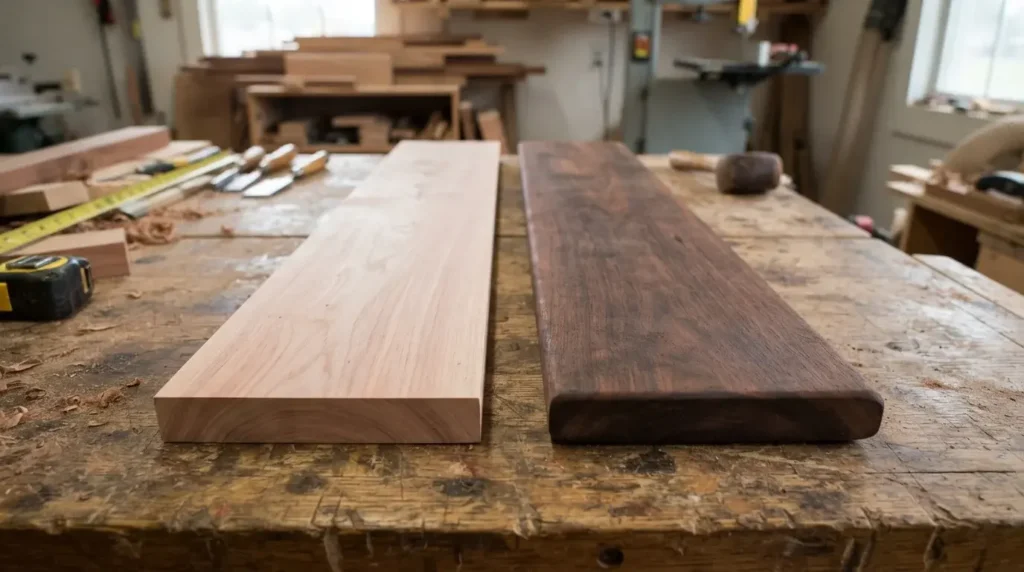
Brazilian cherry, botanically known as Jatoba, is a dense South American hardwood used for solid and engineered flooring. It starts out pale pink or salmon when milled, then darkens over months of light exposure into a rich red-brown. Its main draw is hardness and color depth; its main tradeoffs are that darkening and a premium price tag.
The wood goes by several names depending on where you’re shopping: Jatoba, courbaril, and South American cherry all point to the same species. It has no botanical relation to American cherry, which is a much softer domestic wood. That naming overlap trips up a lot of first-time buyers, so when you’re comparing quotes, ask the retailer to confirm the species is genuinely Hymenaea courbaril rather than a look-alike stain on a cheaper wood.
Freshly milled boards look surprisingly light, almost tan or salmon-colored. That’s temporary. Within the first year, exposure to ordinary daylight triggers a natural chemical change in the wood’s compounds, and the floor deepens into the burgundy and reddish-brown tones most people picture when they hear “Brazilian cherry.” This is normal, expected, and part of why the species has such a devoted following among people who want a floor that looks more dramatic every year, not less.
Brazilian Cherry Hardwood Flooring Pros and Cons
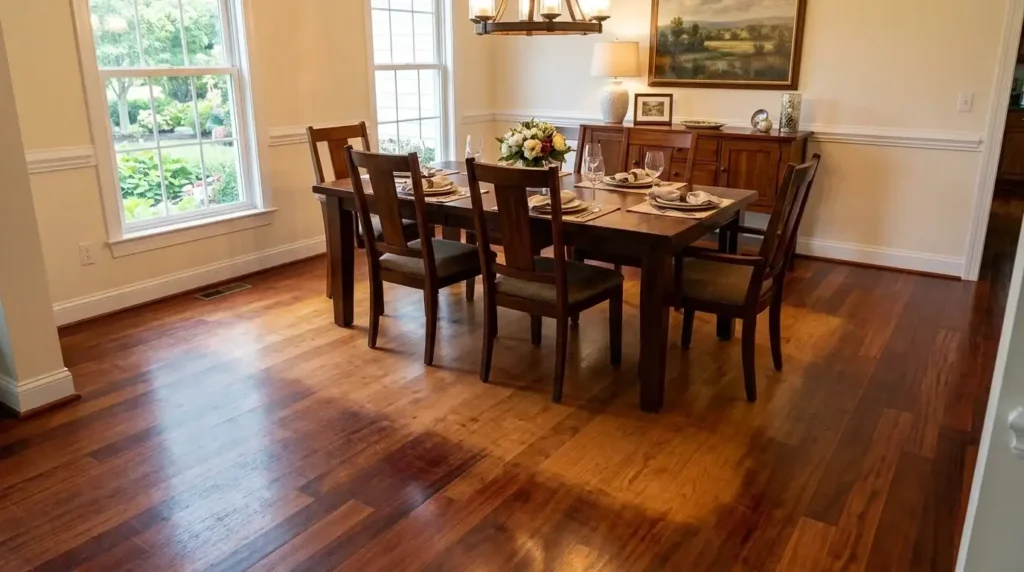
Every exotic species is a tradeoff, and Brazilian cherry hardwood flooring is a particularly clear example of that. Here’s how the advantages and drawbacks actually break down in a real home.
The upside:
- Exceptional hardness. Janka hardness ratings for Brazilian cherry typically land somewhere between 2,350 and 3,500, depending on the source and grade, which puts it well above red oak’s roughly 1,290 rating. That translates into strong resistance to dents, dings, and the wear that comes from kids, dogs, and dining chairs.
- Striking, evolving color. Few domestic woods produce the same layered mix of cream, salmon, burgundy, and deep red found in a single plank. Because the tones vary board to board, it’s forgiving of scratches and pairs naturally with a wide range of cabinetry and furniture finishes.
- Long-term refinishing potential. Solid Brazilian cherry can typically be sanded and refinished multiple times over its life, unlike thin-veneer engineered products, which stretches the lifespan of the floor well beyond a couple of decades.
- Natural pest and decay resistance. The wood’s density and natural oils make it less appealing to insects and more resistant to rot than many softer species, a genuine plus in humid regions.
The downside:
- Noticeable, sometimes uneven darkening. Rugs, furniture, and window coverings block light unevenly, which can leave visible outlines on the floor as the exposed wood darkens faster than the covered sections. Rotating rugs periodically helps, but it won’t eliminate the effect entirely.
- Premium pricing. Expect to pay more than oak or maple for material, and exotic species can carry higher refinishing costs too, since the density that makes the wood durable also makes it slower and more labor-intensive to sand.
- A heavy, dramatic look in the wrong room. That same deep red-brown that feels rich in a traditional dining room can overwhelm a small, dim, or minimalist space.
- Sourcing and sustainability questions. Because Jatoba comes from South American forests and isn’t a fast-growing species, it’s worth asking any supplier for chain-of-custody or certification documentation, particularly from an organization like the National Wood Flooring Association.
How Much Does Brazilian Cherry Hardwood Flooring Cost in 2026?
Material alone typically runs about $5 to $12 per square foot, with the lower end covering standard-width, mill-run prefinished strip flooring and the upper end reflecting wider clear-grade planks with premium finishes. Buying manufacturer-direct rather than through a big-box retailer can trim a noticeable amount off that range.
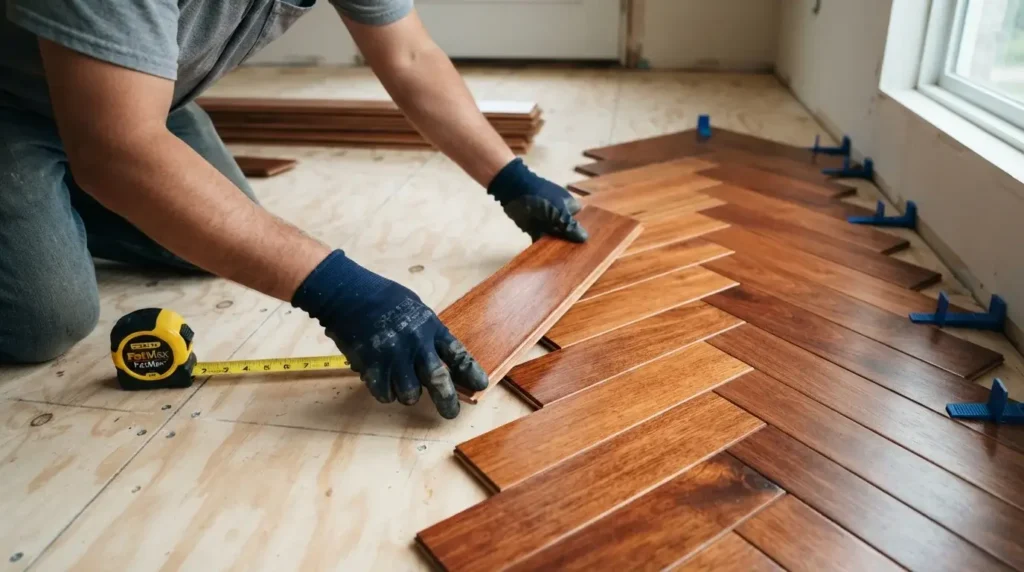
Professional installation adds roughly $4 to $8 per square foot on top of material, so a straightforward job over a level subfloor commonly lands in the $9 to $18 per square foot range all-in. That number climbs fast if the project involves tearing out old tile, leveling a subfloor, adding a moisture barrier, or laying the boards in a herringbone or diagonal pattern, since those steps add both labor hours and material waste. Budget an extra 7 to 15 percent in material for cuts and pattern work.
Refinishing an existing Brazilian cherry floor down the line generally costs $5 to $10 per square foot, more than the $3 to $5 typical for oak, because the wood’s hardness slows down the sanding process. Solid boards can handle several refinishing cycles over their lifetime; thin-veneer engineered planks usually can’t, so if long-term refinishing matters to you, that distinction is worth confirming before you buy.
Is Brazilian Cherry Flooring Good for a Kitchen?
This is the question that matters most if you’re weighing Brazilian cherry hardwood flooring for a cooking space, and the honest answer is: proceed carefully. Kitchens see more spilled water, dishwasher leaks, and general moisture than almost any other room in the house, and any solid wood floor, Brazilian cherry included, can cup, gap, or discolor if water sits on it or seeps into seams.
That said, this species is a better candidate than most. Its density and natural oils give it more resistance to moisture-related decay than softer domestic woods, and homeowners do successfully run it through kitchens, especially when it’s the same species used in an adjoining dining or living area and they want a continuous look underfoot. The tradeoff is maintenance discipline: wipe up spills immediately, use a mat in front of the sink and dishwasher, and skip wet mopping in favor of a barely damp cloth or a wood-safe cleaner. In a genuinely humid kitchen, running a dehumidifier during peak season helps protect the seams around cabinets and the dishwasher.
If you want the look with less worry, engineered Brazilian cherry with a stable plywood or HDF core handles humidity swings better than solid strip flooring, since the cross-layered construction resists the expansion and contraction that causes gapping. It’s a reasonable middle ground for a busy family kitchen where the floor will see daily traffic and the occasional accident.
Brazilian Cherry vs. Oak and Other Hardwood Floors
Oak remains the default hardwood in most American homes for a reason: it’s affordable, widely available, and easy to match if you ever need a repair years later. Brazilian cherry costs more, both to buy and to refinish, but it delivers meaningfully higher hardness and a color depth that oak simply can’t replicate without a heavy stain.
Compared with other exotics, Brazilian cherry sits in a middle tier. Brazilian walnut, known as Ipe, is even harder and pricier, while Santos mahogany offers a darker, more uniform brown with less dramatic color variation. Brazilian cherry is generally the most affordable and most widely available of the South American hardwoods, which is part of why it became the entry point into exotic flooring for so many homeowners over the past two decades.
The decision usually comes down to how much color drama you want and how much durability you actually need. A high-traffic entryway or a home with large dogs benefits from Brazilian cherry’s hardness. A minimalist, light-filled space is often better served by a paler domestic wood that won’t fight with the room’s palette.
How to Care for and Maintain Brazilian Cherry Floors
Routine care for Brazilian cherry hardwood flooring isn’t dramatically different from any other solid or engineered hardwood, but a few habits matter more given the wood’s sensitivity to light and moisture.
- Sweep or vacuum regularly with a soft-bristle attachment to keep grit from scratching the finish.
- Clean with a barely damp mop and a pH-neutral, wood-safe cleaner, never a steam mop or standing water.
- Rotate area rugs and furniture every few months during the first year or two, so the floor darkens as evenly as possible.
- Use furniture pads and an entry mat to cut down on grit and moisture tracked in from outside.
- Keep indoor humidity between roughly 35 and 55 percent to limit seasonal expansion and contraction, especially in solid plank installations.
- Plan for professional refinishing every several years, more or less often depending on traffic, rather than waiting until the finish has fully worn through.
Does Brazilian cherry flooring darken over time?
Yes. Brazilian cherry undergoes a natural color change as it’s exposed to light, shifting from its original pale pink or salmon tone into a deeper red-brown or burgundy over the first six to twelve months. This is a normal characteristic of the species, not a defect, and it’s part of why many buyers choose it in the first place.
Is Brazilian cherry flooring going out of style?
It’s less trendy than it was during its peak popularity in the early 2000s, when it appeared in a huge share of new-construction homes. It hasn’t disappeared, though. Designers still specify it in traditional, rustic, and warm-toned interiors, and its durability keeps it in steady demand for high-traffic homes regardless of passing style cycles.
What’s the difference between solid and engineered Brazilian cherry planks?
Solid planks are cut entirely from Jatoba and can be sanded and refinished multiple times over their lifespan, but they’re more sensitive to humidity swings. Engineered planks have a thinner Brazilian cherry wear layer over a stable plywood or HDF core, which resists moisture-related expansion better but offers fewer refinishing cycles before the veneer wears through.
How hard is Brazilian cherry compared to oak?
Brazilian cherry’s Janka hardness rating typically falls between roughly 2,350 and 3,500, compared with about 1,290 for red oak. In practical terms, that means Brazilian cherry resists dents, scratches, and general wear noticeably better than oak, which is a major reason it’s chosen for busy households.
Brazilian cherry hardwood flooring rewards homeowners who want a floor with real character and real toughness, as long as they go in with clear eyes about the color change, the price, and where moisture-prone rooms fit into the plan. Weigh those tradeoffs against your household’s traffic, climate, and style, and it’s easier to tell whether this is the exotic hardwood worth investing in.