
How Much Does It Cost to Finish a Basement in 2026?
The cost to finish a basement in 2026 typically runs $30 to $75 per square foot for a standard contractor-led job, or roughly $30,000 to $75,000 for a 1,000 square foot space. A bare-bones cosmetic refresh on a dry, already-wired basement can come in under $20 per square foot, while a full living suite with a kitchen and bathroom can push past $100. The number you land on depends far less on square footage than on what you’re actually building down there.
If you’ve spent any time pricing home projects, kitchen remodels included, you already know how wildly cost estimates can swing depending on the source. Basement pricing is worse. One site quotes $7 per square foot, a neighbor mentions paying $70,000, and a contractor’s bid lands somewhere in between. Here’s how to make sense of the range and build a realistic number for your own space.
How Much Does It Cost to Finish a Basement? (Quick Answer)
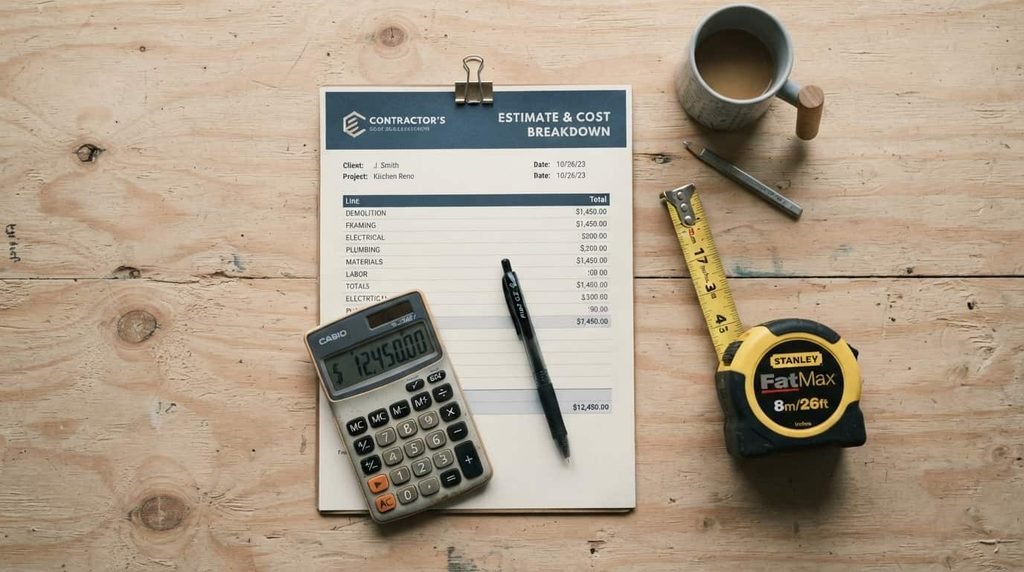
A standard, code-compliant basement finish costs $30 to $75 per square foot in 2026. For the average 1,000 square foot basement, that’s $30,000 to $75,000, with most homeowners landing near $50,000 for a mid-range job. Basic cosmetic work on a shell that’s already dry, framed, and wired can cost as little as $15 to $20 per square foot, while a full apartment-style suite with a kitchen, bathroom, and separate entrance often exceeds $100 per square foot.
The wide gap between the cheapest online estimates and real contractor bids usually comes down to what’s included. Budget figures often skip permits, egress windows, and the plumbing or electrical upgrades most unfinished basements actually need. A true low-cost finish exists, but it describes paint and flooring on a space that was already code-ready, and few basements start there.
Basement Finishing Cost by Square Footage
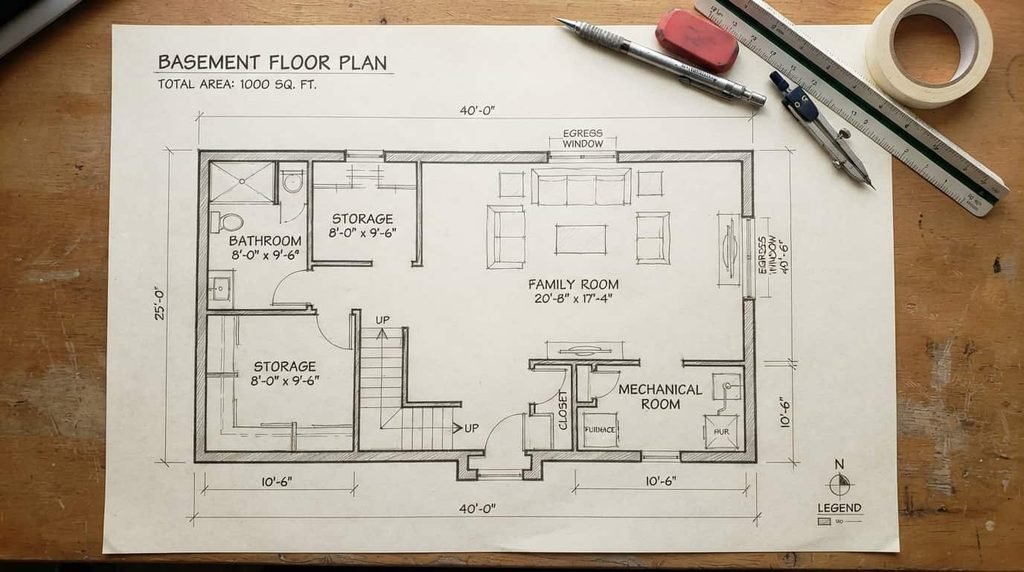
Once you know your finish level, square footage gives you a working number. These figures use the standard contractor-led range of $30 to $75 per square foot.
| Basement Size | Typical Cost (Standard Finish) | Common Use |
|---|---|---|
| 400 sq ft | $12,000 – $30,000 | Home office, gym, or rec room |
| 500 sq ft | $15,000 – $37,500 | Guest room or media room |
| 700 sq ft | $21,000 – $52,500 | Home theater plus a second use |
| 800 sq ft | $24,000 – $60,000 | Family room with a wet bar |
| 1,000 sq ft | $30,000 – $75,000 | Living area with a small bathroom |
| 1,200 sq ft | $36,000 – $90,000 | Multi-room layout with a full bathroom |
| 1,500 sq ft | $45,000 – $112,500 | In-law suite or legal apartment |
A basement that’s already partially finished, meaning some framing, wiring, or flooring already exists, usually costs less than these ranges suggest, since you’re not starting from bare concrete. Local labor rates and permit costs also matter a lot; a job priced in a high-cost metro area will run above the national averages here.
Cost to Finish a Basement by Finish Level
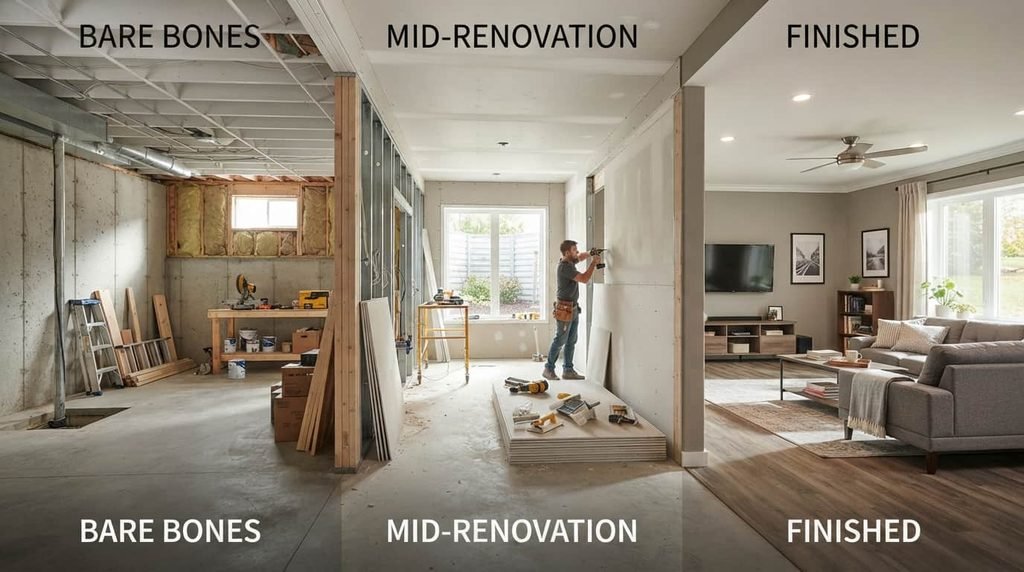
Scope, not size, is what really separates a $20,000 project from a $90,000 one. The same 1,000 square feet can become an open rec room or a one-bedroom apartment, and the price difference is enormous.
- Basic finish ($15–$30 per sq ft): Flooring, drywall, paint, and lighting on a shell that’s already dry, insulated, and code-ready. Good for a rec room or storage area upgrade.
- Standard contractor finish ($30–$75 per sq ft): Framing, insulation, drywall, flooring, egress, and basic electrical and HVAC work. This is where most homeowners land.
- Full living suite ($75–$120+ per sq ft): A bathroom, kitchenette, bedroom-egress window, upgraded electrical and HVAC systems, and apartment-level code compliance.
If your basement is unfinished and untouched, budget toward the standard or full-suite range. Most quotes that undercut $20 per square foot are describing cosmetic work only, not the systems upgrades an average unfinished basement needs.
What Drives the Cost to Finish a Basement Up or Down
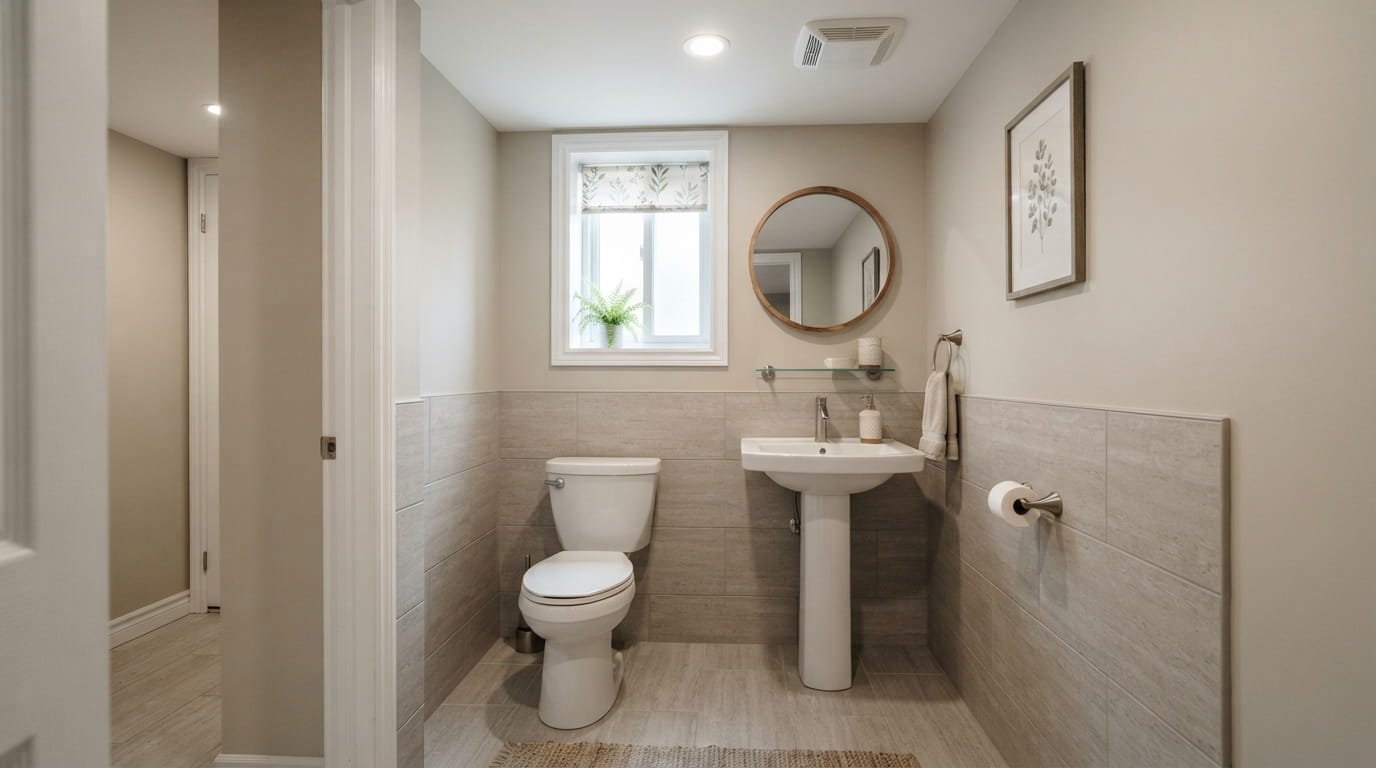
Most of a basement budget goes toward work you’ll never actually see once the drywall goes up.
Plumbing and electrical. Licensed plumbers and electricians bill the highest hourly rates on the job, and any plan with a bathroom or kitchenette leans on both trades heavily. This is consistently the single biggest line item in a basement finish.
Waterproofing. A wet basement isn’t ready to finish, full stop. Minor sealing can run under $1,000, while a full interior drainage system or exterior excavation can run $5,000 to $15,000. Finishing over an unresolved moisture problem is the most common way an entire budget gets wasted, since the damage shows up through new drywall within a year or two.
Egress and ceiling height. A basement bedroom needs a code-compliant escape window or door, which typically costs $2,500 to $5,500 installed once excavation and a window well are factored in. Habitable rooms generally need at least a 7-foot ceiling under most residential codes, and a low ceiling can rule out a sleeping-room plan before it starts.
Structural repairs. Foundation cracks or settling need fixing before anything else goes in, usually $2,000 to $8,000 depending on severity.
Systems capacity. If the existing electrical panel or HVAC system can’t handle a finished living space, plan for another $3,000 to $8,000 in upgrades.
Radon. Easy to overlook and cheap to address upfront. A test kit costs a few dollars, and building in a mitigation system during construction is far less expensive than retrofitting one behind finished walls later.
Basement Bathroom, Kitchenette, and Other Add-On Costs
What you plan to do with the space matters just as much as square footage.
- Bathroom: $10,000–$25,000. Fixtures below the main sewer line often need a sewage ejector or up-flush system, since basement plumbing can’t simply drain downhill the way a main-floor bathroom does. That’s the main reason a basement bathroom costs more than the identical one upstairs.
- Kitchenette or wet bar: $5,000–$25,000. A simple wet bar with a sink and mini fridge sits at the low end; a full kitchenette with a range and ventilation runs closer to $15,000–$25,000.
- Home theater or media room: $5,000–$30,000. Most of that spread comes from soundproofing and the audio-visual package, not the framing.
- Bedroom egress: $2,500–$5,500. A conforming bedroom needs a 7-foot ceiling, a closet, and an emergency escape opening. Without that opening, an appraiser won’t count the room as a legal bedroom no matter how nicely it’s finished.
- Basement apartment or in-law suite: $40,000–$100,000+. Combine a kitchen, bathroom, egress, and often a separate entrance, and you’re looking at a full living unit that also has to satisfy zoning and, in many cities, a rental license.
If a bathroom isn’t in your immediate plan but might be someday, ask your plumber for a rough-in during construction. Retrofitting plumbing under a finished slab later usually means cutting concrete, which can roughly double that portion of the job.
DIY vs. Hiring a Contractor to Finish a Basement
Labor typically makes up 40% to 60% of a basement budget, with a general contractor’s coordination fee adding another 10% to 25% on top for managing permits, inspections, and the handoffs between trades.
A professional finish makes the most sense whenever the project touches plumbing, electrical, egress, or structural work, since all of that has to pass inspection and a failed inspection means redoing finished work. DIY suits a basement that’s already dry and structurally sound, where what’s left is mostly cosmetic: painting, flooring, and trim. A common middle ground is a hybrid approach, hiring out the systems work and handling the paint, flooring, and decorating yourself.
How to Lower the Cost to Finish a Basement
The most reliable savings come from trimming scope, not from cutting corners on materials.
- Finish only what you’ll use. Keep storage and utility zones raw and finish only the living areas. This captures most of the everyday benefit for a fraction of a full remodel.
- Leave the ceiling exposed. Painted exposed joists cost less than a drop or drywall ceiling and preserve headroom in an already-short space, typically saving $3,000–$6,000.
- Keep the layout open. Fewer interior walls means less framing, fewer doors, and fewer added circuits, saving roughly $3,000–$7,000 while keeping the space flexible for later.
- Reuse existing plumbing and electrical runs. Placing a bathroom or wet bar near current supply lines avoids one of the more expensive hidden costs: rerouting.
- Get at least three quotes. Compare scopes line by line, not just bottom-line totals. When a quote skips permits, egress, or moisture control, that work still has to happen, and it usually shows up later as a change order.
Is Finishing a Basement Worth It?
For most homeowners, yes. Industry cost-versus-value data consistently puts basement remodel resale recoup somewhere between roughly 70% and 86% of project cost, depending on the market and how the space is finished. A finished basement also adds everyday living space you’ll actually use, not just resale value, whether that’s a family room now or a home office and guest suite later. One catch worth knowing: a finished basement usually doesn’t count toward a home’s official above-grade square footage on an appraisal, even when it’s finished to the same standard as the rest of the house, though walkout basements are sometimes treated differently.
Basement Finishing FAQs
Is it cheaper to finish a basement yourself?
DIY can meaningfully cut the labor portion of a basement budget, but only for cosmetic work like painting, flooring, and trim. Plumbing, electrical, egress, and structural work generally need a licensed pro to pass inspection, and a botched DIY attempt at any of those can end up costing more to fix than hiring out would have in the first place.
What is the most expensive part of finishing a basement?
Plumbing and electrical work is usually the single most expensive category, especially once a bathroom or kitchenette is added, since both trades bill the highest hourly rates and have to meet inspection standards. Structural repairs, waterproofing, and egress windows can also dominate a budget when the basement starts out in rough shape.
Does finishing a basement add value to your home?
Yes, though the return varies by source and market, typically somewhere between 70% and 86% of project cost recouped at resale. A permitted finish, especially one that adds a legal bedroom or bathroom, tends to return more value than an unpermitted cosmetic job.
How long does it take to finish a basement?
A contractor-led basement finish typically takes 4 to 8 weeks, depending on the size of the space and how much plumbing, electrical, and structural work is involved. Permitting and inspections can add extra time on top of the construction schedule itself, and a DIY timeline can stretch to several months.
Getting a Number You Can Actually Trust
The ranges above are a planning tool, not a bid. Basement pricing depends heavily on your local labor market, the current condition of your foundation and framing, and exactly what you want the space to become. Before you fall in love with a Pinterest board of basement ideas, get your basement’s moisture situation checked first, then get at least three contractor quotes built around the same detailed scope so you’re comparing apples to apples instead of guessing which number is real.

Pingback: Why Is Beef So Expensive? The Real Reasons (2026)