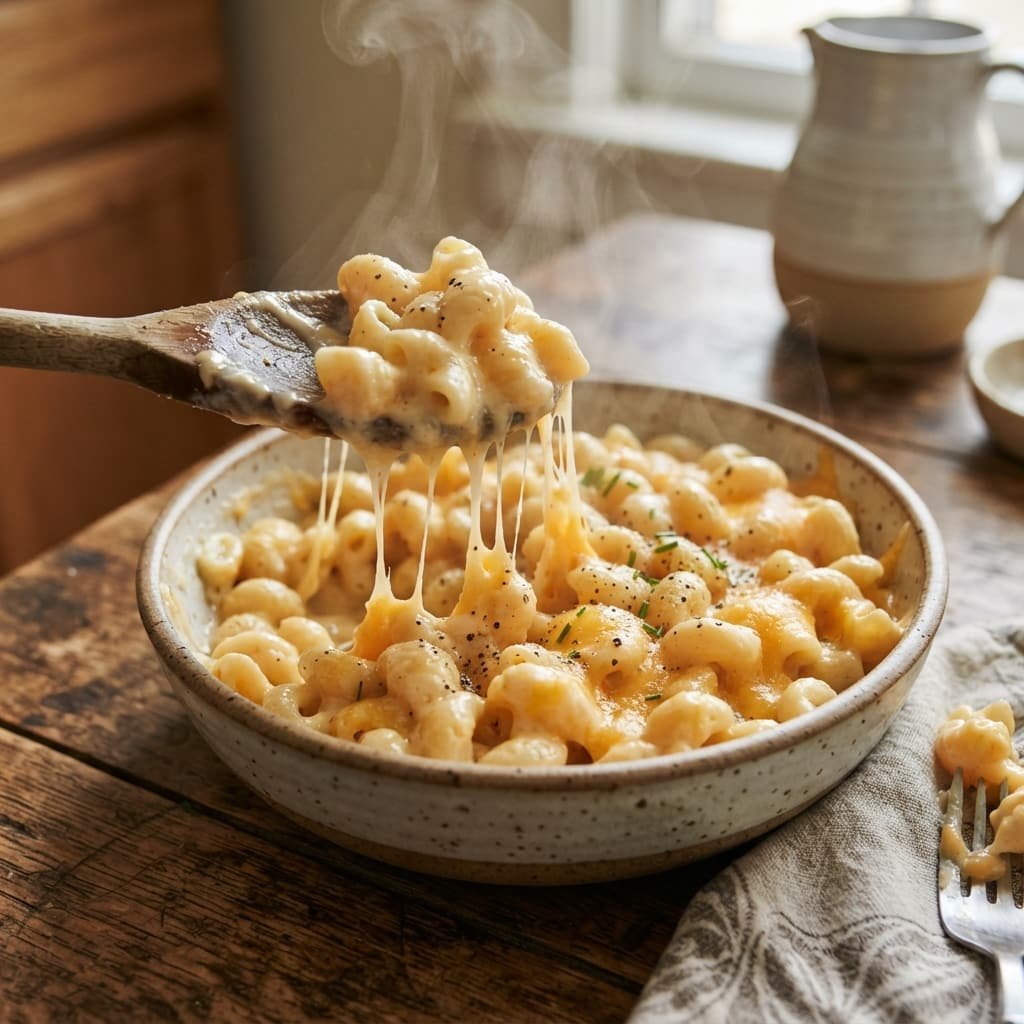
Simple Mac and Cheese Without Flour
You don’t need flour to make a creamy, comforting bowl of mac and cheese. In fact, if you’re looking for a quick stovetop version, skipping the flour can make the whole process easier.
This simple mac and cheese without flour uses the starch from the pasta, warm milk, butter, and freshly grated cheese to create a sauce that coats every noodle. There is no roux to make, no flour to cook out, and no second saucepan waiting in the sink.
The whole thing takes about 20 minutes, which makes it especially handy when you need an easy dinner and don’t want to turn cooking into a project.
The trick is not complicated: cook the pasta until it’s just tender, save some of the starchy cooking water, and add the cheese gently over low heat. Those small details are what keep the sauce creamy instead of oily or grainy.
Can You Make Mac and Cheese Without Flour?
Absolutely.
Traditional macaroni and cheese often starts with a roux made from butter and flour. The roux is then combined with milk to create a thick white sauce before cheese is added.
But a roux isn’t the only way to get a creamy cheese sauce.
When pasta cooks, it releases starch into the water. That starch can help give your sauce body and help it cling to the macaroni. The cheese supplies richness and flavor, while butter and milk create the smooth base.
This approach is particularly useful when you want a mac and cheese recipe without flour or cornstarch and don’t want to spend time making a traditional cheese sauce.
One thing to keep in mind: the result isn’t exactly the same as a flour-thickened sauce. A flour-based sauce tends to be thicker and more stable. A flourless version is usually lighter and relies more heavily on technique, cheese choice, and pasta starch.
Why Skip the Flour?
There are a few good reasons to leave the flour out.
First, it’s faster. You don’t have to melt butter, whisk in flour, cook the mixture, and slowly add milk while constantly stirring.
Second, there’s less cleanup. Everything can be made in one pot once the pasta is cooked.
And third, you may simply prefer the texture. A flourless cheese sauce can feel silky and rich without having the heavier consistency of a traditional roux-based sauce.
There’s also a practical benefit for people avoiding wheat. If you use certified gluten-free pasta and check the labels on your other ingredients, this basic method can be adapted into a gluten-free meal.
Simple Mac and Cheese Without Flour Recipe
This stovetop recipe makes about four servings as a main dish or around six smaller side portions.
Ingredients
- 8 ounces elbow macaroni or another short pasta
- 3 tablespoons butter
- 1 cup whole milk
- 2 cups freshly shredded sharp cheddar cheese
- ½ cup freshly shredded Gruyere, Monterey Jack, or Parmesan
- Salt, to taste
- Black pepper, to taste
- A small pinch of paprika or mustard powder, optional
- Reserved pasta water, as needed
Whole milk gives the sauce a good balance of richness and looseness. If you want a richer result, you can replace some or all of the milk with half-and-half or evaporated milk.
For the cheese, sharp cheddar gives you that familiar classic mac and cheese flavor. A second cheese can make the sauce smoother or add a little extra depth.
How to Make Mac and Cheese Without Flour
1. Cook the macaroni
Bring a pot of water to a boil and season it generously with salt.
Add the macaroni and cook according to the package directions until it’s al dente—tender but still with a little bite.
Before draining, scoop out about one cup of the cooking water.
This is worth remembering because that cloudy water isn’t waste. It’s full of starch released from the pasta, and you’ll use some of it to adjust the sauce later.
Drain the pasta, but don’t rinse it. Rinsing removes surface starch that helps the cheese sauce cling to the noodles.
2. Warm the butter and milk
Put the same pot back on the stove and melt the butter over medium-low heat.
Add the milk and warm it gently. You want it hot enough to combine with the cheese, but you don’t need it to boil.
Boiling the dairy at this stage doesn’t make the sauce better. It can make the cheese more difficult to emulsify smoothly.
3. Add the cheese slowly
Turn the heat down to low.
Add the shredded cheese a handful at a time, stirring after each addition until it has mostly melted before adding more.
This is one of the most important parts of the recipe. Don’t dump all the cheese into a very hot pot and hope for the best.
Gentle heat gives the cheese time to melt into the warm dairy instead of separating into grease and solids.
4. Add the pasta
Return the cooked macaroni to the pot and stir until the noodles are evenly coated.
If the sauce looks too thick, add a tablespoon or two of the reserved pasta water and stir again.
Keep adding small amounts until the sauce reaches the consistency you like.
Remember that mac and cheese thickens as it sits, so it’s usually better to leave the sauce slightly looser than you think you need.
5. Season and serve
Taste before adding more salt because cheddar and other cheeses can already contain quite a bit of salt.
Add black pepper and, if you like, a small pinch of paprika or mustard powder.
Serve immediately while the sauce is hot and creamy.
What Makes Flourless Mac and Cheese Creamy?
This is the part that often confuses people.
If there is no flour, what actually thickens the sauce?
The answer is a combination of pasta starch, cheese, butter, and dairy.
Pasta starch helps the liquid cling to the noodles and gives the sauce some body. Cheese contributes both fat and milk solids, while butter adds richness.
The reserved pasta water is especially useful because it lets you control the consistency. Instead of adding a large amount of liquid at once, you can loosen the sauce gradually.
Think of it as a finishing tool rather than a fixed ingredient. You may need only a few tablespoons, depending on how much starch your pasta released and how thick your cheese sauce became.
The Best Cheese for Mac and Cheese Without Flour
Cheese selection matters more when you aren’t using a roux.
Sharp Cheddar
Sharp cheddar is the easiest choice if you want classic mac and cheese flavor. It melts well when handled gently and gives the dish plenty of cheesy character.
Gruyere
Gruyere adds a nutty, slightly sweet flavor and melts beautifully. Mixing it with cheddar can make the finished dish taste more complex without making it complicated.
Monterey Jack
Monterey Jack is mild and melts smoothly. It’s useful when you want a softer cheese flavor or want to balance a stronger cheddar.
Parmesan
Parmesan adds savory depth, but I wouldn’t use it as the only cheese in this recipe. It works better as part of a blend.
American Cheese
American cheese may not be the most traditional-looking choice, but there’s a practical reason it works well in stovetop mac and cheese. Its emulsifying properties help create a smooth, stable sauce.
You can mix a small amount with cheddar if your priority is an especially smooth sauce.
Why Freshly Grated Cheese Works Better
For the smoothest sauce, buy a block of cheese and grate it yourself.
Pre-shredded cheese is convenient, but packaged shredded cheese is often coated with anti-caking ingredients to keep the pieces from sticking together.
Those coatings can affect how smoothly the cheese melts.
Freshly grated cheese goes directly from the grater into your warm sauce, making it easier to melt evenly.
If you’ve ever made homemade mac and cheese and wondered why your sauce suddenly became grainy despite following the recipe, the cheese itself may be part of the problem.
How to Keep the Cheese Sauce Smooth
A few simple habits make a big difference.
Keep the heat low. Cheese doesn’t need aggressive heat to melt. Once the milk is warm, lower the burner before adding the cheese.
Add cheese gradually. A handful at a time is much easier to incorporate than an entire pile dumped into the pot.
Don’t boil the sauce. High heat can cause the fat and proteins in cheese to separate.
Use freshly grated cheese. It generally melts more evenly than heavily coated pre-shredded cheese.
Save pasta water. Even if you think you won’t need it, keep some nearby. It’s much easier to loosen a thick sauce than to fix one that has become dry.
Common Mistakes With Flourless Mac and Cheese
Using Too Much Heat
This is probably the easiest way to ruin an otherwise good cheese sauce.
If the cheese gets too hot, it can separate and leave you with a greasy sauce containing small, grainy bits.
Low heat and patience are much more useful than turning the burner up.
Forgetting the Pasta Water
You may not need the entire cup you save, but having it available gives you control over the sauce.
Add it a little at a time rather than pouring it all in.
Rinsing the Pasta
Rinsing cooked macaroni washes away surface starch. For this recipe, that starch is useful because it helps the sauce cling to the noodles.
Unless you’re making a cold pasta salad, there’s usually no reason to rinse the macaroni here.
Overcooking the Pasta
Very soft pasta can become mushy once it’s mixed with the hot cheese sauce.
Cook it to al dente so it still has enough structure when you combine everything.
Using Only a Very Dry Cheese
Some aged cheeses don’t melt into a smooth sauce as easily as younger melting cheeses.
If you’re using a strongly flavored aged cheese, combine it with a cheese that melts more readily.
Can You Make It With Milk Instead of Heavy Cream?
Yes.
You don’t need heavy cream for a creamy flourless mac and cheese. Whole milk works well, especially when combined with butter and good melting cheese.
Half-and-half or evaporated milk can make the sauce richer, but they’re optional.
If you’re using lower-fat milk, you may find that the sauce is a little less rich and may need slightly more cheese or less liquid to reach the consistency you want.
The easiest approach is to start with the amount in the recipe and adjust with pasta water at the end.
Can You Make Gluten-Free Mac and Cheese Without Flour?
Yes, but there’s an important distinction.
A recipe can contain no added flour and still use regular wheat pasta, which means it isn’t gluten-free.
For a gluten-free version, replace the regular macaroni with a gluten-free pasta and check the labels of your cheese, seasonings, and other ingredients if you need to avoid gluten strictly.
Gluten-free pasta can behave differently from wheat pasta. Some varieties release less starch into the cooking water, while others can become soft quickly.
For that reason, don’t rely entirely on the exact cooking time printed on the package. Start checking the pasta a little early and cook it until it reaches the texture you want.
Can You Add Vegetables or Other Ingredients?
Definitely.
The basic cheese sauce is flexible enough to turn into a more substantial meal.
Try adding:
- Steamed broccoli
- Cooked peas
- Roasted cauliflower
- Diced cooked chicken
- Crispy bacon
- Sautéed mushrooms
- Chopped jalapeños
- Caramelized onions
Add cooked ingredients near the end so you don’t disturb the sauce or overcook the pasta.
For a little heat, mustard powder, paprika, cayenne, or chopped jalapeños can work well.
Can You Bake Mac and Cheese Without Flour?
Yes.
The flourless stovetop method can also be finished in the oven if you want a browned top.
Transfer the finished mac and cheese to a baking dish, add extra shredded cheese or breadcrumbs, and bake or broil briefly until the top is golden.
If you’re avoiding flour completely, check the breadcrumbs carefully. Regular breadcrumbs contain wheat flour, so use gluten-free breadcrumbs if necessary.
Keep in mind that baked mac and cheese loses some moisture while it cooks. For that reason, don’t make the sauce extremely thick before putting it in the oven.
How to Store Leftover Mac and Cheese
Homemade mac and cheese is best when eaten fresh, but leftovers can still be enjoyable.
Store cooled leftovers in an airtight container in the refrigerator and use them within about four days.
The sauce will become noticeably thicker when cold. That’s normal.
Best Way to Reheat It
For stovetop reheating, place the mac and cheese in a saucepan over low heat. Add a splash of milk and stir gently until warm.
If you’re using a microwave, heat it in short intervals, stirring between each one. Add a little milk if the pasta looks dry.
Avoid blasting it on high heat for several minutes. That’s a quick way to turn a creamy cheese sauce into something oily and separated.
Can You Freeze It?
You can freeze mac and cheese, but the texture may change after thawing. Dairy-based sauces sometimes separate during freezing and reheating.
If you decide to freeze it, thaw it in the refrigerator and reheat gently with a little milk.
For the best texture, though, this is one of those dishes that’s better made fresh when possible.
What to Serve With Flourless Mac and Cheese
This mac and cheese can easily stand on its own, but a few simple sides make it feel more like a complete meal.
For a weeknight dinner, serve it with steamed broccoli, a simple green salad, roasted vegetables, or grilled chicken.
For a larger gathering, it works well alongside roasted meats, barbecue, or other comfort-food favorites.
If you’re serving it as a side dish, keep the portions smaller because the cheese and butter make it quite rich.
Final Thoughts
Making simple mac and cheese without flour doesn’t require a complicated cheese sauce.
Cook the pasta until al dente, save some of that starchy water, use cheese that melts well, and keep the heat gentle when the cheese goes into the pot. Those four habits do most of the work.
The beauty of this method is its simplicity. You get creamy, cheesy macaroni without making a roux, without cornstarch, and without an extra saucepan.
Keep a box of macaroni and a block of cheddar in the kitchen, and you’ve got an easy comfort-food dinner ready whenever the craving hits.
How do you thicken mac and cheese without flour?
Pasta starch is the easiest option. Save some of the water used to cook the macaroni and add it to the cheese sauce as needed. The cheese itself also provides body as it melts.
Does mac and cheese need flour?
No. Flour is commonly used to make a roux, but it isn’t required. A carefully prepared combination of pasta starch, cheese, butter, and milk can produce a creamy sauce without flour.
Why is my flourless mac and cheese grainy?
The most common reasons are excessive heat, adding cheese too quickly, or using cheese that doesn’t melt smoothly. Turn the heat down and add freshly grated cheese gradually.
Can I use pre-shredded cheese?
You can, but freshly grated cheese is usually the better choice for a smooth sauce. Pre-shredded cheese often contains anti-caking ingredients that can affect melting.
Can I make mac and cheese without flour and cornstarch?
Yes. This recipe uses neither. The pasta’s natural starch and the cheese provide the body for the sauce.
Can I use evaporated milk?
Yes. Evaporated milk can make the sauce rich and creamy and is a useful alternative to some or all of the regular milk.
Why does my mac and cheese become dry?
Mac and cheese naturally thickens as it cools. It can also become dry if too much liquid evaporates during cooking or if the pasta absorbs more sauce than expected.
Add a small splash of milk when reheating to bring some creaminess back.
Can I make this recipe with gluten-free pasta?
Yes. Use your preferred gluten-free macaroni or another short gluten-free pasta. Keep in mind that different gluten-free pastas release different amounts of starch, so you may need to adjust the amount of pasta water.