
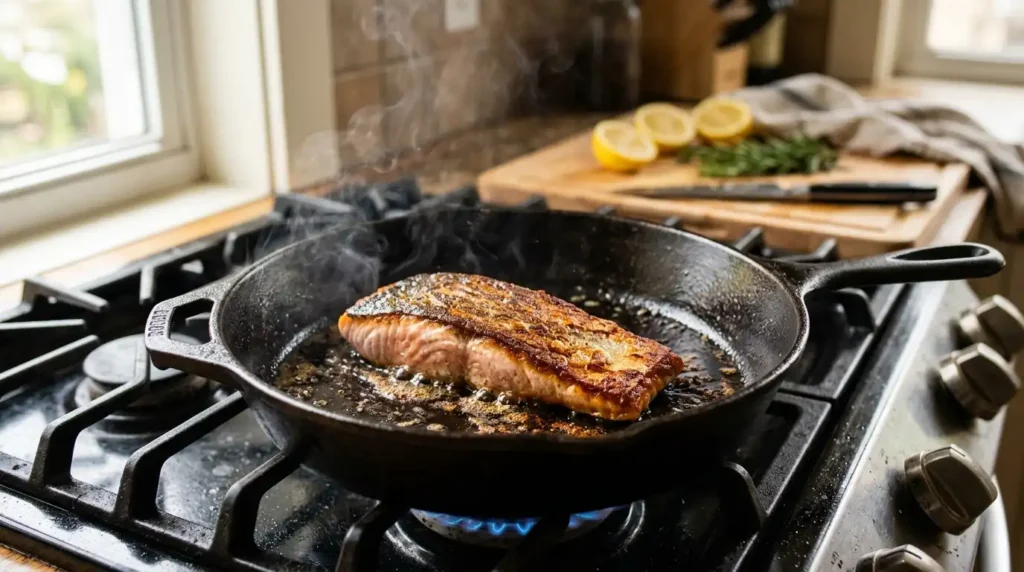
How to Cook Salmon on the Stove
If you want to know how to cook salmon on the stove without ending up with dry fish or a pan full of stuck skin, the fix comes down to three things: a dry fillet, a properly hot pan, and the discipline to leave it alone while it sears. That’s it. No fancy equipment, no long marinades, no oven required. In the next few minutes you’ll have a step-by-step method that gets you a crackling, golden crust on the outside and a moist, flaky center every time, plus the fixes for the mistakes that trip up most home cooks.
What You Need Before You Start
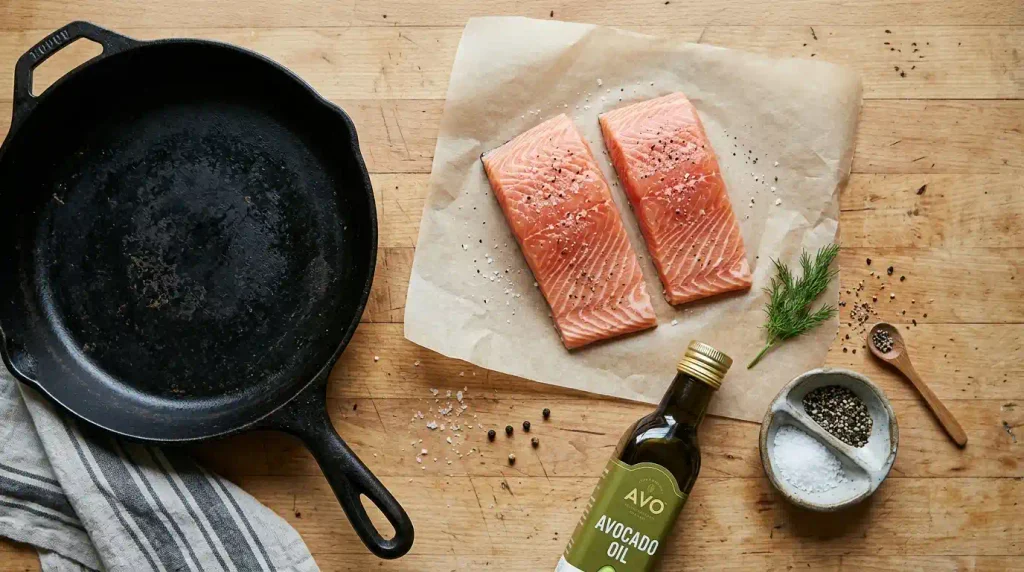
You don’t need much to get a restaurant-quality sear at home. Here’s the short list.
The pan. A heavy-bottomed skillet holds and distributes heat far better than a thin one. Cast iron and stainless steel both work well because they get hot enough to build a real crust, but a good nonstick pan is the easiest option for beginners since it forgives a little extra moisture on the fish. Whatever you use, pick something wide enough to fit your fillets without crowding them, since a crowded pan traps steam and steams the fish instead of searing it.
The oil. Use something with a high smoke point so it can handle medium-high heat without burning. Avocado oil is a great choice, and olive oil works fine too as long as it isn’t an ultra-delicate finishing oil. You only need enough to lightly coat the bottom of the pan.
The fish. Skin-on fillets are more forgiving because the skin acts as a buffer between the hot pan and the delicate flesh, and it holds the fillet together when you flip it. Look for fillets that are roughly the same thickness throughout so they cook evenly, and if you can, ask for center-cut pieces rather than the thinner tail end.
Seasoning. Kosher salt and freshly cracked black pepper are genuinely all you need. Extra flavor is welcome, but it’s not what makes or breaks the sear.
How to Cook Salmon on the Stove, Step by Step
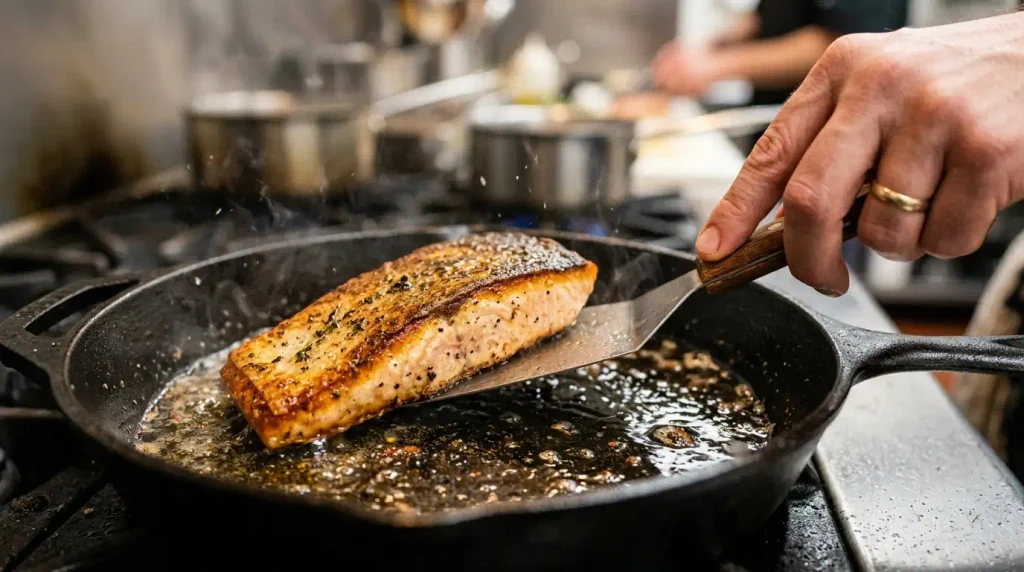
This is the core method, and once you’ve done it a couple of times it becomes second nature.
1. Let the fish come to room temperature. Pull the salmon out of the fridge 15 to 20 minutes before cooking. A cold fillet dropped into a hot pan seizes up and cooks unevenly, so this small step actually matters.
2. Pat it bone dry. Use paper towels and press firmly on both sides. Any surface moisture turns straight to steam in a hot pan, and steam is the enemy of a crisp crust. This is the single most skipped step, and it’s the reason so many people end up with pale, soggy salmon instead of a golden one.
3. Season generously. Salt and pepper both sides. Don’t be shy with the salt. It seasons the flesh and helps draw out any remaining surface moisture.
4. Heat the pan before the oil goes in. Set the burner to medium-high and let the empty pan heat for a minute or two. Then add the oil and swirl it around. You’ll know it’s ready when it shimmers and moves easily across the surface.
5. Add the salmon and don’t touch it. Lay the fillets in the pan, skin side down if they have skin, and resist every urge to poke, nudge, or peek underneath. Cook undisturbed for 4 to 6 minutes, depending on thickness. The fish will release cleanly from the pan on its own once a proper crust has formed. If it’s sticking, it just needs another minute.
6. Flip once. Use a thin fish spatula to turn the fillets. Cook the second side for 2 to 4 minutes more, or until the salmon reaches the doneness you like.
7. Rest it briefly. Move the salmon to a plate and let it sit for 2 to 3 minutes before serving. The internal temperature will keep climbing slightly off the heat, which finishes the cooking gently instead of overcooking it in the pan.
The whole process, start to finish, takes about 15 minutes, which is what makes stovetop salmon such a reliable weeknight dinner.
Skin-Side Down or Skin-Side Up? Settling the Debate
You’ll see both approaches recommended, and honestly, either can work.
Starting skin side down is the more common method. It crisps the skin first, and the skin protects the delicate flesh above it from the direct heat of the pan, which makes it a little more forgiving for beginners.
Starting skin side up, meaning flesh side down first, gives the presentation side of the fillet the cleanest sear since it hits the pan while it’s still perfectly clean and evenly hot. Some cooks prefer this because the crust on the flesh side looks better on the plate.
If you’re new to cooking salmon on the stove, skin side down first is the safer bet. Once you’ve got a feel for how your pan behaves, feel free to experiment.
What’s the Best Way to Cook Salmon on the Stove?
The best way to cook salmon on the stove is to pan-sear it: pat the fillet completely dry, season it well, sear it in a hot, lightly oiled skillet for 4 to 6 minutes per side without moving it, and pull it once it flakes easily or reaches your preferred internal temperature. This method takes about 15 minutes total and produces a crisp exterior with a moist, tender center, which is why it’s the standard technique used in most home kitchens and professional ones alike.
How to Tell When Salmon Is Done
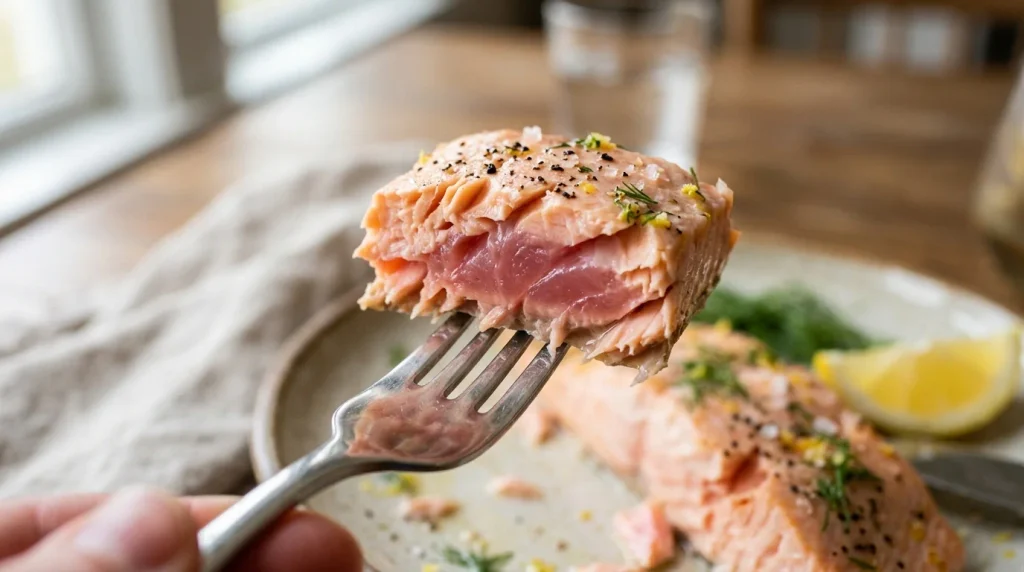
The most reliable way to check doneness is with an instant-read thermometer inserted into the thickest part of the fillet. The USDA lists 145°F as the safe internal temperature for fully cooked salmon, though many cooks prefer to pull it closer to 125°F to 130°F for a softer, more medium center, since salmon is safe to eat at lower temperatures than poultry or ground meat.
No thermometer? Look at the fillet from the side. You’ll see a visible line of opaque, cooked flesh creeping up from the bottom as it cooks. Once that line has moved most of the way through the fillet, it’s close to done. You can also press a fork gently into the thickest part. If the flesh separates easily along its natural lines, it’s ready.
Color is another clue. Salmon turns from translucent and deep pink or red to opaque and lighter pink as it cooks. A fillet that’s still glassy and dark in the very center is under, while one that’s uniformly pale and firm all the way through is fully cooked, verging on well-done.
Common Mistakes That Ruin Stovetop Salmon
Skipping the dry-off. Wet fish steams instead of searing, and it’s the single biggest reason people struggle with sticking.
A pan that isn’t hot enough. If the pan and oil aren’t properly heated before the fish goes in, the salmon will stick, cook unevenly, and never develop a real crust.
Overcrowding the pan. Too many fillets at once drop the pan’s temperature and trap steam. Cook in batches if you need to.
Flipping too early or too often. Every time you move the fish before it’s released naturally, you tear the crust and risk the fillet falling apart. Set a timer, walk away, and trust the process.
Cooking straight from the fridge. Cold fish cooks unevenly, with an overdone exterior and a still-cold center by the time the outside is done.
Overcooking. Salmon goes from perfectly moist to dry and chalky fast. Pull it a touch before you think it’s ready. It will keep cooking slightly as it rests.
What to Serve With Pan-Seared Salmon
A squeeze of fresh lemon over the top is really all this dish needs, but a few simple sides round it out nicely. Garlic mashed potatoes, a pot of rice, or lemony orzo all pair well underneath the fish. For something lighter, roasted green beans, sautéed spinach, or a simple arugula salad with a sharp vinaigrette balance the richness of the salmon nicely.
How long does it take to cook salmon on the stove?
Most fillets take 6 to 10 minutes total, roughly 4 to 6 minutes on the first side and 2 to 4 minutes on the second, depending on thickness and how hot your pan runs.
Should you cook salmon skin side down or skin side up first?
Either works. Skin side down first is more common and a bit more forgiving for beginners, while flesh side down first gives the presentation side a cleaner sear.
What temperature should salmon be cooked to on the stove?
The USDA recommends 145°F for fully cooked salmon, though many home cooks and chefs prefer pulling it at 125°F to 130°F for a moister, medium center.
How do you keep salmon from sticking to the pan?
Make sure the fillet is completely dry before it hits the pan, use enough oil to lightly coat the surface, and don’t try to flip it until it releases on its own. Forcing it early is what tears the crust and leaves fish stuck to the metal.
Cooking salmon on the stove really does come down to patience more than skill. Dry the fish, heat the pan properly, and let it do its thing without interference. Try this method tonight, and once you’ve nailed the basic sear, you’ll have a technique you can dress up with any sauce or seasoning you like.


Pingback: How Long Does Spray Paint Take to Dry? Times & Tips