
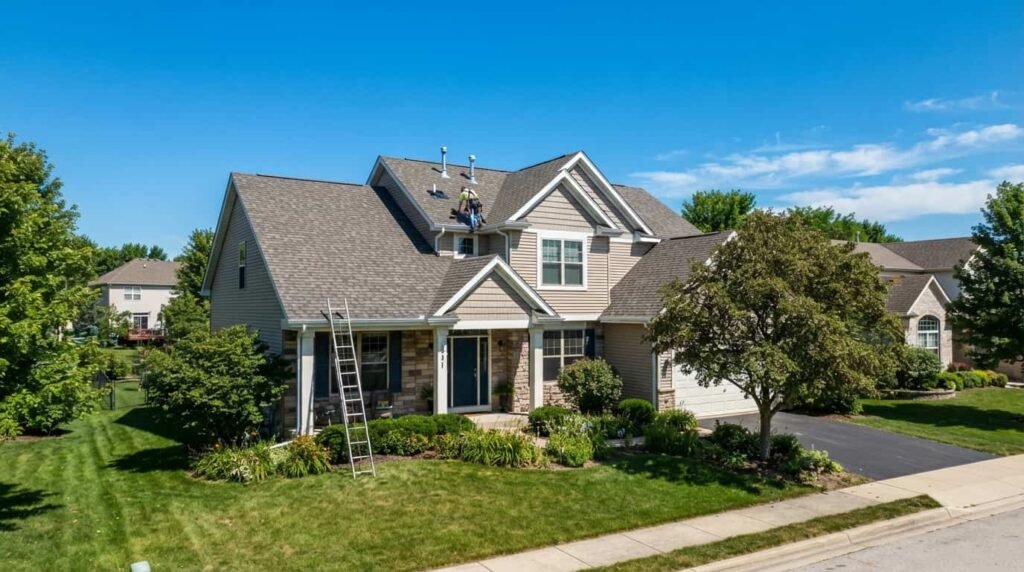
Average Cost of a New Roof in 2026
The average cost of a new roof in 2026 lands between $9,000 and $30,000 for most US homes, with the typical homeowner paying somewhere around $15,000 to $20,000 for a standard asphalt shingle replacement. Where you fall in that range depends on your roof’s size, the material you choose, your local labor rates, and how complicated the job is. Below, we break down real pricing by material and size, what actually drives the cost up or down, and how to pay for it without wrecking your budget.
A roof isn’t a purchase most people plan for. It’s usually a surprise, triggered by a leak, a storm, or an inspector’s report during a home sale. That makes it easy to either panic and overpay or underestimate what the job really involves. Knowing the numbers ahead of time puts you in a much better position when quotes start coming in.
Average Cost of a New Roof in 2026
For a typical 2,000 square foot home, a full roof replacement costs between $9,800 and $30,000, with asphalt shingles landing most homeowners in the $15,000 to $20,000 range. Premium materials like standing seam metal, slate, or cedar shake can push the total past $40,000. Labor usually accounts for 50 to 60 percent of the bill, so location and crew availability matter almost as much as the shingles you pick.
Those figures assume a straightforward tear-off and replace job on a roof with average pitch and complexity. Add a steep slope, multiple layers of old shingles, or a lot of skylights and chimneys, and the number climbs fast.
Average New Roof Cost by Material
Material is the single biggest lever you control. Here’s roughly what each option runs per square foot installed, and what that translates to on a typical roof.
- 3-tab asphalt shingles: $4 to $5 per square foot, about $8,000 to $12,000 total. The budget option, lasting 15 to 25 years.
- Architectural shingles: $5 to $7 per square foot, roughly $15,000 to $30,000 total. The most common choice, with warranties up to 30 years.
- Steel exposed-fastener metal: $4.50 to $6.50 per square foot, around $15,000 to $25,000. Durable and increasingly popular for its longevity.
- Standing seam metal: about $16 per square foot, often $40,000 to $60,000. Sleek, long-lasting, and a favorite for modern homes.
- Synthetic shingles: $15 to $20 per square foot, typically $45,000 to $60,000. Mimics slate or wood without the weight.
- Cedar shake or slate tile: $25 to $30 per square foot, frequently $50,000 to $80,000. The premium tier, chosen for looks and lifespan rather than price.
Asphalt shingles remain the default for most homeowners simply because they balance price, durability, and appearance better than anything else on the list. If your budget is tight, that’s usually where to start looking.
What Determines the Cost of a New Roof
Material sets the baseline, but several other factors swing the final price:
Roof size. Roofers price by the “square,” which equals 100 square feet. A 1,800 square foot roof needs 18 squares of material; a 2,400 square foot roof needs 24. More squares mean more material, more labor hours, and more debris to haul away.
Pitch and accessibility. A steep roof takes longer to work on safely, so labor costs rise even if the square footage stays the same. Roofs boxed in by fencing, landscaping, or tight side yards also cost more, since crews need extra time just to move materials in and out.
Number of penetrations. Every chimney, skylight, and vent pipe needs flashing work. A roof with several penetrations takes longer to seal correctly than a plain, open roof of the same size.
Complexity. Roofs with multiple facets, valleys, and hips cost more than a simple gable roof, because each seam and transition needs careful detail work to stay watertight.
Tear-off and layers. If your home already has two or three layers of old shingles, removing them adds labor time and dump fees on top of the base installation cost.
Local labor rates. Roofing labor pricing varies a lot by region. The same architectural shingle job might cost noticeably more in a high cost of living metro than in a smaller market, even with identical materials.
Roof Cost by Size: Small, Medium, and Large Homes
Square footage is one of the clearest ways to estimate your own project before calling a contractor.
- Small home (1,200 to 1,500 sq ft roof): roughly $6,000 to $12,000 with asphalt shingles.
- Medium home (1,800 to 2,200 sq ft roof): roughly $10,000 to $20,000 with asphalt shingles.
- Large home (2,500+ sq ft roof): roughly $15,000 to $30,000 or more, especially with a complex roofline.
These ranges assume a standard asphalt shingle tear-off and replace. Swap in metal, slate, or synthetic material and the same square footage can easily double or triple in price.
Labor vs. Material: Where the Money Goes
It surprises a lot of homeowners that labor, not shingles, makes up most of a roofing bill. Labor typically covers 50 to 60 percent of total cost, with materials filling out the rest. That labor line includes tear-off, disposal, underlayment and flashing installation, ventilation work, and the actual shingle or panel installation.
This is also where contractor overhead shows up: insurance, licensing, warranty coverage, and crew training all get baked into the labor rate. It’s part of why the cheapest quote isn’t always the safest one. A contractor cutting corners on insurance or using an undertrained crew can save you money upfront and cost you far more if the roof fails early or a worker gets injured on your property.
Does Homeowners Insurance Cover a New Roof?
Sometimes, but not for the reason most people assume. Insurance typically covers roof replacement when the damage comes from a sudden, covered event, like wind, hail, or fire. It generally does not cover a roof that’s simply old or worn out from normal weathering.
If your claim is approved, pay attention to whether your policy pays actual cash value or replacement cost. Actual cash value factors in depreciation, so an older roof gets a smaller payout. Replacement cost coverage pays what a brand-new roof actually costs, which is the better outcome if you have a choice between policies. Either way, notify your insurer whenever you get a new roof installed, since it can sometimes lower your premium.
How to Finance a New Roof
Most homeowners don’t have $15,000 to $30,000 sitting in a savings account, so financing is common rather than a last resort. The main options include:
- Contractor payment plans, offered directly by many roofing companies, sometimes with promotional low or no interest for a set period.
- Home equity loans or lines of credit, which tend to carry lower interest rates since they’re secured by your home.
- Personal loans, faster to get but usually at a higher interest rate than home equity options.
- Credit cards, workable for smaller jobs or as a stopgap, but risky for a full roof replacement given typical interest rates.
Before signing anything, get quotes from at least two or three contractors, confirm what’s included in each one (permits, disposal, underlayment, warranty), and read the financing terms closely. A slightly higher monthly payment with a fixed low rate almost always beats a “no money down” plan that balloons after year one.
Ways to Lower the Cost of a New Roof
You can’t change your home’s square footage, but there’s still room to bring the price down without cutting corners on quality.
Get at least three quotes. Roofing prices vary more than most people expect, even within the same city. A wide spread between bids is normal, but it also means the first quote you get is rarely the best one.
Time it right. Scheduling during a contractor’s slower season, often late fall or winter in most regions, can mean a lower rate and a faster start date than booking during peak summer demand.
Ask about tear-off savings. If your existing roof has only one layer of shingles and local code allows it, some contractors can install new shingles over the old layer instead of a full tear-off, which trims labor and dump fees. This isn’t always the right call for the roof’s long-term health, so weigh it against a full replacement rather than defaulting to it for the discount.
Bundle related work. If you also need gutters, attic insulation, or ventilation upgrades, doing it alongside the roof replacement often costs less than scheduling it as a separate job later.
Check for rebates. Some utility companies and manufacturers offer rebates for energy-efficient or reflective roofing materials, and certain impact-resistant shingles can lower your home insurance premium. Both are worth asking about before you sign a contract.
Maintain what you have. Regular inspections and minor repairs can push a roof’s replacement date back by several years, which matters if prices are trending upward in your area.
Bottom Line
The average cost of a new roof in 2026 covers a wide range, but for most homeowners it settles somewhere between $9,000 and $30,000, with asphalt shingles as the most common and affordable choice. Get multiple quotes, ask exactly what’s included, and check whether insurance or financing can help spread out the cost before you commit to a contractor.
Frequently Asked Questions
How long does a new roof last?
Asphalt shingle roofs typically last 15 to 30 years depending on the shingle grade and local climate. Metal roofs often last 40 to 70 years, and slate or tile can last over a century with proper maintenance.
Is it cheaper to repair or replace a roof?
A repair is almost always cheaper upfront, often a few hundred to a couple thousand dollars. But if your roof is near the end of its expected lifespan or has widespread damage, repeated repairs can end up costing more over time than one full replacement.
What time of year is roofing cheapest?
Late fall and winter tend to bring lower prices in many regions, since roofing crews are busiest in spring and summer. Booking outside peak season can sometimes get you a better rate or faster scheduling.
Can I get a new roof for under $10,000?
Yes, on smaller homes with a straightforward roofline and budget asphalt shingles, total cost can land under $10,000. Larger homes, steep pitches, or premium materials make that harder to hit.


Pingback: Tile and Grout Cleaning: Cost, Process, and Tips (48 characters) - kitchennista.com