How to Cook Turkey in a Bag for a Juicy, Foolproof Bird
Turkey in a bag is one of the easiest ways to guarantee a moist, tender Thanksgiving bird without babysitting the oven all day. The oven bag traps steam around the turkey as it roasts, which bastes the meat automatically and cuts your cooking time by close to an hour compared to open roasting. If you’ve ever pulled a dry, overcooked turkey out of the oven and sworn you’d find a better way, this method is that better way.
This guide walks through exactly what an oven bag is, whether it’s actually safe, how to use one step by step, and how long to cook your turkey based on its weight, plus answers to the questions people ask most.
What Temperature Do You Cook Turkey in a Bag?
Cook turkey in a bag at 350°F. A 12 to 15 pound turkey typically takes 2 to 2.5 hours, and it’s done when a meat thermometer inserted into the thickest part of the thigh reads 165°F. The bag speeds things up because trapped steam cooks the bird faster than dry oven heat alone, so always check temperature rather than relying on time alone.
What Is Turkey in a Bag?
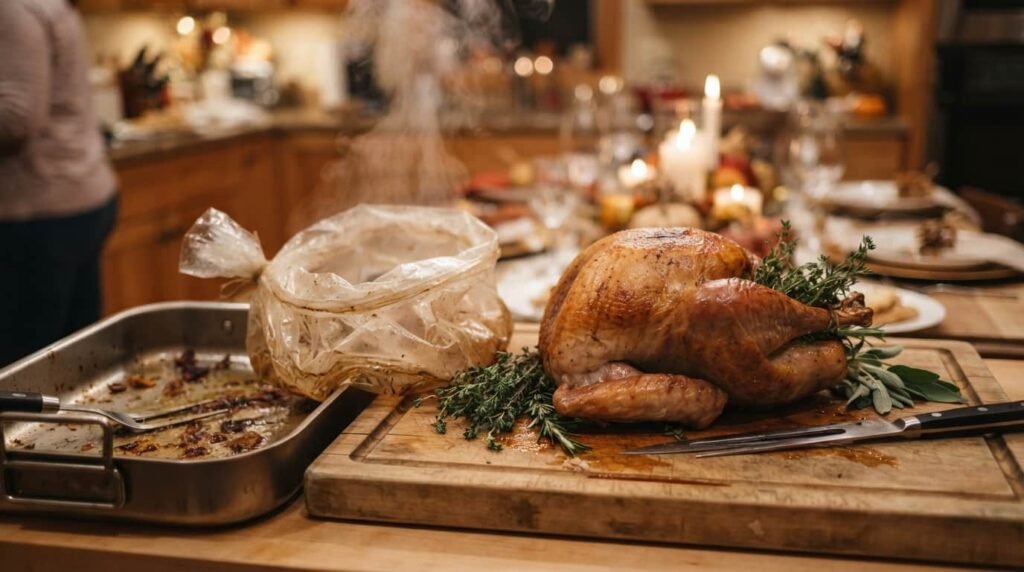
An oven bag is a heat-resistant, nylon bag rated safe for oven temperatures, usually up to 400°F. You place a seasoned turkey inside it, seal it, cut a few small slits for steam to escape, and roast it right in its own juices. The bags are single-use, sold in the baking aisle, and come in two common sizes: a large bag for smaller cuts of meat and a turkey-size bag built to hold a bird up to about 24 pounds.
This isn’t the same as the old-school method of roasting a turkey in a brown paper grocery bag. That version has been a Thanksgiving tradition in some families for generations, but food safety experts don’t recommend it, and we’ll get into why below.
Is Cooking Turkey in a Bag Safe?
Yes, as long as you use an actual oven cooking bag, not a paper bag or a plastic trash bag. Oven bags are made from food-grade nylon that’s BPA-free and rated for oven heat, and most are FDA-approved for cooking. They won’t melt, leach chemicals, or catch fire when used as directed.
Brown paper grocery bags are a different story. They’re not designed to be food-safe, and the glue, ink, and recycled materials used to make them can release fumes or even catch fire at oven temperatures. Extension food safety programs consistently warn against the paper bag method for this reason. If a recipe calls for a paper bag, swap in a turkey-size oven bag instead and you’ll get the same moist result without the risk.
One more safety note: never let the bag touch the oven walls, racks, or heating element, since it can melt on contact. Keep it centered in a roasting pan that’s at least two inches deep.
What You’ll Need
- A turkey-size oven cooking bag (not a brining bag or paper bag)
- A roasting pan at least 2 inches deep, large enough that the bag doesn’t hang over the sides
- 1 to 2 tablespoons of all-purpose flour
- A fully thawed turkey, 12 to 24 pounds
- Butter or oil, plus your preferred seasonings
- Aromatics like onion, carrot, and celery (optional, but they add flavor to the drippings)
- An instant-read meat thermometer
How to Cook Turkey in a Bag, Step by Step
1. Prep the turkey. Remove the neck and giblets from the cavity, then pat the turkey dry inside and out with paper towels. A dry surface helps seasoning stick and helps the skin brown better later.
2. Season generously. Rub softened butter or oil under and over the skin, then season with salt, pepper, and any herbs you like, such as thyme, rosemary, or garlic. Tuck aromatic vegetables into the cavity or the bottom of the bag for extra flavor.
3. Flour the bag. Add a tablespoon of flour to the inside of the oven bag and shake it around to coat the interior. This keeps the bag from sticking to the skin and helps thicken the drippings for gravy later.
4. Add vegetables and the turkey. If you’re using onion, carrot, and celery, place them in the bottom of the bag first. This keeps the turkey slightly elevated so the bottom doesn’t overcook, and it flavors the pan juices. Set the turkey on top, breast side up.
5. Seal and vent the bag. Close the bag with the tie provided, then cut 4 to 6 small slits in the top so steam can escape. Skipping this step is a common mistake, and it can cause the bag to burst.
6. Roast. Place the bagged turkey in a deep roasting pan, tucking the ends of the bag in so nothing hangs over the sides or touches the oven walls. Roast at 350°F according to the weight-based times below.
7. Check the temperature. Insert a meat thermometer through one of the slits into the thickest part of the thigh, avoiding the bone. The turkey is done at 165°F in the thigh and around 150 to 160°F in the breast, since the temperature will continue to rise slightly as it rests.
8. Rest before carving. Let the turkey rest in or out of the bag for 15 to 20 minutes before cutting it open and carving. This lets the juices redistribute instead of running out onto the cutting board.
How Long to Cook Turkey in a Bag by Weight
Cooking times run shorter in a bag than with open roasting, since the trapped steam speeds up the process. Use this as a starting guide, then confirm doneness with a thermometer rather than the clock alone.
| Turkey Weight | Approximate Time at 350°F |
|---|---|
| 10 to 12 lbs | 2 to 2.5 hours |
| 12 to 15 lbs | 2.5 to 3 hours |
| 15 to 18 lbs | 3 to 3.5 hours |
| 18 to 22 lbs | 3.5 to 4 hours |
| 22 to 24 lbs | 4 to 4.5 hours |
A stuffed turkey needs extra time, generally 15 to 30 minutes longer, and the stuffing itself needs to reach 165°F to be safe. Most home cooks find it easier and more reliable to bake stuffing separately and add it to the turkey after both are cooked through.
Pros, Cons, and Tips for Better Skin
The biggest upside of cooking turkey in a bag is moisture. The bag traps steam and self-bastes the meat the entire time it cooks, so you end up with tender, juicy meat with very little effort. Cleanup is also minimal, since the drippings stay contained instead of splattering across the oven and pan.
The tradeoff is skin texture. Because the bag holds in steam rather than letting dry heat circulate, the skin comes out softer than a traditionally roasted bird, and it won’t get that deep, shatter-crisp crackle some cooks chase every year.
A few tips help close that gap. Rubbing the skin generously with butter or oil before bagging encourages better browning. Some cooks cut the bag open for the final 20 to 30 minutes of cooking so the skin can crisp up in direct oven heat, similar to how a paper-bag method finishes uncovered. If crispy skin matters more to you than hands-off convenience, that last-stretch uncovering step is worth doing.
A Simpler Thanksgiving Turkey
Turkey in a bag won’t win any crispy-skin contests, but it’s one of the most forgiving ways to guarantee juicy meat on a day with a lot of moving parts. Season it well, watch the internal temperature instead of the clock, and let it rest before carving, and you’ll have one less thing to worry about on Thanksgiving.
Frequently Asked Questions
Can you use the drippings from turkey in a bag for gravy?
Yes, and they’re often better than drippings from open roasting because none of the flavor escapes into the oven. Strain the liquid from the bag through a fine-mesh strainer, discard the vegetables and any solids, then use the defatted juices as your gravy base. The flour already in the bag helps give the drippings a head start on thickening.
Do you need to baste a turkey cooked in a bag?
No. That’s the main appeal of this method. Condensation collects inside the sealed bag and continuously drips back onto the turkey as it cooks, which bastes it automatically. You can skip opening the oven altogether until it’s time to check the temperature.
Can you cook a turkey in a brown paper bag instead of an oven bag?
It’s not recommended. Paper grocery bags aren’t made from food-safe materials, and the ink, glue, and recycled content can release fumes or ignite at oven temperatures. A turkey-size oven cooking bag gives you the same juicy result with none of that risk.
Why is turkey in a bag faster than regular roasting?
The sealed bag traps steam around the bird, and moist heat transfers faster than dry air. That’s why a 12 to 15 pound turkey in a bag is typically done in about 2 to 2.5 hours, roughly an hour less than the same size turkey roasted uncovered.