
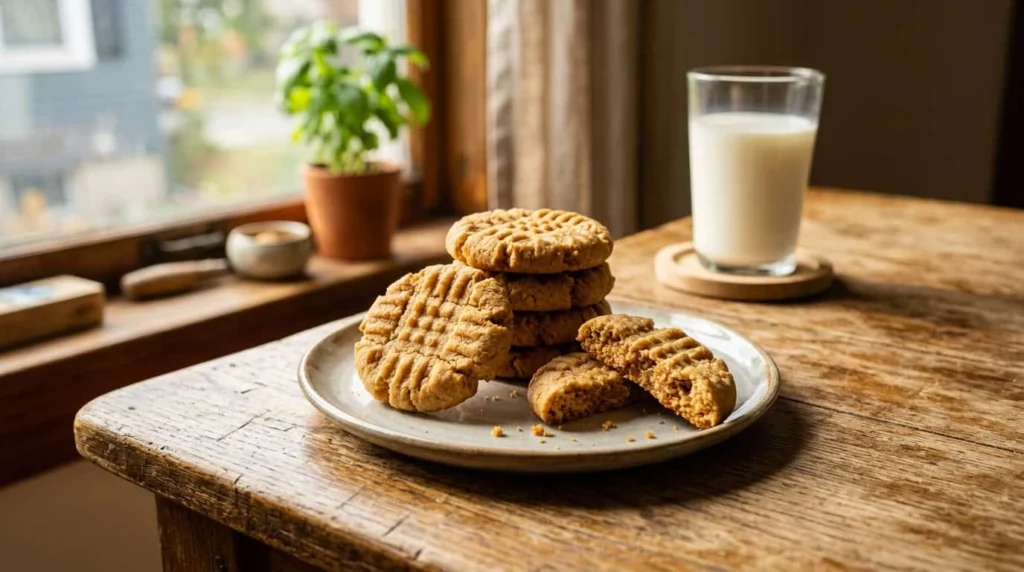
Old Fashioned Chewy Peanut Butter Cookies
Old-fashioned chewy peanut butter cookies are the kind of cookie that never goes out of style: soft, deeply peanutty centers, slightly crisp edges, and that classic fork-pressed crisscross on top. This recipe skips the fuss and sticks to what your grandmother probably used: real butter, both sugars, and a handful of pantry staples, so every batch turns out soft in the middle and chewy all the way through. Below is the exact method I use in my own kitchen, plus the small details, like sugar ratio and bake time, that actually decide whether a peanut butter cookie turns out chewy or dry.
What Makes Peanut Butter Cookies Chewy?
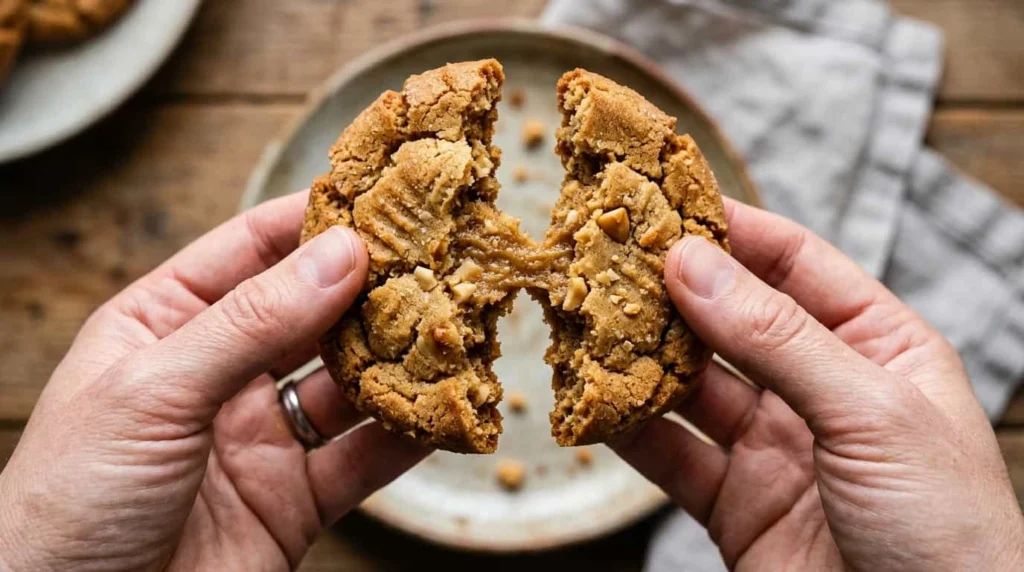
The chewiest peanut butter cookies come from a mix of brown sugar and granulated sugar, room temperature butter creamed just until combined, and a bake time that stops the moment the edges are set. Brown sugar holds onto moisture because of its molasses content, and pulling the cookies out while the centers still look slightly underdone lets them finish firming up as they cool on the pan instead of drying out in the oven. Skip either of those two things, and you end up with a cookie that’s more crumbly than chewy.
Ingredients for Old Fashioned Chewy Peanut Butter Cookies
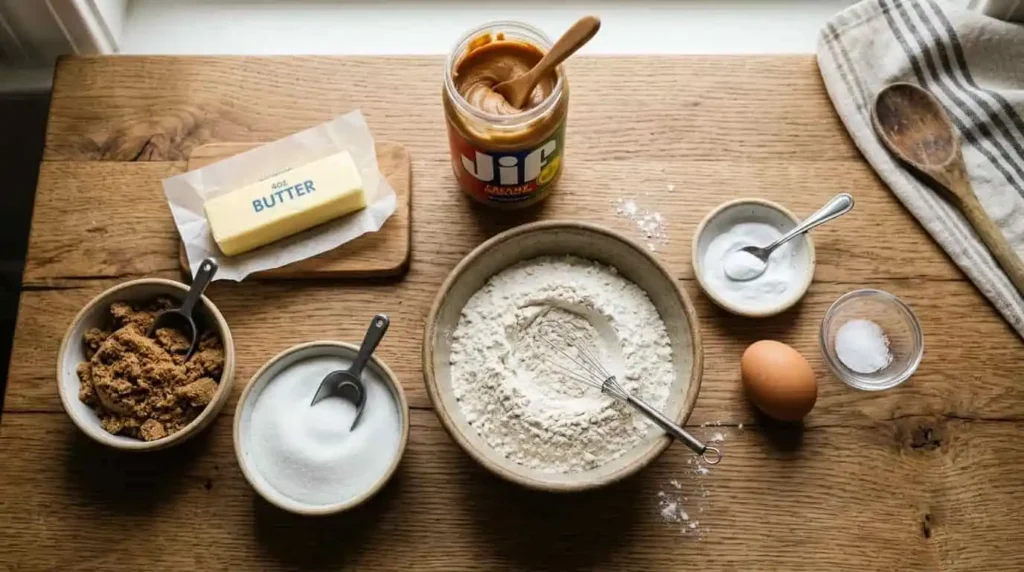
You only need a handful of ingredients, and most of them are already in your pantry.
- Unsalted butter, softened to room temperature. It gives the dough structure and a rich flavor that peanut butter alone can’t provide.
- Creamy peanut butter. A regular, no-stir style like the kind you’d find in any grocery aisle works best. Natural peanut butter tends to separate and can throw off the texture.
- Granulated sugar and brown sugar. The combination matters more than the total amount. Granulated sugar gives the cookie its structure and slight crispness at the edge, while brown sugar is what keeps the center soft and chewy.
- One egg, plus a splash of vanilla extract for depth.
- All-purpose flour, baking soda, and a pinch of salt. These build the base of the dough and give it just enough lift without turning the cookie cakey.
- Extra granulated sugar for rolling, which adds a light, sweet crunch to the outside of each cookie.
How to Make Old Fashioned Chewy Peanut Butter Cookies
- Cream the butter and sugars. In a large bowl, beat the softened butter with the granulated sugar and brown sugar until the mixture is light and fluffy, about two to three minutes. Don’t rush this step, but don’t overdo it either. Over-creaming can add too much air and push the texture toward cakey instead of chewy.
- Add the peanut butter, egg, and vanilla. Mix until everything is fully combined and smooth, scraping down the sides of the bowl as needed.
- Whisk the dry ingredients separately. In another bowl, whisk together the flour, baking soda, and salt so they’re evenly distributed before they hit the wet mixture.
- Combine gently. Add the dry ingredients to the wet ingredients in two additions, mixing on low speed just until the flour disappears. Overmixing at this stage develops extra gluten, which is one of the fastest ways to end up with tough, rather than chewy, cookies.
- Chill briefly, if you have time. Resting the dough in the fridge for 20 to 30 minutes firms up the butter and helps the cookies hold their shape, though this recipe will still work fine baked right away if you’re short on time.
- Roll and coat. Scoop the dough into roughly one-inch balls, then roll each one in granulated sugar until lightly coated.
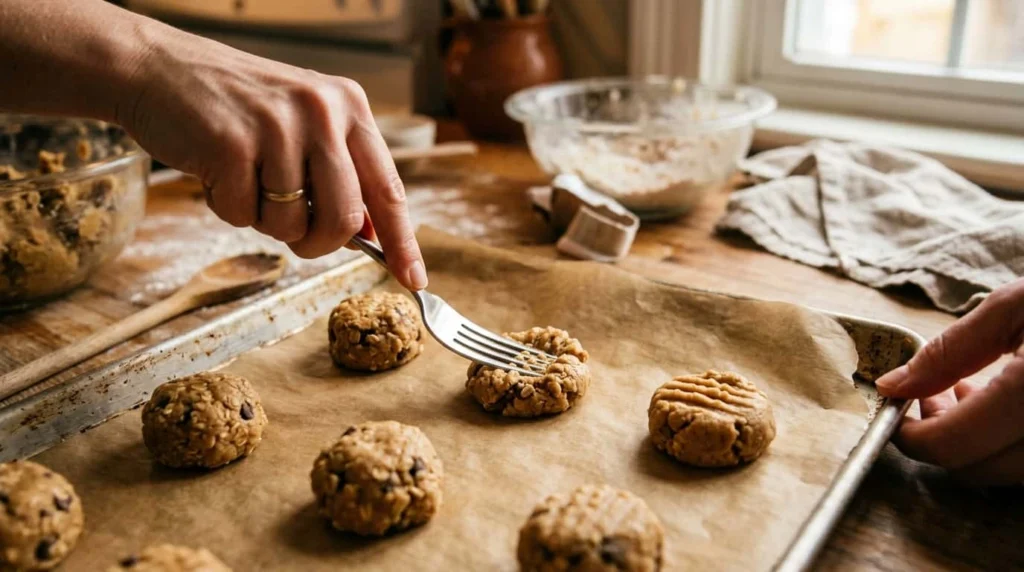
- Press with a fork. Place the balls on a parchment-lined baking sheet, spaced about two inches apart, then flatten each one with the tines of a fork, first in one direction and then the other, to create the classic crisscross pattern.
- Bake until just set. Bake at 350°F for 9 to 11 minutes, until the edges look set and the centers still look slightly soft and pale. The cookies will continue cooking on the hot pan after you pull them out.
- Cool on the pan first. Let the cookies rest on the baking sheet for about 5 minutes before moving them to a wire rack. This short rest is what locks in that chewy center.
Why the Fork Criss-Cross Pattern Matters
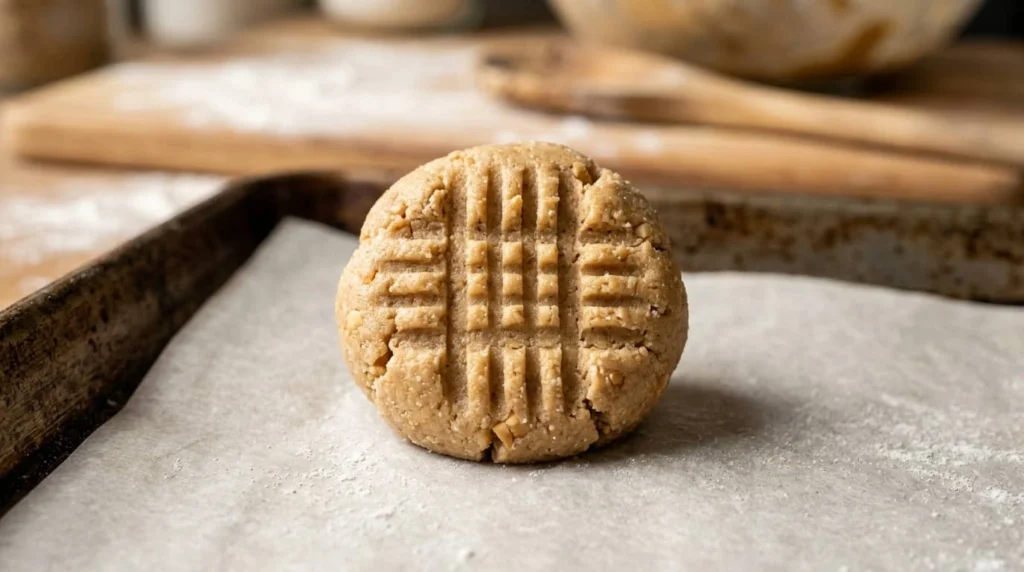
That signature crisscross isn’t just decoration. Peanut butter cookie dough is thicker and denser than most other cookie doughs, so it doesn’t spread on its own the way a chocolate chip cookie does. Pressing the dough with a fork flattens it to an even thickness, which means the whole cookie bakes at the same rate instead of ending up with a raw center and an overcooked edge. The pattern also happens to be a handy visual cue: it’s one of the easiest ways to tell a peanut butter cookie apart from every other cookie on the tray. The habit dates back roughly a century, popularized through early home-baking cookbooks, and it’s stuck around ever since simply because it works.
Tips for the Chewiest Texture Every Time
A few small habits separate a good peanut butter cookie from a great one.
- Don’t overbake. Pull the cookies while the centers still look a touch underdone. They firm up as they cool, and this single habit prevents more dry, hard cookies than anything else.
- Use room-temperature ingredients. Cold butter and cold eggs won’t cream properly, and that affects how evenly the dough bakes.
- Measure your flour carefully. Too much flour, often from scooping straight into the bag, is one of the most common reasons cookies turn out dry or crumbly instead of chewy.
- Store with a slice of bread. If your cookies ever start to firm up too much in the container, tuck a slice of plain bread inside. The cookies pull moisture from the bread and stay soft for longer.
- Let dough balls sit briefly if baking from the fridge. Chilled dough that’s fully cold can take an extra minute or two in the oven, so keep an eye on the first batch.
Creamy vs. Crunchy Peanut Butter: Which to Use
Creamy peanut butter is the better choice for this old fashioned chewy peanut butter cookies recipe because it blends smoothly into the dough and produces a more consistent, tender crumb. Crunchy peanut butter isn’t off the table if you want extra texture and a stronger peanut flavor in every bite, but it can make the dough slightly more crumbly, so you may need to add an extra tablespoon or two of peanut butter to compensate. Either way, steer clear of natural, oil-separating peanut butter unless you’re prepared to adjust the recipe, since the extra oil throws off the balance of fat in the dough.
Storing and Freezing Peanut Butter Cookies
Baked cookies keep well in an airtight container at room temperature for about a week. If you want them to last longer, they freeze beautifully for up to three months, just cool them completely first and layer them with parchment paper so they don’t stick together. The cookie dough also freezes well: scoop it into balls, freeze them on a tray until solid, then transfer to a freezer bag. You can bake the frozen dough balls straight from the freezer, adding a minute or two to the bake time, with no need to thaw first.
Fun Variations to Try
Once you’ve made the classic version, this dough is a great base for a few easy twists.
- Peanut butter blossoms. Skip the fork crisscross and instead press an unwrapped chocolate kiss into the center of each cookie right after it comes out of the oven.
- Chocolate drizzle. Once the cookies have cooled completely, drizzle melted chocolate over the tops or dip half of each cookie for a bakery-style finish.
- Extra crunch. Fold in a handful of chopped roasted peanuts along with, or instead of, peanut butter chips for more texture in every bite.
- Sandwich cookies. Spread a thin layer of frosting, jam, or more peanut butter between two cookies for a heartier treat that’s perfect for lunch boxes.
None of these change the base method above, so you can still count on the same soft, chewy center every time.
Why aren’t my peanut butter cookies chewy?
The most common culprits are overbaking, too much flour, and using all granulated sugar instead of a mix with brown sugar. Pull the cookies from the oven while the centers still look soft, measure flour by spooning it into the cup rather than scooping, and lean on brown sugar for its moisture-holding molasses content.
Why do you press peanut butter cookies with a fork?
Peanut butter cookie dough is too dense to spread on its own in the oven, so pressing it flat with a fork ensures even baking and prevents a raw center with overcooked edges. The crisscross pattern is a side effect of that flattening motion, though it’s also become the cookie’s signature look.
Can I use crunchy peanut butter instead of creamy?
Yes, though the cookies will be slightly more crumbly and have a stronger peanut flavor with visible pieces of nuts throughout. If you swap in crunchy peanut butter, adding an extra tablespoon or two can help keep the dough from turning too dry.
How long do peanut butter cookies stay fresh?
Stored in an airtight container at room temperature, these cookies stay fresh for about a week. For longer storage, they freeze well for up to three months, and a slice of bread in the container helps keep them soft in the meantime.



Pingback: Raw cocoa Butter: Unrefined Cacao Butter for Cooking
Pingback: Brown Sugar Chocolate Chip Cookies: The Chewiest Batch
Pingback: Old Fashioned Donut Recipe: Easy, Crispy & Homemade - kitchennista.com