
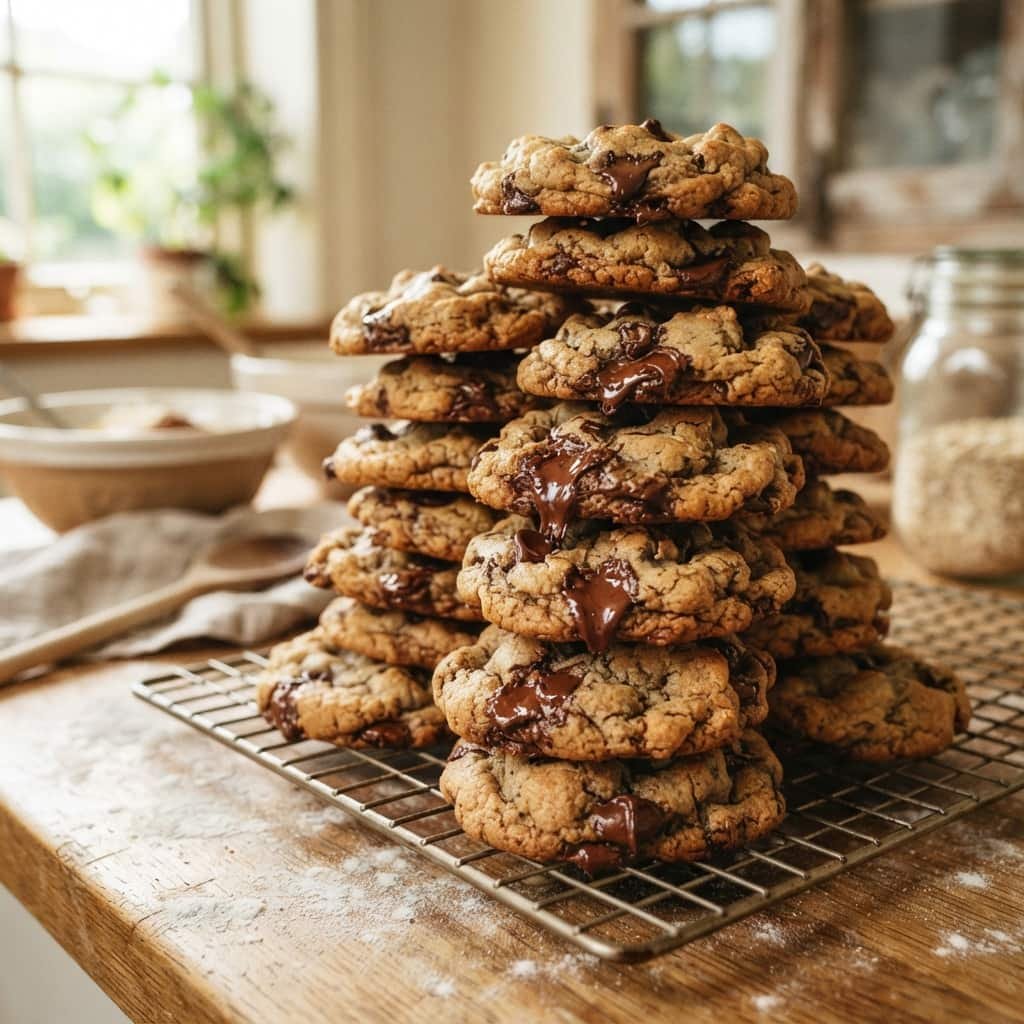
Crisco Chocolate Chip Cookies: Thick, Chewy, and Foolproof
Crisco chocolate chip cookies are the answer if you have ever pulled a tray out of the oven and found flat, greasy puddles instead of tall, bakery-style cookies. Swapping shortening for butter is an old Southern kitchen trick, and it is one of the simplest ways to fix a cookie that spreads too thin. This recipe uses Crisco shortening to build a cookie with crisp edges, a soft chewy center, and a shape that holds up on the tray instead of melting into one giant sheet cookie.
If you grew up with a grandmother who kept a can of Crisco in the pantry specifically for cookies, this recipe will feel familiar. If you are new to baking with shortening, this guide covers exactly what it does differently than butter, how to mix and bake the dough, and how to fix the most common problems bakers run into.
Why Bakers Reach for Crisco Instead of Butter
Butter is roughly 80 percent fat and 20 percent water. Crisco shortening is 100 percent fat. That difference matters more than it sounds like it should. When cookie dough hits a hot oven, the fat melts first, and any water in that fat turns to steam and helps the dough spread. Butter’s water content is exactly why butter-based cookies flatten out and get those characteristic crispy, lacy edges.
Shortening has no water and a higher melting point, so it holds its shape longer in the oven. The result is a cookie that stays tall and thick instead of spreading into a thin disc. Home bakers who have tested batches side by side often notice that shortening-based cookies also stay soft for several extra days, since there is less water to evaporate and dry the cookie out.
None of this means butter is wrong. Butter brings a richer, more complex flavor that shortening cannot fully match. Many recipes split the difference and use half butter, half shortening, which keeps some of that buttery flavor while still controlling spread. This recipe leans fully into shortening because the goal here is a thick, chewy, old-fashioned cookie that holds its shape.
Crisco chocolate chip cookies also have a practical advantage that has nothing to do with texture: shortening does not need to come to room temperature before you bake with it. Butter that is too cold will not cream properly, and butter that is too soft will make your dough greasy and prone to spreading. Shortening sidesteps that whole problem, since it is already the right consistency straight from the can or the stick, which makes this a good recipe for anyone who forgets to set butter out ahead of time.
What You’ll Need for Crisco Chocolate Chip Cookies
- 1 cup Crisco all-vegetable shortening (butter flavor works well if you want a richer taste)
- 1 1/4 cups packed brown sugar
- 1/2 cup granulated sugar
- 2 large eggs
- 2 teaspoons vanilla extract
- 2 3/4 cups all-purpose flour
- 1 teaspoon baking soda
- 1 teaspoon salt
- 2 cups semi-sweet chocolate chips
- 1 cup chopped pecans or walnuts (optional)
A kitchen scale is not required, but if you have one, weighing your flour instead of scooping it will give you more consistent results batch after batch. Scooping flour directly from the bag tends to pack it down and can add several extra tablespoons without you realizing it, which is one of the most common reasons cookie dough turns out too stiff to spread at all.
How to Make Crisco Chocolate Chip Cookies Step by Step
- Preheat the oven to 375°F and line two baking sheets with parchment paper.
- Cream the shortening and sugars. Beat the Crisco, brown sugar, and granulated sugar together on medium-high speed for about 2 minutes, until the mixture looks light and slightly fluffy. Unlike butter, shortening does not need to soften first, so you can go straight from the can to the mixing bowl.
- Add the eggs and vanilla. Beat them in one at a time on low speed, scraping down the bowl so everything is evenly combined.
- Whisk the dry ingredients separately. In a medium bowl, whisk the flour, baking soda, and salt together so the leavening is distributed evenly through the flour before it hits the wet mixture.
- Combine. Add the dry ingredients to the shortening mixture in two additions, mixing on low just until the flour disappears. Overmixing at this stage is a common cause of tough, dense cookies.
- Fold in the chocolate chips and nuts. Stir by hand so you do not overwork the dough.
- Scoop and bake. Drop rounded tablespoons of dough about 2 inches apart on the prepared sheets. Bake for 8 to 10 minutes for a chewier cookie, or 11 to 13 minutes if you prefer a crisper edge. The centers should look slightly underbaked when you pull them out.
- Cool properly. Let the cookies rest on the baking sheet for 2 to 5 minutes before moving them to a wire rack. This short rest lets them finish setting up without breaking apart.
Unlike a lot of chilled-dough cookie recipes, this dough can go straight from the mixing bowl to the baking sheet. Because shortening holds its shape at room temperature, you do not need to chill it first to keep the cookies from spreading.
Is Crisco or Butter Better for Chocolate Chip Cookies?
For a taller, chewier cookie that holds its shape and stays soft for days, Crisco shortening beats butter. For a flatter cookie with crispier edges and a richer, more buttery flavor, butter wins. Neither is objectively “better,” they just produce a different style of cookie, which is why plenty of bakers use a 50/50 blend to get some of both.
Fun Variations to Try
- Butter flavor Crisco: Swap in butter-flavored shortening for a richer taste without changing the texture at all.
- Mini chocolate chips: Use mini chips instead of standard size for chocolate in every single bite.
- Add-ins: Butterscotch chips, white chocolate chips, or toffee bits all work well folded in alongside or instead of the chocolate chips.
- S’mores style: Pull the cookies out two minutes early, press half a marshmallow into the center, then bake the remaining two minutes and drizzle with melted chocolate and crushed graham crackers once cooled.
- Cookie bars: Press the same dough into a greased 13×9-inch pan and bake at 375°F for about 16 to 18 minutes, until the top is golden and a toothpick comes out clean, then cut into bars.
- Nut-free version: Simply leave out the pecans or walnuts and add an extra half cup of chocolate chips in their place so the dough keeps the same texture and yield.
Any of these variations can be mixed and matched. A batch of butter-flavor Crisco cookie bars with mini chips and toffee bits, for example, still follows the same basic method above, just with a different pan and a slightly different bake time.
Storing and Freezing Crisco Chocolate Chip Cookies
To freeze the baked cookies, let them cool completely, then layer them between sheets of parchment paper in an airtight container or freezer bag. They will keep well for up to three months. Thaw at room temperature for about 20 minutes before serving.
You can also freeze the raw dough. Scoop it into individual balls, freeze them on a tray until solid, then transfer to a freezer bag. Bake straight from frozen, adding one to two extra minutes to the bake time.
If you have been chasing a chocolate chip cookie that stays tall, chewy, and soft for days rather than spreading thin, this Crisco version is worth keeping in permanent rotation. Try it once with the recipe as written, then start experimenting with mix-ins once you know how the base dough behaves in your own oven.
Common Questions About Crisco Chocolate Chip Cookies
Can I substitute butter for Crisco in this recipe?
Yes, you can swap butter in at a 1:1 ratio. Keep in mind the texture will change: butter’s water content means the cookies will likely spread more and turn out flatter and crispier at the edges, rather than the tall, thick shape you get from shortening. If you want a middle-ground result, try replacing half the Crisco with butter.
Why are my Crisco chocolate chip cookies so thick and not spreading at all?
Some thickness is expected and is the whole point of using shortening, but if your cookies are not spreading even a little, the most likely culprit is too much flour. Measuring by scooping straight from the bag can pack in extra flour without you noticing. Try spooning flour into your measuring cup and leveling it off with a knife instead, or weigh it if you have a scale. A too-cold oven can also keep dough from spreading, since the fat needs enough heat to soften before the cookie sets.
Do I need to chill the dough before baking?
No. One advantage of shortening-based cookie dough is that it does not need to chill to hold its shape, since Crisco is already solid at room temperature and has no water to cause excess spread. You can mix, scoop, and bake in one session.
How should I store Crisco chocolate chip cookies?
Once completely cooled, store them in an airtight container at room temperature for up to five days. Because shortening has no water to evaporate, these cookies tend to stay soft slightly longer than an all-butter version. For longer storage, freeze baked cookies in a freezer-safe bag for up to three months.


Pingback: Bahama Mama Tropical Smoothie Recipe